
Do you really know what hidden risks lurk within your automated decision systems and how they could endanger your entire corporate reputation?
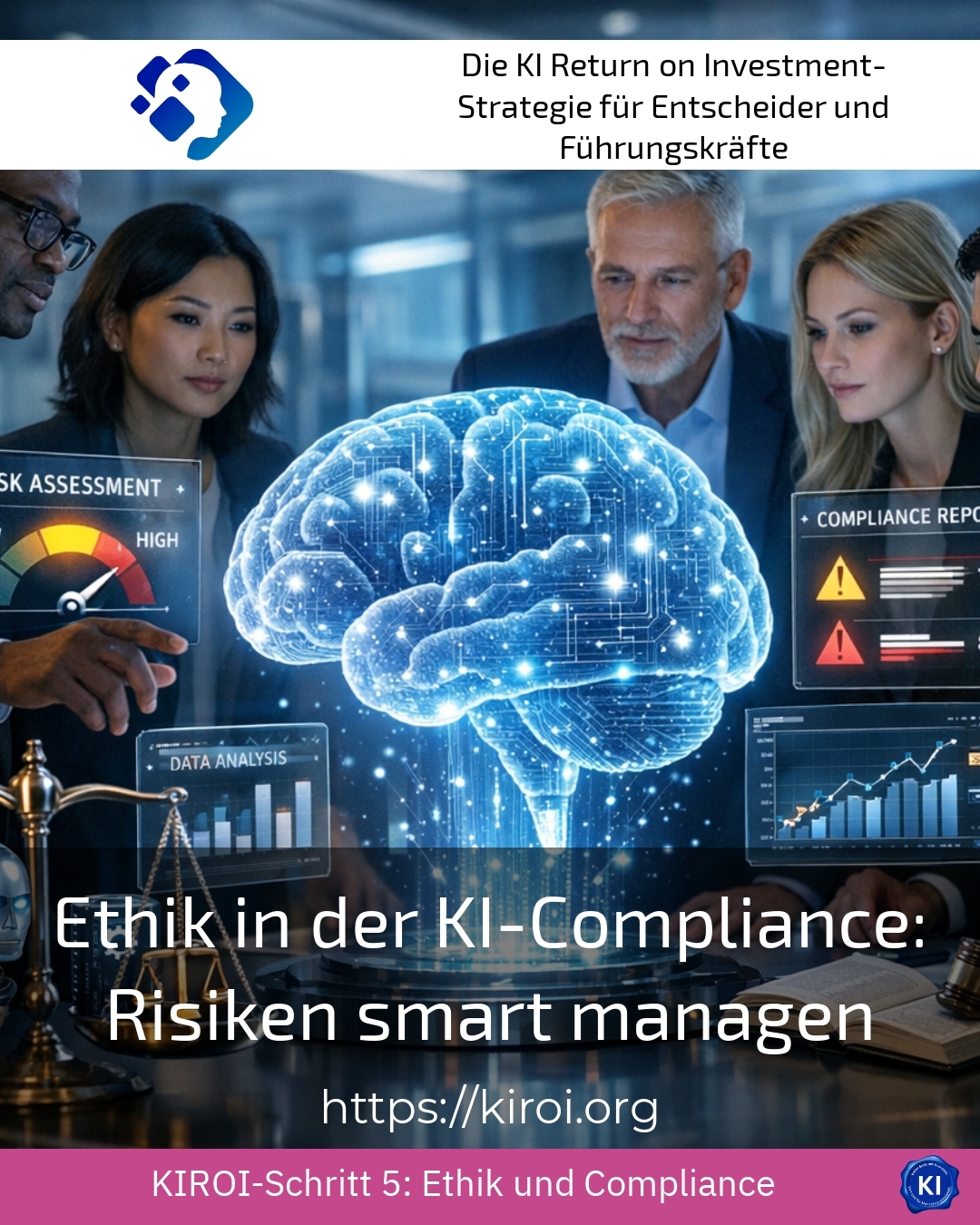
The digital transformation has reached a completely new dimension, and with it, questions arise that were unthinkable just a few years ago. Companies are increasingly relying on intelligent systems that are designed to optimize processes, support decision-making, and increase efficiency. In doing so, they are AI Compliance Ethics It is increasingly becoming a focus of attention for executives, regulators, and the critical public. The challenge lies in reconciling technological progress with moral principles. At the same time, organizations must meet regulatory requirements without losing their innovative edge. This balancing act requires a thoughtful strategy and a deep understanding of the multifaceted relationships between technology, law, and societal responsibility.
The fundamental importance of ethics in AI compliance for modern organizations
Smart systems are now permeating almost every business sector. From personnel selection to credit granting to medical diagnostics, algorithms make decisions with far-reaching consequences. This development brings significant opportunities, but also risks that without appropriate control mechanisms can lead to serious problems. For example, a financial services provider implemented an automated scoring system that unintentionally systematically disadvantaged certain population groups. A retail company used facial recognition technology to analyze customer data without fully considering the data protection implications. An insurance company employed predictive analytics, while the underlying evaluation criteria for the affected parties remained completely opaque.
These examples illustrate why a systematic engagement with ethical questions has become indispensable. Companies must understand that technical efficiency alone is not enough. Rather, a holistic approach is needed that combines technological innovation with ethical responsibility. The societal acceptance of intelligent systems depends largely on whether people can trust these technologies. This trust can only be achieved through transparency, fairness, and accountability.
Best practice with a AIROI customer
A medium-sized technology company in the financial services sector turned to transruptive coaching because it had encountered significant resistance in the implementation of an automated credit decision system. The regulatory authority had raised critical questions regarding the traceability of the algorithmic decisions, and there was also uncertainty internally about the ethical implications of the new system. As part of the transruptive coaching process, the company developed a comprehensive governance framework that considered both technical and ethical aspects. Criteria for fair decision-making processes were defined together, transparency mechanisms were implemented, and continuous monitoring was established. The company conducted regular bias audits, which were carried out by an interdisciplinary team. Clients often report that only through this structured approach was it possible to build a sustainable relationship of trust with customers and regulatory authorities. The project exemplifies the importance of professional guidance in the implementation of complex technology solutions.
Understand and systematically address central risk dimensions
The risks associated with the use of intelligent systems can be divided into different categories. First, there are algorithmic risks, which result from the way systems process data and derive decisions. For example, a staffing provider discovered that its applicant tracking system favored male candidates because historical training data contained this bias. A healthcare provider found that its diagnostic system produced less reliable results in certain ethnic groups. A logistics company recognized that its route optimization algorithm systematically neglected economically weaker neighborhoods.
In addition, there are reputational risks that arise when unethical behavior of automated systems becomes public. Media coverage of algorithmic discrimination can lead to significant damage to the company’s image. Customers increasingly expect companies to handle technology responsibly. Investors are increasingly considering ethical aspects when making investment decisions. This development makes it clear that AI Compliance Ethics It is not a purely regulatory matter, but has a direct economic significance.
Recognizing operational risks in day-to-day operations
In operational operations, risks often manifest themselves in subtle ways. A telecommunications company only noticed after months that its customer service chatbot was systematically failing with complex complaints. An energy provider belatedly realized that its consumption forecasting system discriminated against certain household types. A retail company discovered that its dynamic pricing led to unfair price differences in certain regions. These examples show that continuous monitoring is essential. Companies must establish mechanisms to detect problematic system behavior early.
The complexity of modern systems significantly complicates this task. Often, even developers do not fully understand how their algorithms arrive at certain decisions. This phenomenon of the so-called black box represents a fundamental challenge. Transparency and explainability therefore become central requirements for responsible technology development. Organizations must invest in appropriate expertise and tools to meet this requirement.
Implementing ethics in AI compliance through structured governance frameworks
An effective governance framework forms the foundation for responsible technology use. This involves not only compliance with legal requirements but also establishing a comprehensive value architecture. For example, an automotive supplier implemented an Ethics Board that evaluates all relevant technology decisions. A pharmaceutical company introduced binding impact assessments for all new algorithmic applications. A media company established a stakeholder advisory board that brings perspectives from different social groups.
These examples illustrate that successful risk management requires organizational structures. It requires clear responsibilities, defined processes, and sufficient resources. Leaders must actively promote the topic and act as role models. The corporate culture must encourage and reward critical questioning. Employees need appropriate training and scope for action.
Best practice with a AIROI customer
An internationally operating industrial corporation sought support in establishing a corporate-wide governance framework for its digital decision-making systems. The company had realized that the existing compliance structures were no longer adequate to meet the new challenges, and turned to transruptive coaching for comprehensive support of the transformation process. Together, a multi-stage evaluation system was developed that systematically identifies and categorizes ethical risks. Each new project now undergoes a defined review process that integrates technical, legal, and ethical aspects. Transruptive coaching particularly supported the development of practical guidance for operational implementation. Staff from various departments were trained in interdisciplinary workshops and sensitized on relevant issues. The insights gained through transruptive coaching helped the company establish a new culture of responsibility. Today, the framework serves as a reference model for other organizations in the industry.
Using practical tools for risk management
In addition to organizational measures, technical tools play an important role. Algorithmic auditing tools enable the systematic verification of systems for biases. Explainability frameworks help make decision processes comprehensible. Privacy-enhancing technologies support the protection of sensitive data. For example, a bank uses specialized software that continuously monitors the fairness of its credit decisions. An insurance company uses simulation tools to test the potential impact of new algorithms before their implementation. A retailer implemented a dashboard that transparently displays relevant metrics regarding algorithm performance.
However, these technical solutions can only achieve their full effect if they are embedded in a comprehensive management approach. Tools alone do not solve ethical issues. They do, however, help to identify these issues early on and to address them systematically. The combination of technical expertise, organizational embedding, and cultural awareness creates the prerequisites for sustainable responsible technology use.
Meeting stakeholder expectations and building trust
Different stakeholder groups formulate different expectations regarding the responsible handling of intelligent systems. Customers expect fair treatment and transparency regarding automated decisions. Employees want to understand how algorithmic systems influence their work. Regulatory authorities require evidence of compliance with legal requirements [1]. Investors are increasingly interested in ESG criteria and ethical standards. The public is critically observing how companies handle sensitive technologies.
These diverse expectations require a differentiated communication strategy. For example, a technology company publishes regular transparency reports about its algorithmic systems. A financial services provider has established a customer advisory board that is consulted on ethical issues. A healthcare company conducts public dialogues about the opportunities and risks of its diagnostic systems. This proactive communication can build trust and promote societal acceptance of technology. At the same time, it protects against reputational damage that can result from a lack of transparency.
Understanding cultural change as a success factor
The sustainable success of compliance measures depends largely on the corporate culture. Rules and processes alone are not enough if the underlying values are not lived by. For example, a software company has integrated ethical principles into its development process. Every project team begins with a structured reflection on the potential ethical implications of its work. A consulting firm has expanded its performance evaluation to include ethical criteria. A manufacturing company actively promotes interdisciplinary exchange between engineers, lawyers, and ethics experts.
These cultural changes require time and consistent leadership. Leaders must act as role models and actively demand ethical behavior. Employees need psychological safety to be able to openly express concerns. Mistakes should be viewed as learning opportunities, not as grounds for sanctions. Such a culture of open reflection forms the foundation for sustainable responsible innovation.
My AIROI Analysis
The confrontation with AI Compliance Ethics It reveals fundamental challenges for modern organizations that go far beyond technical issues and touch upon the self-perception of companies in a digitized society. The analyzed examples clearly show that isolated measures are not sufficient and instead a holistic approach is required that integrates the technical, organizational, and cultural dimensions. Particularly striking is the discrepancy between the pace of technological development and the speed with which organizations build corresponding governance structures, which carries significant risks.
From my perspective, the ability to develop and deploy intelligent systems responsibly becomes a crucial competitive factor, as customers, employees, and investors increasingly incorporate ethical criteria into their decisions. Companies that invest early in the appropriate competencies and structures gain a strategic advantage. At the same time, they contribute to the societal acceptance of technology, which is essential for the success of digital innovations [2]. The integration of AI Compliance Ethics Therefore, it should not be viewed as a regulatory burden, but as a strategic opportunity for forward-thinking organizations. Transruptions coaching helps companies successfully navigate this transformation and realize sustainable competitive advantages.
Further links from the text above:
[1] EU Regulatory Framework for Artificial Intelligence
[2] World Economic Forum – Artificial Intelligence Insights
For more information and if you have any questions, please contact Contact us or read more blog posts on the topic Artificial intelligence here.









 Deutsch
 English (UK)