
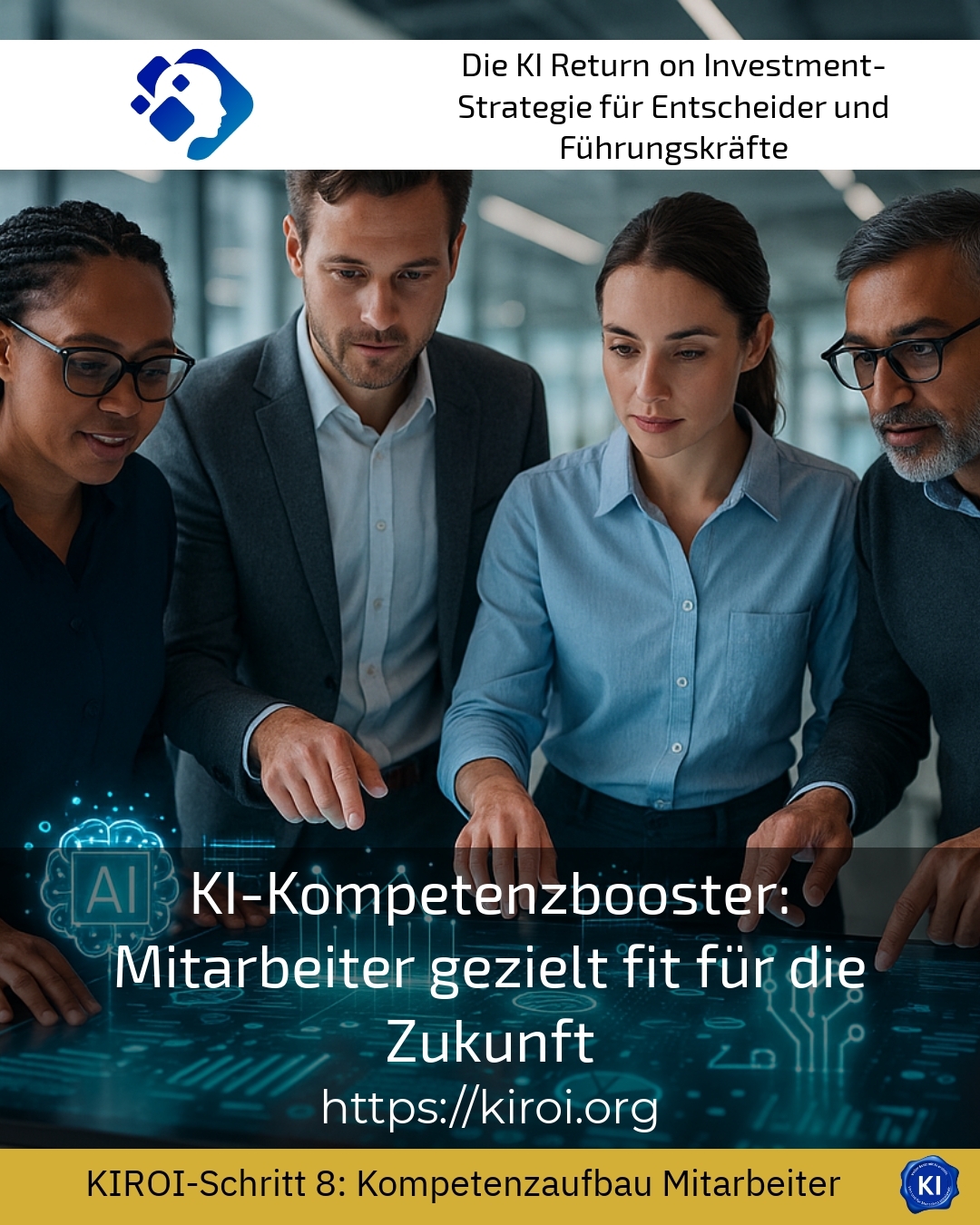
Imagine your employees suddenly mastering tools that were considered science fiction just a few years ago, driving your company into entirely new dimensions of value creation. AI Skills Booster is revolutionising the way companies prepare their workforce for digital transformation, and those who miss this train risk being left behind in a future that has already begun. The question is no longer whether artificial intelligence will change your daily work. The question is how well your teams are prepared for it.
Why the AI skills booster is becoming a strategic necessity
Digital transformation has reached a new speed that is surprising many companies. At the same time, the pressure on leaders to position their teams for the future is growing. Employees today need different skills than just five years ago. They must understand how intelligent systems work and where their limitations lie. Furthermore, they must learn to use these tools productively [1].
In the finance industry, analysts already use automated systems for risk assessment. They interpret the results and make informed decisions. In healthcare, intelligent algorithms support diagnosis. Doctors and nurses need to be able to contextualise these recommendations. The logistics industry optimises supply chains with the help of predictive models. Dispatchers then coordinate complex transport networks more efficiently than ever before.
Transruption coaching supports companies with precisely these kinds of transformation projects. It helps to reduce resistance and generate enthusiasm. Clients often report that their employees were initially sceptical. However, after targeted training, they develop genuine curiosity for the new possibilities.
Bridging the skills gap with the AI skills booster
Many companies are facing a significant skills gap. Their employees are excellent at classic workflows, but they lack an understanding of data-driven processes. Therefore, they need targeted impetus and systematic further training. AI Skills Booster sets about it precisely and conveys practical knowledge [2].
In retail, buyers learn how automated demand forecasting works. They understand what data the systems require and how reliable the predictions are. This allows them to make better ordering decisions. In production, engineers use predictive maintenance systems. They identify machine failures before they occur and schedule repairs in good time. In marketing, teams analyse customer behaviour with intelligent analysis tools. They personalise campaigns and measurably increase their conversion rates.
Best practice with a AIROI customer
A medium-sized manufacturing company approached us with a specific request. Management wanted to implement intelligent quality control systems. However, they encountered significant resistance from the workforce. Employees feared losing their jobs. They also doubted the reliability of automated inspection processes. As part of the transruption coaching, we initially developed a comprehensive communication concept. We explained to the teams that the systems were intended to support them, not replace them. Subsequently, we conducted multi-stage training sessions. Employees learned how the image recognition software works. They understood which defects the system reliably detects. At the same time, they learned where human expertise remains indispensable. After six months, the workforce's attitude had fundamentally changed. Quality inspectors appreciated their new digital assistants. The rejection rate dropped by twenty-three percent. At the same time, job satisfaction increased significantly. This example shows how important careful support is during technological change processes.
Strategies for sustainable skills development
Successful competence development requires more than individual training sessions. It needs a well-thought-out overall strategy. Companies must develop a learning culture and technological infrastructure equally. Various factors play a crucial role in this [3].
In the banking sector, institutions are establishing internal academies for digital competencies. Employees complete modular learning paths at their own pace. They acquire certificates and continuously expand their knowledge. In the insurance industry, companies are relying on peer-learning formats. Experienced employees pass on their knowledge to colleagues. This creates natural learning communities. In the pharmaceutical industry, companies are combining theoretical training with practical projects. Scientists apply their new knowledge directly in research projects.
Transruption coaching provides valuable insights here. It helps companies develop bespoke learning programmes, taking into account different starting levels and learning needs. Clients often report that this individual approach makes the difference.
Leaders as drivers of change
Leaders play a key role in skills development. They need to embody change and inspire their teams. At the same time, they themselves require in-depth knowledge of new technologies. This is the only way they can credibly advocate for change [4].
In the automotive industry, manufacturers train their leaders intensively. These leaders then understand how autonomous driving systems work. They can assess development progress and make strategic decisions. In the energy sector, managers learn how smart grids are controlled. They competently plan investments in smart grid technologies. In telecommunications, leaders understand how network optimisation works. They set realistic expectations and communicate benefits convincingly.
Practical implementation of the AI competency booster
Practical implementation requires a structured approach. Companies should first analyse the current situation. What competencies already exist within the organisation? Where are the biggest gaps? They then define specific learning objectives [5].
In the media industry, publishers are analysing the digital capabilities of their editors. They identify needs in areas such as automated text generation. Subsequently, they develop targeted training programmes. In tourism, hotels are training their staff in the use of chatbots. The teams learn how to monitor the automated systems. They also know when to intervene personally. In the real estate industry, estate agents are using virtual viewing tools. They understand how the technology appeals to prospective buyers and speeds up sales processes.
Best practice with a AIROI customer
A large retail company sought support in implementing automated inventory management systems. The challenge was to train over a thousand employees across various branches, many of whom had limited prior experience with digital tools. Together, we developed a three-stage approach. In the first phase, we trained so-called multipliers in each branch. These employees received intensive training and gained a detailed understanding of the systems. In the second phase, the multipliers passed on their knowledge to their colleagues. They offered regular short training sessions and individual support. In the third phase, we accompanied the rollout with continuous coaching. We answered questions and resolved problems quickly. The result exceeded all expectations. Inventory accuracy improved by thirty-eight percent, while overstock levels were significantly reduced. Employees felt competent in using the new systems, and many came up with their own suggestions for improvement. This project demonstrates how systematic support enables transformative change.
Integrating the competence booster into everyday work
Sustainable learning success is achieved through integration into everyday work. Isolated training courses are often ineffective. Instead, employees should learn and apply continuously. Microlearning formats effectively support this approach [6].
In the legal sector, law firms are using short video tutorials. Legal professionals learn how document analysis tools work. They immediately apply the knowledge in their daily work. In the construction industry, companies are relying on mobile learning platforms. Site managers complete training directly on the construction site. They understand how project management software optimises construction processes. In the hospitality industry, chains are training their staff via smartphone app. The personnel learn how ordering systems work with intelligent recommendations.
Challenges and approaches
Various challenges arise during competency development. Some employees fear change. Others doubt their own ability to learn. Still others see no personal benefit in the training [7].
In public administration, authorities counter such resistance with transparency. They openly communicate their objectives. They explain how the changes will improve daily work. In the education sector, institutions rely on positive role models. Teachers who successfully use new tools share their experiences, thereby creating motivation through authentic examples. In social work, organisations give their employees adequate time. They avoid overload by introducing new technologies gradually.
Transruption coaching also supports companies through difficult situations. It helps to address resistance constructively and to involve sceptics. Clients often report that the most critical employees later become the most dedicated supporters.
My AIROI Analysis
The systematic development of skills in intelligent technologies represents a crucial competitive factor. Companies that invest early in further training their employees gain significant advantages. They can deploy new technologies productively more quickly. At the same time, they increase the motivation and retention of their workforce. AI Skills Booster enables precisely this targeted preparation for future requirements.
My analysis shows that successful transformation projects always put people at the centre. Technology alone does not create sustainable added value. Only when employees understand how they can use the new tools does the full potential unfold. Technical expertise is less important here. Rather, people need a fundamental understanding of possibilities and limitations.
The accompanying support from experienced coaches has proven to be a critical success factor. Companies that rely on professional guidance achieve their goals faster and more sustainably. They avoid typical pitfalls and learn from the experiences of others. Transruption coaching offers precisely this structured support for complex change projects.
For the years ahead, I anticipate a continuing increase in the importance of ongoing skills development. The pace of technological change is accelerating. Companies must establish agile learning structures that keep pace with this dynamic. Those who lay the foundations today will be able to reap the rewards tomorrow.
Further links from the text above:
[1] McKinsey Global Survey on AI Adoption
[2] World Economic Forum Future of Jobs Report
[3] Gartner Workforce Planning Insights
[4] Harvard Business Review Leadership Studies
[5] Deloitte Human Capital Trends
[6] PwC Future of Work Studies
[7] OECD Skills and Work Policy Studies
For more information and if you have any questions, please contact Contact us or read more blog posts on the topic Artificial intelligence here.







 Deutsch
  English (UK)