
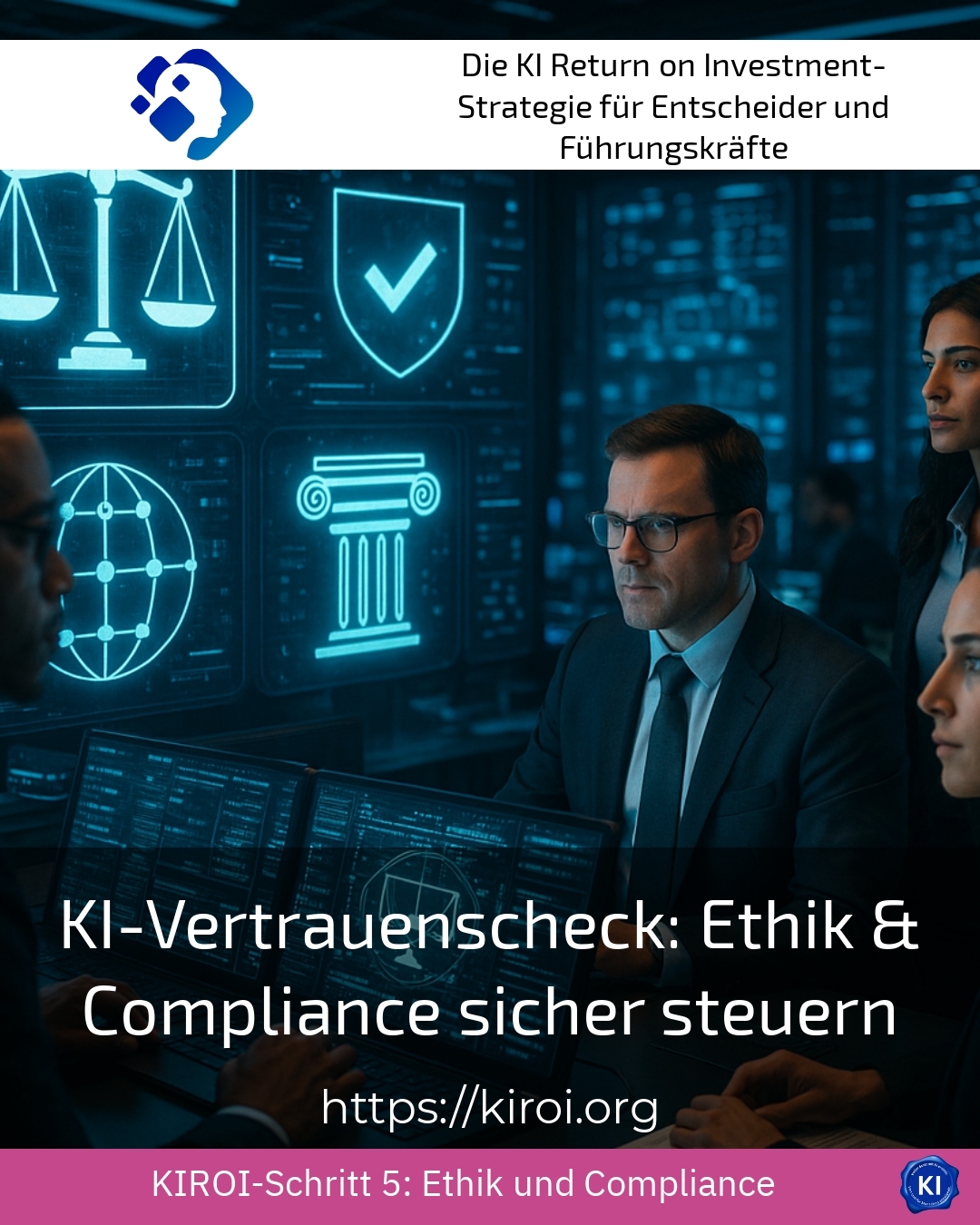
Imagine your entire production line is controlled by intelligent systems that make decisions in fractions of a second. But who takes responsibility when these decisions are ethically questionable or violate regulatory requirements? The AI Trust Check: Navigating Ethics & Compliance Safely is becoming an indispensable tool in industrial manufacturing as companies increasingly rely on automated decision-making processes. The complexity of these systems requires completely new approaches to quality assurance and risk management. This is long no longer just about technical functionality. It is about fundamental questions of corporate responsibility.
Why the AI trust check is becoming indispensable in manufacturing
Industrial production is undergoing a profound transformation. Intelligent systems monitor production parameters and optimise processes autonomously. They make decisions regarding material flows and quality approvals. In press shops, algorithms analyse sheet metal deformation in real time and independently adjust press pressures. Welding robots in body shop lines optimise their parameters based on sensor data without human intervention. This development brings enormous efficiency gains with it. At the same time, however, it raises fundamental questions.
For example, an automotive supplier uses machine learning for the quality control of transmission parts. The system decides independently which parts are allowed to leave production. But what happens if the algorithm systematically overlooks certain types of fault? Similar challenges are evident in semiconductor manufacturing. There, intelligent systems control cleanroom environments and etching processes with minimal tolerances. In the food industry, automated systems continuously monitor hygiene parameters and cold chains. Decision-making authority increasingly lies with algorithms rather than humans.
A chemical company is using intelligent systems for formulation optimisation. While these systems can suggest raw material combinations that are efficient, they struggle to evaluate potential environmental impacts. This highlights the need for a structured testing procedure. Companies require clear mechanisms for evaluating algorithmic decisions.
Best practice with a AIROI customer
A medium-sized manufacturer of precision components for the aerospace industry faced a significant challenge. The company had implemented an intelligent quality inspection system designed to detect surface defects on turbine blades. After six months of operation, quality management noticed that the system was systematically classifying certain micro-cracks as harmless. The cause lay in the training data, which underrepresented these specific types of defect. As part of the transruptions coaching, the team developed a comprehensive inspection protocol for all algorithms used. This protocol includes regular audits of the decision bases and a systematic review of the training data for representativeness. In addition, the company established an escalation procedure for borderline decisions. Human experts are now consulted at defined uncertainty thresholds. The complaint rate fell by thirty-five percent within a year. At the same time, customer confidence in the company's quality assurance processes improved significantly.
Ethical dimensions of algorithmic decision-making in production environments
The ethical evaluation of automated decision-making systems requires a multidimensional approach. In industrial manufacturing, ethical issues often manifest themselves subtly. For example, a predictive maintenance system prioritises machine repairs according to economic criteria. In doing so, it may not adequately take into account the occupational safety of the employees. Similar areas of tension arise in automated roster scheduling in shift operations. Algorithms optimise productivity. However, in doing so, they can neglect the social needs of the employees.
A steel plant uses intelligent systems to optimise smelting processes. These systems reduce energy consumption significantly. However, they can cause emission peaks that are of regulatory concern. In the textile industry, algorithms monitor production chains and supplier relationships. Yet, they can only evaluate information on working conditions in supplier facilities to a limited extent. Pharmaceutical production relies on automated batch release. In doing so, systems must weigh complex quality parameters against patient safety.
An electronics manufacturer implemented a system for automated printed circuit board assembly. The system independently optimises component placement sequences. However, it does not always take into account the ergonomic requirements of manual rework steps. Such interactions between automated and human work steps require careful analysis. The AI Trust Check: Navigating Ethics & Compliance Safely addresses precisely these interfaces between technical efficiency and human values.
Transparency as a cornerstone of trustworthy systems
The traceability of algorithmic decisions presents manufacturing companies with significant challenges. Modern systems often work with high-dimensional data spaces. Their decision-making logic cannot be intuitively understood. For example, a quality inspection system for castings analyses X-ray images for blowholes and inclusions. The criteria for the evaluation are coded in neural networks. They elude direct human interpretation.
In plastics processing, algorithms continuously optimise injection moulding parameters. The relationships between settings and product quality are complex. Human operators are often unable to comprehend system decisions. During the assembly of electric motors, intelligent systems coordinate robot arms and conveyor belts. The prioritisation logic during bottlenecks frequently remains opaque. A packaging machine manufacturer uses predictive algorithms for maintenance scheduling. The predictive models are based on patterns in historical machine data. These patterns are not readily recognisable to maintenance technicians.
Systematically meeting compliance requirements
The regulatory landscape for automated decision-making systems is evolving dynamically. Manufacturing companies must take a wide variety of requirements into account [1]. Product liability regulations demand clear responsibilities for quality decisions. Occupational health and safety regulations require the consideration of human factors in automated processes. Environmental regulations set limits for process-related emissions and resource consumption.
A medical technology manufacturer must meet strict documentation obligations. Every decision made by a quality inspection system must be fully traceable. In the automotive industry, IATF standards apply to quality management systems [2]. These standards require the validation of all process-relevant software, including intelligent systems. The chemical industry is subject to extensive reporting obligations for emissions and material flows. Automated monitoring systems must reliably meet these requirements.
A food manufacturer relies on automated traceability systems for raw materials. In the event of a crisis, these systems must be able to identify all affected batches within the shortest possible time. The requirements of the EU Food Safety Regulation must be strictly complied with [3]. The AI Trust Check: Navigating Ethics & Compliance Safely supports companies in addressing these complex requirements in a structured manner.
Best practice with a AIROI customer
An internationally active manufacturer of packaging machinery faced the task of adapting its automated systems to new regulatory requirements. Over the years, the company had implemented various intelligent systems that optimised production processes and monitored quality parameters. A regulatory change now demanded comprehensive documentation of all automated decision-making processes. As part of transruption coaching, the team developed a holistic compliance framework. This framework defines clear responsibilities for each system component and establishes testing cycles for all decision-making algorithms. Of particular importance was the introduction of an audit trail that logs all system decisions. The documentation now encompasses input data, processing steps and outputs for every relevant decision. As a result, the company was not only able to meet the regulatory requirements, but also significantly improved its internal understanding of the systems in use. Employees frequently report that they now have considerably more trust in the automated processes.
AI Trust Check: Ethics & Compliance as a Continuous Process
The implementation of ethical and compliance-compliant systems is not a one-off project. It requires continuous attention and regular review. Algorithms evolve through machine learning. Their decision-making patterns can change over time. Regulatory requirements are adapted and expanded. Societal expectations regarding responsible corporate governance are continuously increasing.
An industrial robot manufacturer reviews its control algorithms on a quarterly basis. In doing so, the team systematically analyses all edge case decisions from the past period. In the semiconductor industry, companies carry out regular bias audits for their quality inspection systems. They ensure that no systematic distortions occur during defect detection. A wind turbine manufacturer evaluates its predictive maintenance systems on a semi-annual basis. The prediction accuracy is compared against actual failure patterns and documented.
Battery cell production for electric vehicles is subject to particularly stringent quality requirements. Intelligent systems continuously monitor electrode coating processes. The criteria for cell approvals must be regularly validated against current safety standards. An agricultural machinery manufacturer uses automated systems for the calibration of harvesting machines. The algorithms take environmental conditions and crop types into account during adjustment. The ethical dimension is evident here in resource efficiency and yield optimisation.
Organisational embedding of accountability structures
Technical implementation alone is not enough. Companies must establish clear accountability structures for automated decision-making systems. This requires new roles and competencies within the organisation. For example, a foundry has created the position of algorithm officer. This person coordinates all issues relating to automated decision-making systems within the company.
In the paper industry, companies are establishing cross-functional teams for system monitoring. Production specialists, IT experts and quality managers work together to evaluate algorithmic decisions. A manufacturer of construction machinery has implemented an escalation procedure for critical system decisions. When defined thresholds are reached, human experts are automatically brought in. The glass industry uses automated systems to optimise melting furnaces. Energy efficiency is continuously improved. At the same time, emission limit values must be reliably complied with.
A textile machinery manufacturer regularly trains its staff on the ethical issues of automation. The training raises awareness of potential problem areas and establishes a culture of critical reflection. transruptions coaching supports companies in developing such organisational structures. It provides impetus for integrating ethical considerations into existing management systems.
Best practice with a AIROI customer
A manufacturer of railway technology components wanted to fundamentally redesign its internal structures for dealing with automated systems. The company had realised that existing quality management processes were not sufficiently geared towards algorithmic decision-making systems. In transruptions coaching, the team first systematically analysed all deployed systems and their decision-making areas. Building on this, the company developed a governance structure with clear responsibilities for each system category. An ethics board was established which reviews all critical system decisions on a quarterly basis. This body is made up of representatives from various company departments and takes different perspectives into account. In addition, the company introduced a reporting system for conspicuous system decisions. Employees can easily and anonymously communicate observations. These are then systematically evaluated and adjustments are made if necessary. Employee satisfaction with the automated systems improved significantly following the introduction of these structures.
My AIROI Analysis
Industrial manufacturing is at a turning point. Automated decision-making systems are becoming increasingly powerful and ubiquitous. At the same time, demands for transparency, traceability and ethical responsibility are rising. The AI Trust Check: Navigating Ethics & Compliance Safely provides manufacturing companies with a structured approach to tackle these challenges. It enables the systematic evaluation of algorithmic decisions and the integration of ethical considerations into technical processes.
My analysis shows that companies benefit considerably from a proactive approach. The early establishment of control mechanisms prevents costly rectifications. It strengthens the confidence of customers, employees and regulators in corporate governance. The examples from various manufacturing sectors illustrate the practical relevance of this topic. From the automotive supply industry and food production to medical technology, companies face similar fundamental questions.
I find the insight that technical solutions alone are not sufficient to be particularly important. The organisational embedding of accountability structures is equally crucial. Businesses must develop new competencies and raise employees' awareness of ethical issues. transruptions coaching accompanies organisations along this path and provides practical impetus for implementation. Clients frequently report that structured engagement with these topics not only reduces compliance risks, but also fosters a corporate culture of reflection and continuous improvement. The future of industrial manufacturing will be shaped by companies that view efficiency and responsibility as complementary goals.
Further links from the text above:
[1] EU Artificial Intelligence Act
[2] IATF Global Oversight – Automotive Quality Management Standards
For more information and if you have any questions, please contact Contact us or read more blog posts on the topic Artificial intelligence here.








 Deutsch
  English (UK)