
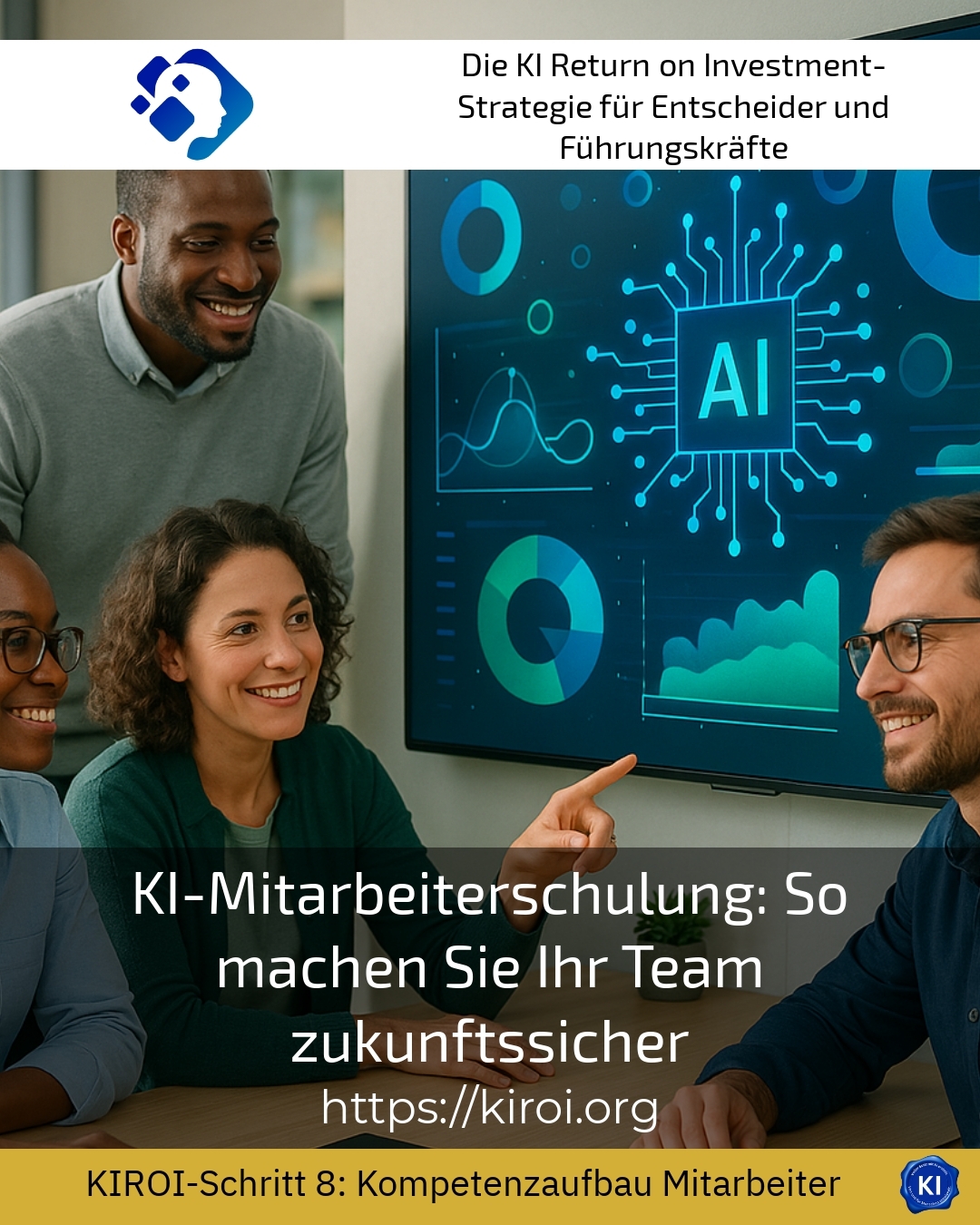
Imagine your team is facing a completely new technology tomorrow. The question is no longer whether work processes will change. The crucial question is: Are your employees prepared for it? The AI employee training is becoming the central success factor for modern businesses. Many leaders report that they come to us with precisely this issue. They want to empower their teams while simultaneously alleviating fears. Transruption coaching guides organisations in successfully shaping this transformation. In this post, you will learn how to strengthen your business sustainably.
Why the qualification of teams is essential today
The world of work is undergoing a profound transformation. Intelligent systems are taking on more and more tasks in everyday working life. At the same time, completely new fields of activity and requirements are emerging. Many employees feel overwhelmed by this development. They do not know which competencies will be in demand in the future. Clients frequently report a sense of uncertainty and anxiety about the future. This is precisely where a well-thought-out upskilling strategy comes in. It not only imparts technical knowledge, but also strengthens self-confidence [1].
In the manufacturing sector, for example, companies are already using intelligent maintenance systems. These systems analyse machine data and predict breakdowns in advance. Without appropriately trained personnel, however, such innovations remain ineffective. The situation is similar in healthcare, where diagnostic systems support doctors. Financial service providers also rely on automated analysis tools for risk assessments. These examples clearly show that technology alone does not create added value. Only the combination of human and machine unlocks the full potential.
The retail sector is currently experiencing particularly dynamic development. Chatbots answer customer enquiries around the clock. Recommendation systems personalise the shopping experience individually for every visitor. Inventory management systems optimise stock levels and significantly reduce waste. But who looks after these systems and interprets their results? The answer lies in well-trained employees. They form the bridge between technology and business success.
Viewing AI staff training as a strategic investment
Many companies still view further training as a cost factor. However, this perspective is far too short-sighted. Thorough qualification represents a strategic investment. It secures competitiveness and retains valuable talent within the company. Younger employees in particular now expect development opportunities from their employers. Those who do not offer these lose out in the competition for skilled professionals [2].
This connection is particularly evident in the logistics industry. Autonomous transport systems are revolutionising warehousing in large distribution centres. Route optimisation software saves fuel and significantly shortens delivery times. However, without trained dispatchers, these benefits remain purely theoretical. The situation is similar in the insurance industry with automated claims assessments. Media companies also use intelligent systems for personalised content. The AI employee training makes it possible to truly master these technologies.
Best practice with a AIROI customer
A medium-sized manufacturing company came to us with a specific challenge. The management team had invested in modern production control systems. However, it quickly became apparent that the workforce was overwhelmed by the new technology. The machines were not running optimally, and the hoped-for efficiency gains failed to materialise. In close collaboration, we developed a multi-stage training programme for all departments. First, we jointly identified the individual learning needs of the various teams. We then designed practical workshops tailored to real-world working situations. The employees learned how to operate and optimise the new systems independently. Imparting basic knowledge about intelligent algorithms was particularly important in this process. After six months, productivity had measurably improved. The employees reported increased self-confidence and higher job satisfaction. This example impressively demonstrates how transruptions coaching can support companies with such projects.
Establishing the right learning culture as a foundation
Technical training alone is not enough for lasting success. Companies need a genuine learning culture in their daily work. This culture encourages employees to try out new things and make mistakes. Managers play a crucial role as role models in this process. They should take part in further training themselves and learn openly. By doing so, they signal that continuous development is part of the company [3].
In the banking sector, many institutions are experimenting with intelligent advisory systems. These systems analyse customer profiles and automatically recommend suitable financial products. Advisors must learn to critically evaluate these recommendations. At the same time, they are expected to preserve the human element of the consultation. In the hotel industry, intelligent systems are increasingly personalising the guest experience. Energy suppliers are also relying on smart grids and automated load balancing. All these applications require new competencies from employees.
Practical approaches to AI staff training
Designing effective training programmes requires a thoughtful approach. First, companies should analyse the current skills level of their workforce. This often reveals considerable differences between various departments. Some employees are already technologically adept and keen to experiment. Others first require a fundamental understanding of the new possibilities. This heterogeneity calls for differentiated learning opportunities for all groups.
In the automotive industry, manufacturers train their service technicians on new diagnostic systems. These systems often identify faults faster than experienced mechanics could. Nevertheless, human judgement remains indispensable for complex repairs. Pharmaceutical companies use intelligent systems for drug development and research. Marketing agencies rely on automated campaign optimisation for their clients. In all these areas, employees must develop new skills [4].
Blended learning formats have proven particularly successful in practice. They sensibly combine online modules with face-to-face workshops and practical exercises. This enables employees to learn at their own pace. At the same time, they benefit from direct exchange with colleagues. Micro-learning units also enable learning during the working day. Short video tutorials or interactive quizzes can be easily integrated.
Best practice with a AIROI customer
A customer service company approached us. The organisation had introduced an intelligent ticketing system that automatically classified enquiries. However, many employees resisted the new technology, fearing that their jobs were at risk due to automation. These fears paralysed the entire team and impaired the quality of service. Our coaching approach therefore initially focused on the emotional aspects. We organised open discussion sessions where worries and concerns could be addressed. This revealed that many fears were based on ignorance and misunderstandings. In the next step, we provided practical instruction on how the new system worked. The employees realised that the technology relieved them of routine work rather than replacing them, freeing up time for more complex customer enquiries and more demanding tasks. The mood in the team improved significantly within a few weeks. Today, the department is regarded as a role model for successful transformation within the company. Transruption coaching can effectively accompany and support such change processes.
Overcoming resistance and promoting acceptance
Change initially triggers discomfort in many people. This phenomenon is completely normal and should be taken seriously. Successful training programmes therefore also consistently address emotional aspects. They create spaces for open conversations about worries and fears. At the same time, they highlight concrete opportunities that may arise.
In the legal sector, intelligent systems provide significant support with document analysis. Lawyers are thus able to find and evaluate relevant precedents more quickly. In human resources, automated tools noticeably facilitate applicant management. Architects also use generative systems for initial design variants. All these applications fundamentally change established ways of working. Employees need time and support for this adaptation [5].
Change champions from within the organisation can accelerate the transformation. These multipliers are specifically trained and supported. They act as points of contact for their colleagues on the ground. Their experiential knowledge makes abstract technology tangible and understandable. Success stories from within the company are more motivating than external examples.
Developing future skills in a targeted way
Alongside technical know-how, soft skills are becoming increasingly important. Critical thinking helps to contextualise the results of intelligent systems. Creativity enables the discovery and implementation of new application possibilities. Communication skills remain indispensable for teamwork. These so-called soft skills can also be systematically trained.
In journalism, intelligent systems are already generating initial news reports automatically. Reporters must learn to edit and contextualise these drafts. In agriculture, precision systems are significantly optimising the use of fertilisers. Digital assistance systems are also increasingly finding their way into the trades. Electricians, for example, use intelligent diagnostic devices for their work. These developments require a complete realignment of professional qualifications.
Data literacy is developing into a key competence for many professional fields. Employees should understand how data-based decisions are made. They need to be able to question results and recognise potential bias. Ethical considerations are playing an increasingly important role in this. The AI employee training should systematically integrate these aspects.
Ensure the sustainability of the qualification
One-off training sessions are not enough for lasting success. Technologies are evolving rapidly and require continuous learning. Companies should therefore schedule regular refreshers and updates. Learning communities and peer-to-peer exchange formats additionally support sustainability. This keeps knowledge within the company alive and up to date.
In the telecommunications sector, customer expectations are changing particularly quickly. Service staff constantly have to learn new tools and processes. Requirements for teaching staff are also changing fundamentally in the education sector. Even traditional industries such as construction are experiencing a digital transformation. Building Information Modeling and intelligent planning tools are becoming the norm. These examples illustrate the need for continuous upskilling [6].
My AIROI Analysis
Upskilling staff to handle intelligent technologies presents companies with complex challenges. According to my analysis, however, a clear picture emerges. Organisations that invest early in the development of their workforce gain significant competitive advantages. They are able to deploy new technologies faster and more effectively than their competitors. At the same time, they retain talented employees who value and expect development opportunities.
The combination of technical training and cultural change seems particularly important to me. Technology alone does not sustainably transform an organisation. It requires people who are willing to tread new paths. This willingness does not just happen on its own, but must be fostered. Leaders bear a special responsibility for their teams here. They must create spaces for experimentation and view mistakes as opportunities to learn.
The presented examples from various industries impressively demonstrate the diversity of applications. From manufacturing to retail to professional services. Everywhere, intelligent systems are fundamentally and sustainably changing established ways of working. The AI employee training forms the foundation for successful transformation. Transruption coaching can effectively guide and support companies on this journey. Anyone who acts now secures their organisation's viability for the future in the long term.
Further links from the text above:
[1] McKinsey: The State of AI
[2] World Economic Forum: Future of Jobs Report
[3] Harvard Business Review: Organisational Learning
[4] Gartner: Future of Work Trends
[5] Deloitte: Global Human Capital Trends
[6] PwC: Workforce Hopes and Fears Survey
For more information and if you have any questions, please contact Contact us or read more blog posts on the topic Artificial intelligence here.








 Deutsch
  English (UK)