
The working world is changing rapidly, and anyone who does not invest in the development of their teams today will be left behind tomorrow. The AI Skills Boost: Specifically enabling employees for tomorrow therefore sits right at the top of the strategic agenda for many companies looking to secure their long-term competitiveness. Yet while some organisations are already pressing ahead boldly, others are still hesitating, thereby underestimating the transformative power inherent in the systematic upskilling of their workforce. In this article, you will discover why proactive action is crucial and how you can sustainably prepare your organisation for the future.
The necessity of a systematic approach to the AI competence boost
The integration of intelligent technologies into operational processes requires far more than mere software installations or technical infrastructure measures, because the real success factor lies in empowering the people who are expected to use these tools on a daily basis. Companies that involve their employees at an early stage and specifically qualify them frequently report significantly higher acceptance rates when introducing new systems. This connection is hardly surprising, as people are naturally more open to change when they understand the personal benefits it brings and how they themselves can profit from it.
For example, a manufacturing company faced the challenge of optimising its quality control while simultaneously increasing employee satisfaction. Through a structured training programme, workers learned how image-based analysis systems could support their work and take over monotonous inspection tasks. The result was impressive because the error rate fell and employees gained more time for more demanding activities. Another example is provided by a logistics company that trained its dispatchers in the use of predictive planning tools, thereby significantly improving route optimisation. Retail also demonstrates how important well-founded qualification is: employees who understand how recommendation algorithms work are able to advise customers more competently and better explain personalised offers [1].
Best practice with a AIROI customer
A medium-sized enterprise in the industrial manufacturing sector approached us with a clear problem: although significant investments had already been made in modern analysis tools, the expected efficiency gains largely failed to materialise. During our joint analysis, it became apparent that the workforce had only received superficial training on the new systems and did not understand the fundamental relationships. As part of our transruption support, we developed a multi-stage qualification concept that imparted both a foundational understanding and practical application skills. The approach of training internal multipliers who subsequently passed on their knowledge to their respective teams proved to be particularly valuable. Employees frequently reported that it was only through this intensive support that they understood the potential held within the available tools and how these could make their everyday working lives easier. After about six months, the company was able to record measurable improvements in production planning and resource utilisation, whilst simultaneously seeing a significant increase in the acceptance of the new technologies.
Individual learning paths as the key to a sustainable AI skills boost
Not every employee brings the same prerequisites, which is why standardised one-size-fits-all training often delivers unsatisfactory results and wastes valuable resources. A well-thought-out qualification concept therefore takes into account different starting levels, learning styles and functional areas within the organisation. Experience shows that tailored learning pathways achieve significantly higher transfer rates into practice than generic mass events.
In healthcare, for instance, nursing staff require completely different competencies compared to administrative employees or doctors when it comes to the use of intelligent support systems. While the former must learn how diagnostic assistance systems can complement their assessments, the latter deal with the automation of administrative processes [2]. In financial institutions, by contrast, a different constellation emerges: advisors need an understanding of algorithmic investment recommendations, whereas compliance staff engage with automated fraud detection. This topic is also gaining increasing importance in public administration, because citizen enquiries are being pre-processed by intelligent assistance systems ever more frequently, and case handlers need to understand how these suggestions are generated [3].
Practice-oriented learning for sustainable skills development
Theoretical knowledge alone is not enough to truly empower employees and make them capable of action in the long term. Instead, learning content must be closely linked to concrete work situations so that the transfer to everyday professional life succeeds. Companies that rely on experience-based learning often achieve better results than those that rely exclusively on frontal teaching.
For example, a mechanical engineering company integrated learning modules directly into ongoing projects so that employees could apply new skills immediately. This approach proved to be particularly effective because abstract concepts instantly became tangible and the practical benefit was directly experienceable. In the food industry, a manufacturer used so-called sandbox environments in which employees could experiment with forecasting models risk-free. A telecommunications provider, in turn, developed gamified learning formats where teams practised optimising customer interactions in simulated scenarios and gained valuable experience in the process.
Leaders as drivers of the AI skills boost in the company
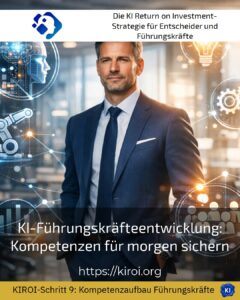
The role of senior management in transformation projects can hardly be overestimated, because without their active support and role model function, even the best qualification initiatives will come to nothing. Managers must not only understand the opportunities offered by intelligent systems, but must also be willing themselves to engage in continuous learning and further develop their own skills. This attitude signals to the entire workforce that lifelong learning is valued and forms part of the organisation's identity.
A pharmaceutical company deliberately invested in upskilling its middle management and subsequently observed that the acceptance of new technologies within the teams also increased significantly. In the construction industry, a project leader reported that their own commitment to digital planning tools enabled them to motivate their staff to approach changes with an open mind. This connection is also evident in the insurance sector: team leaders who are themselves proficient in handling analysis systems can support their staff more credibly and dispel concerns more convincingly [4].
Best practice with a AIROI customer
A service company with several hundred employees approached us with a complex issue because, despite extensive technology investments, the expected increase in productivity failed to materialise and frustration was growing among the workforce. The transruptions support began with a systematic stocktaking, during which we jointly analysed where the biggest skills gaps lay and what fears were occupying the employees. Interestingly, it turned out that many concerns were based on misunderstandings about how the new systems worked and could be dispelled through targeted information. We developed a concept that combined various learning formats: from short microlearning units for basic knowledge to intensive workshops for specialised use cases. Particularly effective was the establishment of an internal community where employees could exchange their experiences and learn from one another. Managers were actively involved and took on visible roles in imparting new skills to their teams. After about nine months, employees frequently reported that they felt significantly more confident in handling the available tools and were able to make better use of their potential.
Constructively addressing resistance and taking concerns seriously
Change naturally triggers uncertainties, and this reaction is completely understandable and human. A successful transformation process does not ignore such concerns, but actively addresses them and creates spaces for open dialogue. Experience shows that employees who feel they are being heard prove to be significantly more cooperative and engaged.
In an energy supply company, regular dialogue sessions were introduced where employees could openly address their concerns regarding new technologies. A retail company set up an anonymous feedback platform through which staff could contribute their experiences and suggestions for improvement. In the manufacturing sector, it has proven effective to recruit experienced employees as ambassadors for change projects, because their credibility among colleagues is particularly high [5].
Sustainable embedding of new competencies within the organisation
One-off training measures quickly fizzle out if they are not supported by continuous learning opportunities and organisational embedding. The AI Skills Boost: Specifically enabling employees for tomorrow therefore requires a long-term approach that establishes skills development as an integral part of corporate culture. Only in this way can organisations ensure that acquired knowledge is not lost and is continuously updated.
An automotive supplier implemented a system for the regular refreshing of competencies, where employees update their knowledge at specified intervals. In the chemical industry, a mentoring programme was established in which experienced practitioners assist new colleagues as points of contact. A media company integrated learning objectives into annual development reviews, ensuring that capacity building is systematically promoted and recognised. These examples demonstrate the diverse possibilities for sustainable embedding.
My AIROI Analysis
The systematic upskilling of employees for the demands of an increasingly technology-driven working environment is no longer an optional measure, but a strategic necessity for any forward-looking organisation. My experience from numerous accompanying projects clearly shows that the success of technology investments depends significantly on how well people are empowered to make effective use of these tools. Companies that hesitate or take half-hearted measures here risk not only poor financial investments, but also the loss of motivated employees who are hoping for better development opportunities elsewhere.
Transruption accompaniment has proven to be a valuable approach in this regard, as it helps companies to develop individually tailored qualification concepts and implement them sustainably. I find the realization that technical and human aspects must never be considered in isolation, but must always be understood in their interaction, to be particularly important. Managers play a key role here, because through their own behaviour they significantly influence how open their teams are to change. The AI Skills Boost: Specifically enabling employees for tomorrow works best when it is understood as a continuous process that is firmly anchored in the corporate culture and regularly adapted to new developments. Organisations that consistently pursue this path will not only be more competitive in the long term, but will also become more attractive employers for talented professionals who value personal development.
Further links from the text above:
[1] Bitkom: Artificial Intelligence in the Economy
[2] Federal Ministry of Health: Digitalisation in healthcare
[3] Federal Ministry of the Interior: Digitalisation of public administration
[4] Haufe: Professional training in the field of artificial intelligence
[5] German Economic Institute: AI in industry
For more information and if you have any questions, please contact Contact us or read more blog posts on the topic Artificial intelligence here.








 Deutsch
 English (UK)