
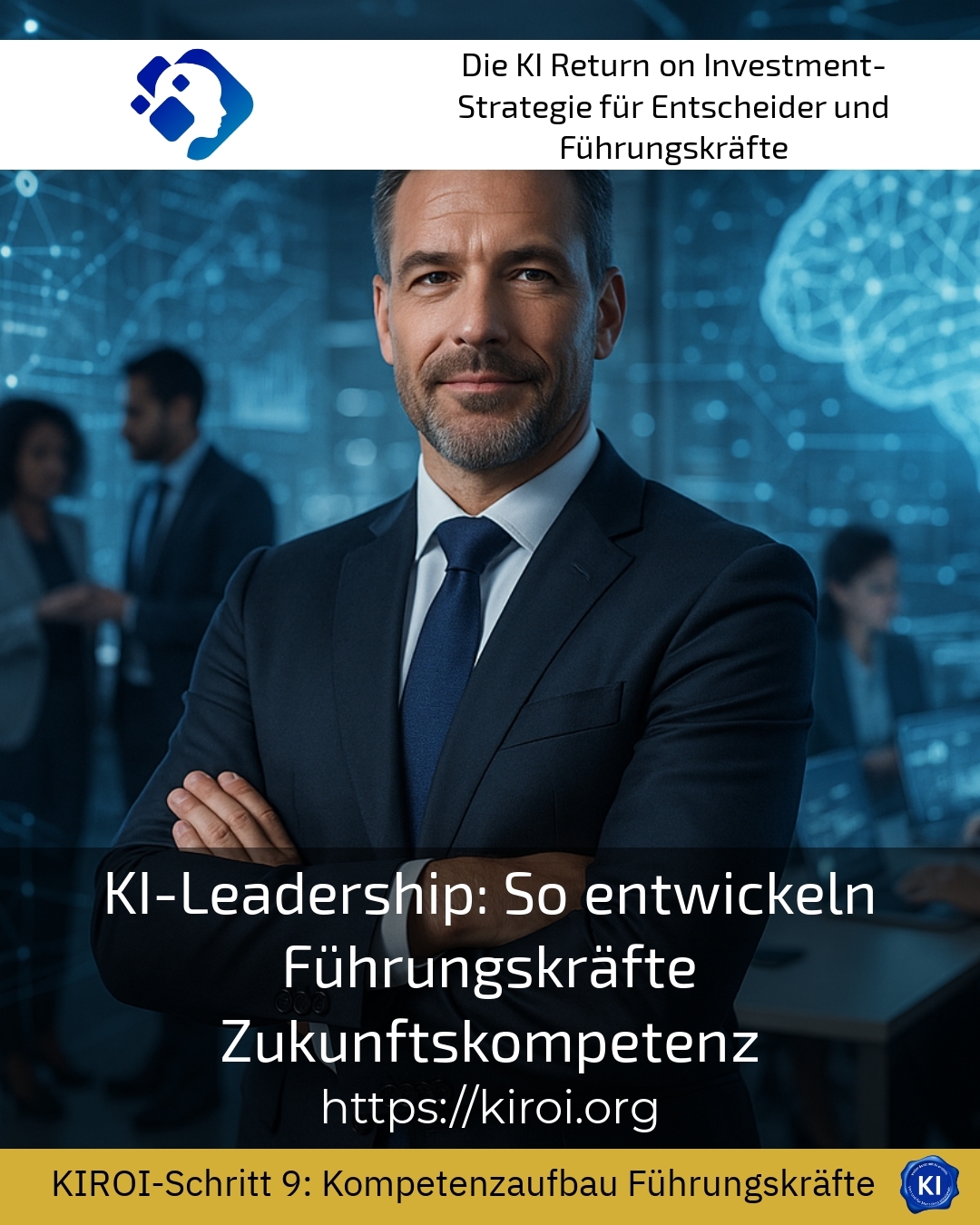
The digital transformation is fundamentally changing businesses. Leaders are facing new challenges. They need to familiarise themselves with intelligent systems. At the same time, they are expected to guide their teams through the change. The topic AI Leadership takes centre stage in the process. Anyone holding responsibility today needs new competencies. These skills differ from traditional leadership qualities. They combine technological understanding with human intuition. Many decision-makers feel overwhelmed by this. Others recognise the enormous opportunities of this development. In this article, you will learn how to build your future competence systematically.
Why traditional management models are no longer sufficient
Traditional management approaches are based on control and hierarchy. These structures work exceptionally well in stable environments. However, the business world is changing ever more rapidly. Intelligent algorithms are increasingly taking over routine tasks. As a result, the role of leaders is shifting significantly. They need to control less and inspire more. A manufacturing company in the mechanical engineering sector experienced this change firsthand. The introduction of automated quality control presented the entire leadership team with new questions. Suddenly, it was no longer about monitoring, but about interpreting data. The department heads had to learn to deal with the results of intelligent systems. They needed new skills in the area of data analysis. At the same time, they were expected to support their employees through this transformation. This required a completely different mindset than before.
Another example comes from the financial sector. A regional bank introduced automated credit decisions. Branch managers were initially sceptical about this innovation. They feared the loss of their decision-making authority. In fact, their role changed fundamentally. Instead of approving loans themselves, they now interpreted algorithm recommendations. They learned to recognise the limitations of the system. In special cases, they continued to make their own decisions. This combination of machine analysis and human judgement proved to be very successful. In the process, the branch managers developed important future skills. They understood the logic behind the automated processes. At the same time, they retained their ability for individual assessment.
Retail is also showing interesting developments in this area. A retail company deployed intelligent ordering systems in its branches. Store managers had to completely redefine their leadership role. Previously, they decided themselves which goods were ordered. Now, the system took over this task largely automatically. From then on, the managers concentrated on strategic issues. They focused more intensively on staff development and customer relations. This shift required new competencies and a changed self-perception.
Developing AI leadership as a key strategic competence
The development of future skills does not happen overnight. It requires a systematic approach and continuous learning. Leaders must build a basic understanding of technology. This is not about programming or deep technical details. Rather, they need a conceptual understanding of intelligent systems. They should know how algorithms fundamentally work. They must be able to assess the possibilities and limitations of these technologies. One logistics company has designed this learning process in an exemplary manner. The executive board organised regular workshops for all management levels. External experts explained the basics of machine learning in an understandable way. The participants worked on practical case studies from their daily work. They developed an intuitive understanding of how intelligent systems function.
A pharmaceutical company chose a different approach to skills development. It established a mentoring programme between IT specialists and senior managers. The managers learned directly from the experts within the company. They asked questions and received practical answers. This format proved to be particularly effective. The managers not only built up knowledge. They also forged important connections within the technical departments. These networks later proved to be very valuable.
Best practice with a AIROI customer
A medium-sized enterprise from the automotive supply industry approached us with a complex challenge. The management team felt overwhelmed by the rapid pace of technological development and was looking for guidance. transruptions coaching accompanied the company over several months through this important transformation process. First, we jointly analysed the current level of competence of all managers in the field of intelligent technologies. This revealed a considerable range of prior knowledge and also of anxieties regarding the new situation. Some managers had already gained initial experience with automated systems and showed great openness. Others were sceptical about the development and feared for their role within the company. We developed a tailored development programme for each manager that took personal strengths and areas for development into account. The programme included one-to-one coaching, group sessions and practical projects from the participants' everyday working lives. Working on the inner convictions and belief systems of the managers was particularly important. Clients frequently report the fear of being replaced by technology or of no longer being needed. During the coaching, we worked intensively on a new self-image that perceives technology as support rather than a threat. After six months, a clear change in the corporate culture and in management behaviour became apparent. The managers acted more confidently when dealing with technological innovations and intelligent systems. They understood their new role as shapers and facilitators of change.
Interesting developments regarding modern leadership skills are also emerging in the healthcare sector. A hospital group introduced intelligent diagnostic support in several departments. The consultant physicians had to learn how to deal with the systems' recommendations. They developed a nuanced understanding of the strengths and weaknesses of algorithmic analyses. This competency proved crucial to the success of the implementation.
combining a technical understanding with people management
Future-proof leadership combines technological knowledge with social competence. This combination distinguishes excellent from average leaders. An energy supplier demonstrated this combination in an exemplary way in its transformation project. The company introduced intelligent grid control in several regions. The technical conversion was complex and required extensive training. However, the real challenge lay in the human sphere. Many employees feared for their jobs and showed resistance. The leaders had to take these fears seriously and address them. They held intensive discussions with their teams about the changes. At the same time, they explained the benefits of the new technology in an understandable way. Simultaneously, they outlined prospects for professional development.
An insurance company had similar experiences when introducing automated claims processing. Customer service team leaders faced a dual task. They had to understand the new technology while simultaneously supporting their staff. This required both technical and emotional competence. The most successful managers were characterised by high empathy. They recognised their team members' concerns early on. They created spaces for open discussions about fears and uncertainties. At the same time, they conveyed a positive vision of the future.
This need to combine competencies is also evident in the field of media production. A publishing house integrated intelligent text generation into its editorial workflows. The editorial directors had to understand how these systems create content. At the same time, they were expected to evaluate the quality and ethical acceptability of the results. In doing so, they developed critical media literacy at the highest level. This ability helped them to train their editors accordingly.
Embedding AI leadership in practice
The implementation of future skills requires concrete measures in everyday working life. Theoretical knowledge alone is not enough for sustainable change. Managers must actively apply and further develop their new skills. To achieve this, a chemical company established an innovative learning format within its management circles. The managers met monthly to exchange experiences on technological projects. They reported on their successes and failures when implementing intelligent systems. This peer-to-peer counselling proved to be very valuable for all participants. The managers learned from one another and built up competence together.
A telecommunications company chose a project-based approach to develop the competencies of its managers. Each manager took responsibility for a smaller digitalisation project within their area. These projects served as a learning environment for dealing with intelligent technologies. The managers gained practical experience in a protected framework. They learnt from their mistakes and celebrated successes together. This approach significantly accelerated skills development.
Best practice with a AIROI customer
An international consumer goods manufacturer contacted us with the desire for systematic leadership development in the field of modern technologies. The company had already launched several digitalisation projects, which, however, did not deliver the expected results. Analysis quickly showed that the management level was not adequately prepared for the changes. The transruptions coaching developed a comprehensive programme to support the entire management team. We worked with the leaders on their personal relationship with technology and change. Many participants discovered deep-seated beliefs that were unconsciously blocking them. For example, a sales director realised that he viewed automated systems as competition. Through the coaching work, he developed a new understanding of his role as a strategic shaper. A production manager overcame her fear of loss of control through intensive reflection work in the coaching. She learned to build trust in intelligent systems while remaining critical. The programme also included practical exercises on applying new leadership skills. The participants tested various communication strategies for dealing with unsettled employees. They practised explaining complex technological contexts in understandable language. Upon completion of the programme, the managers reported a significantly increased self-confidence. Subsequent digitalisation projects ran much more successfully than previous initiatives.
A construction company is currently demonstrating how continuous learning can be integrated into everyday management. The project managers use weekly short formats for their further training in intelligent technologies. They invest just thirty minutes a week in structured learning. These regular small units add up to a significant gain in competence. The managers stay abreast of technological developments. They are able to quickly evaluate new tools and use them for their projects.
Ethical competence as part of AI leadership
Future-proof leadership also encompasses ethical reflection and a sense of responsibility. Intelligent systems raise complex moral questions that leaders must answer. A personnel service provider experienced this challenge during the introduction of automated candidate selection. The system analysed CVs and automatically generated rankings of the candidates. The recruiters had to decide how to handle these recommendations. They wondered whether the system might disadvantage certain groups of applicants. The leaders developed guidelines for the ethically responsible use of the technology. They established regular reviews for potential bias in the results.
A technology company firmly integrated ethical considerations into its leadership development. Every training session on intelligent systems includes a module on ethical issues. The managers intensively discuss real-life case studies and their moral implications. In doing so, they develop a keen sense for problematic applications of the technology. This competency helps them to make responsible decisions.
Awareness of ethical leadership skills is also growing in the public sector. A city administration introduced intelligent systems for citizen advice. The department heads had to ensure that all citizens are treated equally. They developed control mechanisms for fair and transparent processes. This ethical responsibility significantly expanded their understanding of leadership.
My AIROI Analysis
Developing future skills for leaders is no longer an option. It has become a compelling necessity for sustainable business success. My experience from numerous consultancy projects shows clear patterns and success factors. Leaders who actively engage with intelligent technologies develop a new self-image. They see themselves as architects of change rather than passive victims. This mental shift is often more important than the technical knowledge itself. Successful leaders combine curiosity with critical thinking in their approach. They try out new tools while simultaneously reflecting on their limits. They understand that intelligent systems offer support, but do not replace human judgment.
Transruption coaching can provide valuable impetus during this development process. Support from experienced coaches significantly accelerates competence building. Leaders are given a safe space for reflection and experimentation. They can address uncertainties that they would not show in their day-to-day corporate lives. This psychological safety is crucial for genuine development. The combination of technological understanding, social competence and ethical reflection characterises future-proof leadership [1]. Companies that invest in this skills development secure significant competitive advantages. They can identify and harness technological opportunities more quickly. At the same time, they avoid typical mistakes when implementing intelligent systems. The investment in leadership development pays off many times over [2]. It not only strengthens managers' individual competence. It also improves the corporate culture and overall innovative capacity [3].
Further links from the text above:
[1] Harvard Business Review – Leadership and Management
[2] McKinsey – Insights on People and Organisational Performance
[3] World Economic Forum – Artificial Intelligence Agenda
For more information and if you have any questions, please contact Contact us or read more blog posts on the topic Artificial intelligence here.








 Deutsch
  English (UK)