
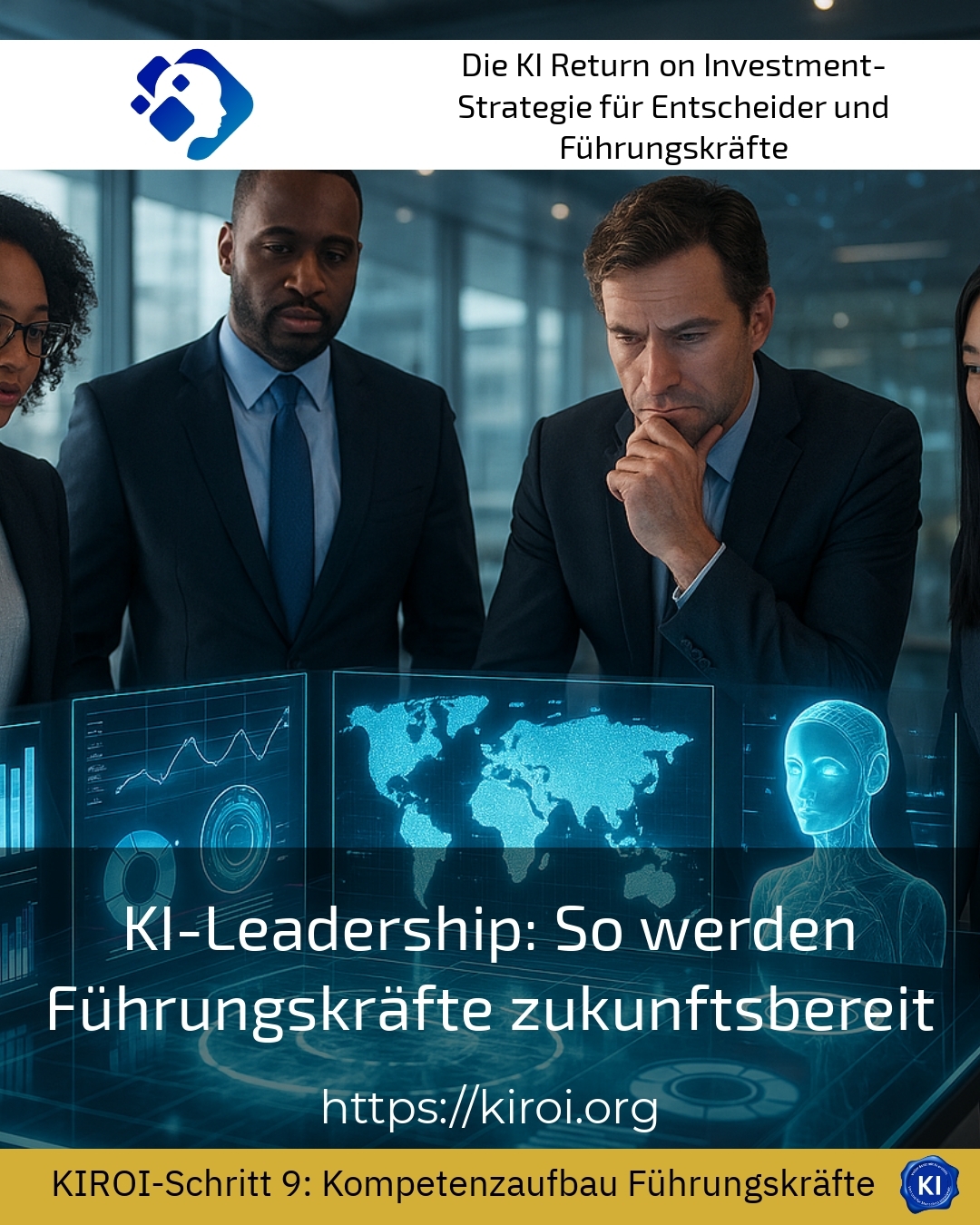
Digital transformation is changing businesses faster than ever before. Leaders are facing entirely new challenges. They must navigate teams through uncertain times. At the same time, they are expected to use innovative technologies strategically. AI Leadership becomes a decisive success factor in the process. Those who do not act today will lose touch tomorrow. But what does future-proof leadership actually mean? And how can decision-makers systematically expand their competencies? This article outlines practical pathways. It provides concrete impulses for modern leadership work. Proven methods are at the heart of this, helping with implementation in everyday working life.
The new role of decision-makers in times of change
Modern leaders must fulfil multiple roles simultaneously. They act as strategists and visionaries. At the same time, they are mentors to their teams. The integration of intelligent systems requires entirely new skills in the process. A basic understanding of technology is becoming just as important as emotional intelligence. Managers frequently report feeling overwhelmed in this situation. Transruption coaching provides guidance precisely with such challenges. It supports decision-makers in developing suitable strategies. This is not about quick fixes. Rather, the primary focus is on sustainable competence development.
A medium-sized engineering company was facing major upheaval. The management had to rethink production processes. Automation and data-driven decisions became necessary. Initially, the executive level felt overwhelmed. However, through targeted guidance, those responsible developed new perspectives. They learned to view technology as a tool. Thus, an innovative understanding of leadership emerged within the company.
A similar picture emerges in the financial sector. Bank directors must understand algorithmic trading systems. At the same time, they are expected to maintain client relationships. This dual role requires continuous professional development. Many executives therefore seek professional guidance. They want to systematically expand their competencies.
The pressure to change is also growing steadily in the healthcare sector. Hospital managers have to introduce diagnostic systems. Nursing expertise and technical know-how are merging in the process. Leadership responsibility is thus becoming significantly more complex.
Developing AI Leadership as a Core Strategic Competence
Future-proof leadership is based on a deep understanding of change processes. AI Leadership involves more than technical expertise. It is about the ability to meaningfully connect people and machines. Leaders must be able to address ethical questions. They should be able to realistically assess opportunities and risks. This requires continuous learning and openness to new things. Many clients report initial scepticism. In the course of the coaching, this often turns into enthusiasm.
A retail group wanted to optimise its inventory management. Forecasting models were intended to control stock levels. The executives had little experience with such systems. Through structured guidance, they developed the necessary understanding. They were subsequently able to make well-founded decisions. The project was successfully implemented.
In the insurance industry, companies are increasingly relying on automated claims processing. Leaders must manage and control these processes. At the same time, they are expected to support employees through the transition. This multiple burden requires professional support.
Logistics companies are also facing similar challenges. Route optimisation and fleet management are becoming data-driven. Leaders need new skills for these tasks.
Best practice with a AIROI customer An internationally active pharmaceutical company was facing the introduction of intelligent research systems. The department heads were expected to make data-driven decisions in drug development. Initially, there was a great deal of uncertainty within the leadership team. Those responsible felt overwhelmed by the complexity of the new technologies. As part of a structured support process, they first developed a fundamental understanding of how the systems worked. They learned to interpret relevant data and draw strategic conclusions from it. The aim was not to become technology experts themselves. Rather, they were to be able to ask the right questions and make informed decisions. After six months of intensive support, the management culture had changed noticeably. The department heads communicated more openly about technological challenges. They developed a feel for the potentials and limitations of the new tools. The entire company benefited from this development. Employees felt better led during the change phase. Acceptance of new processes increased significantly.
Communication and transparency as leadership tools
Successful leadership in phases of change requires clear communication. Employees want to understand why changes are necessary. They want to know what impact new technologies will have on their work. Managers must be able to answer these questions honestly. This builds trust and promotes acceptance. Clients frequently report communication problems in their teams. transruptions coaching provides impetus for better communication management. It assists in the development of transparent communication strategies.
An energy supplier introduced smart grid control systems. The managers had to bring technicians and engineers along with them. Open communication about opportunities and risks was crucial. Through targeted support, the dialogue formats improved significantly.
Business models in the media sector are changing rapidly. Editorial directors have to evaluate automated content creation. At the same time, they are expected to ensure journalistic quality. This balance requires sensitive communication with the teams.
Similar patterns are also emerging in the automotive industry. Production managers are increasingly controlling connected production lines. Communication with skilled workers is gaining in importance.
Combining AI leadership and ethical responsibility
The introduction of intelligent systems raises fundamental ethical questions. Who bears responsibility for algorithmic misdecisions? How can bias and discrimination be avoided? Leaders must confront these questions. They need a clear ethical compass for their decisions. AI Leadership therefore also means taking responsibility. It is about the conscious use of powerful tools. Many decision-makers are looking for support with these complex issues.
An employment agency used automated applicant selection. The management had to ensure fairness and transparency. That required deep engagement with ethical principles. Clear guidelines for action were created through professional guidance.
In the credit industry, banks use scoring models for credit decisions. Managers bear responsibility for fair assessments. They must ensure transparency towards customers. This ethical dimension requires careful reflection.
Demands are also growing steadily in the public sector. Agency heads are introducing digital administration systems. In doing so, they must respect data protection and the welfare of citizens.
Best practice with a AIROI customer A major telecommunications company wanted to automate customer service processes. Chatbots and voice assistants were intended to handle simple enquiries. The senior management team was initially sceptical about the technology. They had concerns regarding potential drops in quality in customer contact. In addition, there was uncertainty regarding the impact on jobs. As part of the support provided, these concerns were systematically addressed. The managers developed a differentiated understanding of the possible applications. They realised that automation can relieve pressure on employees. Routine enquiries are processed more quickly. Complex issues receive more time and attention. Following implementation, customer satisfaction and employee motivation increased simultaneously. The managers had learned to view technology as support. They successfully communicated this perspective to their teams. Today, the company is regarded as a pioneer in customer-oriented digitalisation. The leadership culture has changed sustainably.
Practical steps for future-proof leadership
Developing sustainable leadership skills requires concrete measures. Leaders should regularly update their knowledge. Networks with other decision-makers offer valuable perspectives. External guidance can accelerate the development process. This is not about ready-made recipes. Rather, leaders develop individual strategies for their specific situation. Transruption coaching accompanies this development. It provides impulses and encourages self-reflection.
A technology company established regular management workshops. Current developments were discussed and classified there. The participants jointly developed new management approaches. These formats were professionally moderated with external facilitation.
In the education sector, universities are experimenting with new teaching formats. Deans need to understand and manage adaptive learning systems. They bear responsibility for quality and innovation at the same time.
New demands on leadership are also emerging in the trades. Operations managers are increasingly using digital planning tools. The combination of tradition and innovation requires a delicate touch.
Shaping AI leadership in an international context
Global corporations face unique challenges in digitisation. Different cultures have varied expectations of leadership. Regulatory frameworks vary significantly between regions. AI Leadership must take this diversity into account. Leaders need intercultural competence for global deployment. They must understand and respect local specifics. At the same time, they should be able to enforce uniform standards.
A consumer goods corporation introduced globally uniform analytics systems. Executives in various countries reacted differently. Cultural support helped with the successful implementation. This is how adapted approaches for different markets emerged.
In mechanical engineering, German companies export technology worldwide. Service managers have to coordinate international teams. Digital tools support collaboration across borders in doing so.
Consultancy firms are also operating with an increasingly international network. Partners must be able to lead virtual teams. The distance requires new management tools and forms of communication.
My AIROI Analysis
Developing future-proof leadership skills is a continuous process. It requires openness, a willingness to learn and the courage to change. Leaders who take on this challenge gain a decisive advantage. They can navigate their organisations safely through turbulent times. Professional guidance noticeably supports this development process. Transruptions coaching offers precisely this support on the path to modern leadership. It accompanies projects revolving around digital transformation. Decision-makers benefit from structured reflection processes. They develop individual strategies for their specific situation. Analysis shows that successful leadership combines technical understanding with human competence. It is not about knowing everything oneself. Rather, leaders must be able to ask the right questions. They should identify experts and utilise their knowledge. At the same time, they maintain an overview of strategic goals. This ability to integrate different perspectives is becoming increasingly important. Companies that invest in the development of their leaders are better positioned. They can implement changes more quickly. Their employees feel more secure in uncertain times. In the long term, this pays off in competitiveness and innovative strength. The future belongs to those who are ready to learn today [1] [2] [3].
Further links from the text above:
[1] McKinsey: AI and the New Leadership Imperative
[2] Harvard Business Review: Artificial Intelligence Resources
[3] World Economic Forum: Artificial Intelligence Insights
For more information and if you have any questions, please contact Contact us or read more blog posts on the topic Artificial intelligence here.










 Deutsch
  English (UK)