
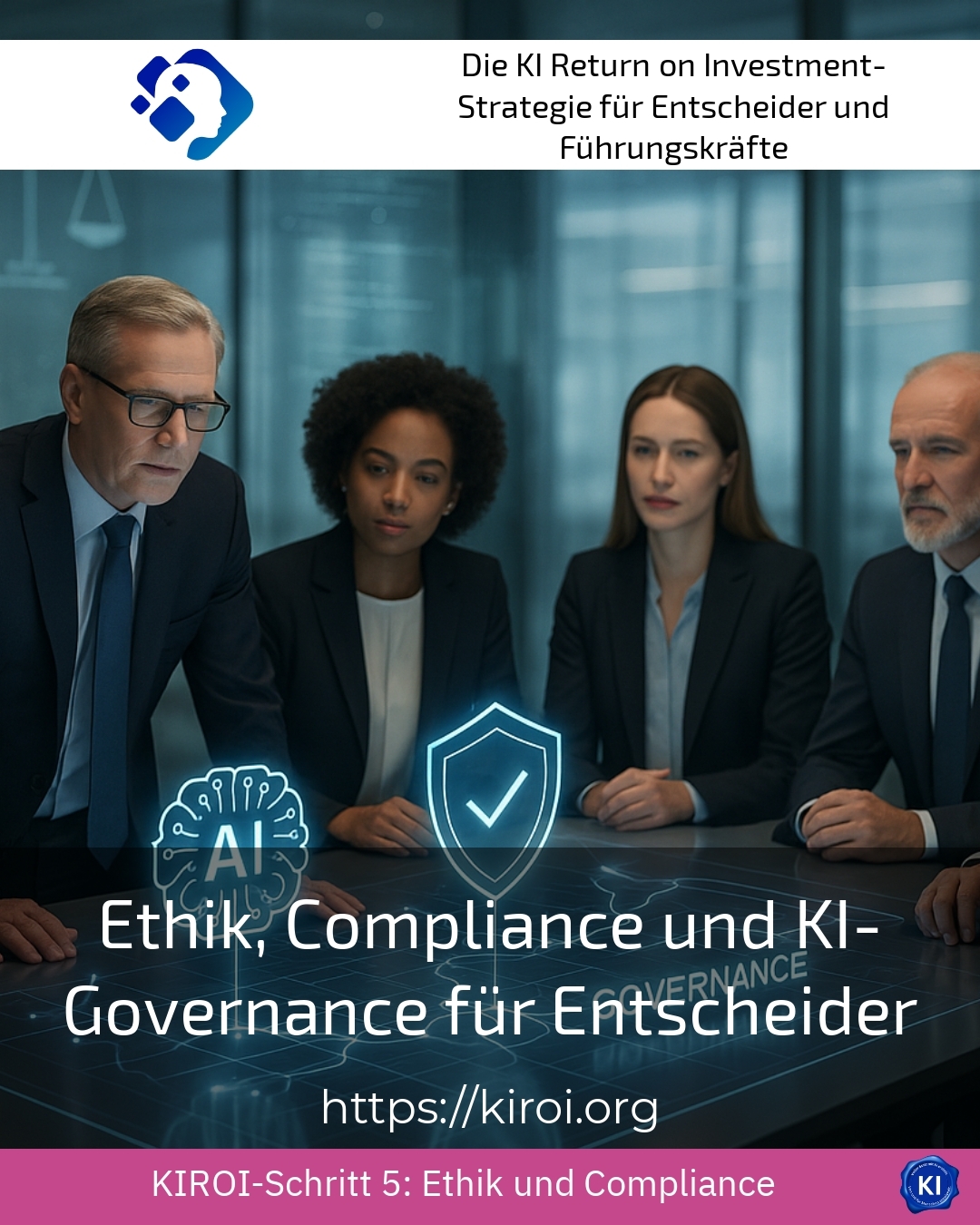
Imagine your company developing algorithmic systems that make thousands of decisions every day. These decisions affect credit approvals, personnel selection, or medical diagnoses. But who is responsible when these systems discriminate? The Ethics, Compliance and AI Governance This becomes a central challenge for leaders. Decision-makers face a fundamental change in their responsibility structures. The digital transformation is not only changing business models but also moral principles. This change requires new ways of thinking and frameworks for action.
The new framework of responsibility for executives
Executives today must make decisions that have far-reaching social consequences. Algorithmic systems permeate all business areas. They analyze customer data, manage supply chains, and evaluate employee performance. These systems often operate autonomously and make independent decisions. This creates new ethical questions that traditional compliance structures cannot address. Companies must therefore fundamentally rethink their governance frameworks. The integration of Ethics, Compliance and AI Governance becomes a strategic necessity.
For example, a financial services provider implemented a scoring system for credit decisions. The system evaluated applicants based on historical data. In doing so, it unintentionally discriminated against certain population groups. The senior management only recognized the problem after customer complaints. Such situations require proactive control mechanisms. A insurance company, however, implemented fairness metrics early on. These metrics continuously monitor the quality of decision-making of algorithmic systems. A trading company, in turn, intensively trained its management. The training sessions provided a fundamental understanding of algorithmic decision-making processes.
Best practice with a AIROI customer
A medium-sized company in the service sector faced the challenge of implementing algorithmic decision-making systems responsibly. The management team recognized early on the need for a structured approach. As part of the transruptive coaching, we supported the company in developing an integrated governance framework. First, we jointly analyzed the existing compliance structures and identified gaps. It turned out that traditional control mechanisms were not sufficient. The company needed new processes for algorithmic transparency. We developed a code of ethics for the use of intelligent systems together. This code of ethics defined clear responsibilities and escalation paths. Additionally, we implemented a monitoring system for algorithmic decisions. Clients often report initial uncertainty about such projects. Transruptions coaching provides impulses for structured problem solving. After six months, the company had established a functioning governance system. The employees understood their role in the new framework of responsibility. The management was able to follow the algorithmic decisions transparently.
Ethics, compliance, and AI governance in practice
Practical implementation requires concrete measures at various levels. First, companies must clearly define their values. These values form the foundation for all other decisions. Subsequently, they develop binding guidelines based on them. These guidelines must be understandable to all employees. Implementation takes place in stages and is accompanied by training measures.
For example, a telecommunications company established an ethics board. This body evaluates all new algorithmic applications before they are introduced. The evaluation includes fairness, transparency, and societal impact. A power company, on the other hand, developed an automated testing process. This process tests new systems for discriminatory patterns. A logistics company adopted decentralized accountability structures. Each department appoints a person responsible for algorithmic accountability [1].
Transparency as a cornerstone of responsible management
Transparency forms the foundation for trustworthy algorithmic systems. Decisions must be documented in a comprehensible manner. This documentation enables subsequent reviews and corrections. Individuals affected have the right to explanations. Companies must therefore prioritize explainable systems.
A HR service provider, for example, documents all applicant evaluations in detail. The documentation shows which factors contributed to the decision. A healthcare company explains the basics of algorithmic diagnostic support to patients. A retail company regularly publishes reports about its algorithmic systems. These reports inform stakeholders about the functioning and results [2].
Regulatory requirements and strategic positioning
The regulatory landscape continues to evolve dynamically. European regulations are increasingly setting strict standards. Companies must proactively anticipate these requirements. Early adaptation provides competitive advantages. Compliance becomes a strategic success factor.
A financial institution invested early in compliance structures for algorithmic systems. This investment paid off in subsequent regulatory audits. An industrial company used new regulations as an innovation driver. The requirements led to improved processes and products. A service provider positioned itself as a pioneer in responsible digitalization. This positioning strengthened customer and partner trust [3].
Best practice with a AIROI customer
An internationally operating company came to us with the challenge of harmonizing different regulatory requirements. The different markets set different requirements for algorithmic systems. The management sought a unified governance framework. In transruptive coaching, we developed a modular approach. This approach enabled uniform fundamental principles while allowing for local adaptability. We supported the company in implementing the framework over several months. This resulted in clear processes for cross-border coordination. The framework defined minimum standards for all markets. Additionally, it enabled country-specific additions as needed. The executives received regular updates on regulatory developments. Clients often report on the complexity of international compliance requirements. Transruptive coaching supports in structuring these challenges. After implementation, the company was able to react faster to new regulations. The unified structures significantly facilitated internal communication. Management gained confidence in strategic decisions.
Ethics, compliance, and AI governance as a competitive advantage
Responsible governance creates sustainable business success. Customers increasingly favor trustworthy providers. Investors evaluate governance structures when making decisions. Talenters choose employers based on ethical criteria. Companies with strong governance attract the best employees.
A technology company successfully marketed its ethical standards. Transparent communication measurably strengthened customer loyalty. A consulting firm developed special governance services for clients. These services became an important source of revenue. A manufacturing company reduced risks through proactive governance. The avoided damages exceeded the investment costs by a significant margin [4].
Cultural change and leadership responsibility
Sustainable governance requires a profound cultural change. Leaders must actively drive this change. Through their behavior, they set standards for the entire organization. Employees are guided by the actions of their superiors. The leadership’s role as a role model is therefore crucial.
A media company established regular ethics dialogues at the board level. These dialogues signaled the strategic importance of the topic. A retail company integrated ethical criteria into bonus agreements. Linking them to remuneration reinforced accountability. A pharmaceutical company fostered an open culture of error. Employees reported concerns early and without fear of consequences.
Practical recommendations for decision-makers
Decision-makers need concrete approaches for implementation. First, they should analyze the current status of their governance structures. This analysis identifies strengths and potential for improvement. Subsequently, they define clear goals and priorities. Implementation takes place in manageable steps with measurable milestones.
One automotive supplier started by conducting a survey of all algorithmic systems. This survey formed the basis for further measures. A banking institution prioritized high-risk applications in the governance implementation. An insurance company initially comprehensively trained the senior management. The trained executives took the knowledge forward into their teams [5].
My AIROI Analysis
The integration of Ethics, Compliance and AI Governance It presents companies with complex challenges. At the same time, it offers significant opportunities for sustainable competitive advantages. My analysis shows that successful companies combine three key elements. They develop clear values and binding guidelines. They implement practical control and monitoring mechanisms. They promote a profound cultural change within the organization.
The speed of technological development requires continuous adjustments. Static governance structures are no longer sufficient. Companies need adaptive systems that keep pace with changes. Transruptive coaching supports companies in this continuous development. We provide guidance for strategic direction and practical implementation.
Regulatory dynamics will continue to increase. Companies that invest today are creating advantages for tomorrow. Social expectations for responsible corporate governance are rising continuously. Executives increasingly bear personal responsibility for algorithmic decisions. This development requires new competencies and structures. The AIROI-Framework supports companies in systematically developing these skills. The time and resources invested pay off many times over in the long run.
Further links from the text above:
[1] European Commission – Artificial Intelligence Strategy
[2] BSI – IT basic protection and security standards
[3] European Parliament – EU AI Act
[4] Bitkom – Artificial Intelligence in Companies
[5] Platform Learning Systems – Governance and Ethics
For more information and if you have any questions, please contact Contact us or read more blog posts on the topic Artificial intelligence here.










 Deutsch
 English (UK)