
How can companies ensure that their algorithmic decision-making systems do not suddenly become a legal and reputational risk?
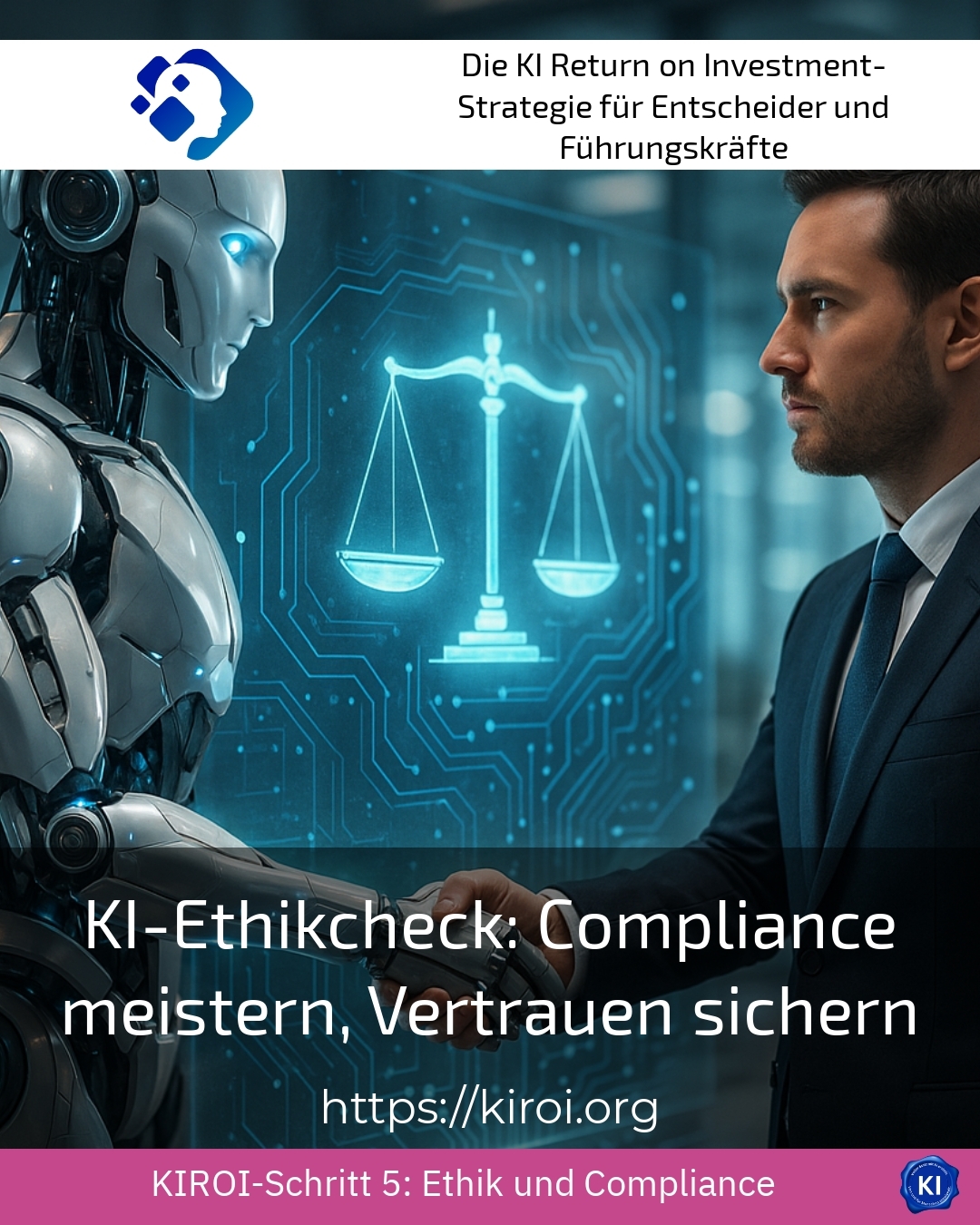
This question is currently occupying executives and domain experts alike. Progressive digitalisation is fundamentally changing business models. In the process, new responsibilities are emerging. A structured AI ethics check: mastering compliance, securing trust becomes a strategic necessity. Companies face the challenge of combining technological innovation with social responsibility. Transruption coaching supports organisations through this complex transformation. The following remarks outline practical approaches. They provide guidance for sustainable implementation strategies.
The growing importance of ethical review mechanisms
Automated systems now permeate virtually every corporate division. They influence personnel decisions and credit allocation processes. At the same time, they control product recommendations and customer interactions. This far-reaching integration requires systematic control mechanisms. Without such checks, significant risks arise.
For example, a financial services provider implemented a scoring system for creditworthiness assessment. However, the system reproduced historical patterns of discrimination against certain population groups. Only an external audit uncovered these biases. An insurance company used algorithmic risk assessments for policies. These systematically disadvantaged certain postcode areas. The resulting reputational damage was substantial. A telecommunications provider deployed automated churn predictions. The system identified customers with a high probability of switching. However, the derived measures led to unfair preferential treatment of individual customer groups.
These examples illustrate the practical relevance of ethical review processes. They also show the complexity of the underlying issues. Clients frequently report similar challenges in their organisations.
Understanding and applying regulatory frameworks
European legislation is evolving dynamically. New regulations set out concrete requirements for algorithmic decision-making [1]. Businesses must meet transparency obligations. They must ensure explainability. In addition, grievance mechanisms must be established.
A retail group had to comprehensively document its pricing algorithms. The dynamic pricing required traceable decision-making logic. An energy supplier adapted its automated contract adjustments. The regulatory requirements demanded individual verification options for consumers. A logistics company fundamentally revised its route optimization. Data protection requirements made this necessary.
Compliance with these regulations requires specialised expertise. transruptions coaching supports companies in developing tailored compliance strategies. This guidance provides important momentum for practical implementation.
The AI Ethics Check: Mastering Compliance Through Structured Processes
An effective testing process comprises several coordinated components. The systematic approach forms the foundation of successful implementations. Technical and organisational aspects play an equally important role in this.
Risk categorisation is at the beginning of every auditing procedure. Companies assess their systems according to the depth of intrusion and the circle of affected persons. A personnel service provider classified its applicant management solution as high-risk. The relevance of the decision for life chances justified this classification. A retailer, on the other hand, classified its product recommendations as low-risk. A healthcare provider classified its diagnostic support systems with particular care. The medical relevance required comprehensive protective measures.
Best practice with a AIROI customer A medium-sized enterprise in the financial sector faced significant challenges in implementing ethical auditing mechanisms for its algorithmic decision-making systems. The company used various automated processes for credit decisions and customer classifications. The existing systems had grown over several years and contained numerous undocumented decision-making logics. As part of the transruption coaching, the team first developed a comprehensive inventory of all deployed algorithmic systems. This cataloguing encompassed more than thirty different applications with varying risk classifications. Subsequently, the company established a structured auditing process with clear responsibilities and defined review intervals. The introduction of an interdisciplinary ethics committee enabled the regular evaluation of critical decision-making logics. Within six months, the company was able to fully document all high-risk systems and equip them with comprehensible explanation components. Employee satisfaction increased measurably because clear operational guidelines eliminated uncertainties. Today, the established process serves as a blueprint for further digitalisation projects within the organisation.
Securing trust through transparency and traceability
Transparency forms the cornerstone of trustworthy algorithmic systems. Stakeholders expect comprehensible explanations for automated decisions. This expectation applies equally to customers, employees, and regulatory authorities.
An insurance company introduced detailed explanation components for tariff calculations. Customers received understandable breakdowns of their individual premium structures. A recruitment consultant made their matching algorithms transparent for applicants. The presentation of relevant criteria significantly increased acceptance. An online retailer systematically explained its product recommendations. Customers thereby better understood the basis of the displayed suggestions.
The technical implementation of such explanation components presents companies with complex challenges [2]. Various methods enable different degrees of transparency. The selection of suitable approaches depends on the specific use case.
Organisational embedding of ethical review mechanisms
Sustainable compliance requires organisational structures beyond technical solutions. Companies are increasingly establishing specialised committees and responsibilities. These institutional arrangements ensure continuous attention to ethical issues.
A technology corporation established an interdisciplinary ethics board. Representatives from various departments systematically evaluated new applications. A financial services provider created the position of Chief Ethics Officer. This executive centrally coordinated all ethical review processes. An automobile manufacturer integrated ethical reviews into its product development processes. Every development phase included defined review points.
The organisational embedding decisively determines the effectiveness of ethical review procedures. transruptions coaching supports companies in designing appropriate governance structures. This support takes into account the specific circumstances of each organisation.
Employee qualification as a success factor in AI ethics checks
The best inspection mechanisms fail to achieve their effect without qualified staff. Training programmes impart the necessary knowledge regarding ethical issues. They raise awareness of potential problem areas in daily work.
A media company introduced mandatory training for all developers. The sessions focused on bias detection and fair data use. A retail group trained its buyers on the ethical aspects of algorithmic pricing. Participants learned about the limits and risks of dynamic pricing systems. A healthcare provider trained medical staff to critically evaluate algorithmic recommendations. The training raised awareness of potential biases.
Regular refreshers keep knowledge up to date. New regulatory developments require continuous adjustments to the training content [3].
Technical instruments to support ethical reviews
Specialised tools support the practical implementation of ethical review procedures. These technical aids automate repetitive review steps. They enable systematic analyses of large datasets.
A credit institution used fairness metrics for the continuous monitoring of its scoring systems. Deviations from defined threshold values triggered automatic warnings. An insurance company used bias-detection tools for its risk models. The software identified potential discrimination patterns in training data. A telecommunications provider implemented audit trails for all algorithmic decisions. The complete documentation enabled subsequent reviews.
The selection of suitable tools depends on various factors. System architecture and data landscape significantly influence the integration possibilities.
Best practice with a AIROI customer An international services group recognised the need for a systematic approach to evaluating its numerous algorithmic systems across various business areas. The company had more than fifty different applications with automated decision-making components in various country organisations. The decentralised development history had led to inconsistent documentation standards and disparate review procedures. As part of the collaboration, the project team initially developed a group-wide catalogue of criteria for the ethical evaluation of algorithmic systems. This catalogue took into account sector-specific requirements and regulatory particularities of various jurisdictions. Subsequently, a centralised platform was implemented for managing all review documentation. The platform enabled the exchange of best practices between different national subsidiaries. Local teams were able to fall back on standardised templates and checklists and adapt them to their specific needs. The introduction of regular cross-audits between different business areas fostered knowledge transfer and identified potential for improvement. After eighteen months, the group had a fully integrated review process with clear escalation paths and defined responsibilities at all levels.
Mastering compliance through continuous improvement
Ethical review procedures require regular further development. Regulatory requirements are continuously changing. Technological developments create new application possibilities and risks.
A logistics company established quarterly reviews of its auditing processes. Insights from conducted audits were incorporated into process improvements. An energy provider linked its ethical auditing mechanisms with quality management. Synergies between both areas significantly increased efficiency. A financial services provider integrated feedback loops with affected customer groups. The direct feedback enabled targeted adjustments.
The readiness for continuous improvement differentiates successful implementations from less successful ones. transruptions coaching provides impetus for the design of such improvement cycles.
My AIROI Analysis
The systematic examination of ethical aspects of algorithmic decision-making systems is developing into a crucial competitive factor for forward-looking companies. The numerous practical examples from various industries illustrate both the challenges and the opportunities associated with the implementation of structured review procedures. Organisations that invest early in corresponding processes and structures position themselves advantageously for upcoming regulatory developments. The AI ethics check: mastering compliance, securing trust does not represent a one-off measure. Rather, it requires permanent organisational embedding with clear responsibilities and adequate resources. The technical capabilities to support ethical audits are continuously evolving. Companies should monitor these developments closely and integrate suitable tools into their review processes. The qualification of employees at all levels forms another critical success factor. Only when ethical sensitivity is anchored throughout the organisation can auditing mechanisms unfold their full effectiveness. Interdisciplinary collaboration between technical, legal and business departments proves to be particularly valuable. transruptions-Coaching accompanies companies in shaping these complex transformation processes. Experience from numerous projects shows that the path to responsible algorithmic systems is indeed demanding. However, it opens up significant potential for sustainable business success and societal acceptance of technological innovation.
Further links from the text above:
[1] EU Regulatory Framework for Artificial Intelligence
[2] Bitkom resources on artificial intelligence
[3] AlgorithmWatch – Research and advocacy on algorithmic decision-making systems
For more information and if you have any questions, please contact Contact us or read more blog posts on the topic Artificial intelligence here.









 Deutsch
 English (UK)