
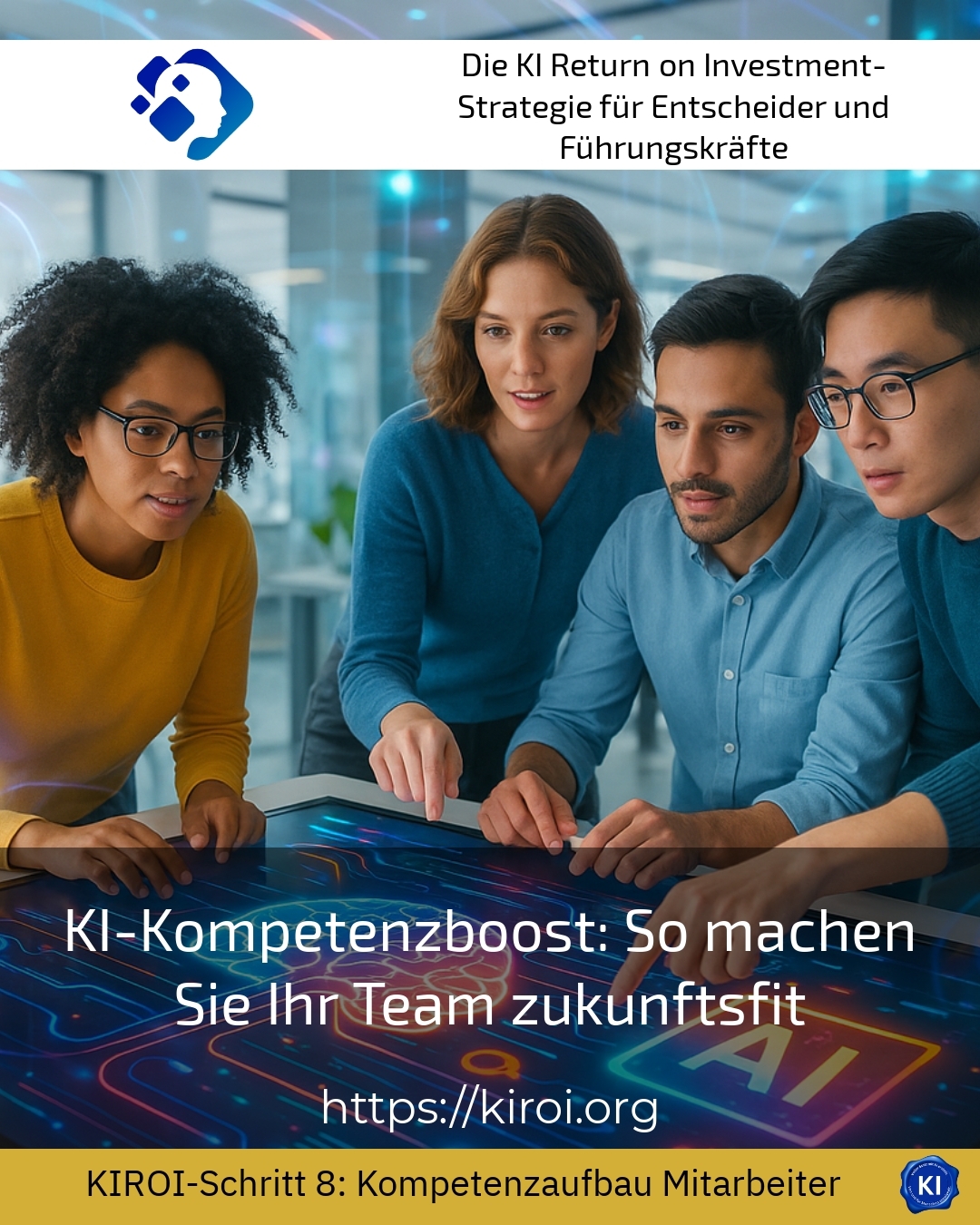
The digital transformation is fundamentally and inexorably changing our working world. Companies are facing the crucial question of how they can prepare their workforce for these changes. The AI skills boost: How to future-proof your team is no longer just an optional extra, but a strategic necessity. Many leaders report uncertainty and resistance within their teams. However, these challenges can be overcome with the right guidance and well-thought-out concepts. In this article, you will learn how to guide your employees step by step into the new era.
Why an AI skills boost is essential today
The speed of technological developments frequently exceeds the adaptability of traditional organisations. Employees often feel overwhelmed by new tools and processes. At the same time, pressure to remain competitive and offer innovative solutions is growing. Retail companies, for example, are already using intelligent systems for inventory optimisation. Banks employ automated processes for credit checks. Manufacturing firms integrate predictive maintenance systems into their production lines. These examples clearly demonstrate that change has affected all sectors.
Leaders frequently report similar challenges within their teams. The employees are fundamentally motivated and engaged. Yet they often lack the necessary knowledge to handle new technologies with confidence. This is where transruptions coaching steps in, supporting companies with systematic skills development. It is not about short-term training courses, but about sustainable processes of change.
The human factor in technological change
Technology alone does not guarantee success. The decisive difference lies in human competence. A medium-sized logistics company can use the most modern route planning systems. Without trained dispatchers, however, the potential remains untapped. The situation is similar in healthcare. There, intelligent diagnostic systems support medical decision-making. However, the final assessment still rests with qualified specialist personnel. This pattern is also evident in legal advice. Automated research tools accelerate the work considerably. However, legal interpretation requires human expertise and experience.
Best practice with a AIROI customer A traditional family business from the manufacturing industry approached us with a complex challenge. The management team had recognised that technological innovations would fundamentally change the market. At the same time, the workforce consisted of long-standing employees with deep expertise. There was great concern about losing these valuable specialists or demotivating them. As part of the transruption support, we developed a bespoke concept for this company. First, we analysed the existing competencies and potential within the team. Then, we identified the relevant technology fields for the specific business model. In structured workshops, we gradually introduced the employees to new tools. In doing so, we always ensured a connection between traditional expertise and modern methods. The experienced specialists became mentors for the integration of new technologies. This created a culture of shared learning and mutual appreciation. After six months, there was a noticeably increased openness to change. Staff turnover fell measurably and employee satisfaction rose significantly.
AI skills boost in practical implementation
The successful implementation of new competencies requires a structured approach [1]. Various factors play a decisive role in this process. First of all, the company management must make a clear commitment to further development. This attitude creates trust and signals appreciation towards the employees. A craft business can, for example, start with digital job management systems. This makes the entry easier and lowers the threshold of hesitation. An architectural firm, on the other hand, could start with virtual visualisation tools. Every organisation finds its individual entry point into the transformation.
The learning curve varies in steepness for different people. Therefore, a differentiated approach with various learning formats is recommended [2]. Some team members prefer structured, in-person training. Others prefer to learn at their own pace using digital resources. Still others benefit particularly from direct application in projects. Transruptions coaching takes these individual needs into account and develops tailored concepts. In this way, companies achieve greater acceptance and more sustainable results.
Discover sector-specific application areas
Every industry offers specific applications for smart technologies. In the hospitality sector, dynamic pricing systems optimise occupancy rates and revenue. Personalised guest management is made possible by analysing preferences and habits. Automated reservation systems relieve staff of routine tasks and improve service. In agriculture, sensor data supports precise irrigation and fertilisation. Drone-based stocktaking provides valuable information on crop health. Intelligent harvest forecasts facilitate planning and reduce losses [3].
The education sector is also experiencing profound changes through new technologies. Adaptive learning systems adapt to the individual progress of learners. Automated assessment tools provide timely feedback on standardised tasks. Intelligent tutoring systems offer additional support outside of class times. In the insurance industry, automated claims assessments accelerate the processing of claims. Risk assessments are becoming more precise and differentiated through the analysis of large volumes of data. Customer portals with intelligent dialogue management significantly improve accessibility.
Understanding and constructively supporting resistance
Changes often trigger uncertainty and scepticism in many people at first. These reactions are natural and should be taken seriously. Behind the resistance there are frequently legitimate concerns about one's own job. Sometimes there is simply a lack of understanding regarding the benefits of the innovations. An open dialogue can create clarity here and alleviate fears. In the trades, experienced master craftsmen often fear a devaluation of their expertise. Yet experience shows that traditional expertise gains value through new tools. A master carpenter with competence in digital planning significantly expands their range of services.
The AI skills boost: Making your team fit for the future only succeeds with a genuine understanding of those affected. Leaders must actively listen and understand their employees' perspectives. Small successes should be celebrated and communicated. Mistakes are part of the learning process and must not be punished. In the hospitality industry, a new point-of-sale system can initially cause frustration. With patient training and continuous support, this turns into enthusiasm. A care home introduced digital documentation systems and initially met with rejection. After a careful introductory phase, the nursing staff recognised the time saved and accepted the system.
Best practice with a AIROI customer An accountancy practice with several branches approached us with a specific request. The partnership had decided to integrate modern technologies into their daily work. However, the workforce was very diverse in terms of their technical affinity. Some younger team members showed great enthusiasm for the new possibilities, whereas older colleagues expressed clear reservations and concerns. As part of our transruptions mentoring, we developed a tandem concept for this practice. A technologically savvy specialist and an experienced professional formed a learning pair in each case. This allowed both sides to benefit from one another and contribute their respective strengths. The younger team members learned from the tax law expertise of their experienced colleagues, while the experienced professionals received patient support in learning new tools and methods. This approach fostered team cohesion and reduced generational conflict. The practice reported a noticeably improved working atmosphere and increased productivity. Clients now benefit from faster processing times while maintaining consistently high professional quality.
Sustainable learning culture as a key to success
One-off training sessions are not enough for a sustainable AI skills boost. Instead, organisations need an ongoing culture of learning and continuous development. This culture does not happen by itself, but must be deliberately fostered. Leaders should make themselves visible as learners and model a thirst for knowledge. Regular sharing formats enable experiences and insights to be pooled. In marketing agencies, weekly innovation sessions can introduce new tools and trends. Engineering firms benefit from internal specialist lectures on current technological developments. Medical practices can combine case conferences with discussions on new digital tools.
Investing in staff development pays off manifold in the long run [4]. Qualified teams work more efficiently and make better decisions. Employee retention increases because people feel valued and supported. Employer attractiveness improves, making it easier to attract new talent. A brokerage that continuously invests in the ongoing training of its employees stands out positively from the competition. An advertising agency with competent teams can take on more demanding projects. A craft business with digital know-how taps into new customer segments and business areas.
The role of leadership in the transformation process
Leaders bear a special responsibility in the skills development of their teams [5]. They must provide orientation while simultaneously creating scope for experimentation. Their own attitude significantly shapes the mindset of the entire workforce. A managing director who uses new tools themselves and talks about them motivates their team. A head of department who speaks openly about their own learning processes removes employees' fear of making mistakes. In the hotel industry, directors can set an example through the personal use of digital check-in systems. Practice owners can lead the way when introducing new research tools and share their experiences.
Transruption coaching provides managers with impetus for their role in the change process. It involves developing an authentic attitude towards transformation. Leaders learn to address uncertainties and deal with them constructively. They receive tools for communicating change within the team. This enables a construction contractor to get their team excited about digital planning processes, for example. A practice manager finds ways to involve skeptical team members and bring them along. The AI competence boost: How to future-proof your team therefore always begins at management level.
My AIROI Analysis
The systematic development of competencies in the field of intelligent technologies is no longer an optional extra today, but a strategic necessity for every organisation. Observations from numerous consultancy projects clearly show that the human factor makes the decisive difference. Companies that accompany and support their employees on this journey benefit from this investment in multiple ways. They not only gain in efficiency and innovative strength, but also in employee satisfaction and employer attractiveness. The challenges along this way are real and should not be underestimated. Resistance and anxieties are part of the process and deserve respectful handling. With the right guidance and a structured approach, however, these hurdles can be overcome.
The AIROI methodology provides a tried-and-tested framework for successful transformation. It combines an understanding of technology with psychological sensitivity and strategic thinking. People are always at the heart of all considerations and measures. Experience shows that sustainable change requires time and patience. Quick fixes and hasty roll-outs often lead to frustration and resistance. A cautious approach, involving small steps and continuous support, on the other hand, promises lasting success. Organisations of all sizes and across all sectors can benefit from structured skills development. Investing in the future-readiness of one’s own workforce is ultimately an investment in the future of the entire organisation. The time to act is now, because technological development does not wait for the hesitant.
Further links from the text above:
[1] McKinsey – The Human Side of Digital Transformation
[2] Harvard Business Review – Learning and Development
[3] World Economic Forum – Artificial Intelligence Insights
[4] Deloitte – Human Capital Trends
[5] MIT Sloan – Leadership in Digital Transformation
For more information and if you have any questions, please contact Contact us or read more blog posts on the topic Artificial intelligence here.






 Deutsch
  English (UK)