
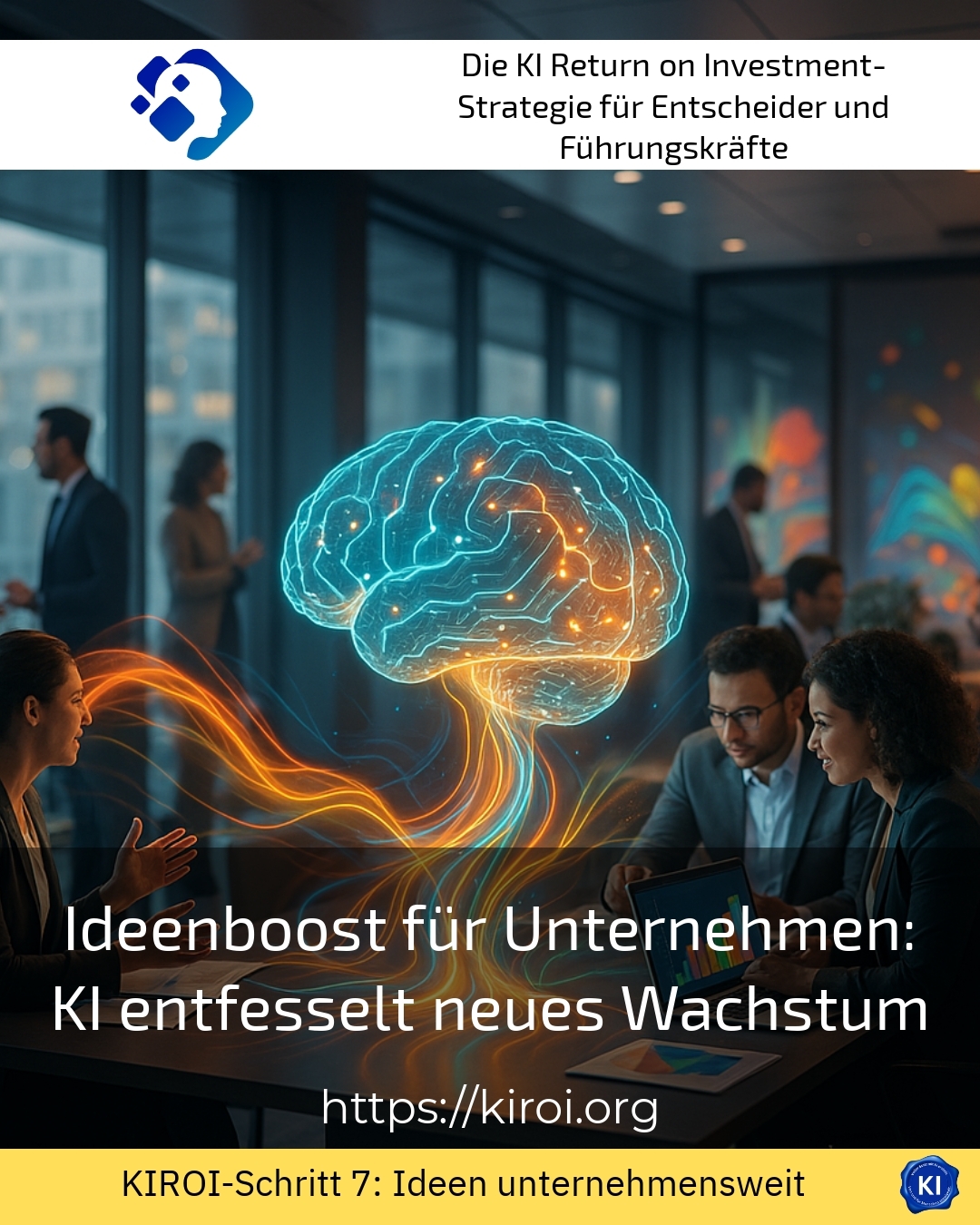
Imagine your company could start each morning with a fresh stream of ideas that are precisely tailored to your challenges. The Ideas boost for businesses: AI unleashes new growth is no longer a distant dream, but is already changing the way successful organisations think, plan and act today. What if machine intelligence could not only take over routine tasks, but also actively support the development of completely new business areas and tap into untapped potential? This is precisely the transformation we are currently experiencing in almost all sectors of the economy, and the companies that act now are securing decisive competitive advantages for the coming years.
How intelligent systems are revolutionising creative processes
The idea that machines can be creative seemed absurd for a long time. However, modern algorithmic systems prove the opposite day after day. They analyse vast amounts of data and recognise patterns hidden from the human eye. From this, they generate suggestions that teams can use as a starting point for innovation. In the automotive industry, for example, development departments have been relying on generative design software for a long time. This creates hundreds of component variants in the shortest possible time, which engineers then evaluate and further develop. This results in lighter components that save fuel and protect the environment. Impressive use cases are also emerging in the consumer goods sector. Marketing teams have intelligent systems suggest campaign ideas. The algorithms take into account trends from social media, seasonal fluctuations and competitor activities. The result is concepts that are more in tune with the times.
The application is particularly exciting in the food industry, where companies want to develop new flavour combinations. Intelligent systems analyse recipe databases from all over the world and identify unusual ingredient pairings. A well-known spice manufacturer used this technology to create a completely new product line. The combination of saffron and cardamom with local herbs would probably never have arisen without algorithmic support. At the same time, fashion houses are using similar approaches to design collections. The systems evaluate catwalk images, street style photos and sales data. From this, they derive cut shapes, colour palettes and material trends that inspire designers.
Best practice with a AIROI customer
A medium-sized mechanical engineering company approached us with a specific challenge. The development department had felt stuck in established thought patterns for years. New product ideas emerged only sporadically, and competition from the Far East was increasingly putting pressure on the team. As part of a transruption coaching process, we first implemented an analysis phase. Together with the engineers, we identified areas where algorithmic support would offer the greatest added value. Subsequently, we gradually introduced a generative design tool. The employees learned to view the systems as creative partners. After six months, the clients reported a significantly increased flow of ideas. The number of patent applications submitted nearly tripled. Particularly noteworthy was the changed team dynamic. Engineers who had previously seen themselves as competitors were now collaborating on the machine-generated suggestions. The transruption coaching continuously supported this cultural shift and helped to resolve resistance constructively.
Ideas boost for companies through data-driven decision-making
Many organisations are sitting on veritable data treasures without recognising their potential. Customer interactions, production data, and market information often lie dormant and unused in databases. Intelligent analysis tools can consolidate this information and derive actionable insights from it. For example, a retail company analysed point-of-sale data from previous years. The system recognised correlations between weather conditions, local events, and purchasing behaviour. Subsequently, the company adjusted its product range regionally and seasonally. Sales increased, while at the same time, warehousing costs decreased. Similar successes are being achieved by logistics companies that optimise route planning and warehousing. Algorithms take into account traffic forecasts, delivery deadlines, and vehicle capacities. The result is more efficient processes and more satisfied customers.
Fascinating opportunities are also opening up in healthcare, although these must always be considered from an ethical perspective. Clinics are using predictive models to better manage patient flow. The systems forecast when emergency departments will be particularly busy. Staff can then be allocated accordingly. Pharmaceutical companies are using similar technologies in drug discovery. Algorithms search scientific publications and identify promising molecular structures. This can potentially accelerate the development process of new medicines. The financial sector also benefits from intelligent data analysis. Banks can recognise unusual transaction patterns and thus often identify fraud attempts earlier. Asset managers use algorithmic support to develop investment strategies.
New growth through intelligent customer analysis
Understanding customer needs has always been key to business success. Modern analysis tools take this understanding to a new level. They evaluate feedback from a wide variety of channels. In doing so, they capture not only explicit statements but also subtle sentiments and trends. A telecommunications provider systematically analysed customer service conversations. The system identified recurring points of frustration that had previously remained hidden from management. Consequently, the company developed new service options that addressed these pain points. Customer satisfaction increased measurably, and the churn rate decreased significantly. Hotel chains also proceed similarly, evaluating reviews on travel portals. Algorithms recognise patterns in comments and derive concrete suggestions for improvement. This way, a hotel can find out that guests from certain countries have different breakfast preferences.
The human component in technological change
Despite all the enthusiasm for technological possibilities, one aspect must not be forgotten. Machines can provide support and impetus. However, the final decisions are made by humans. This is exactly where transruptive coaching comes in. We guide teams in finding the right balance between algorithmic support and human judgment. Clients often report initial anxieties and resistance. Employees fear being replaced by machines. We take these concerns seriously and address them in the coaching process. We demonstrate how intelligent systems can relieve people of burdens. Routine tasks are automated, leaving more time for creative and strategic activities. An architecture firm experienced precisely this transformation. Initially, employees were sceptical about using planning software. However, after a guided introduction phase, they recognised the advantages. The software took over repetitive calculations and documentation tasks. The architects were able to concentrate more on design and client consultation.
Similar dynamics are emerging in the advertising industry, which require sensitive guidance. Initially, creative teams feared that algorithmically generated content would devalue their work. Within transruption coaching, we addressed these concerns and developed new working models. The systems now handle the creation of variations and adaptations. Creatives focus on the original idea and strategic direction. This division of labour has increased productivity while also enhancing job satisfaction. We are also observing comparable developments in journalism, which present both opportunities and risks. Newsrooms are using intelligent systems for research and fact-checking. However, the actual journalistic work remains in human hands.
Best practice with a AIROI customer
An insurance company approached us with a complex request. They wanted to equip their field sales force with intelligent consulting tools. At the same time, management feared that personal customer relationships might suffer. As part of the transruption coaching process, we jointly developed a concept for gradual implementation. We trained the sales staff not only technically, but also in customer communication. They learned to use the algorithmic recommendations as a basis for discussion. They continued to make the final consulting decisions themselves. After implementation, remarkable results emerged. The quality of advice improved measurably because the staff had more comprehensive information available. At the same time, the personal touch was maintained. Customers appreciated the more well-founded recommendations and the consistently trusting relationship with their advisors. The feedback from the staff themselves was particularly pleasing. They felt strengthened in their expertise rather than threatened.
Ideas boost for businesses in traditional sectors
It's not just technology companies that benefit from intelligent systems. Traditional industries, in particular, often experience the greatest transformations. In agriculture, for example, sensors and analysis algorithms are revolutionising cultivation. Farmers receive precise recommendations for irrigation, fertilisation and harvest times. Yields increase while resource consumption decreases. Tradespeople are also discovering new opportunities that can expand their business models. A carpentry business uses generative design software to create individual pieces of furniture. Customers can enter their wishes and immediately receive visualised suggestions. This has fundamentally changed the business model and opened up new customer groups. The construction industry is also experimenting with intelligent planning tools that promise efficiency gains. Architects and structural engineers have structural variants calculated. The algorithms consider static requirements, material costs and sustainability criteria.
Innovative applications are also emerging in the hospitality industry that can enhance the guest experience. Hotels are utilising price optimisation systems that dynamically adjust room rates. These algorithms take into account occupancy forecasts, local events, and competitor pricing. Restaurants are relying on intelligent ordering systems that optimise inventory and staff scheduling. The systems predict which dishes will be particularly in demand on specific days. Chefs can purchase and prepare accordingly. This reduces food waste and improves service quality equally.
My AIROI Analysis
The integration of intelligent systems into business processes is not a passing trend, but a fundamental shift in the economic landscape. Organisations that ignore this development risk being left behind. At the same time, my experience from numerous consulting projects shows that technology alone does not guarantee success. The decisive factor lies in the way companies introduce and use these tools. A well-thought-out strategy takes into account both technical and human aspects. Employees must be involved and empowered. Their concerns deserve serious attention, and their expertise remains indispensable.
The Ideas boost for businesses: AI unleashes new growth unfolds its full potential only when technological possibilities and human creativity work together [1]. This is why transruptions coaching does not just support companies with technical implementation. We also provide support with the cultural transformation that is necessary for sustainable success. The examples from various industries show that the opportunities are real and tangible. From the automotive industry to healthcare and skilled trades, companies of all sizes benefit. The first step is crucial. Those who start today secure competitive advantages for tomorrow. Technology is developing rapidly. Companies that gain experience now will be able to adapt future innovations more quickly [2]. This is not about jumping on every bandwagon. Rather, organisations should strategically select which applications offer the greatest added value for their specific challenges. It is precisely in this selection and implementation that we support you with our AIROI approach [3].
Further links from the text above:
[1] McKinsey: The State of AI
[2] Gartner: Artificial Intelligence Insights
[3] AIROI method with risawave
For more information and if you have any questions, please contact Contact us or read more blog posts on the topic Artificial intelligence here.










 Deutsch
  English (UK)