
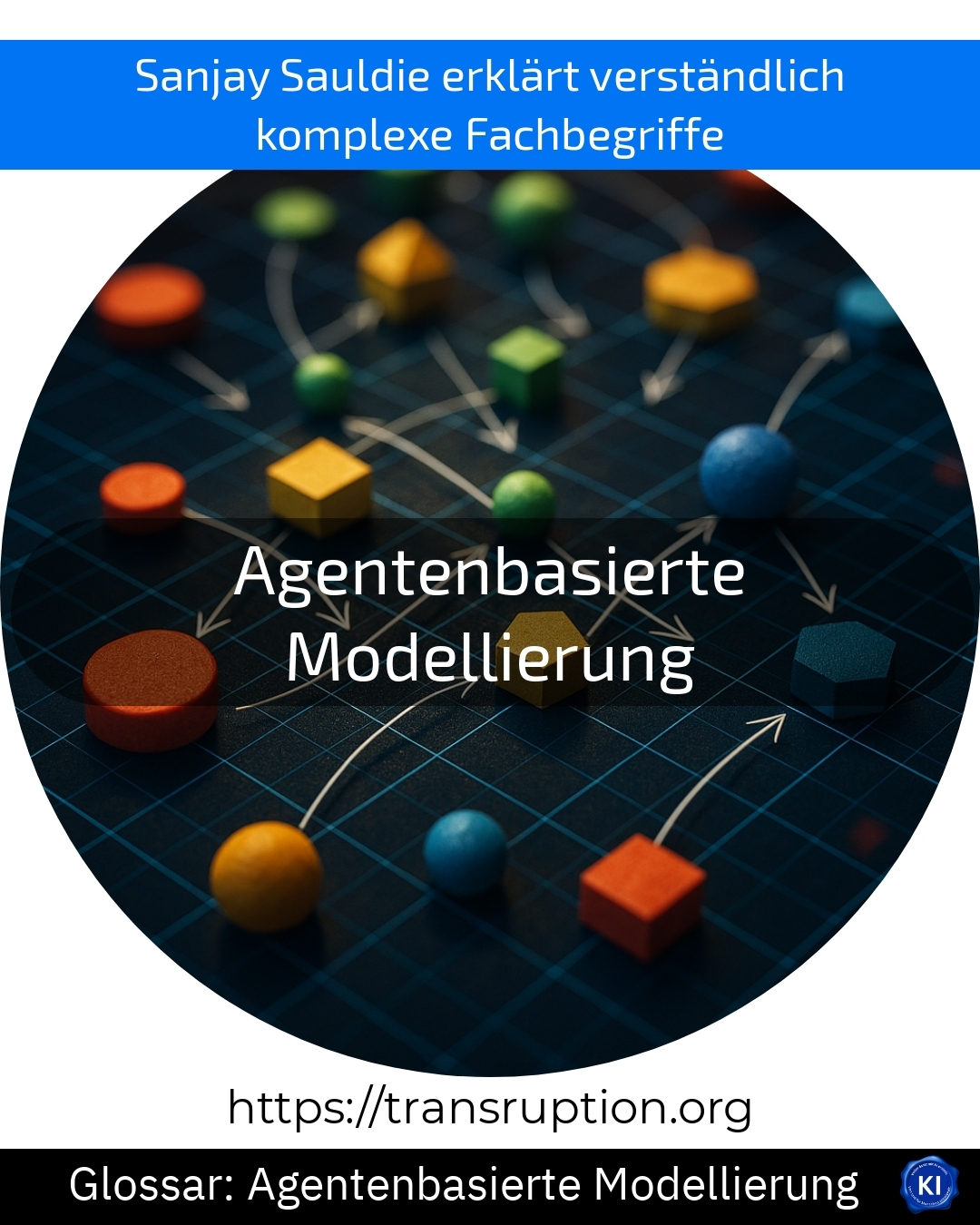
Agent-based modelling is a term from the fields of artificial intelligence, big data and smart data, as well as industry and Industry 4.0. It describes a method to make complex interrelationships understandable and predictable with the help of many individual, so-called „agents“. Each agent acts for itself, has its own rules, and can interact with other agents. Such agents can be, for example, people, machines, or companies.
A practical example: A company wants to know how a new production line will affect the overall process. Using agent-based modelling, all employees, machines and processes are represented as individual agents. In the computer, decision-makers can then observe how small changes have an impact on the bigger picture – for example, more employees on a shift or new machines in use. This allows bottlenecks to be identified and improvements to be planned effectively.
Agent-based modelling is particularly helpful when processes are non-linear and unpredictable. It allows for better decisions to be made based on realistic simulations, thereby saving time and costs.











 Deutsch
  English (UK)