
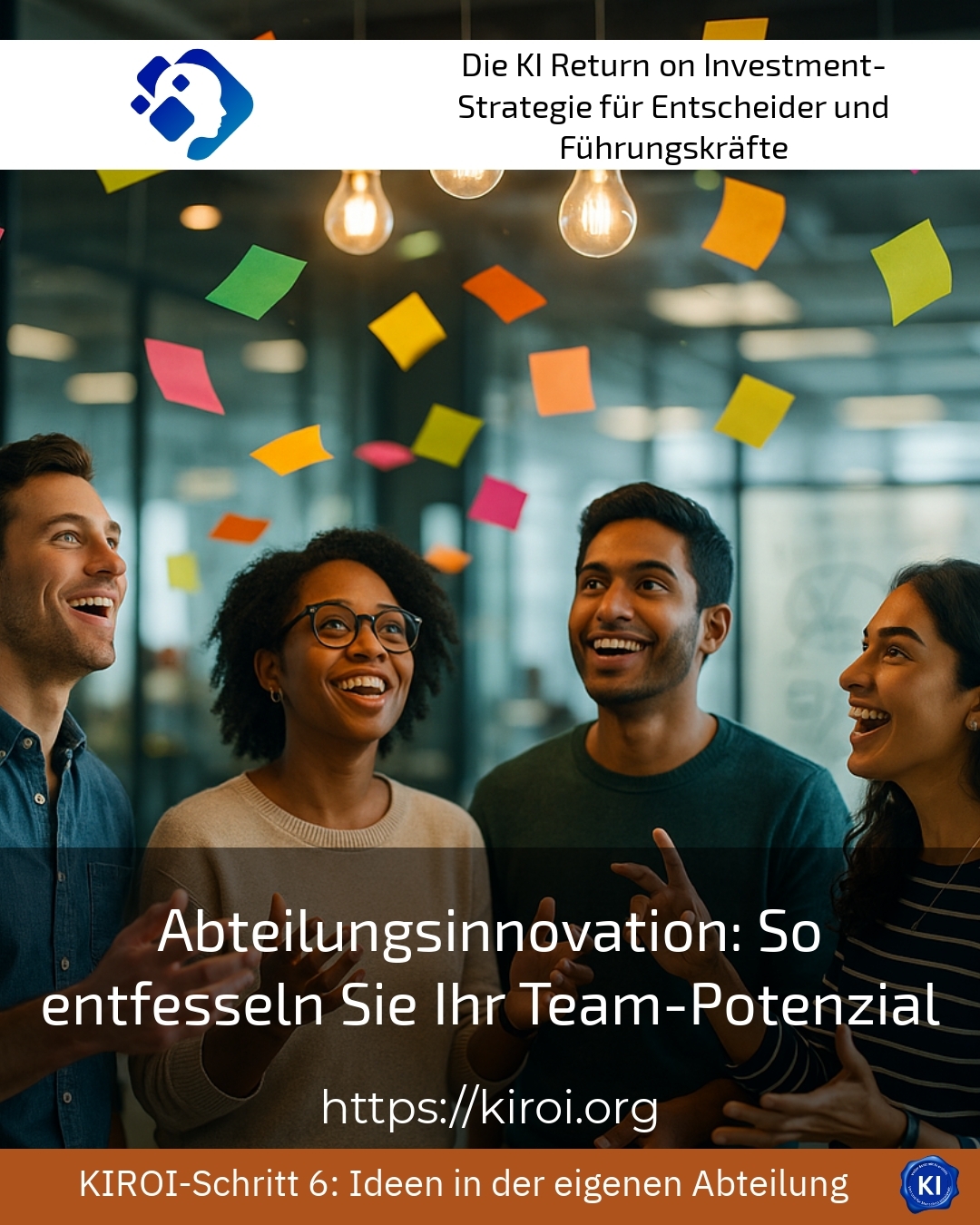
Imagine your employees coming to work every morning with a sparkle in their eyes, eager to contribute new ideas. Departmental Innovation: Unleashing Your Team's Potential begins exactly where people feel heard and valued. Many leaders know the feeling when projects stall and creativity dries up. Yet, enormous potential lies dormant in every team, full of untapped opportunities. This potential is just waiting to be awakened. The following sections will show you the concrete steps that can help you achieve this.
Why classic structures often block your department's potential
Traditional hierarchies have worked for decades. They offered guidance and clear responsibilities. However, the working world is changing rapidly. Rigid structures can become an obstacle today. Employees feel constrained and don't dare to suggest new ideas. The fear of making mistakes has a lasting paralysing effect on many teams. Yet, the best ideas often emerge far from meetings and minutes.
In a medium-sized manufacturing company, we observed the following pattern: suggestions from employees regularly got bogged down in bureaucratic processes. A machine operator had an idea for optimising a manufacturing step. This idea travelled through five departments and never reached the implementation phase. A logistics company experienced something similar with route planning. A driver knew more efficient routes, but no one asked him about them. A retail company ignored its cashiers' observations about customer behaviour for years.
These examples clearly illustrate a recurring pattern. People on the ground possess valuable knowledge. However, this knowledge remains unused if no channels exist. Transruption coaching assists companies in identifying such blockages. Together, we develop structures that promote and support the flow of ideas.
Best practice with a AIROI customer
A manufacturing company faced a particular challenge, as the rate of innovation had been declining for years and employees appeared increasingly demotivated. Together with transruptions coaching, we developed a format called „Ideenfrühstück“ (Idea Breakfast), where teams could exchange ideas in a relaxed atmosphere on a weekly basis. There were no hierarchies or evaluations in the initial phase. The results surprised even sceptical managers, as within six months, twelve feasible improvement suggestions emerged from the workforce. One suggestion regarding material handling reduced waste by eighteen per cent and saved considerable resources. Employee satisfaction increased measurably, and staff turnover decreased significantly. Particularly noteworthy was the changed communication culture, as people who had barely known each other before suddenly started talking to one another. Management learned to listen rather than immediately evaluate, which initiated a genuine cultural change.
Enabling departmental innovation through psychological safety
The concept of psychological safety significantly shapes modern organisational development [1]. People need the trust that their contributions will not be used against them. Without this trust, even the most creative minds remain permanently silent. Research shows clear connections between safety and innovative strength. Teams with high psychological safety demonstrably develop better solutions faster.
A pharmaceutical company implemented regular „Fail Forward“ sessions in its lab teams. Here, employees report on failed experiments without fear of consequences. An IT service provider introduced anonymous suggestion boxes that are evaluated weekly. A consulting firm established „Lessons Learned“ workshops after every completed project. These measures gradually but sustainably change the corporate culture over time.
Clients often report a noticeable change in the atmosphere within their teams. After a few months, conversations become more open and constructive. Criticism is no longer perceived as an attack, but rather as an opportunity that is understood and embraced. Transruption coaching provides impulses on how you can initiate this change within your organisation.
Concrete tools for greater departmental innovation in everyday life
Theoretical concepts remain ineffective without practical implementation in daily business. That's why I'm presenting proven methods that can support teams. The „5-Minute Idea,“ for example, reserves five minutes at the end of each meeting for suggestions for improvement. „Cross-functional Tandems“ bring together employees from different departments and encourage exchange. „Innovation Walks“ move brainstorming sessions outdoors and stimulate new ways of thinking.
A mechanical engineering company uses „reverse mentoring“, where younger employees coach senior leaders. An insurance group has established „Innovation Labs“, where small teams work on future-focused topics. A retail company organises „hackathons“ quarterly to solve concrete challenges and problems. These formats can be adapted to different company sizes and industries.
Best practice with a AIROI customer
A service company with over three hundred employees was looking for ways to improve collaboration between its sites, as geographical distance had led to silo thinking and significantly hindered knowledge transfer. As part of the transruption coaching, we developed a digital innovation board where all employees can submit and rate ideas. The system ensures transparency and gives everyone an equal voice in the process. Within the first quarter, over two hundred suggestions were received, of which thirty were selected for implementation. One idea to digitise a customer service process originated from a part-time employee in the accounting department. No one had previously asked her for her opinion on customer service or recognised her expertise. The implementation of this idea reduced processing time by forty per cent and measurably increased customer satisfaction. The company reports a strengthened sense of belonging, despite the spatial distance between the locations.
The role of the leader in unleashing team potential
Leaders crucially shape their department's innovation culture through their daily behaviour. Their actions constantly send signals to employees. A boss who doesn't admit their own mistakes can hardly expect tolerance for errors. Someone who immediately judges ideas stifles creativity in the bud in the long run. The modern leadership role requires a shift from control to enablement.
The managing director of an automotive supplier started deliberately speaking last in meetings. A department head at a bank explicitly granted her team „experimentation time“ and protected it. A team leader at an advertising agency publicly celebrated even failed projects as learning opportunities. These changes in behaviour often have a stronger impact than formal programmes or expensive initiatives.
Many executives come to us feeling they have to solve everything themselves. Transruption coaching helps them to develop and practice a new approach. We work together on concrete situations from their daily leadership work. This results in individual strategies that suit the person and the context.
How to use resistance constructively
Changes regularly meet with resistance in organisations of all sizes. This is normal and even helpful for the process. Resistance often contains valuable information about unvoiced concerns of the workforce. Instead of fighting it, you can use and integrate it as a resource. The smartest objections often come from the biggest sceptics in the team.
An energy provider deliberately invited critical voices into project teams and utilised their perspectives. A hospital created „devil's advocate“ roles designed to uncover weaknesses in ideas. A technology company established „pre-mortem“ analyses, where teams imagine why a project might fail. These approaches transform potential blockers into valuable quality assurance for innovations.
Clients often report that initial critics have become the most dedicated supporters. The key is to take their concerns seriously and integrate them constructively. This creates a sense of co-creation rather than being steamrollered by changes.
Making departmental innovation measurable and sustainably anchoring it
What cannot be measured is quickly forgotten in the day-to-day running of a business. Therefore, innovation initiatives require appropriate metrics for measuring success [2]. The number of ideas submitted is a possible indicator of activity. The implementation rate shows how seriously suggestions are taken. Employee satisfaction reflects cultural change over time.
A chemical company measures the „Innovation Index“ of its departments and publishes it regularly. A media company systematically tracks the time from idea to implementation. A logistics group regularly collects the „Psychological Safety Barometer“ of its teams through surveys. This data enables targeted interventions and clearly shows progress.
Best practice with a AIROI customer
A medium-sized manufacturer of special components wanted to proactively foster and develop innovation rather than leave it to chance. Together, we developed a dashboard that visualises and makes various innovation metrics transparent. Managers can see at a glance how many ideas have been submitted, evaluated, and implemented. The system also shows which departments are particularly active and where support is needed. After a year, we found that the productivity increases had repaid the investment many times over. However, the greater benefit lay in the changed culture, as employees identified more strongly with the company and its goals. Management reports a noticeably better working atmosphere and fewer sick days as a side effect. The dashboard now also serves as a basis for development discussions and bonus agreements within the company.
Don't lose sight of the long-term perspective
Cultural changes require time and patience from everyone involved. Quick successes are possible, but sustained transformation typically takes several years. Setbacks are part of the process and should be factored in. It is important to maintain course and learn continuously from mistakes. Transruptions coaching professionally supports companies on this long journey too.
A family business in the food sector has been consistently working on its innovation culture for three years. An international corporation has embedded innovation as a core component of its corporate strategy. A start-up has built structures from the outset that foster and protect creativity. All these organisations share the conviction that investing in people pays off in the long term.
My AIROI Analysis
Unlocking team potential isn't rocket science, but it's also not a given in organisations. It requires conscious decisions, consistent action, and patience over longer periods. The approaches and examples presented here show that change is possible and worthwhile. However, there are no one-size-fits-all solutions that would work equally well for all companies.
Every organisation brings its own history, culture, and challenges. What works in one context may fail or have a different effect in another. That's why an individual analysis of the starting situation is so important for success. The AIROI framework offers a structured approach to identify and address potential.
My experience from numerous support projects repeatedly shows the following pattern very clearly. The biggest obstacles rarely lie in a lack of resources or insufficient knowledge of those involved. They lie in ingrained ways of thinking and unconscious assumptions about work and people. Recognising and gently questioning these is the first step towards change.
Transruption coaching sees itself as accompaniment on this journey, not as a quick fix. We provide impulses, ask questions, and keep the space open for development. The actual work is done by the people in the organisations themselves on a daily basis. And it is precisely there that the greatest potential for sustainable and effective innovation lies.
Further links from the text above:
[1] Harvard Business Review: High-Performing Teams Need Psychological Safety
[2] McKinsey: The Eight Essentials of Innovation
For more information and if you have any questions, please contact Contact us or read more blog posts on the topic Artificial intelligence here.








 Deutsch
  English (UK)