
Have you ever wondered why some companies mine gold from their data sets, while others drown in a sea of information?
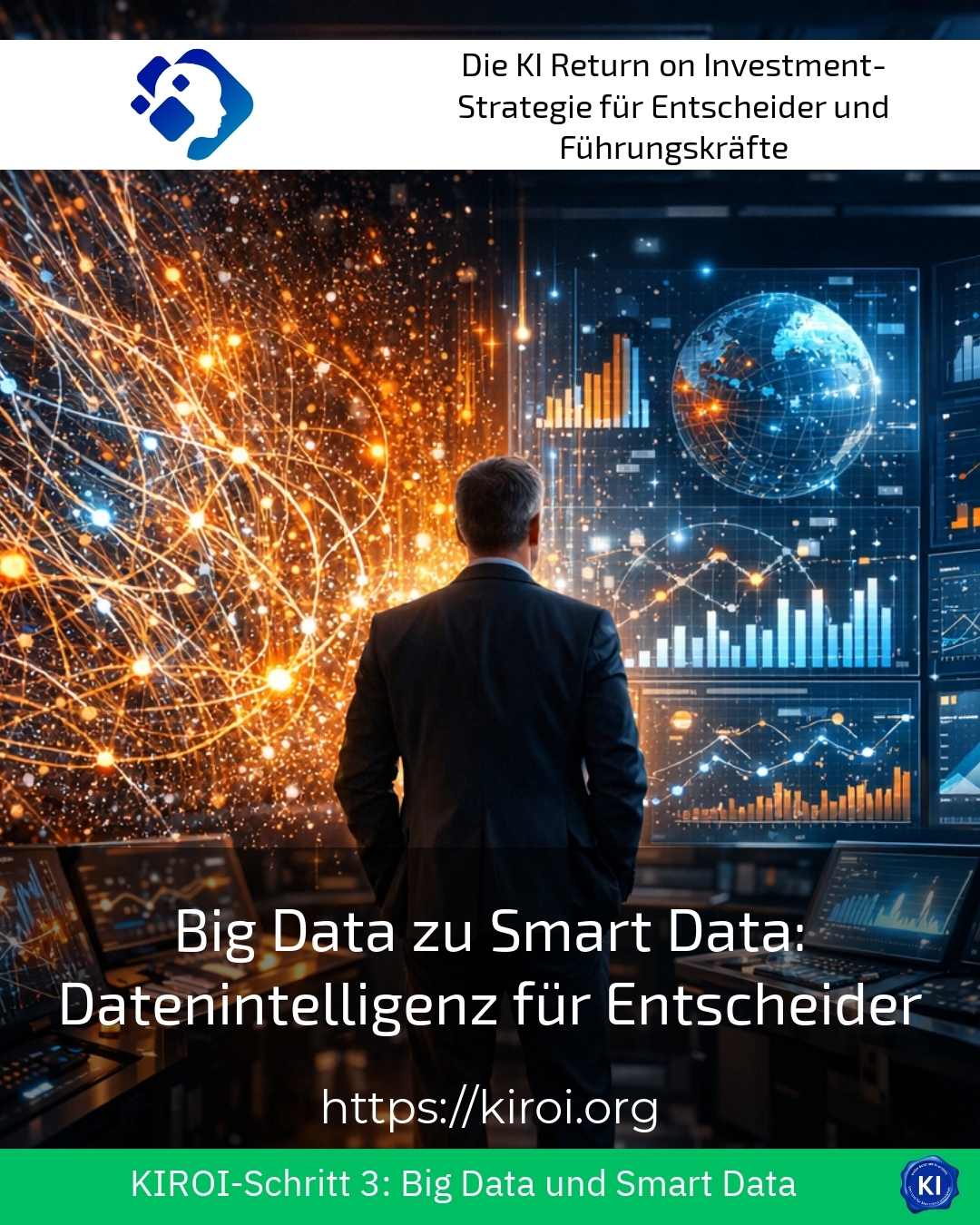
The transformation of Big Data to Smart Data Currently, leadership positions are occupied by professionals in almost all sectors of the economy, because the mere accumulation of information does not bring any added value. Rather, the ability to extract precise insights from this data flood is crucial. Data intelligence for decision-makers today means recognizing relevant patterns and translating them into concrete recommendations for action. The following article sheds light on how organizations can successfully implement this change.
The fundamental difference between data quantity and data quality
Many organizations today collect more information than ever before in history. Servers store terabytes of customer data, transaction histories, and behavioral patterns. Yet executives often complain about a lack of decision-making basis. This paradox is explained by a fundamental fact. Raw data alone do not tell a story and provide no answers. They must first be filtered, structured, and contextualized.
For example, a medium-sized trading company has millions of cash register receipts. However, without intelligent analysis, these remain silent witnesses to everyday business operations. Only through targeted evaluation can valuable insights about purchasing behavior be derived. A logistics company, in turn, generates GPS data from hundreds of vehicles daily. The challenge lies in deriving route optimizations from this data. An energy provider measures consumption in real time using intelligent meters. From these measurements, precise load forecasts can be derived, provided the right analytical tools are used.
Best practice with a AIROI customer
A regionally operating company in the field of technical services came to us with a typical challenge. The organization had documented customer inquiries, service requests, and complaints over the years. However, these data were scattered across various systems and formats. During the transruptions coaching, we first conducted a comprehensive inventory. It became apparent that valuable information about customer preferences remained untapped. We supported the project team in defining relevant KPIs and assisted in developing a dashboard for the management. After six months, the managers reported significantly more informed decisions in sales. The response times to customer inquiries improved noticeably. Particularly noteworthy is the increased employee satisfaction, as repetitive analysis tasks were eliminated. This example illustrates how data intelligence can concretely take on a form for decision-makers.
From a data graveyard to a strategic resource: Transforming Big Data into Smart Data
The transfer of Big Data to Smart Data It requires a systematic approach. First, it is necessary to define clear objectives. What questions should the data analysis answer? Without this focus, teams can get lost in endless analyses. The second step involves data cleaning and standardization. Inconsistent formats and erroneous entries distort any analysis. Finally, suitable analysis methods and competent staff are needed.
In healthcare, hospitals collect extensive patient data across various departments. The integration of this information significantly supports personalized treatment paths. An insurance company analyzes claims using machine learning algorithms. This allows for the early detection of fraud patterns. In the manufacturing industry, sensors on production equipment provide continuous measurement data. This enables predictive maintenance and significantly reduces unplanned downtime.
The quality of the data base decisively determines the success of all further steps. In practice, many organizations underestimate this aspect considerably at the outset. Therefore, we closely accompany our clients in developing data quality standards. We also provide guidance regarding the organizational embedding of data responsibilities. These governance structures form the foundation for sustainable data intelligence.
Technological Foundations for Intelligent Data Utilisation
Modern analytics platforms combine various functions under one surface. They enable the processing of structured and unstructured data alike. Cloud-based solutions offer scalability and flexibility. Machine learning identifies connections that human analysts would be unable to detect. Visualization tools make complex results accessible and understandable for decision-makers.
For example, a telecommunications provider uses real-time analytics to optimize its network. A retailer forecasts demand fluctuations using historical sales data and external factors. A financial services provider assesses credit risks by combining various sources of information. These use cases impressively demonstrate the breadth of possibilities.
Putting data intelligence into practical use for decision-makers
Executives do not need detailed technical knowledge of algorithms. However, they must understand what questions data analytics can answer. We refer to this competence as strategic data competence. It encompasses knowledge of the possibilities and limitations of data-based decision making. Equally important is a basic understanding of ethical aspects of data use.
In human resources management, advanced organizations systematically analyze fluctuation patterns. From this they derive measures to retain employees. Marketing departments are increasingly segmenting target groups based on behavioral analyses. Purchasing optimises supplier relationships by analyzing historical performance data. These examples illustrate the pervasive nature of all business areas.
Best practice with a AIROI customer
A manager of a medium-sized production company approached us with a specific question. She wanted to understand which factors influence the productivity of her teams. Previous analyses had yielded no satisfactory results. In the framework of our transruptive coaching, we first reviewed the existing data sources. In doing so, we identified previously unused information from the shift planning system. The linking of this information with production metrics resulted in new insights. For example, a correlation was identified between break regulations and defect rates. The manager was able to make targeted adjustments based on this information. Often, clients report an Aha moment in such situations. The data were there, only the right connection was missing until now. This project impressively highlights the value of external support in complex data projects.
Organizational prerequisites for the transition to Smart Data
Technology alone does not create intelligent data usage. What is crucial are the people and processes behind it. A data-oriented culture must be promoted from the top down. Employees need training and the freedom to work analytically. Silos between departments significantly hinder the flow of information.
For example, a pharmaceutical company has established cross-departmental data teams that work together on specific issues from different perspectives. A city utility integrates data from network management, customer service, and sales into a central platform [1]. A media company has created the role of a Chief Data Officer. This person coordinates all data-related initiatives and reports directly to the management.
Cultural change requires time and perseverance from all involved parties. Resistance often arises from uncertainty or fear of control. Transparent communication about goals and limits of data usage can be helpful here. We support our clients in these change processes using proven methods. We place special emphasis on involving all relevant stakeholders.
Ethical dimensions of data intelligence
With the increasing use of data, the responsibility of organizations grows. Data protection regulations set important guidelines for permissible analyses. Furthermore, ethical questions regarding transparency and fairness arise. Algorithmic decisions can unintentionally have discriminatory effects. Executives must be aware of these risks and actively manage them.
In application management, for example, automated pre-selection can reinforce existing inequalities. An insurer must pay attention to verifiable criteria when assessing risk. An online retailer should respect ethical boundaries when offering personalized pricing [2]. These examples call for caution when implementing data-driven systems.
My AIROI Analysis
The transformation of Big Data to Smart Data represents one of the most significant levers for entrepreneurial success. In my opinion, many initiatives fail not due to technology, but due to a lack of strategic integration. Executives who view data intelligence as a purely technical project will fail to achieve their goals. Rather, it is an organizational change that permeates all areas and requires active change management.
The experiences from numerous mentoring projects clearly show recurring success patterns. Organizations that start with clearly defined use cases achieve faster results and maintain motivation. A step-by-step approach reduces risks and significantly facilitates learning loops. Involving the specialist departments from the outset significantly increases acceptance of the results. External mentoring can provide valuable insights and uncover blind spots.
The future belongs to organizations that understand and utilize their data as a strategic resource. This is not about maximizing the collected information. Rather, it is about intelligently compressing data to yield decision-relevant insights. This paradigm shift requires new competencies at all levels. Companies that embrace this challenge will be able to sustainably strengthen their competitive position.
Further links from the text above:
[1] Bitkom – Smart Data and Data Economy
[2] AlgorithmWatch – Analyses of algorithmic decision systems
For more information and if you have any questions, please contact Contact us or read more blog posts on the topic Artificial intelligence here.










 Deutsch
 English (UK)