
Why do so many promising innovation projects fail despite highly motivated teams and generous budgets?
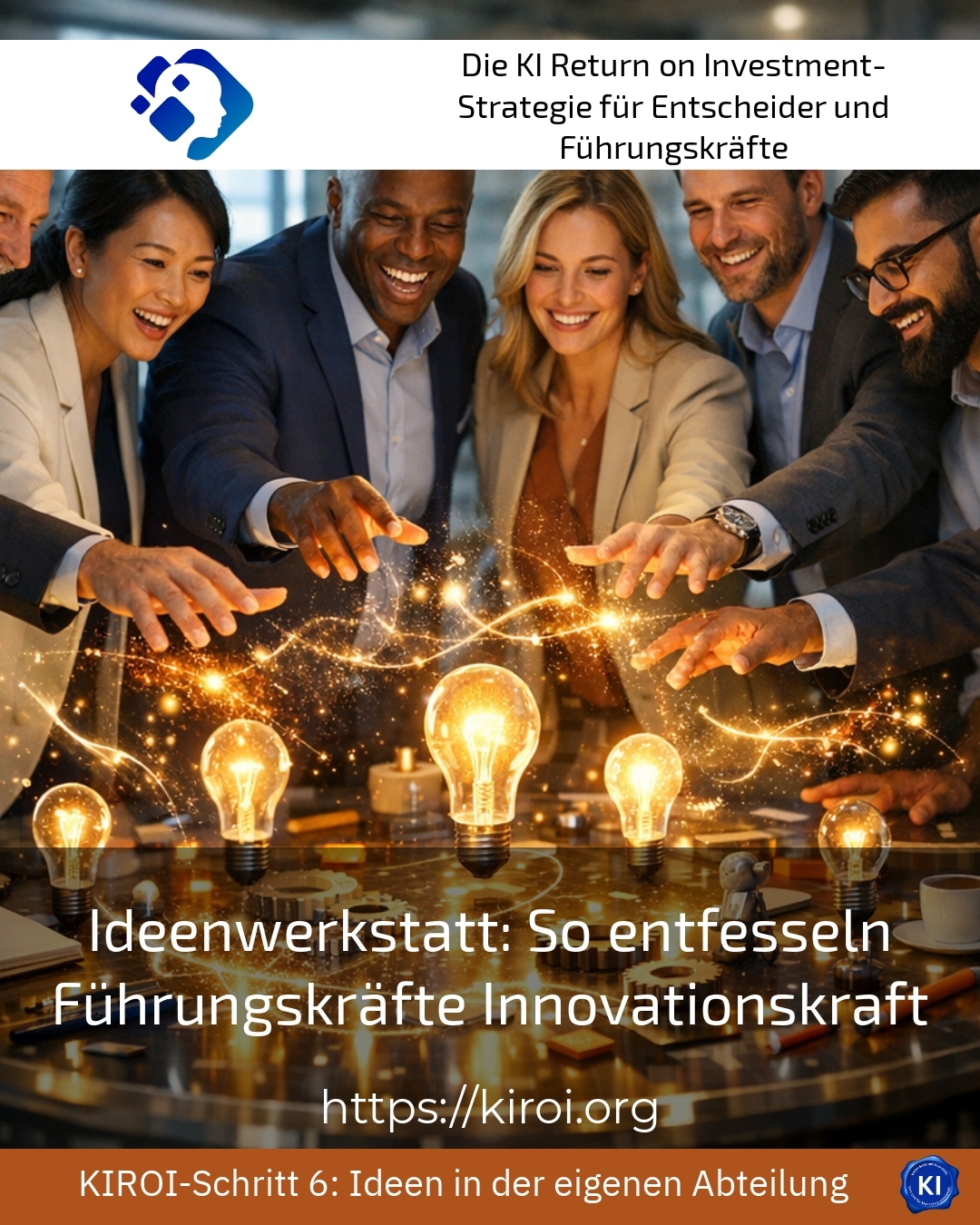
This question concerns executives in almost all industries. The answer often lies not in a lack of resources. It lies rather in the way companies structure and support creative processes. A professionally moderated ideas workshop It can provide transformative impulses here. It creates spaces where groundbreaking ideas can emerge. Many leaders report that structured creative formats sustainably change their teams [1]. The key lies in the right balance between freedom and structure.
Understanding the fundamentals of a successful idea workshop
Before companies invest in elaborate innovation programs, they should understand the fundamental principles. One ideas workshop It differs fundamentally from traditional brainstorming sessions. It follows a methodical framework and creates psychological safety. Participants must feel confident to express even unconventional ideas. Google has scientifically substantiated this insight through its famous Aristotle Project [2].
In the technology sector, the effectiveness of such formats is particularly evident. Software companies regularly organize hackathons where interdisciplinary teams develop functional prototypes within a few days. Automobile manufacturers have adapted similar concepts and hold internal innovation competitions. Ideas for new powertrain concepts or digital vehicle services are emerging. Financial service providers are also increasingly intensively using structured creative formats. They are developing new business models for the digital age in protected laboratory environments.
The pharmaceutical industry has also recognized the potential in methodically guided creative processes. Research teams work there in so-called design-thinking sprints on solutions for complex medical challenges. Consumer goods manufacturers, in turn, regularly invite end consumers to their innovation labs. This provides them with valuable insights into actual user needs and pain points.
Psychological security as the foundation of the Ideas Workshop
Without psychological security, even the most creative minds remain silent. Employees must feel that their contributions are valued. Criticism should be constructive and never be expressed in a personal manner. Leaders play a crucial role as role models here. They must themselves show vulnerability and be able to admit their own uncertainties. Only then will other team members venture to share incomplete ideas.
An electronics company conducted interesting experiments on group dynamics. It was found that mixed hierarchies initially inhibited creativity. Younger employees were noticeably more reserved in the presence of their superiors. Subsequently, the formats were modified and anonymous ideas were solicited. The result positively and significantly surprised all those involved.
Best practice with a AIROI customer
A medium-sized mechanical engineering company faced a difficult challenge in its innovation management. The management noticed that despite high technical expertise, hardly any new product ideas had emerged. Employees focused exclusively on the operational day-to-day business and avoided taking risks. As part of the transruptions coaching, we supported the company in introducing a new creative format. First, we jointly analyzed the existing structures and identified obstacles. It became apparent that a pronounced culture of error systematically suppressed innovative ideas. Subsequently, we developed a multi-stage program for cultural transformation. Executives received intensive training in moderating creative sessions. At the same time, we established protected experimental spaces without immediate pressure for success. After six months, the innovation culture had noticeably changed. The number of submitted improvement proposals increased by over two hundred percent. Three of these proposals resulted in concrete product development projects with significant market potential. The management reports today of a completely changed atmosphere in team meetings. Employees are more actively involved and openly discuss possible future scenarios.
Utilizing methodological diversity in the idea workshop
A successful ideas workshop It intelligently combines various creative methods. Design Thinking has established itself as a particularly effective framework. This method consistently places the user perspective at the center of all considerations [3]. Teams go through several phases from problem definition to prototyping. Each phase requires different thinking approaches and working methods.
In healthcare, clinics are increasingly adapting this methodology for process optimization. Nurses and doctors are jointly developing new workflows for patient care. Logistics companies are using similar formats to design efficient supply chains. In the process, innovative solutions are emerging for the final mile of delivery. Retail companies, in turn, are experimenting with creative methods to redesign shopping experiences. They combine physical and digital touchpoints to create seamless customer experiences.
The Six Thinking Hats method by Edward de Bono offers another valuable approach. It structures discussions and prevents one-sided perspectives. Participants consciously switch between different perspectives such as criticism, optimism, or creativity. Energy companies use this technique when developing sustainable business models. They systematically examine new concepts from different perspectives.
The role of digital tools in modern creative processes
Digital collaboration platforms have significantly expanded the possibilities for distributed teams. Virtual whiteboards enable synchronous work across locations and time zones. Software providers are developing specialized tools for structured idea development and evaluation. Telecommunications companies are intensively using such platforms for their internal innovation programs. This enables the networking of experts from different countries and disciplines.
Artificial intelligence is now supporting creative processes in various ways [4]. Algorithms analyze large amounts of data and identify unexpected patterns. They can suggest inspirations from non-industry sectors. Insurance companies use such systems to develop new pricing models. Media companies are experimenting with AI-powered idea generation for content strategies. This is leading to interesting hybrid formats between human creativity and machine analysis.
Best practice with a AIROI customer
A service company from the financial sector was looking for new ways to innovate its products. The previous approaches had led to incremental improvements, but not real breakthroughs. As part of our support, we first thoroughly analyzed the existing innovation processes. It turned out that ideas were evaluated too early and thus dismissed. Promising approaches regularly failed due to internal approval processes. We jointly developed a new format that we called a protected innovation corridor. Within this framework, teams were able to further develop ideas without immediate economic feasibility checks. Only after a defined maturity phase did the structured evaluation take place. At the same time, we introduced regular creative sessions with external input. Industry-non-experts brought fresh perspectives to the discussions. After a year of intensive guidance, the company had developed three completely new product categories. One of these innovations addressed a previously unaddressed customer segment with significant growth potential. The executives report on a noticeably changed attitude towards experimentation and calculated risk.
Taking on leadership responsibilities in the innovation process
Leaders bear a special responsibility for the success of innovation initiatives. They must create frameworks while at the same time granting operational freedom. This balance requires a high degree of self-reflection and restraint. Many leaders tend to unconsciously dominate creative processes. Their opinions are interpreted by employees as directives.
Industrial companies have developed interesting models to solve this dilemma. Some establish dedicated innovation units with their own governance. These teams operate largely independently of the operational business. Technology companies even establish their own venture companies for disruptive projects. Retail companies are experimenting with internal startup programs and incubators. They combine entrepreneurial agility with the resources of the corporation.
The chemical industry has also developed innovative organizational forms for creative processes. Cross-functional teams work on long-term research projects without immediate market pressure. Construction companies establish similar structures for the development of sustainable building methods. They invest in experimental projects with uncertain outcomes.
Ensure sustainability and continuity in the idea workshop
Individual creative workshops rarely have a lasting impact without systematic follow-up. Ideas must be documented, evaluated, and pursued further. Many companies fail in this transfer from idea to implementation. They produce full repositories of ideas, but few realized innovations.
Successful organizations have established clear processes for the further development of ideas. They define criteria for prioritization and assign responsibilities. Resources are specifically allocated for promising projects. Aerospace companies use stage-gate processes for the gradual maturation of ideas. Food manufacturers have implemented similar systems for their product development. Telecommunications providers combine agile and classic methods in innovation management.
My AIROI Analysis
After numerous mentoring projects in various industries, clear patterns emerge for successful innovation work. The technical and methodological aspects of an idea workshop are important, but not decisive. The true difference lies in the cultural dimension and the attitude of the leadership. Companies that authentically live psychological safety achieve significantly better results. They create environments where creative failure is accepted as a necessary part of the learning process.
The guidance provided by external experts can provide valuable insights especially in the early stages. We often observe that internal moderators unconsciously reproduce existing hierarchies. External guidance creates a healing distance here and enables more objective process design. At the same time, the goal should always be to empower the internal organization. Permanent dependence on external consultants is neither meaningful nor sustainable.
We experience the combination of structured creative formats and individual leadership development as particularly effective. When decision-makers reflect on their own behavioral patterns, the entire team dynamics changes. They become authentic facilitators of innovation. The integration of digital tools and artificial intelligence opens up additional perspectives for the future. We are observing an exciting development here, which meaningfully complements traditional creative methods. Human creativity remains the central factor, but it is enriched and amplified through technological support [5].
Further links from the text above:
[1] Harvard Business Review – Innovation Management
[2] Google re:Work – Team Effectiveness Guide
[3] Interaction Design Foundation – Design Thinking
[4] McKinsey – AI and Innovation
[5] MIT Sloan – Building a Culture of Innovation
For more information and if you have any questions, please contact Contact us or read more blog posts on the topic Artificial intelligence here.







 Deutsch
 English (UK)