
Have you ever wondered why some infrastructure projects seem to succeed effortlessly, while others sink into costly delays, straining both the budget and the nerves of those involved?
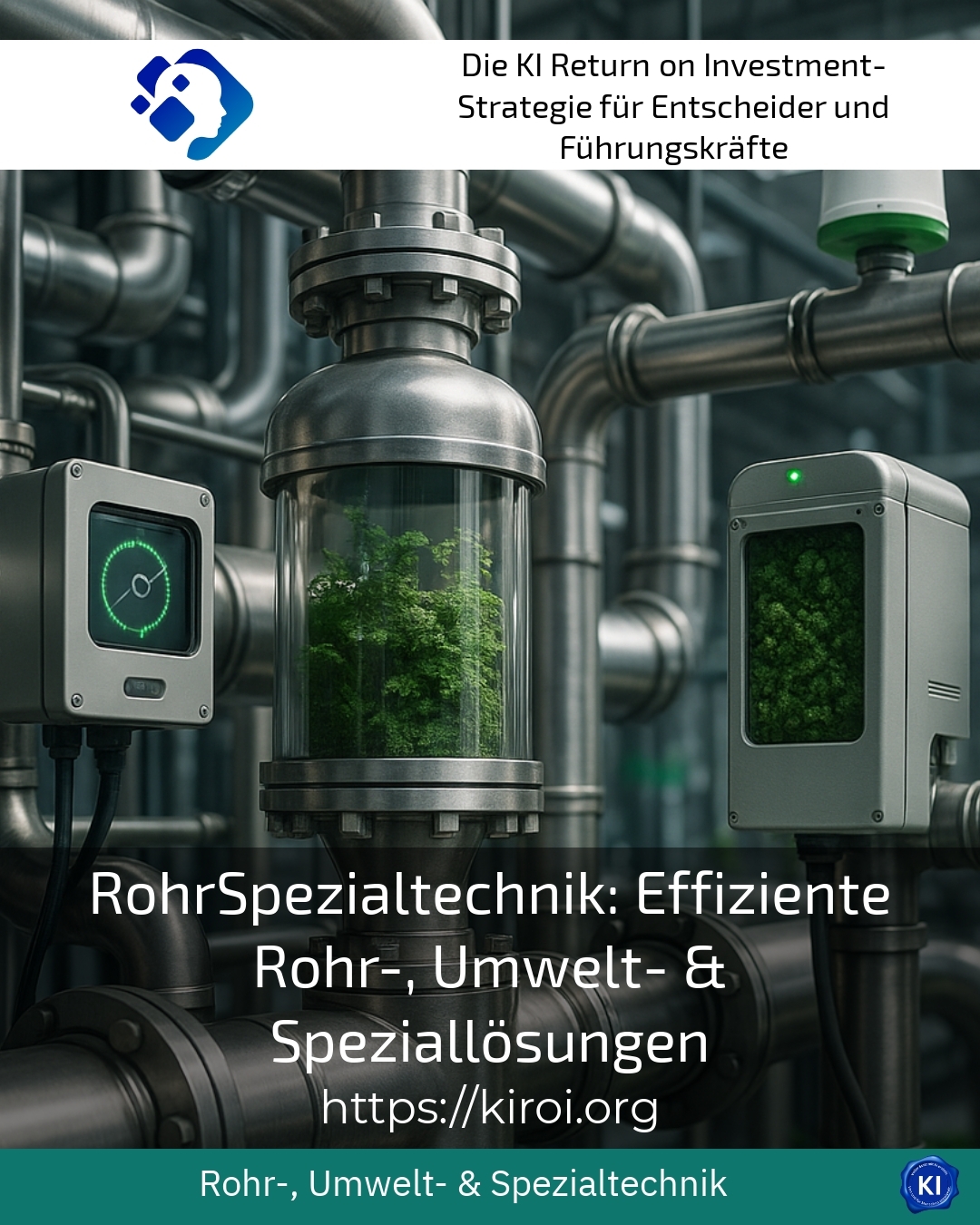
The answer often lies in choosing the right partners and methods, because especially in the field of Pipeline Special Techniques: Efficient pipeline, environmental and special solutions Thorough expertise determines success or failure. Municipalities, industrial companies, and construction companies face immense challenges. They must renew aging infrastructure networks. At the same time, pressure from environmental regulations is growing. Digitalization is also fundamentally changing the entire industry. Transruptions coaching supports companies in this complex transformation. It provides impulses for sustainable change processes. This leads to future-proof structures and working methods.
The importance of modern infrastructure solutions for municipalities and industry
Underground supply networks form the backbone of our modern society. Without functioning plumbing systems, the water supply crumbles. Wastewater cannot be properly drained away. Industrial plants rely on reliable media transport. Municipal utilities often report outdated sewer networks with significant renovation backlog. Trenchless methods are therefore gaining increasing importance. They enable repairs without requiring costly excavation work. Residents experience fewer disturbances caused by construction sites. Traffic can flow unimpeded.
The canal inspection using camera monitoring accurately shows the condition of the pipes. Specialists detect root growth, cracks, and deposits. This diagnosis enables targeted planning of measures. Chemical companies use such technologies for their complex pipeline systems. Refineries rely on regular inspection cycles. Power plants monitor their cooling water pipes continuously. This prevents unplanned outages. Predictive maintenance saves significant costs. Clients often report significant efficiency improvements.
Best practice with a AIROI customer A medium-sized utility faced the challenge of renovating its over fifty-year-old sewer network without endangering ongoing operations and without overburdening local residents. The original planning envisioned conventional construction work with open trenches, which would have meant months of closures and would have resulted in correspondingly high costs. As part of the transruptive coaching, we analyzed the existing data together and developed a digital strategy to prioritize the renovation sections. The utility then implemented an AI-based assessment system that automatically classifies inspection data and generates action recommendations. The switch to trenchless renovation methods such as Schlauchlining and partial repairs reduced the construction time by about sixty percent. The residents experienced hardly any further disruptions caused by the construction work. The project team was able to utilize the available resources much more efficiently. The total costs fell significantly below the original budget.
Pipeline Special Techniques: Efficient pipeline, environmental and special solutions in an industrial context
Industrial companies place special demands on their management infrastructure. Aggressive media require special materials and coatings. High temperatures and pressures continuously strain the systems. Food companies require hygienic transport routes. Pharmaceutical companies are subject to the strictest purity requirements. The choice of the right remediation method determines production safety. Specialized service providers offer customized solutions for every industry.
High-pressure cleaning removes stubborn deposits from pipelines. Special milling tools mechanically remove encrustations and scale. Robot-assisted systems reach even hard-to-reach areas. Breweries use these technologies to clean their wort piping. Dairy companies rely on regular hygienic cleaning of their production pipelines. Paint lines in the automotive industry require particle-free compressed air supplies. Quality assurance begins with the infrastructure.
Environmental aspects are gaining increasing importance in industrial practice. Leaks in sewage pipes significantly endanger groundwater. Leaking oil pipelines cause costly remediation work. The early detection of such vulnerabilities protects the environment and budget. Gas station operators regularly have their underground piping systems inspected. Chemical parks continuously monitor their wastewater systems using sensor technology. Airports inspect their drainage systems particularly carefully. In this way, no calculable environmental risks are created.
Digital transformation in the pipe special technology industry
Digitalization is also fundamentally changing this traditional industry. Drone-assisted inspections complement traditional camera surveillance. Artificial intelligence automatically analyzes image data. Predictive Maintenance increasingly replaces reactive repair approaches. Utilities are building digital twins of their transmission networks. These virtual images enable precise simulations. Vulnerabilities can thus be identified at an early stage. Maintenance planning is optimized based on data.
Transruptions coaching supports companies in this digital transformation. It accompanies the introduction of new technologies and processes. Employees are prepared for the changed requirements. Executives receive guidance for agile organizational structures. The industry is currently undergoing a profound transformation. Traditional craft businesses are evolving into technology companies. The shortage of skilled workers further accelerates automation. Robot solutions take over dangerous and monotonous tasks.
Best practice with a AIROI customer A nationwide infrastructure service provider wanted to digitize its inspection processes and significantly improve the quality of damage assessment in order to offer real added value to its municipal clients. The previous manual evaluation of camera footage was time-consuming and depended on the experience of individual employees, leading to inconsistent results. In the transruptions coaching process, we developed a roadmap for the gradual digitalization of the entire process chain from data collection to the final report. The service provider implemented an AI-based image analysis that automatically detects and classifies damage, with the software continuously learning and delivering ever more accurate results. The lead times for inspection reports were reduced by about seventy percent, and the consistency of the assessments improved significantly. Employees are now focusing on complex decisions and customer consultations instead of repetitive analysis work. The company was able to significantly strengthen its market position and win new customers who appreciate this innovative approach. The investment in digitalization paid off completely within eighteen months.
Environmental protection and sustainability as key drivers
Climate change poses new demands on infrastructure. Heavy rainfall events increasingly overload conventional canal systems. Retaining basins and infiltration systems are gaining in importance. The rehabilitation of existing networks must take these changed conditions into account. Coastal cities are struggling with rising groundwater levels. Flood protection requires functioning drainage systems. Droughts significantly strain the drinking water supply. Leak detection and repair are therefore becoming increasingly important.
The Pipeline Special Techniques: Efficient pipeline, environmental and special solutions [1] It contributes significantly to environmental protection. Trenchless methods significantly reduce land consumption. The CO2 balance is significantly lower than with conventional methods. Less excavation means less transport traffic. The materials used are increasingly more sustainable. Recyclable liners replace conventional plastic solutions. Biodegradable cleaning agents protect the environment. The industry is continuously developing more environmentally friendly methods.
Agricultural businesses benefit from modern drainage systems. Irrigation systems are designed and maintained more efficiently. Biogas systems require reliable pipeline infrastructure. Slurry pipelines require special care in inspection and maintenance. Water protection begins with intact underground piping systems. Wastewater treatment plants optimize their processes through better condition monitoring. The circular economy places new demands on pipeline networks.
Special solutions for special challenges
Not every situation can be handled using standard methods. Historical city centers require particularly gentle approaches. Listed buildings tolerate no visible interventions. Renovation under continuous operation places the highest demands. Hospitals cannot simply shut down their supply lines. Manufacturing plants require uninterrupted media supply. Data centers require reliable cooling systems around the clock.
Emergency preparedness is an essential part of the service portfolio. Pipe breaks require quick and competent responses. Floods caused by defective pipes cause massive damage. Emergency location works even at night and on weekends. Insurance companies value reliable partners for such situations. Homeowners need quick help in case of blockages. Business owners cannot tolerate long downtime.
Best practice with a AIROI customer A large hospital had to fundamentally renovate its over thirty-year-old wastewater infrastructure, but under no circumstances could it endanger the ongoing hospital operations, which presented an exceptionally complex planning and implementation task. The challenge was to coordinate the renovation work so that neither operating rooms nor intensive care units would be without functioning waste disposal systems. As part of the transruptions coaching, we developed a detailed project plan together with the hospital management and the technical facility management, which took into account all critical dependencies. The renovation was carried out in small sections with permanent redundancy through temporary bypasses and alternative pipeline routes, with each step being simulated in advance. A digital monitoring system monitored all relevant parameters in real time and immediately alerted the project team to deviations. The entire project took eighteen months to complete and was completed without a single unplanned outage. The clinic now has a future-proof management network with significantly improved capacity and operational reliability. The experiences from this project are being incorporated into future renovation projects of other healthcare facilities.
Qualification and competence development in the industry
Technological change requires continuous training. Professionals must be able to handle state-of-the-art technology. Operating inspection robots requires special training. Software expertise is becoming increasingly important for technicians. The evaluation of digital data complements the traditional craft trades. Companies are increasingly investing in the qualification of their employees [2]. Certifications attest to the competence towards clients.
Safety at work is of the utmost priority in this industry. Working in confined spaces carries significant hazards. Toxic gases can occur in ducts. Personal protective equipment must be worn consistently. Rescue plans must be prepared before work begins. Compliance with accident prevention regulations is strictly monitored. Regular safety briefings are standard practice. Through these measures, the industry is seeing a decline in accident rates.
My AIROI Analysis
The analysis of this exciting infrastructure sector clearly shows that digitalization can no longer be stopped, and those companies that will be successful are those that actively shape this transformation rather than passively endure it. The integration of artificial intelligence into inspection and maintenance processes offers enormous efficiency potential that has so far only been consistently exploited by a few pioneers. Transruptive coaching accompanies these change processes and provides important impulses for the organizational and cultural transformation that must accompany technological modernization.
The Pipeline Special Techniques: Efficient pipeline, environmental and special solutions It stands as an example of an industry undergoing change, where traditional expertise and digital competence must come together. Demographic change further exacerbates the shortage of skilled workers and forces companies to automate their processes and become more attractive to younger generations. Environmental requirements will continue to increase, making sustainable processes and materials even more important [3]. Municipalities and industrial companies are increasingly realizing that investments in infrastructure are not a cost item but rather value-preserving measures that enable significant savings in the long term. The successful companies in this sector will be those that prioritize technological innovation, environmental responsibility, and customer orientation equally, and involve their employees in this process.
Further links from the text above:
[1] Federal Environmental Agency – Water supply and infrastructure
[2] German Association for Water Management, Wastewater and Waste e.V.
[3] Federal Ministry of Environment – Water and Resources
For more information and if you have any questions, please contact Contact us or read more blog posts on the topic Artificial intelligence here.









 Deutsch
  English (UK)