
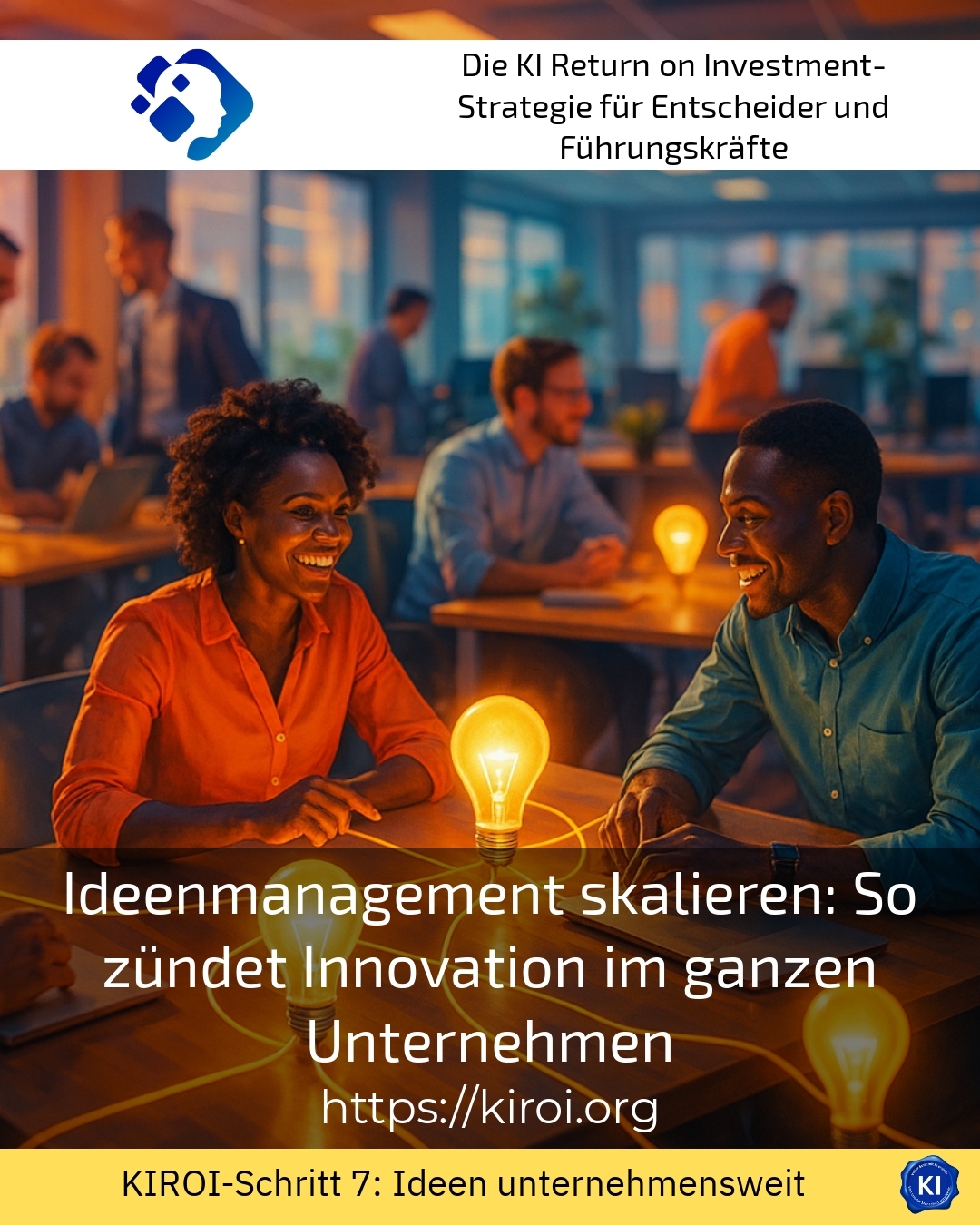
Imagine that brilliant ideas in your company no longer get buried in drawers. Instead, they are systematically captured and transformed into entire business areas. That is exactly what we do at Scaling ideas managementCreativity becomes a strategic resource. In a time when disruptive changes bring new challenges daily, the ability to continuously innovate determines success and failure. However, many organizations fail to systematically leverage the creative potential of their employees. They have dedicated teams with valuable insights. Yet these impulses often get lost in the operational daily routine. This article shows you how to activate this potential.
Why classic innovation approaches reach their limits
Traditional methods for ideation have become obsolete. Mailboxes for improvement suggestions and annual innovation competitions now seem outdated. They reach only a fraction of the workforce and do not generate sustained momentum. A medium-sized manufacturing company from southern Germany relied for years on a traditional suggestion box. Participation remained consistently below five percent of employees. The few ideas submitted were often not followed up. This led to frustration and declining engagement.
Another example illustrates similar challenges in the service sector. There, quarterly innovation workshops were organized with selected executives. However, the results remained superficial and lacked practical application. The participants lacked direct contact with customers for relevant insights. At the same time, employees on the ground felt left out. This situation prevented genuine innovation from the outset.
In healthcare, we observe similar patterns in process optimization. Nurses and medical staff develop creative solutions daily. They circumvent cumbersome processes and find pragmatic ways. However, these valuable improvements are often not documented. They are not systematically recorded or shared. Other departments keep reinventing the wheel over and over again.
Scaling the cornerstones of successful idea management
To ignite innovation across the company, more than just new software is needed. It requires a fundamental cultural transformation and well-thought-out structures. First and foremost, psychological safety must be ensured in all teams. Employees only express creative ideas when they fear no negative consequences. Leaders play a crucial role as role models. They must demonstrate openness and handle mistakes constructively.
One automotive supplier successfully implemented this insight. The company introduced so-called learning rituals and also celebrated failed experiments. In monthly meetings, teams shared their failures and the lessons learned from them. This transparency fostered trust and encouraged further attempts. The number of submitted proposals increased by over two hundred percent within a year.
Another fundamental pillar lies in the availability of resources for experiments. Good ideas need time and financial resources to be implemented. A technology company grants its employees ten percent of their working time for their own projects. This investment pays off through innovative product improvements and higher employee engagement. People become more engaged when they are given the freedom to create.
In retail, a third example of successful resource allocation is evident. A home improvement chain set up a small experimental area in each store. There, employees could test new presentation concepts or service processes. The best approaches were documented and rolled out in other stores. This created a continuous improvement process from the ground up.
Best practice with a AIROI customer
An international logistics company approached our transruptive coaching team with a specific challenge. The organization had more than twenty thousand employees in different countries. Although the company had introduced a digital idea platform, participation remained far behind expectations. The analysis revealed several obstacles that we systematically addressed. First, there was a lack of clear communication about the purpose and benefits of the platform. Many employees were not even aware of its existence. Others had had negative experiences with previous initiatives and behaved cautiously. As part of our coaching, we developed a multi-stage activation program. We first trained selected multipliers in all locations. These innovation ambassadors received tools and techniques for idea activation. They introduced low-threshold formats such as coffee break brainstorming sessions. These short sessions lasted only fifteen minutes and took place regularly. At the same time, we established a transparent feedback system for all submitted proposals. Each submitter received an initial response within seven days. After six months, the participation rate had quadrupled. The company implemented more than three hundred improvements from the workforce. The estimated savings amounted to several million euros annually.
Scale technological support for idea management
Digital tools can significantly facilitate the process of idea collection and evaluation. They enable cross-site collaboration and create transparency. Modern platforms use artificial intelligence to categorize and connect proposals. They automatically identify patterns and highlight synergies between different ideas. This saves time and prevents duplication of effort in large organizations.
An insurance company implemented such an intelligent platform with impressive results [1]. The software recognized that several departments were working independently on similar digitalization projects. By combining these initiatives, the company saved significant development resources. At the same time, the quality of the final solution improved due to the exchange of different perspectives.
In mechanical engineering, a manufacturer of precision tools uses a mobile application. Employees in the production department can thus capture improvement suggestions directly on the machine. They photograph problematic situations and add voice notes. This low-threshold recording significantly increased participation. Especially older employees with extensive experience make intensive use of this opportunity.
A hotel chain used gamification elements in its innovation platform. Employees collect points for submitted and implemented ideas. They can exchange these points for rewards or additional vacation days [2]. The playful element increased motivation and created positive competition. Teams in different properties inspired each other to come up with creative solutions.
Leadership culture as a catalyst for corporate-wide innovation
Without the active involvement of the leadership level, all innovation initiatives remain ineffective. Managers must schedule time for idea evaluation and feedback. They should regularly engage in direct dialogue with the ideators. This appreciation signals the organization’s strategic importance of innovation. It motivates employees to further commitment and strengthens identification.
A pharmaceutical company requires its executives to personally oversee innovation projects. Each manager sponsors at least two ideas per quarter. He actively supports the implementation and removes obstacles. This direct involvement shortens decision-making processes and significantly speeds up implementation.
In an energy supply company, they introduced so-called innovation break-out sessions. The board reserves two hours each week for discussions with ideators. Employees of all hierarchical levels can sign up for these appointments. They present their proposals directly and receive immediate feedback. This level of accessibility by the leadership sends a strong signal to the organization.
A media company practices the principle of reverse hierarchy in innovation decisions. Junior employees evaluate and prioritize submitted ideas in a first round [3]. They bring fresh perspectives and digital expertise to the process. Experienced executives complement these assessments with strategic and financial considerations. This combination leads to balanced and forward-looking decisions.
Establish structures for sustainable idea management to scale up
Sustainable innovation requires institutionalized processes and clear responsibilities. It is not enough to carry out one-off actions or launch temporary projects. Successful organizations embed innovation in their core structure and routines. They create dedicated roles such as innovation managers or integrate relevant tasks into existing positions.
A telecommunications provider established a network of innovation coaches across all business areas. These employees support their colleagues in developing ideas. They are familiar with the internal processes and know how to successfully implement proposals. The network meets monthly to exchange experiences and receive training.
A regional bank integrated innovation goals into its targets at all levels. Executives are not only measured on financial metrics; they must also demonstrate which innovations have emerged and been implemented within their area. This integration into the management system underscores its strategic importance. It prevents innovation from being lost in day-to-day operations.
In the public sector, a city administration demonstrates how innovation structures can work there as well. It established an innovation lab that serves as a one-stop-shop for all departments. Employees can develop prototypes and test new service concepts there. The lab has its own budgets and operates consciously outside the usual administrative logic.
Best practice with a AIROI customer
A traditional family-run food industry company sought our guidance in an ambitious transformation project. The company had been successfully operating for over a hundred years and was considered a market leader in its segment. However, the new generation of management recognized an urgent need for action. The rate of innovation had declined over the years and the competition had caught up. As part of the transruptive coaching program, we first analyzed the existing structures and cultural factors. We conducted numerous discussions with employees at all levels of the hierarchy and across functional areas. An interesting pattern emerged that we often observe. The long-standing employees possessed enormous implicit knowledge about products and processes. However, this knowledge was not systematically recorded or shared. Younger colleagues brought digital skills and fresh ideas. However, they did not find access to the established decision-making structures. We developed a concept for cross-generational innovation teams. Experienced employees worked together with younger colleagues in two-person teams. Together they developed improvement proposals for products and processes. The combination of experience and digital expertise proved extremely fruitful. Within a year, several new product variants were created that were successfully placed on the market. Employee satisfaction increased measurably and the turnover rate decreased.
Overcoming obstacles and creating sustainable dynamics
Companies encounter typical resistance on the path to becoming an innovative organization. Knowing and proactively addressing these obstacles significantly increases the likelihood of success. A common problem is the overload of employees by daily work. They simply do not have time for creative work in addition to their regular duties.
A chemical company solved this problem by introducing innovation time. Each employee receives half a day per month for creative projects. This time is fixed in the work schedule and is not used for other tasks. The management actively monitors compliance with this rule. This creates a protected space for experimentation and new ideas.
Another obstacle lies in a lack of transparency about the progress of submitted ideas. Employees often experience that their suggestions disappear in the system. They do not receive any feedback on the status of the processing or the reasons for rejections. This lack of transparency frustrates and prevents further engagement.
A business company addressed this problem with a public idea board. All submitted suggestions are displayed there with their current status. Employees can track the progress and ask questions if interested [4]. This transparency creates trust and motivates further submissions. It also shows that the organization takes suggestions seriously.
In the financial sector, companies often struggle with regulatory restrictions on innovation. A bank therefore developed a special testing procedure for compliance-related ideas. Experts from the legal department accompany promising proposals from the very beginning. They identify potential obstacles early on and develop compliant solutions. In this way, good ideas are not prematurely discarded for regulatory reasons.
My AIROI Analysis
The systematic development of innovation in organizations requires a holistic approach. It is not enough to implement individual measures in isolation or to rely solely on technological solutions. Successful companies combine cultural transformation with structural adjustments and intelligent use of technology. They create frameworks in which creativity can flourish and unfold.
Transruptive coaching supports organizations in shaping this complex change. We provide guidance for developing an innovation-friendly culture and accompany the implementation of appropriate structures. We always take into account the specific circumstances and challenges of each organization. Often, clients report surprising insights during the process.
The examples presented show that companies of different industries and sizes benefit from a systematic approach. The key is the willingness of the leadership to initiate and sustain real change. Innovation cannot be mandated, but it can be enabled and promoted. Investing in creative structures pays off in the long run through higher competitiveness and employee engagement.
Our analysis also shows that many organizations are far from realizing their potential. The creative resources of employees often remain untapped or are even actively suppressed. This often happens not intentionally, but through established structures and unconscious patterns. Unlocking these patterns requires targeted interventions and consistent support. We help companies activate their dormant potential and build sustainable innovation capabilities.
Further links from the text above:
[1] McKinsey: The Eight Essentials of Innovation
[2] Harvard Business Review: Innovation Topics
[3] Gartner: Innovation Strategy Insights
For more information and if you have any questions, please contact Contact us or read more blog posts on the topic Artificial intelligence here.










 Deutsch
 English (UK)