
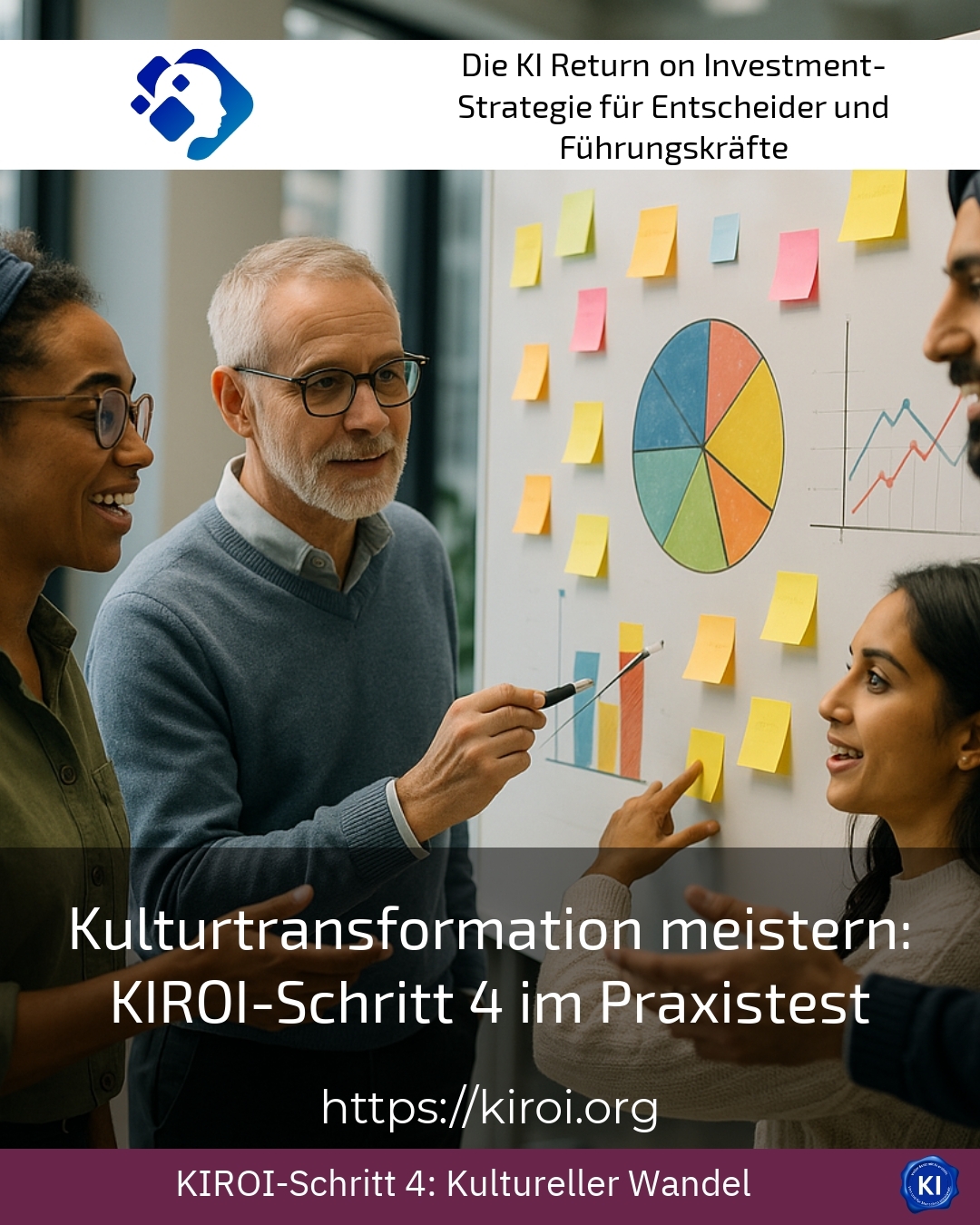
The Culture transformation poses significant challenges for companies, particularly in the fourth step of an established process. In practice, this demonstrates how important it is to carefully design this phase. This is because it determines how the measures previously put in place will be sustainably anchored in everyday life. Successful cultural transformation not only aligns values and behaviours, but also strengthens innovative strength and employee retention.
Culture transformation: Step 4 in focus
The fourth step of a typical culture transformation process focuses on institutionalising the changes. This phase ensures that new ways of thinking and behavioural patterns become a permanent part of the company culture, rather than just being temporary. In practice, several important starting points are evident for this.
It is therefore essential to examine existing structures and processes and adapt them if necessary. A production company in the automotive industry reported that the integration of new communication channels and feedback systems significantly strengthened cross-team collaboration. At the same time, a medium-sized technology company was able to achieve a stronger alignment with shared values by adapting its appraisal and reward systems. Finally, a large corporation in the service sector also signals how far the cultural transformation has already been embedded through visible leadership initiatives and continuous training programmes.
BEST PRACTICE with one customer (name hidden due to NDA contract) In an international financial services provider, the fourth step established framework conditions that made cultural changes visible in daily decisions. This was achieved through accompanying coaching and the introduction of a culture compass, which supports employees in navigating change and thus sustainably accompanies the transformation.
Practical implementation and challenges
A frequently corrected topic in cultural transformations is the consistent involvement of all hierarchical levels. A consumer goods manufacturer has therefore introduced a cascading of cultural objectives. This way, employees at all levels understand which changes in behaviour are expected. Another example from the healthcare sector shows how important it is to identify and address resistance early on through continuous feedback and reflection. Cultural transformation rarely proceeds in a straight line, but requires patience and adaptability.
Furthermore, companies in the software industry report that the use of so-called culture hacks – small interventions to reinforce desired behaviours – can provide impetus to keep change alive. In modern teams, tolerance of error and a willingness to learn are important success factors.
Accompanying cultural transformation: Reliable support is key
The support of specialised coaching proves to be a great advantage at this stage. Transruption coaching helps companies to drive their cultural projects forward in a methodical and empathetic way. An energy provider, for example, was able to bring different departments on board through regular workshops and open dialogue formats. An NGO also reported how external support helped to overcome communication barriers and develop a common language for transformation. At the same time, a wholesaler reports that continuous coaching motivates managers to lead by example authentically and embody the new culture.
Sustainable impulses are more important here than quick results. The focus is on understanding cultural transformation as a process that is constantly developed and adapted. This way, companies avoid the risk of measures reverting to old patterns.
Tips for Successful Implementation on the Path to Cultural Transformation
To master culture transformation in the fourth step, the following tried-and-tested actions are recommended:
- Clear definition and communication of new behavioural standards at all levels.
- Integration of cultural goals into processes such as performance appraisals and promotions.
- Strengthening leaders as credible role models for change.
- Regular support through coaching to reflect on and consolidate progress.
- Encouraging open feedback and a mistake-tolerant environment to stimulate learning processes.
- Targeted use of culture-specific actions (culture hacks) to encourage desired behaviours.
Companies implementing these practices often report increased employee satisfaction as well as a stronger culture of innovation.
My analysis
Cultural transformation remains a complex process that requires careful planning and constant support. In the fourth step, the challenge is to permanently anchor the new and thus keep the change alive. Practical examples from a wide range of industries show that adjustments to structures, the clear embodiment of values and accompanying coaching can support the change. Cultural transformation is therefore less of a one-off project and more of a continuous development process that needs lasting impetus.
Further links from the text above:
Evaluation of Methods for Cultural Transformation – OPUS
The path to successful cultural transformation – and associates
Company Culture in Practice | springerprofessional.de
How do I make culture change initiatives successful?
For more information and if you have any questions, please contact Contact us or read more blog posts on the topic Artificial intelligence here.











 Deutsch
  English (UK)