
Have you ever wondered why some organizations thrive when integrating algorithmic systems, while others fail to overcome regulatory hurdles and lose valuable resources?
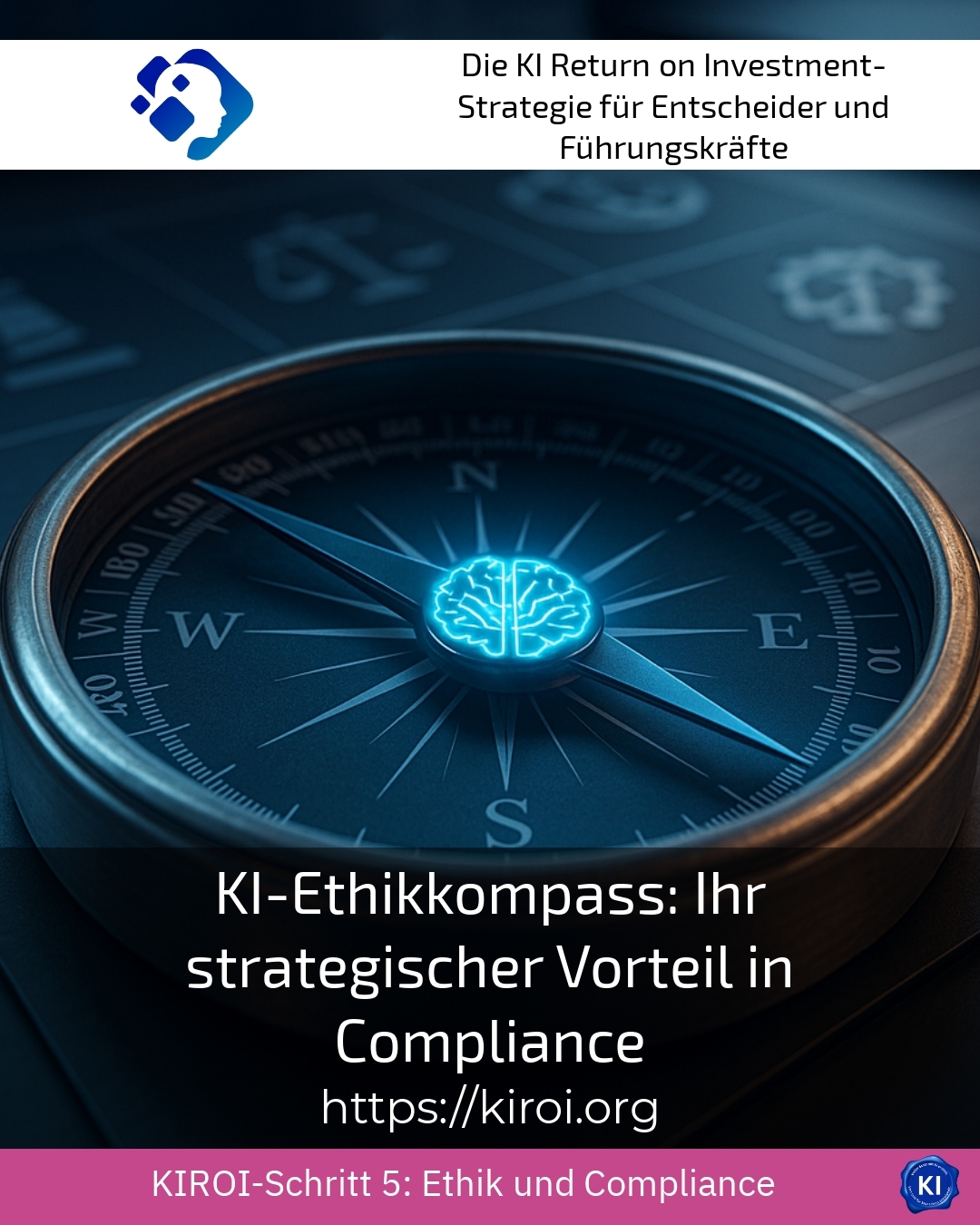
This question currently concerns numerous decision-makers in a wide range of sectors, because the requirements for responsible technology use are continuously increasing and are taking on increasingly complex dimensions. AI Ethics Compass: Your strategic advantage in compliance This forms a central point of reference that enables organizations to combine technological innovation with social responsibility. Clients often report that they feel caught in a tension between competitive pressure and ethical requirements. This is precisely where a well-structured support system provides the impetus and establishes sustainable structures.
Why ethical orientation becomes an indispensable competitive factor
The rapid development of intelligent systems poses fundamental questions for organizations that go far beyond technical implementation and require profound strategic considerations. Let us first consider the healthcare sector, where algorithmic decision support in diagnoses is now widespread. This raises complex ethical questions regarding transparency, accountability, and ultimate responsibility for medical decisions. For example, a hospital that allows imaging diagnostics to be supported by learning systems must ensure that doctors can critically review the recommendations and that patients are appropriately informed.
In the financial sector, similar challenges arise in lending through automated rating systems. Banks use intelligent algorithms for risk assessment, and discriminatory patterns in historical data can reproduce problematic decisions. A responsible institution therefore implements verification mechanisms that identify and correct systematic disadvantages. Furthermore, regulatory frameworks increasingly require customers to receive understandable explanations for automated decisions, which is technically demanding and organizationally complex.
The education sector is also experiencing profound changes through adaptive learning systems that create individual learning paths and assess performance. Schools and universities face the task of using these tools meaningfully without neglecting pedagogical fundamental principles or disadvantaging students through opaque evaluation mechanisms. AI Ethics Compass: Your strategic advantage in compliance It helps these institutions develop clear guidelines that promote innovation while preserving valuable values.
Best practice with a AIROI customer A medium-sized insurance company faced the challenge of optimizing its claims processing through intelligent systems while simultaneously meeting strict regulatory requirements and ethical standards. As part of our support, we jointly developed a comprehensive framework that combined technical implementation with ethical reflection. The organization initially established an interdisciplinary committee that regularly reviewed decision-making processes and identified potential biases. Additionally, transparent communication channels were established so that customers could understand how decisions were made. The implementation of continuous monitoring, which detected systematic deviations early on, proved particularly valuable. After six months, the company reported increased customer satisfaction and improved regulatory compliance. The employees felt relieved by clear guidelines and were able to confidently use the new tools. This example illustrates how strategic guidance enables sustainable change.
The AI Ethics Compass as a Foundation for Sustainable Transformation
A structured approach to ethical orientation begins with a thorough analysis of existing processes and their potential impact on various stakeholder groups. In the manufacturing industry, for example, companies use predictive maintenance systems that predict machine failures and optimize maintenance intervals. This raises questions regarding workplace safety, data protection, and the responsibility for mispredictions, which must be carefully addressed. An automotive supplier implementing such systems must clarify how to handle surplus maintenance positions and what training measures are offered.
In retail, personalized recommendation systems are revolutionizing the shopping experience, with the boundary between helpful support and manipulative influence being fluid. A responsible retailer continuously reflects on whether its algorithmic systems are actually serving customers or primarily maximizing purchase incentives. This reflection requires interdisciplinary expertise and a structured dialogue between technical experts, ethicists, and business leaders. Transruptions coaching supports companies in precisely these projects and provides guidance for sustainable decision-making processes.
The public sector faces particular challenges because algorithmic systems are being deployed here in sensitive areas such as social benefits, law enforcement, and immigration. Municipal authorities that use intelligent systems for resource allocation must ensure that no population groups are systematically disadvantaged. This requires robust audit mechanisms and transparent documentation of all decision-making processes, which are regularly evaluated by independent bodies.
Practical implementation of the AI Ethics Compass in daily work
Successful implementation of ethical guidelines requires more than theoretical concepts, as it requires concrete tools and processes that can be applied in everyday work. In human resources, many organizations are now using automated pre-screening systems for job applications, where these systems are demonstrably capable of reproducing biases if not carefully monitored. One large logistics company told us that after a thorough analysis of their recruitment system, significant biases were identified that systematically disadvantaged certain qualification profiles. By adapting algorithms and human review steps, the company was able to address these problems.
In the media sector, automated content creation and curation are generating far-reaching societal implications that extend beyond individual organizations. News platforms that prioritize content algorithmically significantly influence public opinion formation and bear responsibility for the quality of societal discourse. A broadcaster with whom we collaborated therefore developed transparent criteria for algorithmic news selection and actively communicated them to its audience. This transparency strengthened viewers’ trust and positively differentiated the provider from competitors.
In the energy sector too, intelligent systems are playing an increasingly important role in grid control and the optimization of consumption patterns. Energy providers that implement smart grid technologies collect detailed consumption data that allows for insights into lifestyle habits. The responsible handling of this sensitive information requires clear ethical guidelines that go beyond mere data protection regulations and proactively put the well-being of customers at the center.
Best practice with a AIROI customer An internationally operating pharmaceutical company integrated intelligent systems into its clinical research to accelerate drug development and more accurately predict side effects. The organization approached us with the question of how to ensure ethical standards when algorithmic systems support patient selection in studies. As part of our support, we jointly developed a multi-stage review process that ensured both scientific excellence and ethical integrity. Particularly important was the establishment of an independent ethics board that regularly evaluated all algorithmic decision-making processes. The company also implemented training programs for researchers that deepened their understanding of algorithmic biases and their impact on vulnerable patient groups. Continuous monitoring enabled the early identification and appropriate addressing of emerging challenges. After a year, the company reported increased trust among study participants and improved relationships with regulatory authorities. This case illustrates vividly how ethical excellence can lead to measurable business benefits.
Strategic advantages through ethically-based technology use
Organizations that systematically integrate ethical reflection into their technology strategy benefit from a wide range of competitive advantages that extend far beyond regulatory compliance. In the tourism sector, for example, hotels and airlines use dynamic pricing systems that adjust prices based on demand and customer behavior. However, customers who perceive opaque pricing practices increasingly react critically and switch to providers that communicate fair and transparent pricing models. A leading travel company successfully differentiated itself by transparently explaining its pricing algorithms and allowing customers to control certain parameters.
The agricultural sector is undergoing fundamental changes through precision agriculture, where intelligent systems optimize seeds, fertilizers, and irrigation. Agricultural enterprises face the question of how to handle the collected data and what dependencies arise on technology providers. The cooperatives we have been supporting therefore developed common ethical standards for data ownership and use that protected the autonomy of individual enterprises. AI Ethics Compass: Your strategic advantage in compliance This helped them navigate these complex interests and find viable compromises.
In the sports field, clubs and federations are increasingly using analytical systems for performance optimization and talent identification. This development raises questions regarding fairness, athlete privacy, and the role of human judgment. One Bundesliga club told us that the introduction of clearer ethical guidelines for the use of analytical tools strengthened the trust of players and increased acceptance of new technologies. Players who understood how the data was used cooperated more willingly and provided higher-quality information.
The AI Ethics Compass as the Foundation for Trustful Stakeholder Relationships
Trust forms the foundation of successful business relationships, and ethically sound technology use sustainably strengthens this trust among all relevant stakeholder groups. In the real estate sector, real estate agents and platforms use algorithmic valuation systems that estimate property prices and speed up transactions. Buyers and sellers who perceive these systems as fair and transparent show a higher willingness to collaborate. A real estate platform we supported proactively communicated the functioning of its valuation algorithms and offered users the opportunity to view correction factors.
In the legal sector too, intelligent systems are increasingly being used for document analysis, precedent research, and even predictive success probabilities. Law firms that use these tools must ensure that clients are appropriately informed and that final decision-making remains in the hands of qualified lawyers. A medium-sized law firm developed, with our support, transparent communication standards that informed clients about the use of technological tools while at the same time emphasizing trust in human expertise.
In the cultural sector, generative systems are raising fundamental questions regarding creativity, authorship, and cultural authenticity that challenge traditional concepts. Museums and galleries exhibiting algorithmically generated works are increasingly reflecting on the implications of this development for artistic practice and cultural value creation. One renowned museum told us that the development of clearer curatorial guidelines for the handling of algorithmically supported art has both stimulated internal discussions and increased public interest.
My AIROI Analysis
The integration of ethical reflection into technological strategies is evolving from an optional addition to an indispensable core competency that significantly influences organizational success and ensures long-term competitiveness. My experience from numerous accompanying projects shows that organizations that incorporate ethical reflection into their operations achieve better results and are more competitive. AI Ethics Compass: Your strategic advantage in compliance take it seriously, not only meet regulatory requirements, but also become more innovative and resilient. The structured dialogue between technical experts, ethicists, and business leaders creates synergies that isolated approaches cannot achieve.
Particularly noteworthy is the observation that ethical excellence is often correlated with economic success, as customers, employees, and partners increasingly value responsible behavior and align their decisions accordingly. Transruptions coaching accompanies companies precisely in these projects and provides impulses for sustainable development that combine technological innovation with social responsibility. The coming years will show that organizations that invest in ethical competence today will be tomorrow’s winners of the technological transformation [1]. Regulatory frameworks are becoming increasingly stringent, and companies that act proactively avoid costly adjustments under time pressure [2]. I am increasingly observing that organizations with clear ethical guidelines also attract more qualified talent, because younger professionals in particular place value on meaningful work [3]. Establishing an ethical framework is not a one-time project but a continuous process that requires regular review and adaptation. Organizations that embark on this journey with competent guidance often report positive side effects such as improved internal communication and increased innovation capabilities.
Further links from the text above:
[1] European approach to artificial intelligence
[2] BSI standards and certification
[3] DGFP on AI and personnel management
For more information and if you have any questions, please contact Contact us or read more blog posts on the topic Artificial intelligence here.









 Deutsch
 English (UK)