
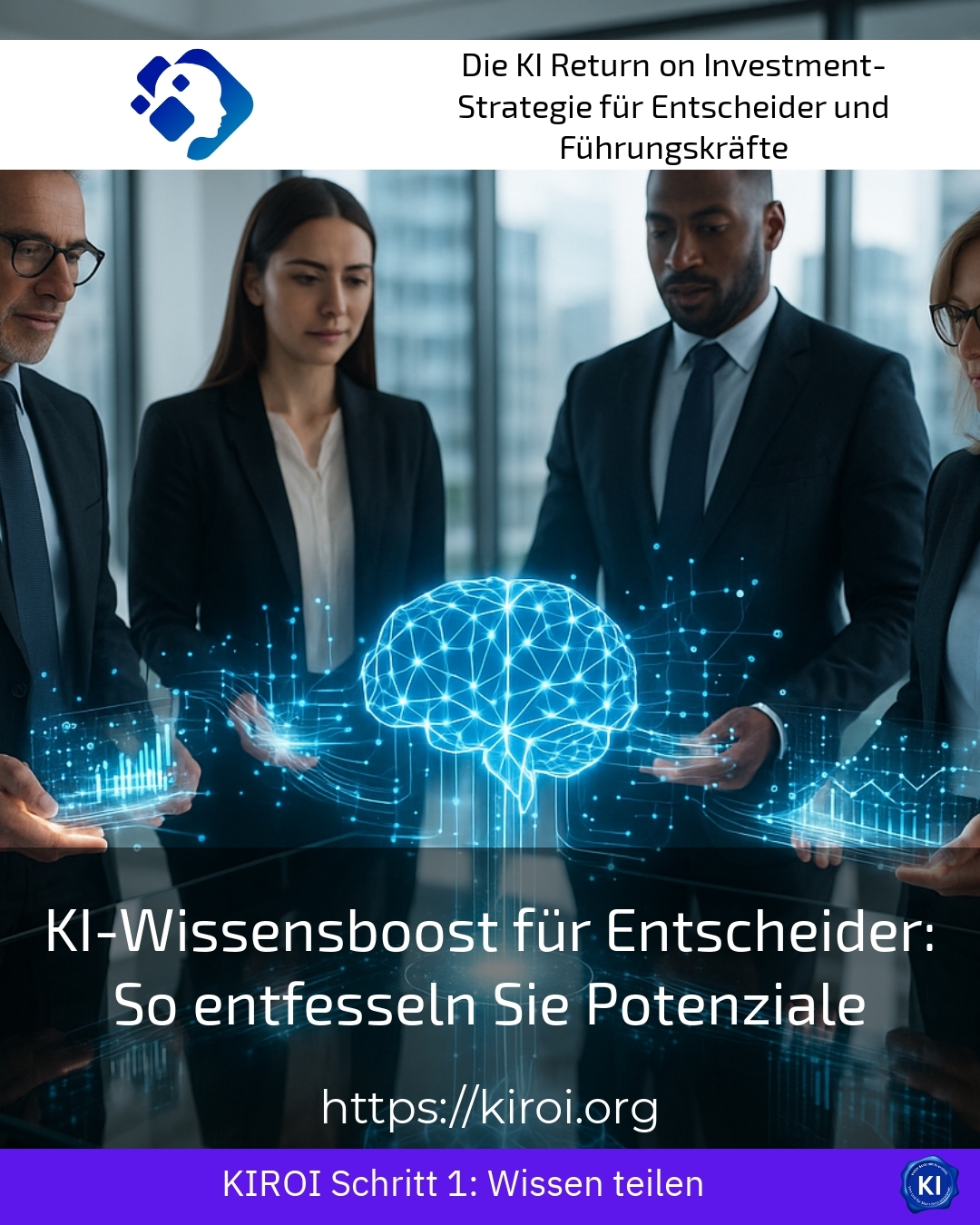
Do you sometimes wonder why some leaders seem to make complex decisions effortlessly while others hesitate for months? The crucial difference often lies not in experience or gut feeling, but in the systematic use of intelligent technologies that are known as AI knowledge boost for decision-makers function and make hidden connections visible. In a time when data volumes are growing exponentially and markets are rapidly changing, the ability to analyze data quickly and thoroughly becomes the decisive competitive advantage. This is where a modern understanding of leadership takes hold; it views technological possibilities not as a threat, but as powerful support.
The transformation of decision-making processes by intelligent systems
Executives today face a paradoxical situation. On the one hand, they have more information than ever before in the history of business. On the other hand, this flood of information often leads to paralysis in decision-making and uncertainty. Intelligent analysis systems fundamentally change this dynamic by detecting relevant patterns and deriving actionable recommendations. As a result, executives regularly report that they save hours of preparation time through automated analysis. They invest the time gained in strategic discussions and creative problem-solving.
An example from the financial sector illustrates this development particularly vividly. Risk managers now use algorithms that monitor thousands of transactions in real time. These systems detect anomalies before human analysts would notice them. In healthcare, similar technologies support clinical managers in resource planning. They predict patient volumes and automatically optimize shift schedules. Similarly, in the manufacturing sector, plant managers rely on predictive maintenance systems. These detect machine problems before costly downtime occurs [1].
Best practice with a AIROI customer
A mid-sized company in the logistics industry faced the challenge of optimizing its route planning without losing the experienced expertise of its dedicated dispatchers. As part of the transruptions coaching, we supported the management in developing a hybrid strategy that combines human expertise with algorithmic analysis. At first, the dispatchers felt threatened by the new technology and showed significant resistance to its implementation. Through moderated workshops, we worked together to develop an understanding of how intelligent systems support their work, not replace it. The employees realized that by automating repetitive calculations, they gained more time to handle complex customer requests. After six months, the company reduced its empty runs by a significant twenty percent. At the same time, employee satisfaction increased, because the dispatchers were able to focus on more demanding tasks. Through coaching, the management had learned to view change processes as a shared journey, rather than imposing them from above.
The AI knowledge boost for decision-makers in a strategic context
Strategic planning traditionally requires extensive market analyses and competitive observations. Intelligent systems significantly accelerate these processes and unlock new sources of insight. They analyze publicly available data from patent databases, professional publications, and social media. From this, they derive trends that human observers might miss. For example, a retail company used sentiment analysis to identify changes in customer behavior early on. It adjusted its product range before competitors noticed the shift.
In human resources, intelligent systems support the identification of talent and the prediction of turnover. Human resources managers often report that they can have more informed conversations with executives through data-driven analysis. A technology company recognized through the analysis of employee feedback that certain teams were under high pressure. Early intervention prevented a wave of terminations and strengthened employee trust. In sales, too, there are significant potential opportunities. Field sales representatives receive automatically prioritized contact lists based on probability of closing [2].
The integration of these technologies, however, requires more than just the purchase of software. It requires a fundamental change in the corporate culture and decision-making processes. Executives who are committed to this AI knowledge boost for decision-makers Open up, develop a new understanding of data-driven leadership. You learn to balance between algorithmic recommendations and human judgment. This skill will become a crucial differentiator in the years to come.
Practical application areas in various company divisions
The deployment possibilities of intelligent analytics systems extend to almost all business functions. In marketing, they enable personalized customer interaction in real time and automatically optimize advertising budgets. A media company increased its conversion rate by more than thirty percent through dynamic content customization. In purchasing, predictive models support demand planning and negotiation preparation. Buyers thus know their suppliers’ current market position better than the suppliers themselves. The finance department benefits from automated fraud detection and more precise liquidity forecasts.
The progress in the field of process automation is particularly impressive. Intelligent systems increasingly take on routine tasks that were previously handled by qualified employees. An insurance company has largely automated the processing of claims. Now, claims handlers focus on complex cases that require human judgment. In customer service, chatbots answer standardized inquiries around the clock. This frees up time for service agents to engage in more consultative conversations. This development is changing job profiles and requires new qualifications [3].
Best practice with a AIROI customer
A manager from the healthcare sector approached us because she was having difficulty motivating her leadership team to adopt data-driven decision-making processes. The experienced department heads had relied on their intuition for years and viewed analytical tools with skepticism. In the framework of the transruptive coaching, we developed a communication strategy together that valued and integrated both perspectives. We organized pilot projects in which leaders first documented their intuition and then compared it with algorithmic predictions. This exercise revealed both strengths and blind spots in human judgment. The leaders recognized that intelligent systems can not only complement but also enhance and validate their experience. After nine months, a culture of data-driven reflection had established itself, valuing both sources of knowledge. The managing director reported that strategic discussions are now taking place more constructively and less influenced by personal preferences. The coaching had initiated a cultural change that extended far beyond the original question.
Challenges on the path to boosting AI knowledge for decision-makers
The introduction of intelligent systems is not a self-evident process and involves significant challenges. Many companies underestimate the necessary effort for data quality and integration. Algorithmic analyses are only as good as the underlying data. A trading company invested significant sums in a forecasting system that initially yielded disappointing results. The cause lay in inconsistent master data that had accumulated over the years. Only after a comprehensive data clean-up did the system reach its full potential.
Ethical questions are gaining increasing importance and require careful consideration. Algorithms can unintentionally reinforce discrimination when they are trained on distorted historical data. A staffing provider discovered that its selection system systematically discriminated against certain applicant groups. Fixing this required not only technical adjustments but also a fundamental reflection on the selection criteria. Transparency and explainability of algorithmic decisions are therefore becoming important requirements. Leaders must understand how systems arrive at their recommendations [4].
The human component remains crucial despite all technological advancements. Intelligent systems support decisions, but they do not make them. The ultimate responsibility always lies with the leaders who interpret and implement recommendations. An experienced board member put it succinctly: Algorithms provide answers, but people ask the right questions. This insight shapes a mature approach to technological transformation.
Success factors for sustainable implementation
Successful companies are characterized by a structured approach to the implementation of intelligent systems. They start with clearly defined use cases that promise measurable added value. One pharmaceutical company started by automating literature searches for the research department. The success of this pilot project convinced even skeptical executives of the possibilities. Subsequently, the company gradually expanded the deployment to other areas. This incremental approach reduces risks and creates acceptance.
The qualification of employees and managers deserves special attention in transformation projects. Technical understanding alone is not sufficient to utilize intelligent systems profitably. Leaders need the ability to critically question data and interpret results in context. An energy provider therefore established an internal academy that provides the fundamentals of data analysis. The participants developed a new awareness of the possibilities and limitations of algorithmic support. This knowledge empowers them to ask informed questions of data experts [5].
Collaborations between different business divisions significantly accelerate progress. Fach departments bring domain knowledge, while IT experts contribute technical expertise. This interdisciplinary collaboration requires new forms of communication and a common language. An automotive supplier established regular exchange formats between production and data analysis. Engineers learned to formulate their requirements precisely, while analysts developed an understanding of manufacturing processes. The result were practical solutions that found widespread acceptance.
The role of accompaniment and coaching in transformation
Technological changes always touch upon personal and organizational dimensions as well. Leaders often experience uncertainty and a loss of control when familiar decision-making patterns are questioned. Professional support can significantly facilitate and accelerate this transition. Transruptive coaching offers a protected space for reflection and experimentation. Leaders can try new behaviors without having to fear immediate consequences.
The integration of technological and personal growth characterizes a holistic approach. AI knowledge boost for decision-makers It only reaches its full potential when it is accompanied by personal development. Leaders who understand their own mindsets use technological tools more consciously and effectively. They recognize when algorithmic recommendations could counteract their blind spots. This self-reflection distinguishes transformative from superficial technology use.
Best practice with a AIROI customer
The CEO of a consulting firm sought support in the strategic realignment of his company in light of the increasing automation of analytical services. He feared that intelligent systems could make his company’s business model obsolete within a few years. In transruptive coaching, we first worked on his personal attitude towards technological change. He recognized that his fears stemmed partly from previous professional experiences with disruptive changes. This insight enabled him to take a more rational view of the actual opportunities and risks. Together, we developed a strategy that combines human consulting expertise with technological analytical capabilities. The company repositioned itself as a partner that accompanies clients in interpreting and implementing algorithmic insights. The employees received training to use intelligent tools as a way to enhance their expertise. After a year, the company had expanded its customer base and increased its revenue. The CEO reported that the coaching had helped him see change as an opportunity rather than a threat.
My AIROI Analysis
The systematic use of intelligent analytics systems is changing the way executives make decisions and control companies. This transformation goes far beyond technical implementations and touches upon fundamental questions of leadership and organization. My analysis shows that successful companies pursue an integrative approach that considers technology, people, and processes equally. They invest not only in software but also in the development of their leadership and the creation of supportive frameworks.
The decisive success factor lies in the combination of algorithmic intelligence with human judgment. Neither blind faith in technology nor blanket rejection leads to lasting results. Rather, the situation requires a nuanced approach to the specific possibilities and limitations of different applications. Leaders who master this balance provide their organizations with significant competitive advantages. They make more informed decisions, react faster to changes, and utilize their resources more efficiently.
Accompanying transformation projects with experienced coaches and consultants accelerates progress and reduces typical errors. Transruptive coaching addresses both the strategic and personal dimensions of change. It supports leaders in defining their own role in an increasingly data-driven work environment. This holistic perspective distinguishes sustainable transformation from superficial technology projects that often fail due to human factors.
Further links from the text above:
[1] McKinsey: Top Trends in Technology
[2] Harvard Business Review: Artificial Intelligence Research
[3] Gartner: Information Technology Insights
[4] World Economic Forum: AI and Robotics
[5] MIT Sloan: Artificial Intelligence Research
For more information and if you have any questions, please contact Contact us or read more blog posts on the topic Artificial intelligence here.









 Deutsch
  English (UK)