
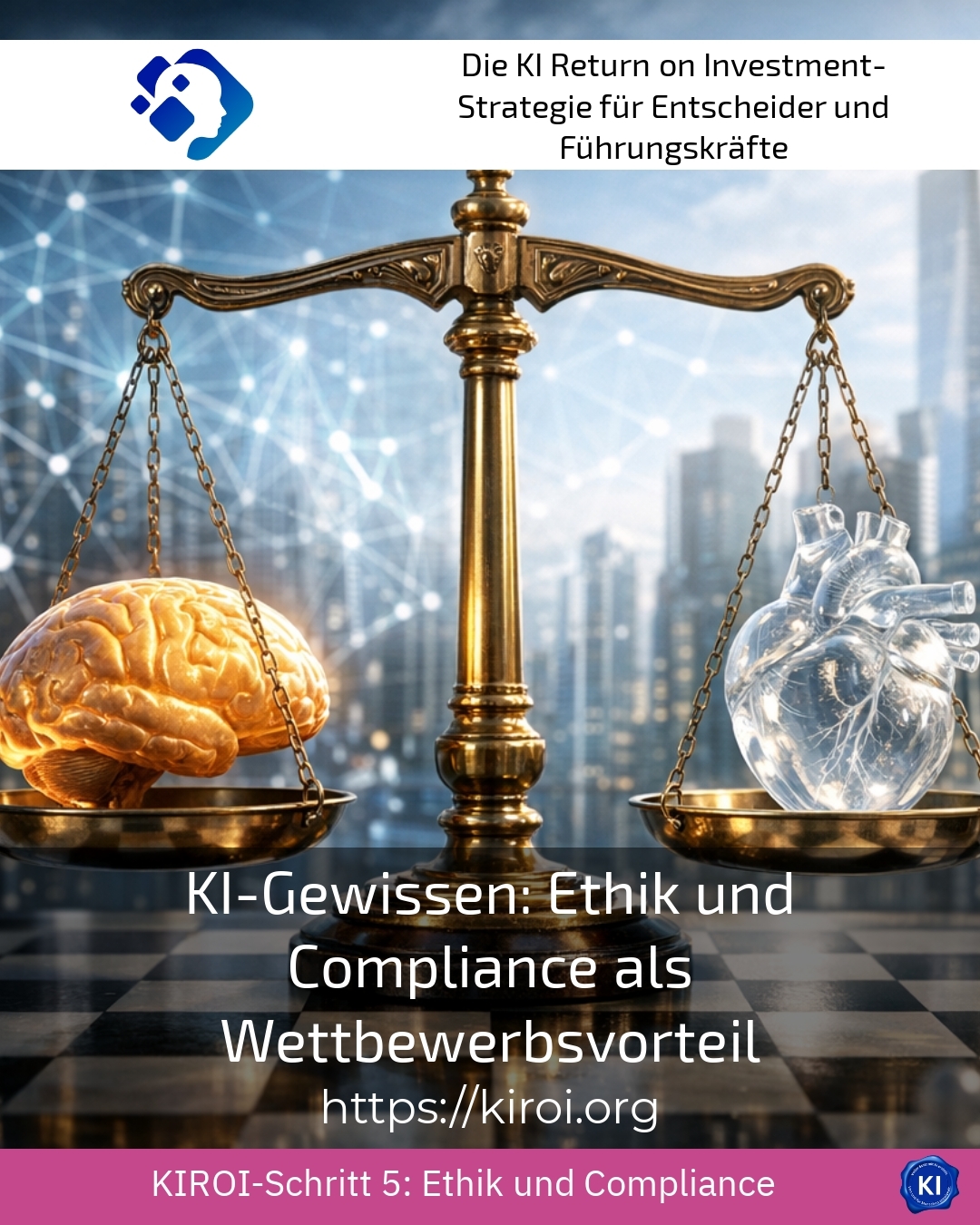
Can a machine actually distinguish between right and wrong, and why might this question determine the economic success of your company in the coming years? The rapid development of algorithmic systems presents organizations with entirely new challenges that go far beyond technical implementation issues and touch upon fundamental aspects of corporate management. AI Ethics: Ethics and compliance as a competitive advantage It is evolving into a key strategic differentiator that forward-thinking companies are already leveraging today. While many organizations are still hesitant and waiting, pioneers in various industries are recognizing the enormous opportunities that come from a responsible approach to intelligent systems. This introduction takes you through a comprehensive exploration of the possibilities, risks, and concrete options for action in this dynamic field.
Why moral guidelines for algorithmic systems are essential
The integration of intelligent systems into business processes is advancing relentlessly and fundamentally changing the way companies make decisions and interact with their stakeholders. It is becoming increasingly clear that technical capabilities alone are not sufficient to ensure long-term success. For example, a leading European financial services provider had to realize that its automated credit scoring system systematically discriminated against certain population groups, leading to significant reputational damage and legal consequences. A large insurance company, on the other hand, invested early on in transparent algorithms and was thus able to sustainably strengthen the trust of its customers. In the healthcare sector, clinics often report that patients respond more positively to diagnostic support when it can be explained in a comprehensible way.
Implementing ethical principles in automated decision-making processes requires a holistic approach that encompasses both technical and organizational aspects and involves all relevant stakeholders. Companies that act proactively in this area often report improved customer relationships and increased employee satisfaction. AI Ethics: Ethics and compliance as a competitive advantage This manifests itself in concrete business metrics such as higher customer retention and reduced liability risks.
Best practice with a AIROI customer
A medium-sized company in the manufacturing sector faced the challenge of automating its quality control processes without compromising the long-term employment of its employees or delivering defective products to customers. The transruptions coaching accompanied this project over several months and supported the management team in developing clear ethical guidelines for the use of image recognition systems. The employees were involved from the very beginning of the transformation process and received training that helped them perceive the new technologies as support rather than as a threat. Particularly important was the establishment of transparent communication channels through which concerns and improvement suggestions could be raised at any time. The result of this holistic approach was not only a significant reduction in the error rate but also a measurably increased level of job satisfaction among the workforce. Customer feedback also showed that open communication about the use of intelligent systems was perceived as a quality feature and strengthened trust in the brand.
Viewing regulatory requirements as an opportunity
European legislation is increasingly developing binding frameworks for the use of algorithmic systems, and companies do well to understand this development not as a burden but as a strategic opportunity [1]. In the banking sector, it is already evident today that institutions with robust governance structures can bring new products to market more quickly because they need to spend less time on subsequent adjustments. Automotive manufacturers that invested early in comprehensible decision logics for assistance systems now benefit from shorter approval processes and greater acceptance among safety-conscious customers. Retailers, in turn, report that transparent personalization algorithms lead to higher conversion rates because customers are more willing to follow recommendations that they can understand.
Compliance in this context means much more than simply fulfilling legal minimum requirements; it involves actively creating a trustworthy ecosystem that provides security and guidance for all involved parties. AI Ethics: Ethics and compliance as a competitive advantage It only achieves its full effect when companies go beyond the mandatory program and establish a genuine culture of responsibility [2]. Pharmaceutical companies, for example, use strict internal standards as a selling point with hospitals and doctors who place the highest demands on data protection and traceability.
Concrete steps to implement ethical standards
The practical implementation of ethical principles begins with an honest assessment of the systems already in place and their potential impact on various stakeholder groups. A structured approach, as pursued by transruptive coaching in the accompaniment of transformation projects, helps identify risks early and develop appropriate countermeasures. Telecommunications providers, for example, have successfully formed interdisciplinary teams that bring together technical, legal, and ethical perspectives. Energy providers report that regular audits of their pricing algorithms not only minimize regulatory risks but also provide valuable insights for product improvements. Logistics companies, in turn, use feedback loops to continuously review the fairness of their route optimization systems with respect to drivers.
Trust as the most valuable currency in the digital age
In a time when scandals involving data misuse and algorithmic discrimination regularly make headlines, customer, employee, and business partner trust becomes a crucial differentiating factor that directly impacts business success [3]. Insurance companies that communicate transparently about how their risk assessment systems work often report a higher willingness of their customers to disclose relevant information. Human resources services that openly inform about the functioning of their applicant management systems more easily attract qualified candidates in competitive labor markets. The education sector shows that schools and universities that have established clear ethical guidelines for learning software experience greater support from parents and students.
Transruptions coaching helps organizations systematically build their credibility and communicate with credibility without falling into superficial marketing clichés. Insights from collaboration with various industries show that authentic transparency is often more effective than elaborate image campaigns. It’s not about being perfect; it’s about the willingness to admit mistakes and continuously improve.
Best practice with a AIROI customer
An international trading company wanted to improve its customer communication through chatbots and automated recommendation systems, but faced concerns from its regular customers who valued personal advice and had distrust of impersonal systems. As part of the transruptive coaching process, a comprehensive participatory process was developed in which customer councils were actively involved in shaping the new systems. The participants were able to articulate their preferences and concerns and had their suggestions directly taken into account during the development process. The introduction of a transparency portal, where customers could always see which data had been used for what purpose, was particularly effective. This open communication strategy led to surprisingly positive response even from initially skeptical customers. The conversion rates of automated recommendations eventually exceeded those of traditional counseling sessions, because the built-up trust significantly increased acceptance.
AI Ethics: Ethics and compliance as a competitive advantage in practice
The theoretical benefits of responsible technology use can be illustrated through numerous concrete examples that show how companies of various sizes and industries benefit from this approach [4]. Media companies that design their recommendation algorithms in such a way that they actively counteract filter bubbles gain subscribers who value quality journalism. Travel portals that forgo manipulative dark patterns and instead rely on honest price comparisons build loyal customer relationships that are more economically valuable than short-term conversion optimizations. Manufacturers of medical devices that comprehensively validate and document their diagnostic algorithms open up markets with particularly strict regulatory requirements.
Accompanying by experienced partners can help avoid typical pitfalls and adapt proven practices from other contexts. Clients often report that it is the outside perspective that opens up valuable perspectives that were overlooked internally. Transruptive coaching does not offer ready-made solutions; rather, it supports organizations in finding their own authentic path.
Employees as the key to ethical transformation
No even the most sophisticated policy will have any effect unless it is understood and lived by the people within the organization. That is why training and awareness-raising are key success factors. Manufacturing companies report that employees who understand the ethical foundations of their work with automated systems work more engaged and carefully. Customer service teams in call centers that know why certain decisions are made this way and not another can communicate this more convincingly. Development teams in software companies that integrate ethical considerations into their work from the outset produce more robust and socially acceptable products.
The issues that organizations come to transruptive coaching about often encompass exactly these questions of internal communication and cultural development. It is regularly shown that technical implementations fail when the human dimension is neglected. Successful transformations, on the other hand, are characterized by a close interplay between technical and organizational measures.
My AIROI Analysis
After intensive work on this topic, I am presented with a clear picture that encompasses both challenges and significant opportunities. Integrating ethical principles into algorithmic systems is no longer merely an optional philosophical exercise; it is a business-critical necessity that can determine success or failure. Companies that hesitate or act only superficially here not only risk their reputation but also risk regulatory sanctions and the loss of important business relationships. At the same time, for forward-thinking organizations, there are significant opportunities for differentiation in increasingly saturated markets.
The AIROI analysis highlights that the return on investment of ethical measures is often underestimated because it does not always directly translate into traditional metrics. However, trust, reputation, and employee engagement are factors whose economic value cannot be overestimated in the long term. Consulting transformation projects by experienced partners can make the difference between a superficial compliance exercise and a real cultural transformation. Companies should not seek the perfect solution, but rather establish a continuous improvement process based on openness, willingness to learn, and authentic engagement. AI Ethics: Ethics and compliance as a competitive advantage Therefore, it is not a static goal but a dynamic journey that organizations must design together with their stakeholders.
Further links from the text above:
[1] European Commission – Regulatory Framework for Artificial Intelligence
[2] Bitkom – Guidelines for the use of Artificial Intelligence
[3] AlgorithmWatch – Independent research on algorithmic systems
[4] Accenture – Responsible AI Insights
For more information and if you have any questions, please contact Contact us or read more blog posts on the topic Artificial intelligence here.










 Deutsch
 English (UK)