
Have you ever wondered why some organizations seem to glide effortlessly into the digital era while others, despite enormous investments, stall and ultimately fall behind?
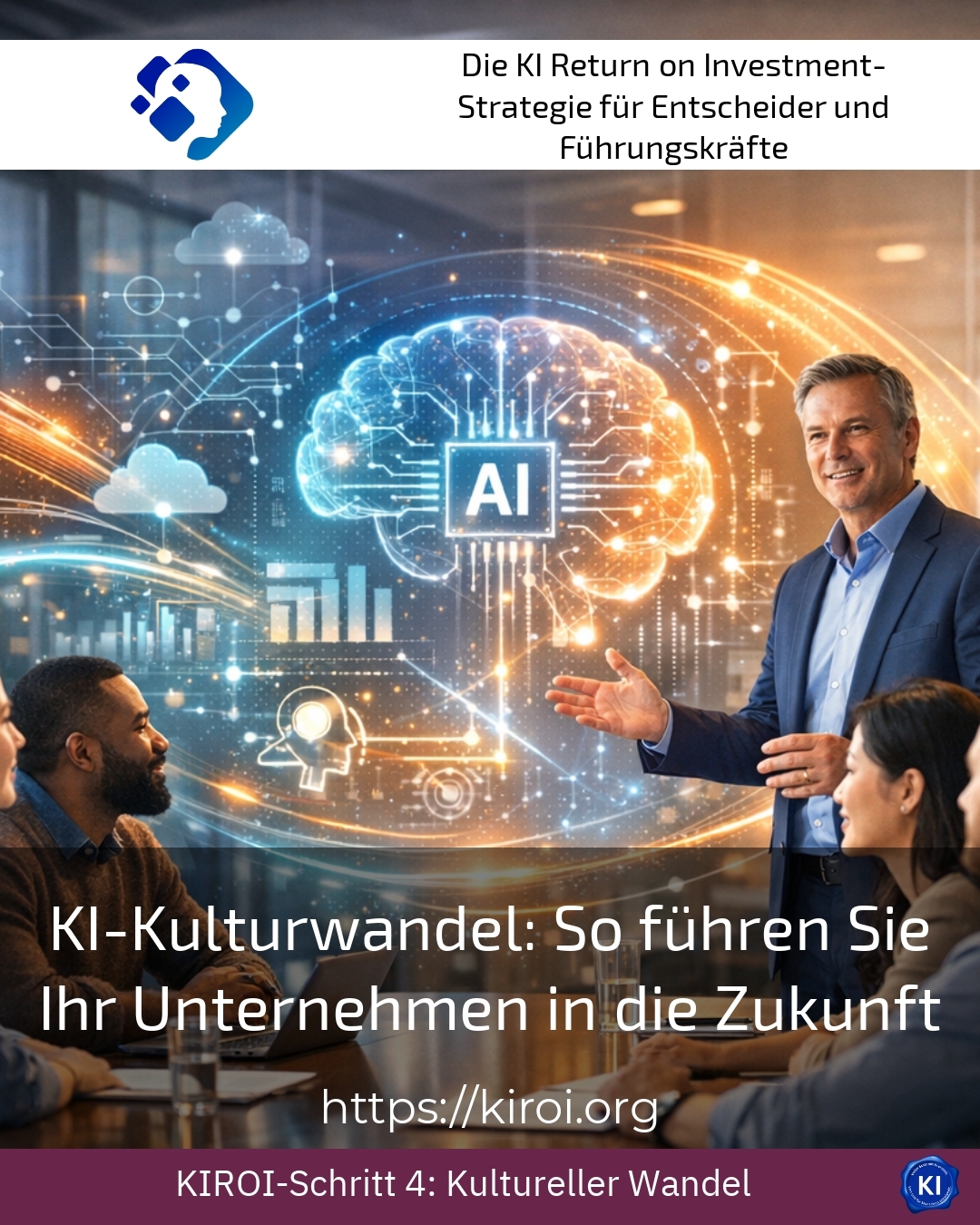
The answer rarely lies in the technology itself. It is rather hidden in the minds of the people. AI cultural change It presents leaders with completely new challenges. These challenges require a rethinking at all levels. Traditional management methods often reach their limits in this regard. The introduction of intelligent systems fundamentally changes work processes. It also transforms the way teams collaborate. At the same time, new requirements arise for communication and leadership. Many companies significantly underestimate this cultural dimension. It is precisely this that determines whether the transformation is a success or failure. In this article, you will learn how to make your organization future-proof.
Why the AI culture shift means more than just technology
The implementation of intelligent systems rarely faces technical hurdles. Often, executives report resistance from their employees. This resistance is rooted in fears and uncertainties. Employees fear the loss of their jobs. They worry about their relevance within the company. Some feel overwhelmed by the speed of change. These emotional aspects deserve special attention and support.
For example, a medium-sized manufacturing company implemented automated quality control. The technology worked flawlessly. Nevertheless, individual employees sabotaged the system unintentionally. They did not trust the results and checked them manually. This led to double work and frustration on all sides. Only through intensive communication and training did the situation change. The management initially underestimated the cultural factor [1].
Another example illustrates a logistics company with similar experiences. There, route optimizations were implemented using intelligent algorithms. However, the drivers consistently ignored the suggestions. They trusted their years of experience more than the system. It was only when they were actively involved in the development process that acceptance increased. Their expertise now flowed into improving the algorithms. This created a win-win situation for all involved.
Similar patterns are also evident in the healthcare sector. A group of clinics implemented diagnostic support systems for radiologists. At first, the doctors felt their expertise was in question. Some perceived the technology as a threat to their professional identity. Through transparent communication and training, the perception changed. Today, the radiologists highly value the system as a valuable second opinion.
The role of leaders in AI cultural change
Leaders play a key role in transforming organizations. Their behavior significantly shapes the corporate culture. Their attitude towards new technologies is also passed on to the teams. When managers themselves are skeptical, this significantly increases resistance. Conversely, enthusiastic leaders can act as catalysts. They inspire their employees and overcome fears through example.
Transruptions coaching intensively supports executives in addressing these challenges. It accompanies them on the path to an open innovation culture. The focus is on individual needs and the specificities of the company. Each organization brings its own history and dynamics with it. It is important to understand and constructively utilize these factors.
A financial services provider was facing the introduction of automated advisory processes. The middle-level executives initially blocked the project. They feared a loss of power and a decline in the importance of their departments. Through targeted workshops, they recognized new opportunities for themselves. Their role changed from controller to strategic designer. This new positioning suddenly boosted the entire transformation significantly [2].
A trading company experienced similar dynamics in its purchasing department. The introduction of predictive ordering systems greatly unnerved the experienced buyers. They had built up decades of expertise in demand forecasting. Now an algorithm was supposed to take over and replace their core competence. The solution lay in redefining their tasks and responsibilities. Today they focus on strategic supplier relationships and negotiations. The routine is taken over by the system, the strategy remains in the hands of the people.
An energy provider also underwent this transformation in impressive fashion. Grid control was increasingly optimized and improved by intelligent systems. Engineers with years of experience suddenly felt degraded and disrespected. Management responded with a comprehensive training program for all concerned. The experts were trained to become supervisors of the automated systems. Their experience is now being used to validate and improve the algorithms.
Best practice with a AIROI customer
An internationally operating machine engineering company faced a comprehensive digital transformation of its service processes and turned to us for accompanying advice. The management had recognized that intelligent predictive maintenance systems held enormous potential for customer service and efficiency improvement. However, it quickly became apparent that the technical implementation represented only a fraction of the challenges and that the greater part lay in the cultural transformation. The on-site service technicians, many of whom had been with the company for decades and were equipped with enormous experience, initially reacted with clear skepticism to the planned changes. They feared that their craftsmanship expertise and knowledge built up over years would be devalued and that they could ultimately be replaced by automated systems. We supported the company over several months with intensive workshops and individual coaching for executives and key individuals in the teams. A crucial turning point was the involvement of experienced technicians in the development of the predictive models, so that their knowledge was actively incorporated into the systems and they experienced themselves as co-creators rather than as victims. Today, the employees report a significantly improved quality of work because routine diagnoses are automated and they can focus on complex problem solutions that require real expertise. The executives have learned to understand change processes as continuous support rather than as a one-time project with a defined endpoint.
Communication as the foundation of successful change
Open and transparent communication forms the foundation of any successful transformation. Employees want to understand why changes are necessary and where the journey is headed. They want to know how their role will evolve. Unclear messages create uncertainty and fuel rumors within the company. A clear vision, on the other hand, provides direction and creates trust among all.
One insurance company demonstrated exemplary communication during its transformation in a very impressive way. The management regularly informed about the progress and challenges in the process. Rejections were also openly discussed and used as learning opportunities. Employees were able to ask questions and received honest answers to them. This transparency built trust and significantly reduced resistance [3].
One pharmaceutical company adopted a different approach with similar success for all. It established change ambassadors in all departments as contact points and intermediaries. These multipliers mediated very effectively between management and the workforce. They translated strategic goals into understandable everyday language for the colleagues. At the same time, they conveyed concerns and suggestions upward to management. This resulted in a continuous dialogue at eye level between all levels.
A telecommunications provider used internal social media platforms extensively for exchange. There, teams openly and honestly shared their experiences with new technologies. Success stories inspired other departments to replicate and try out the ideas. Problems were discussed together and solutions developed within the community. This bottom-up communication greatly complemented the company’s official channels.
Competence development as a strategic investment in the future
Technological change requires new skills at all levels of the organization. Technical knowledge alone is no longer sufficient in today’s modern work environment. Digital competence is now a basic prerequisite for almost all activities. At the same time, social skills are becoming increasingly important for collaboration. Creativity and critical thinking significantly differentiate people from automated systems.
An automotive supplier invested heavily in the further education of its workforce for the future. Each employee received access to digital learning platforms and training offerings. Executives completed special programs to digitally transform their departments. The investment paid off significantly in terms of higher innovation capabilities in the competition [4].
A media company took a particularly creative approach to developing the skills of its teams. It established intergenerational tandem groups for knowledge exchange between young and old. Younger employees taught digital skills to their more experienced colleagues. In return, the latter passed on industry and company knowledge to the young ones. The mutual respect greatly strengthened the cohesion within the organization.
A construction company relied on hands-on learning formats with concrete connections to the work. Employees developed their own digitalization ideas for their areas in workshops. The best suggestions were actually implemented and rewarded by management. This created intrinsic motivation for the change among the people involved themselves. The people saw themselves as creators rather than as objects of change.
AI cultural transformation requires patience and a long-term perspective
Cultural changes do not happen overnight in an organization. They require patience and a long-term commitment from all involved parties. Setbacks are part of the process and should be viewed as learning opportunities. Those who expect quick results will often be disappointed and frustrated. Sustainable change takes time and consistent guidance from experienced partners.
Transruptions coaching accompanies companies along this long journey through transformation. It provides guidance and helps overcome obstacles along the way. The support is tailored to the individual’s specific needs and is always focused on the human being. In all activities and considerations, the human being is always at the center.
A traditional company in the food industry took three years to transform intensively. The first few months brought little visible progress for all involved. The management team temporarily doubted the course it had chosen and its correctness. However, they persevered and eventually reaped the fruits of their perseverance. Today, the company is considered a pioneer in its industry when it comes to digitalization [5].
A family-owned machine manufacturing company experienced similar phases on its transformation path. The generational change in leadership greatly accelerated the cultural transformation. Young successors brought fresh perspectives and consistently demanded change. At the same time, they respected the experience of the older generation and their contributions. This mix proved particularly fruitful for all involved.
A service company began its transformation with a small-scale pilot project. A single department served as an experimental field for new working methods and techniques. Successes were documented and gradually transferred to other areas. This organic approach minimized risks and created success stories for everyone. The transformation grew from within and was driven by the people.
Best practice with a AIROI customer
A traditional retail company with several hundred branches across the DACH region faced the challenge of fundamentally modernizing its work culture and adapting it to the requirements of the digital era. The company’s management had recognized that intelligent systems for inventory management and customer analysis could offer significant competitive advantages when properly deployed. However, the workforce, characterized by decades of analog work practices and established routines, was initially very reluctant to embrace the planned changes. We were invited to accompany the cultural aspect of this comprehensive transformation and provide impetus for sustainable change that involves all employees. In a first phase, we conducted intensive discussions with executives at all levels of the hierarchy to identify and understand existing concerns and resistance. It became clear that many store managers saw their autonomy threatened and feared becoming mere execution units of centrally controlled systems. We took this concern seriously and, together with the management, developed a concept that explicitly granted local decision-making scope and even expanded it through better information bases. Store managers gained access to data and analyses that were previously unavailable to them, improving their decision-making. This transformed the perception of threat into enrichment and the perception of external control into empowerment in daily work. After about eighteen months of intensive support and continuous adaptation of the approach, the management reports a significantly improved collaboration between the central and store levels as well as a new culture of shared learning.
Error culture as the key to innovation and progress
An open culture of error significantly and sustainably supports the innovation capabilities of organizations. Those who punish mistakes hinder people’s enthusiasm for experimentation and creativity. Those who see them as opportunities for learning promote continuous improvement in all areas. This attitude must be practiced and actively promoted by the leadership level.
A technology company consciously institutionalized regular failure Fridays in its work routine. Teams openly shared their failures and the lessons learned from them. Initially, employees were reluctant because of the new openness. But as leaders took the lead with their own mistakes and shared them, others opened up. Today, the format has become an integral part of the corporate culture [6].
One chemical company successfully pursued a similar approach in its innovation management. It established an internal innovation lab with its own rules and freedom of action. There, employees were allowed to experiment without fear of negative consequences. Failed projects were not viewed as failures, but as valuable experiences. This culture increasingly radiated positive influence to other areas of the company.
A consulting company systematically established after-action reviews after each major project. Successes and failures were equally analyzed and thoroughly documented. The findings were incorporated into knowledge databases and made available to everyone. In this way, organizational learning was systematically embedded in the company’s daily practices.
My AIROI Analysis
The transformation of organizations through intelligent technologies represents one of the greatest leadership challenges of our time and requires a deep understanding of cultural dynamics within companies. From my experience in guiding numerous transformation projects, it is repeatedly shown that the technological aspect is indeed important, but ultimately accounts for only about twenty to thirty percent of success, and the rest depends on cultural factors. The true leverage lies in communication, competence development, and the creation of an atmosphere of trust among all stakeholders within the company. Leaders often underestimate how profoundly the change impacts the identity of employees and how existential changes can feel for individual people. It is not enough to introduce new systems and offer training if the fundamental fears and concerns are not addressed and taken seriously by the leadership. AI cultural change It requires empathy, patience, and the willingness to have uncomfortable conversations and resolve conflicts constructively in the interest of the common goal. At the same time, this transformation offers enormous opportunities for organizations that take the cultural aspect seriously and treat it as a strategic priority in their planning. They can not only become more efficient but also more attractive as employers for talented people seeking a meaningful workplace. My recommendation to leaders is therefore to take the cultural change at least as seriously as the technical implementation and to provide adequate resources for support and development. Transruptive coaching offers valuable support and impulses for companies that want to pursue this path consistently and strive for sustainable change. The future belongs to those organizations that can reconcile technology and humanity and at the same time leave no one behind on the common path forward.
Further links from the text above:
[1] McKinsey Insights on Organisational Transformation
[2] Harvard Business Review – Change Management
[3] Gartner – Organizational Change Management
[4] World Economic Forum – Future of Work
[5] BCG – Digital Transformation
[6] Forbes – Innovation and Technology
For more information and if you have any questions, please contact Contact us or read more blog posts on the topic Artificial intelligence here.






 Deutsch
 English (UK)