
Have you ever wondered why some teams seem to effortlessly develop brilliant ideas, while others, despite enormous effort, fall flat and fail to achieve any real breakthroughs?
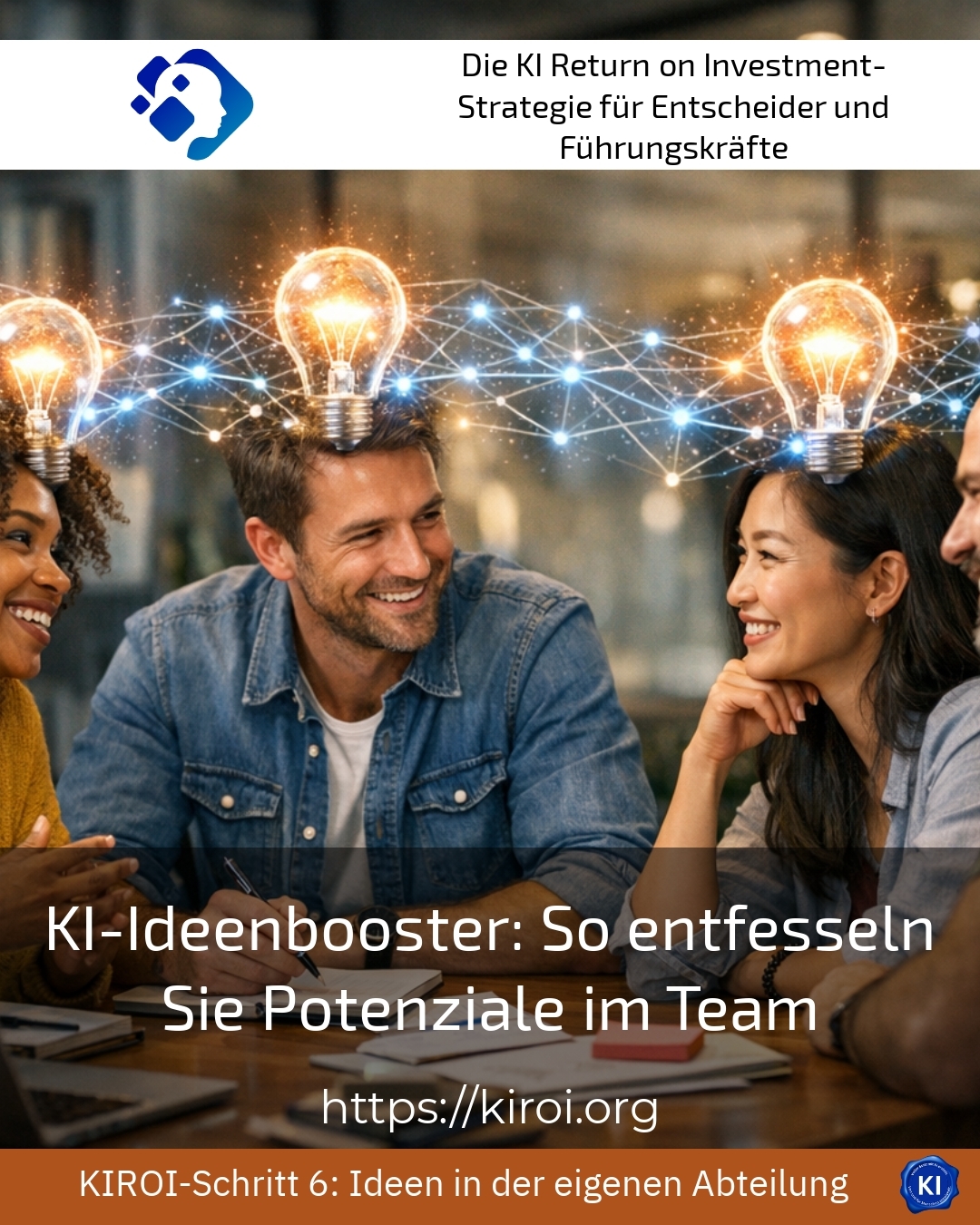
The answer often lies in the way creative processes are structured and supported. In a time when the AI idea booster Becoming a strategic tool has opened up completely new possibilities for companies that are willing to question traditional ways of thinking. The fusion of human creativity with intelligent systems fundamentally changes how innovations emerge and how teams work together. Many executives report that only through this combination have they discovered the full potential of their employees. This is not about replacing people. Rather, synergies emerge that seemed unimaginable before.
Why traditional brainstorming methods reach their limits
Classical creativity techniques have served valuable purposes for decades. They brought teams together and fostered the exchange of ideas. Yet it is increasingly evident that these methods alone are no longer sufficient. The complexity of today’s challenges often exceeds what a single team can capture in a limited time. This is where intelligent support comes into play, serving as a catalyst for creative processes.
In mechanical engineering, for example, engineering teams face the challenge of developing ever more complex products. They must simultaneously consider sustainability requirements, cost efficiency, and technical innovation. A medium-sized manufacturer of industrial robots recently used new approaches to generate ideas. The team was able to develop concepts for more energy-efficient drive systems within a few weeks. These concepts would have taken months using conventional methods.
It is similar in the food industry, where product developers are constantly looking for new recipes and packaging solutions. A dairy in southern Germany experimented with support systems in the development of lactose-free products. The results surprised even experienced food technologists due to their variety and practicality in practice. In retail, merchandising teams use these tools to create innovative store layouts. This generates ideas for customer experiences that stand out from the competition.
The AI Ideas Booster as a catalyst for collective intelligence
If we are talking about a AI idea booster By speaking, we by no means mean a substitute for human creativity. Rather, it is an impetus that helps teams move beyond conventional thinking patterns. The technology acts as a sparring partner, creating unexpected connections and bringing perspectives that might otherwise be overlooked in team daily life.
One pharmaceutical company used this approach in the search for new dosage forms for existing active ingredients. The research department received proposals based on findings from completely different fields. For example, an analogy to the textile industry led to an innovative patch concept with delayed-release of active ingredients. In the automotive sector, design teams use similar methods for the interior design of future vehicles. They combine insights from architecture, ergonomics, and behavioral psychology.
The experiences from the insurance industry are particularly interesting. There, product managers, with the support of intelligent systems, develop customized policies for new risk scenarios. The increasing importance of cyber risks requires creative solutions that go beyond traditional insurance products. One insurer was thus able to develop a modular concept for small and medium-sized businesses that makes individual risk protection affordable.
Best practice with a AIROI customer
An internationally operating logistics company with more than two thousand employees faced the challenge of fundamentally rethinking its warehouse logistics. The existing system had grown over the years and was increasingly showing inefficiencies that negatively affected delivery times and customer satisfaction. As part of a transruptive coaching process, we supported the leadership team in systematically integrating intelligent tools into the idea generation process. First, we jointly defined the key problem areas and formulated precise questions that served as a starting point. The team learned how to use technology as a thinking partner without neglecting their own expertise. Within six weeks, more than forty concrete optimization proposals were developed, twelve of which were directly incorporated into the implementation planning. The experience was particularly valuable in that even long-standing employees developed new enthusiasm for innovation processes. The combination of human experience and technological support led to solutions that no one would have thought possible before. The company was able to reduce its lead times by almost thirty percent while simultaneously increasing employee satisfaction.
How to specifically introduce the AI Ideation Booster into your team
The successful integration of new tools requires more than just the provision of technology. It requires thoughtful guidance that takes into account both technical and human aspects. Many teams report initial apprehension, which quickly subsides when the first successes become visible.
In the banking sector, this is particularly evident in the development of new financial products. A regional bank used the new approach to develop innovative savings models for young target groups. The team of experienced bankers and young digital experts found a common working mode in this way. The technology served as a bridge between the different perspectives and experience horizons. In the construction industry, architecture offices, on the other hand, employ these methods for the early design phase. They generate variants and concepts that are then discussed and further developed in the team.
The chemical industry offers another insightful example of practical application. A specialty chemicals company faced the challenge of developing greener alternatives for established industrial cleaners. The development team used supporting systems to identify active compound combinations that are both effective and biodegradable. The process led to several promising approaches, which are now undergoing testing.
The role of the leader in unleashing creative potential
Leaders play a crucial role in how teams adopt and utilize new methods. They create the framework within which creativity can flourish. They signal through their own behavior whether experimentation is desirable or not. The introduction of a AI idea booster-Therefore, approaches also require a reflection on one's own leadership understanding.
In healthcare, this is evident in the development of new patient services. A group of clinics wanted to improve their patient communication and expand their digital offerings. The clinic management decided on a participatory approach with technological support. Nurses, doctors, and administrative staff worked together on ideas for better information offerings. The diversity of perspectives led to solutions that actually met the needs of all involved parties.
In the media industry, newsrooms use similar approaches for format development. A publishing house experimented with ideation for new podcast formats and interactive content. The journalists were initially skeptical, but quickly recognized the added value as a source of inspiration. In the energy industry, strategy teams, with this support, develop scenarios for transforming their business models. They can thus better understand complex interactions and identify innovative approaches.
Practical steps for implementation in everyday business life
The concrete implementation often begins with a pilot project within a manageable framework. This allows teams to gain experience without putting too much pressure on the situation. It is important to openly communicate and reflect on both successes and challenges.
A textile company began its transformation process with its sportswear design department. The team used new tools to develop pattern designs and explore color concepts. The results convinced the management, so the approach was gradually expanded to other areas. In the tourism sector, tour operators employ similar methods for developing new destination concepts. This allows them to identify trends early and bring innovative offerings to market faster.
The telecommunications industry also offers interesting application areas, particularly in the development of tariff models and customer retention programs. One mobile operator used the supporting approach to rethink loyalty programs. The marketing team generated ideas that went far beyond traditional point systems and offered real added value for different customer groups.
Best practice with a AIROI customer
A medium-sized family business in the metalworking sector approached us with the desire to fundamentally renew its innovation culture. The company had perfected traditional manufacturing methods successfully over the decades, but was increasingly feeling the pressure from new competitors and changing customer requirements. As part of the transruptive coaching, we first worked on the leadership team’s attitude towards new technologies and methods. It quickly became clear that existing reservations were based on uncertainty, not fundamental rejection. We gradually introduced the team to the new possibilities and showed concrete examples of applications from related industries. After about three months, the attitude had noticeably changed, and the employees began to independently develop ideas for using the new tools. What was particularly impressive was the proposal by a long-time master who wanted to use the technology to optimize tool change processes. This initiative came completely unexpectedly and showed how much the company’s willingness to innovate had changed. Today, the company is a pioneer in its region when it comes to integrating intelligent systems into traditional manufacturing processes.
Challenges and How to Meet Them
The introduction of new methods rarely goes without obstacles. Resistance can come from various sources and take on different forms. Professional guidance helps to anticipate and constructively address these challenges.
In the education sector, such resistance is particularly evident in the development of new teaching concepts. Teachers understandably worry about their role and the pedagogical value of their work. One educational institution addressed these concerns through transparent communication and practical workshops. It demonstrated how technology can support, but cannot replace, the work of teachers. In agriculture, advanced farms use similar approaches to develop sustainable farming methods. Here, traditional knowledge and new possibilities come together, which can initially create tensions.
The real estate industry faces similar challenges in developing new housing concepts. Project developers use supporting systems to respond to changing lifestyles and work habits. This generates ideas for flexible space concepts that enable various usage scenarios. The combination of industry experience and technological support leads to innovative solutions.
My AIROI Analysis
The integration of intelligent systems into creative team processes is still in its infancy, but already showing impressive results. From my consulting practice, I can report that companies that take this path not only become more innovative, but also positively change their team culture. AI idea booster It acts as a catalyst for changes that go far beyond mere idea generation.
The key to success is the way in which the introduction and support are implemented. Technology alone is not enough; a well-thought-out change strategy is needed that involves people and addresses their fears. The leadership level must take the lead and demonstrate that experimentation is desirable and that mistakes are part of the learning process. In various industries, from heavy industry to the service sector, there are striking parallels.
Transruptive coaching provides a structured framework for this transformation. It combines methodological approach with individual adaptation to the specific corporate culture. Experience shows that teams that are professionally supported benefit faster and more sustainably from the new opportunities. They not only develop better ideas, but also a greater willingness to continuously innovate. The future belongs to those who can skillfully combine human creativity and technological possibilities.
Further links from the text above:
[1] McKinsey – The State of AI
[2] Harvard Business Review – Innovation Topics
[3] Gartner – Artificial Intelligence Insights
[4] Forbes – AI Coverage
For more information and if you have any questions, please contact Contact us or read more blog posts on the topic Artificial intelligence here.







 Deutsch
 English (UK)