
What distinguishes organizations that thrive through intelligent automation from those that fail despite high investments?
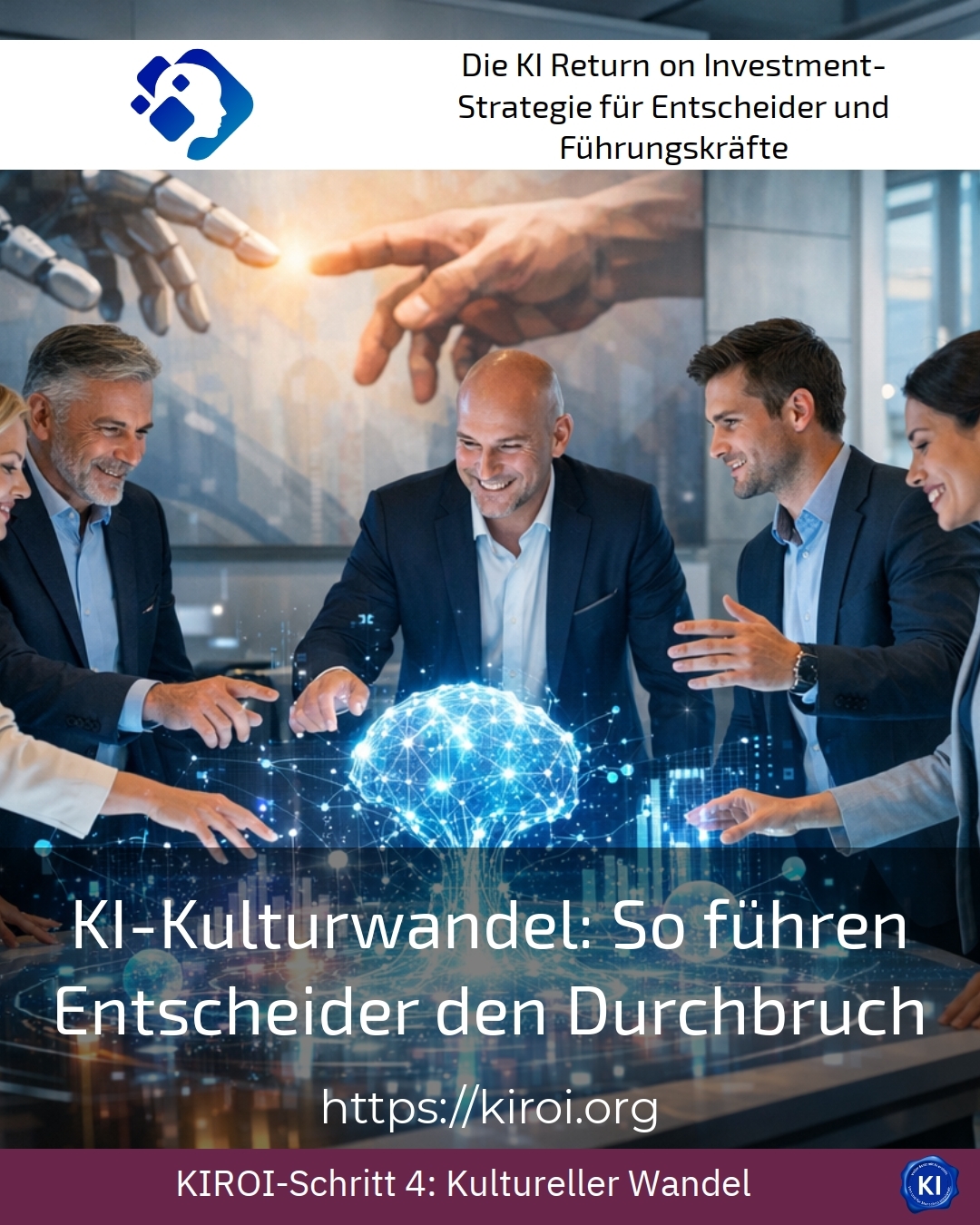
This question currently concerns numerous executives in German companies. The crucial difference lies rarely in the technology itself. Rather, the AI cultural change About the success or failure of transformative initiatives. It’s about much more than introducing new tools. Leadership figures face the task of changing mindsets and redesigning work processes. Clients often report resistance that they hadn’t expected. The technical implementation often succeeds smoothly. But the human side of change proves to be far more complex. This is where real transformation begins, and this is where breakthroughs occur.
Understanding the hidden dimension of AI cultural transformation
Organizations invest substantial sums in modern systems and algorithms. They train employees in new applications and optimize processes. Yet the expected results often remain elusive. The reason lies in an underestimated dimension that many decision-makers overlook [1]. It concerns the cultural readiness of an organization for fundamental changes. For example, an engineering company implemented a state-of-the-art predictive maintenance solution. However, the technicians hardly used the system because they trusted their own experience more. A logistics service provider implemented automated route planning, but the dispatchers routinely circumvented the suggestions. A medium-sized automotive supplier experienced similar problems when introducing quality forecasts. These examples clearly show that technical excellence alone is not enough.
Cultural transformation requires a deep understanding of human behavior. Over the years, employees develop certain work routines and beliefs. These cannot be changed overnight through instructions or training. Instead, organizations need gentle guidance and clear impulses for new mindsets [2]. Transruptive coaching supports leaders in shaping these sensitive processes. The focus is not on technology, but on the human being.
Best practice with a AIROI customer
A traditional manufacturer of precision tools faced a major challenge. The management had invested in an intelligent manufacturing control system. However, the experienced craftsmen in the production showed significant reservations regarding the system’s recommendations. They felt that their professional expertise was not sufficiently valued and feared a loss of significance. As part of the coaching process through transruptive coaching, the company developed a completely new approach. The craftsmen were made active partners of the system and their expertise was integrated into the calibration process. Regular dialogue rounds enabled an exchange between human and machine on equal footing. After six months of intensive coaching, the management reported a fundamental change in attitude. The craftsmen now saw the system as supporting their expertise rather than threatening it. The acceptance rate rose from initially twenty percent to over eighty percent. This example impressively illustrates the importance of the cultural aspect in transformation projects.
Redefining leadership in the age of intelligent systems
The role of leaders is fundamentally changing due to technological developments. Decision-makers must now demonstrate not only strategic foresight but also emotional intelligence. They guide their teams through phases of uncertainty and change. A pharmaceutical company experienced this particularly intensively during the introduction of intelligent laboratory assistance systems [3]. Initially, the scientists feared that their creative research work could be standardized. A financial services provider observed similar concerns regarding the implementation of automated risk analysis. The analysts saw their core competence threatened and reacted with subtle rejection. An energy provider, in turn, observed that its network technicians initially ignored the new forecasting tools.
The AI cultural change It demands new skills and behaviors from leaders. They must build bridges between established working methods and new opportunities. Communicating changes not as revolutions but as evolution helps. Employees respond more positively to gradual adjustments than to radical upheavals. At the same time, leaders must not underestimate the urgency of the transformation. It is necessary to find a balance between empathy and determination.
Communication as the Key to AI Culture Change
The way organizations communicate about changes significantly influences their acceptance. Many companies make the mistake of highlighting only the technical benefits. They talk about increased efficiency, cost savings, and process optimization. However, these messages often fail to resonate with employees. A retail company recognized this when introducing intelligent inventory management systems. The warehouse employees only heard the message of automation and feared job cuts. A telecommunications provider experienced similar resistance when implementing chatbot technologies in customer service. An insurance company observed resistance to the introduction of automated claims processing.
Successful communication focuses on the added value for the employees themselves. It explains how new tools can facilitate and enrich daily work. It shows what new development opportunities open up through the change [4]. Transruptions coaching supports leaders in developing such communication strategies. This creates messages that are both rational and emotionally appealing.
Best practice with a AIROI customer
An international auditing firm planned the introduction of intelligent analysis tools for the audit practice. The partners and audit managers initially feared a devaluation of their professional experience. The initial communication had focused heavily on efficiency gains and reducing errors. This message was interpreted by many as criticism of their previous work. As part of the mentoring process, the leadership team developed a completely new communication strategy. The focus shifted to expanding human judgment through technical support. Auditors were positioned as indispensable interpreters and decision-makers who were relieved of routine tasks. Regular success stories from within the organization reinforced this message. Colleagues reported positive experiences and new development opportunities. This narrative shift led to a significantly higher acceptance of the new tools. Twelve months later, the company recorded a significant increase in usage intensity and employee satisfaction.
Design structures and processes for sustainable transformation
Cultural change requires more than good intentions and inspirational speeches. It requires concrete structural changes that support and reward new behaviors. Many organizations neglect this aspect and wonder why they are not seeing results. One chemical company found that its bonus systems continued to reward only short-term production goals. Therefore, employees had no incentive to invest time in learning new systems. Another construction company observed that its project managers were not recognized for using new planning tools. A media company recognized that its organizational structure hindered the necessary collaboration between the editorial and technical teams.
The successful AI cultural change it requires a systematic adaptation of structures and incentive systems [5]. Organizations need to create spaces where experimentation and learning are possible. They need clear responsibilities for guiding transformation processes. Leaders need time and resources to lead their teams through the change. These structural prerequisites do not arise automatically; they must be consciously designed.
Empowering teams and constructively using resistance
Resistance to change is a natural reaction and by no means fundamentally negative. It can provide valuable insights into vulnerabilities and potential for improvement. A mechanical engineering company learned this when introducing an intelligent maintenance system. The criticism of experienced technicians led to important adjustments of the algorithms. A food producer benefited from the objections of its quality inspectors during the implementation of automated controls. A textile company significantly improved its new planning system through the feedback from its production workers.
Therefore, leaders should not suppress resistance but use it as a resource. They can involve skeptical employees in pilot projects and benefit from their critical perspective. Transruptive coaching provides insights on how such constructive dialogues can be structured. Often, solutions emerge that neither leaders nor employees would have found on their own. These collaborative processes strengthen trust and identification with change.
Developing long-term perspectives for cultural breakthrough
Sustainable cultural change is not a project with a defined endpoint, but a continuous process. Organizations that understand this approach view transformation as an ongoing journey rather than a one-time initiative. A software company established regular reflection rounds to monitor the progress of cultural development. An industrial corporation introduced continuous monitoring of employee satisfaction using new systems. A healthcare provider developed a mentoring program that brought together experienced and technically-savvy employees.
The AI cultural change It is particularly successful when it is understood as a shared learning journey. Leaders and employees develop new skills and working methods together. Mistakes are seen as learning opportunities rather than being criticized as failures. This attitude requires patience and perseverance from all involved. However, it pays off through profound and lasting change.
My AIROI Analysis
Observations from numerous accompanying projects reveal a clear pattern. Organizations rarely fail due to technology, but rather due to the cultural dimension of transformation. Decision-makers often underestimate the emotional and social aspects of change processes. They focus too much on technical implementation and neglect the human side. This approach regularly leads to disappointments and wasted investments. Successful organizations, on the other hand, consciously invest in the cultural accompaniment of their transformation projects. They create spaces for dialogue, reflection, and shared learning. They adapt their structures and incentive systems to the new requirements. They constructively address resistance and actively involve skeptical employees. These organizations understand that technological excellence only has an impact when it is supported by a willing culture. The AIROI methodology helps leaders to take both dimensions into account equally. It provides a structured framework for the systematic design of cultural transformation. At the heart of all activities is the empowerment of people. Experience shows that this integrative approach leads to more sustainable results than purely technology-oriented initiatives. Decision-makers who choose this path often report positive surprises and unexpected synergies.
Further links from the text above:
[1] Harvard Business Review – Organizational Culture
[2] McKinsey – Insights on People and Organisational Performance
[3] MIT Sloan – Artificial Intelligence Insights
[4] Gartner – Change Management Resources
[5] BCG – AI and Digital Transformation
For more information and if you have any questions, please contact Contact us or read more blog posts on the topic Artificial intelligence here.







 Deutsch
 English (UK)