
Will your teams soon be replaced by intelligent systems – or can you qualify them in time for the digital transformation so that they become indispensable agents of the future?
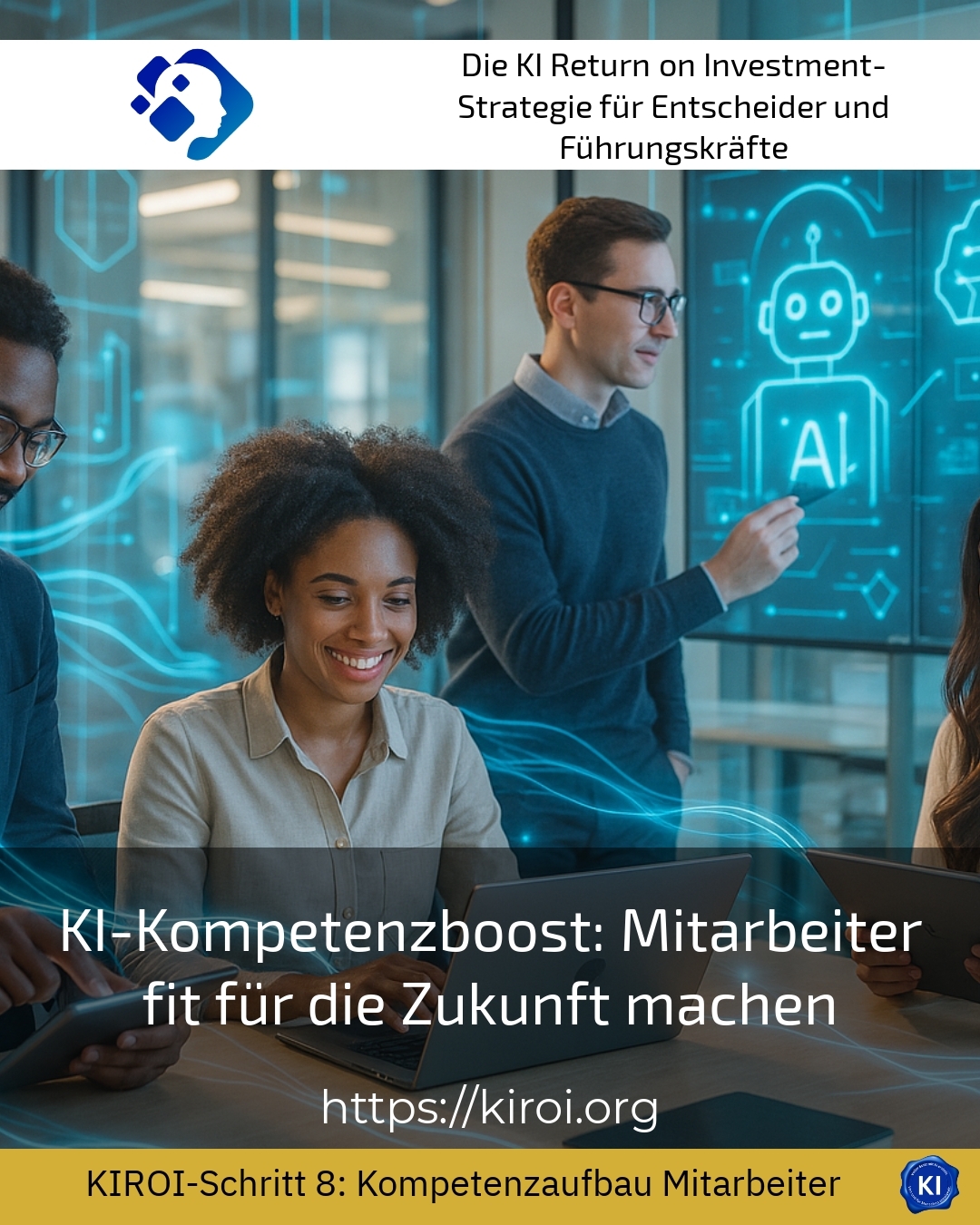
This question currently concerns executives and human resources managers in almost all sectors of the economy, because technological change is advancing at a pace that poses significant challenges for many organizations. AI Skills Boost This is not a short-term trend, but a strategic necessity that determines the competitiveness of companies. Employees who today understand the fundamentals of intelligent technologies and can apply them will be the driving forces behind innovation and sustainable business success tomorrow. In this article, you will learn how to systematically develop your workforce, which methods have proven themselves in practice, and why a well-thought-out qualification strategy is much more than just a cost factor.
The strategic dimension of employee qualification in the digital age
Many companies still underestimate the transformative power of a comprehensive AI Skills Boost It is possible to achieve integration of intelligent systems into operational processes. The integration of intelligent systems into operational processes requires not only technical infrastructure, but above all people who can use these tools in a meaningful way. This does not mean training every employee to become a programmer. Rather, the focus is on developing a fundamental understanding that enables the recognition of opportunities and the assessment of risks.
For example, a medium-sized manufacturing company could empower its quality control officers to monitor and optimize automated testing systems. In retail, sales representatives benefit from understanding how personalized recommendation systems work and how to use them in customer interactions. In the logistics industry, the added value is also evident when dispatchers can grasp the basic principles of predictive route optimization. These examples illustrate that there is enormous potential across industries that can be unlocked through targeted training initiatives.
The AI competence boost as the foundation for sustainable transformation
Accompanying transformation projects with experienced partners like transruptions-coaching can make the difference between superficial training and profound competence development. Clients often report that they were initially unsure how to approach the topic in their teams. The concern about resistance and fears is quite justified. However, with the right approach, such obstacles can be overcome.
Professional coaching helps organizations develop individual learning paths tailored to the specific needs and prior knowledge of employees. In the financial sector, this may mean training in using automated risk assessment systems. In the healthcare sector, caregivers could learn how intelligent documentation tools can facilitate their daily work. And in the construction industry, a thorough understanding of digital planning tools enables more efficient resource utilization. Transruptions coaching supports companies in such projects and provides valuable insights for shaping change.
Best practice with a AIROI customer
An internationally operating machine engineering company faced the challenge of qualifying its approximately three hundred service technicians to handle predictive maintenance systems. The initial skepticism within the team was great, as many long-standing employees feared that their experience and expertise could be undermined by automated systems. As part of a structured support program, an initial assessment of the existing competencies was first carried out. It was revealed that many technicians already recognized patterns intuitively, which should also identify the new systems. This knowledge was integrated into the training curriculum, allowing the technicians to use their expertise as a foundation for understanding the new technology. Within six months, the initial rejection turned into constructive collaboration between human and machine. The service technicians recognized that the intelligent systems did not replace their work, but rather complemented and enhanced it. The first-response rate in service incidents increased significantly, and at the same time, employee satisfaction improved sustainably. This success was largely due to the fact that the qualification initiative was not perceived as a top-down initiative, but as a collaborative development process in which all stakeholders were able to actively participate.
Methodological approaches for effective competence development
The question of which learning formats are best suited cannot be answered in a general way, as it depends on numerous factors, including the company culture, the available resources, and the learning preferences of the target audience. Blended learning concepts that combine online modules with face-to-face workshops have proven their worth in many contexts. They allow participants to develop theoretical foundations at their own pace. At the same time, they provide space for practical exercises and the exchange with colleagues.
In the insurance industry, for example, agents can learn to use automated claims assessment through simulation-based training. The advertising industry benefits from practical workshops where creative teams can experiment with generative systems and explore their limits. And in the real estate industry, interactive case studies enable the learning of intelligent object assessment methods. The decisive success factor is always the combination of theoretical knowledge with practical application in professional everyday life.
With the AI competence boost, overcome resistance and foster acceptance
Change processes almost always encounter certain reservations, and that is completely normal. People are creatures of habit, and new technologies can trigger uncertainty. The topics that leadership often encounter in transruptive coaching often revolve around this very challenge. How can you involve employees without overwhelming them? How can you evoke enthusiasm instead of provoking resistance? And how can you establish a learning organization that understands change as an opportunity?
The answers to these questions are as diverse as the companies themselves, but some basic principles have proven themselves. Transparent communication about goals and expected changes creates trust and reduces fears. The early involvement of employees in the design of qualification measures significantly increases their acceptance. In the hospitality industry, this could mean that experienced service staff are involved in developing training for intelligent reservation systems. In the pharmaceutical industry, researchers can contribute their expertise when it comes to training in using data-driven analysis tools. Also in the transport sector, drivers who actively participate in the introduction of assistance systems later use them more constructively.
Best practice with a AIROI customer
A regional savings bank with several branches early recognized that the digitalization of customer service required new skills. The challenge was to qualify over two hundred advisors from different age groups and technical proficiency to use intelligent support for advice. Instead of relying on uniform group training sessions, a differentiated approach was chosen that took into account the individual learning needs. In-depth modules were offered for technically savvy employees, while others were initially able to master the basics. Particularly successful was the establishment of internal learning partnerships, in which digitally savvy younger colleagues collaborated with more experienced advisors. This mutual transfer of knowledge resulted in both parties benefiting from each other. The younger employees learned from the consulting expertise of their colleagues while simultaneously passing on their technical knowledge. After the completion of the project, eighty percent of the participants reported that they felt confident in handling the new systems and considered them a real asset to their consulting work. Customer satisfaction in the branches that participated in the pilot project increased measurably.
Long-term perspectives and continuous development
A one-off AI Skills Boost It is not enough to remain permanently competitive. Technological development is advancing continuously, and companies must create structures that enable and promote lifelong learning. This requires a corporate culture in which curiosity and a willingness to experiment are valued, and where mistakes can be seen as learning opportunities [1].
In the energy sector, this means, for example, that network managers should be regularly informed about the latest developments in intelligent load management. The media industry benefits from ongoing training on automated research and analysis tools. And in the education sector, teachers can learn through continuous training how to effectively integrate adaptive learning platforms into their teaching. Creating structures for continuous learning is not a purely organizational task; it also requires the willingness of the senior management to provide the necessary resources and to lead by example [2].
Measurable success and lasting impact of the AI competence boost
The investment in employee training must also have measurable results in the long term, although not all effects are immediately quantifiable. In addition to classic metrics such as productivity increases or reduction of errors, softer factors also play an important role [3]. Employee retention can be improved when employees feel that their employer is investing in their development. Innovation capacity increases when teams have the necessary knowledge to creatively apply new technologies. And employer attractiveness increases when a company positions itself as a future-oriented learning place.
In the automotive sector, this is reflected, for example, in the ability to react faster to market changes. The chemical industry benefits from optimized research processes when scientists can fully exploit the capabilities of computer-based molecular analysis. And in retail, a deep understanding of demand forecasts enables more efficient warehousing and less waste. Transruptions coaching helps companies not only achieve these successes, but also make them visible and use them as a foundation for further development steps.
My AIROI Analysis
Systematic training of employees on how to handle intelligent technologies is not an optional measure, but a strategic necessity that determines the long-term success of organizations. My analysis shows that companies that invest early in the development of their workforce have significantly better conditions to meet the challenges of digital transformation. It is crucial not to view training measures as isolated projects, but as an integral part of a comprehensive transformation strategy.
The examples from various industries illustrate that the success of such initiatives depends significantly on the way they are designed and implemented. A participatory approach that involves employees from the outset achieves consistently better results than top-down approaches that mandate training as a mandatory requirement. The guidance provided by experienced partners such as transruptions coaching can help avoid common pitfalls and adapt proven methods to the specific context of a company.
What seems particularly important to me is the realization that competence development is a continuous process that will never really be complete. Companies that establish structures for lifelong learning and promote a corresponding culture are better equipped to meet the challenges of a constantly changing work environment. Investing in people remains the most important investment that a company can make, because technology alone does not create value; it is only when it is in the hands of competent and motivated employees that it can fully realize its potential.
Further links from the text above:
[1] McKinsey: Building a Learning Culture
[2] Harvard Business Review: Organisational Learning
[3] World Economic Forum: Future of Work
For more information and if you have any questions, please contact Contact us or read more blog posts on the topic Artificial intelligence here.







 Deutsch
 English (UK)