
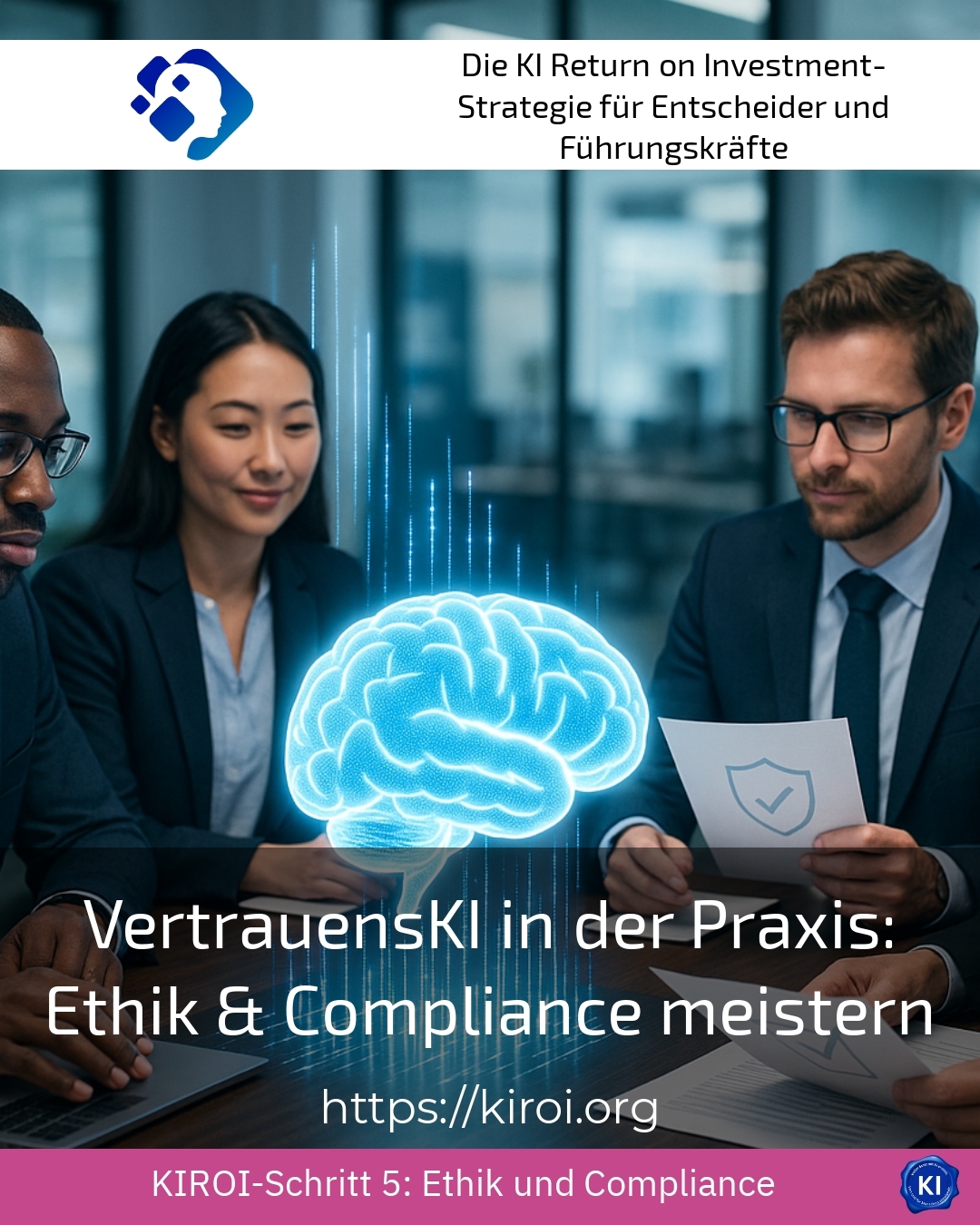
Imagine your automated systems make thousands of decisions daily. These decisions affect people, careers, and financial fortunes. But who takes responsibility when something goes wrong? This is precisely where the journey begins Trustworthy AI in Practice: Mastering Ethics & Compliance. Companies face the monumental task of deploying intelligent technologies responsibly. The challenge lies not solely in the technology itself, but in the moral dimension of every automated action. This article shows you concrete ways to implement ethics. You will learn how compliance requirements can be successfully managed.
The fundamental importance of ethical principles in intelligent systems
Intelligent systems now permeate almost every area of business. They analyse application documents and assess creditworthiness. They optimise supply chains and personalize customer interactions. This inevitably raises ethical questions of considerable importance. For example, one financial service provider used a scoring system. This system automatically assessed credit applications. After a few months, the company noticed systemic disadvantages. Certain population groups were unconsciously rated worse [1]. The cause lay in historical training data with embedded biases. Cases like these highlight the need for ethical guardrails.
An insurance group implemented automated claims assessments. The system significantly sped up processing. However, complaints from policyholders mounted. Rejection rates varied sharply depending on postcode. An internal audit revealed discriminatory patterns. The company had to overhaul the entire system [2]. This experience highlights the importance of continuous monitoring. Ethical principles must be integrated from the outset.
In healthcare, intelligent systems support diagnostic decisions. A hospital used algorithmic recommendations for treatment prioritisation. The software was based on efficiency criteria and resource optimisation. However, doctors noticed problematic tendencies with older patients. The system overweighted statistical survival probabilities. Human dignity and individual circumstances were disregarded. Following intensive discussions, ethical correction mechanisms were introduced [3].
Best practice with a AIROI customer
A medium-sized company from the financial sector approached transruptions-coaching. The firm had already implemented an evaluation system for investment recommendations. However, initial compliance audits had revealed significant shortcomings. Those responsible recognised the urgent need for ethical revision. As part of the support, we first analysed all critical decision points. We identified seven potential discrimination risks in the existing algorithm. Together, we developed a multi-stage verification process for all system outputs. This process integrated both automatic and human control levels. Employees received training on recognising problematic patterns. After six months of intensive support, the company achieved full compliance. Customer complaints decreased by more than seventy percent. Management reported increased trust from regulatory authorities. This case impressively demonstrates the value of systematic ethical guidance.
Trusted AI in Practice: Systematically Meeting Compliance Requirements
Regulatory frameworks are continuously tightening worldwide. Companies must observe and document numerous requirements. European legislation presents particularly high demands. Transparency and traceability are central to this [4]. A telecommunications provider had to completely revise its customer service automation. The supervisory authority criticised a lack of explainability in decisions. Customers could not understand why certain offers were made. The company invested significantly in documentation systems.
An online retailer used dynamic pricing. The algorithms adjusted prices individually based on user profiles. Consumer protection advocates criticised the practices as non-transparent and potentially discriminatory. The retailer had to fundamentally rethink its pricing policy. It introduced fairness checks for all price adjustments. Additionally, it implemented a complaints procedure for affected customers [5]. These measures significantly improved its public image.
In human resources, many companies are automating application processes. A large employer used video analysis for pre-selection. The system evaluated facial expressions, speech, and non-verbal cues. Data protection authorities sharply criticised this practice. The legal basis for such analyses was questionable. The company discontinued the system and returned to traditional methods. This case highlights the limits of technological capabilities.
Practical steps for implementing trustworthy AI in practice
Successful implementation requires structured procedures. Firstly, companies should conduct a comprehensive risk analysis. This analysis identifies potential ethical problem areas early on. Subsequently, it is advisable to establish an ethics committee. This committee continuously monitors all relevant decision-making processes. It ideally consists of internal and external experts.
A pharmaceutical company established a permanent ethics committee. This committee reviews all research applications with automated components. Each new implementation undergoes a multi-stage approval process. All decisions are documented thoroughly and transparently [6]. External auditors regularly check the system for vulnerabilities. This structure has proven to be extremely effective.
A bank implemented an early warning system for problem patterns. The system monitors all automated decisions in real-time. Upon deviations from defined fairness metrics, immediate notification occurs. Specialists then analyse the causes and implement corrective measures. This proactive approach effectively prevents major compliance breaches.
Best practice with a AIROI customer
An insurance company sought support for an ethical realignment. Existing automation solutions no longer met current standards. Clients frequently reported uncertainty regarding regulatory requirements. This was precisely the situation this insurance group found themselves in. We intensively supported the project team over eight months during the transformation. First, we collaboratively developed a comprehensive code of ethics for all systems. This code defined clear boundaries for automated decisions. Subsequently, we trained all relevant employees in ethical fundamental principles. The training included practical case studies and discussion rounds. We developed a dashboard for the continuous monitoring of ethical key figures. This dashboard enables transparent reporting to management. The supervisory authority later praised the company's exemplary compliance structure. Customer satisfaction measurably increased due to improved transparency in decision-making.
Cultural change as the foundation for sustainable ethics
Technical measures alone are not enough. Companies need a fundamental cultural change. Ethical responsibility must be anchored in the company's DNA. Leaders play a crucial role as role models. They must actively embody and demand ethical principles.
A technology group introduced mandatory ethics training for all developers. This training raises awareness of the potential impact of technical decisions. Participants learn to ask critical questions. They systematically question assumptions in data and models [7]. The company reports significantly improved decision quality.
A retail chain established regular ethics reviews for all projects. Each new initiative undergoes a structured ethical assessment. The assessment criteria are transparent and visible to all employees. In cases of critical concerns, projects can be halted or modified. This culture of responsibility strengthens customer trust sustainably.
In the automotive sector, ethical responsibility is gaining particular importance. Driver assistance systems make decisions in fractions of a second. The moral implications of these decisions are significant. Consequently, one manufacturer established an external ethics advisory board. This board provides advice on all safety-critical developments. Collaboration with philosophers and social scientists enriches the perspectives [8].
Strengthen Trustworthy AI in practice through transparent communication.
Open communication with stakeholders is essential. Customers want to understand how decisions are made. Companies should proactively inform about their ethical standards. This transparency builds trust and differentiates from the competition.
A credit institution regularly publishes reports on its fairness metrics. These reports show the distribution of credit decisions according to various criteria. Customers can request a human review if their application is rejected. This option is actively communicated and made easily accessible. The institution has registered increased customer confidence as a result [9].
A recruitment agency transparently informs applicants about automated pre-selection steps. Candidates learn which criteria the software evaluates. They can submit additional information to supplement their application. This openness is very positively received by applicants.
Best practice with a AIROI customer
An international logistics company requested support with its communication strategy. The firm had implemented advanced optimisation systems for route planning. However, employees and customers expressed concerns regarding surveillance and fairness. Transruptions Coaching supported the development process of a comprehensive communication strategy. We developed understandable explanations of the technical functionalities, which were prepared in several formats for different target groups. For employees, we developed interactive information events with Q&A sessions. Customers received transparent presentations of their data usage and choices. Management was trained in authentic crisis communication. Following implementation, the workplace atmosphere noticeably improved. Employees reported increased understanding and reduced scepticism. Customer loyalty stabilised again after initial declines. This case exemplifies the value of professional communication support for technology projects.
My AIROI Analysis
Addressing ethical questions in intelligent systems is not an optional extra. It is a business necessity of strategic importance. My analysis clearly shows that companies with a proactive ethics strategy are more successful in the long term. They avoid costly compliance breaches and reputational damage. They gain the trust of customers, employees, and regulators.
The examples presented demonstrate both pitfalls and pathways to success. Companies should integrate ethical considerations from the outset of a project. Subsequent corrections are significantly more complex and costly. The establishment of permanent monitoring structures is essential. Regular audits by internal and external experts ensure quality. Training for all stakeholders creates the necessary awareness.
The cultural dimension appears particularly important to me. Technical solutions can only be effective if the corporate culture supports them. Leaders must actively embody ethical responsibility. They must create spaces for critical discussions. Employees should be encouraged to voice concerns openly.
Regulatory requirements will continue to increase. Companies that invest today will be better positioned tomorrow. They will have established processes and experienced teams. Support from experienced partners such as transruptions-Coaching can significantly ease the way. External perspectives enrich internal discussions. They help to identify and address blind spots. Investing in ethical excellence pays off multiple times over.
Further links from the text above:
[1] AlgorithmWatch – Automated Decision Systems and their Impact
[2] BaFin – Supervision of Artificial Intelligence in the Financial Sector
[3] German Ethics Council – Statements on Digital Medicine
[4] European Commission – Regulatory Framework for AI
[5] Consumer advice centre – Information on algorithmic pricing
[6] Association of Innovative Pharmaceutical Manufacturers – Code of Ethics
[7] Bitkom – Guide to Ethical AI Development
[8] Verband der Automobilindustrie – Standards for Autonomous Systems
[9] Federation of German Banks – Transparency Initiative
For more information and if you have any questions, please contact Contact us or read more blog posts on the topic Artificial intelligence here.










 Deutsch
 English (UK)