
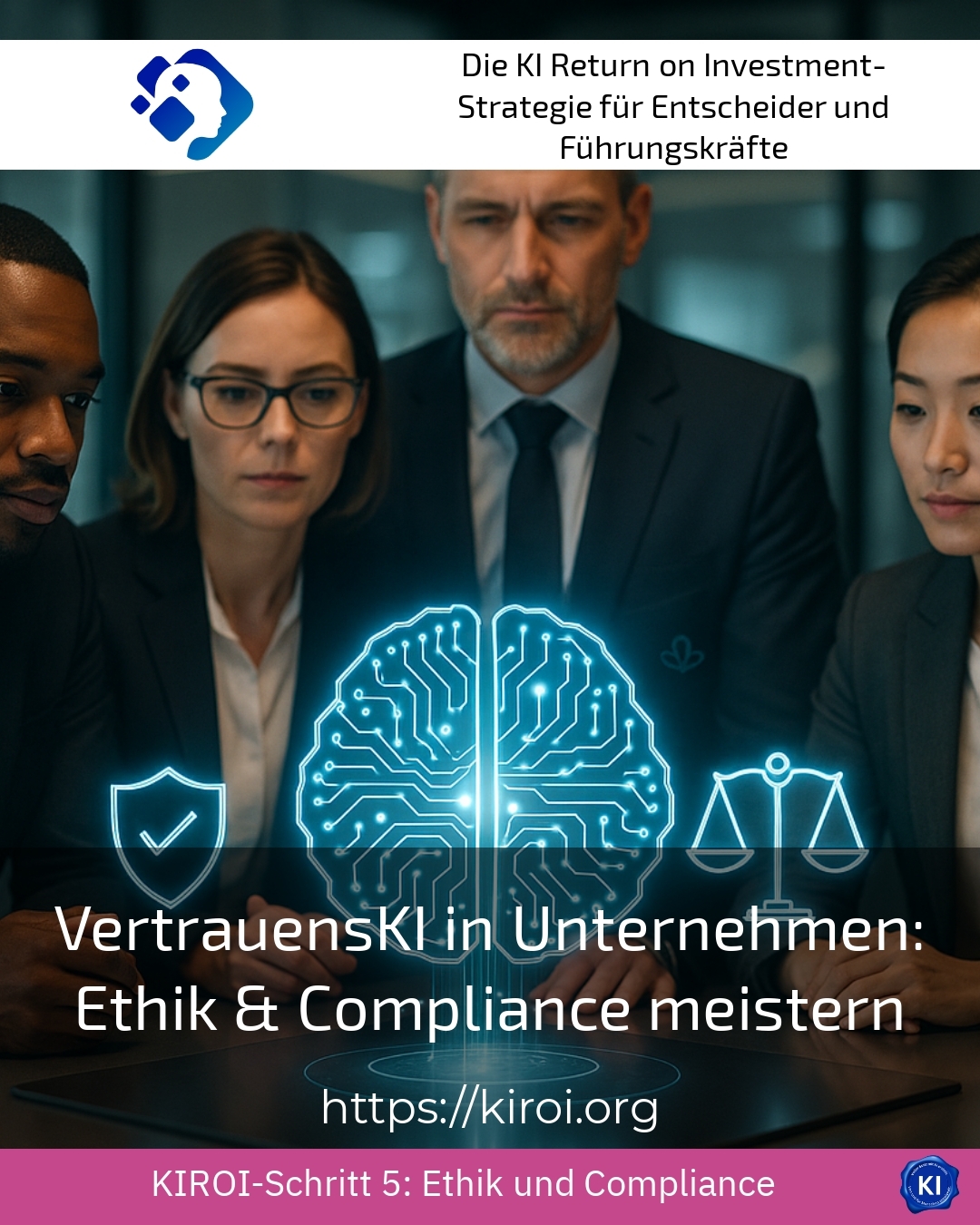
How can organisations ensure that their algorithmic systems not only operate efficiently, but also act in a morally defensible manner while meeting all regulatory requirements?
This question is currently occupying decision-makers in almost all sectors of the economy, because the integration of intelligent technologies into operational processes not only brings enormous opportunities, but also presents managers with complex challenges in the field of Trustworthy AI and the associated ethical and legal issues. The speed atridged with which these technologies are evolving frequently outpaces the adaptability of existing governance structures, which is why a proactive and thoughtful approach has become indispensable [1]. Companies face the challenging task of balancing technological innovation with social responsibility while remaining competitive.
Understanding the ethical dimension of intelligent systems
The implementation of algorithmic decision-making systems raises fundamental questions. These questions touch upon the self-perception of organisations. Companies must ask themselves which values their technological solutions should embody. They need to clarify how transparency can be guaranteed. And they must define who bears responsibility when automated processes produce flawed or discriminatory outcomes. These considerations are by no means purely theoretical in nature. They have tangible impacts on reputation, customer loyalty and, ultimately, economic success.
In the financial sector, for example, banks use intelligent systems for credit scoring. These systems analyse data within seconds. They make decisions that can significantly influence people's lives. A well-known financial institution recently had to discover that its algorithm systematically discriminated against certain population groups [2]. In the healthcare sector, clinics rely on diagnostic assistance systems that help doctors to detect diseases. Here too, biases in the training data can lead to problematic recommendations. Insurance companies, in turn, use predictive models for risk assessment, whereby the traceability of decision-making is often difficult to ensure.
Best practice with a AIROI customer
A medium-sized enterprise in the recruitment sector approached us with a specific concern. The company had introduced an automated applicant management system that analysed CVs and pre-selected candidates. After a few months, those responsible noticed that certain applicant groups were systematically under-represented. The management team was concerned about potential legal consequences and reputational damage. As part of our transruptions coaching support, we first analysed the underlying algorithms and identified problematic patterns in the historical training data. Together with the internal team, we developed a multi-stage review process that included both technical and ethical criteria. We implemented regular audits carried out by an interdisciplinary panel. The result was a fairer system that significantly improved diversity in the applicant pool while maintaining the efficiency of the selection process. Employees often report that they now have a better understanding of how the technology works and feel more confident using it.
Navigating compliance requirements in the context of trustworthy AI
The regulatory landscape is evolving rapidly. Legislators worldwide are working on frameworks. These frameworks are intended to regulate the use of intelligent technologies [3]. The European approach is considered particularly comprehensive in this regard. It places high demands on transparency, traceability, and human oversight. Organisations must categorise their systems accordingly. They must document what risks exist. And they must demonstrate what measures have been taken to minimise risk.
In the banking sector, this specifically means that institutions must document their algorithmic trading systems. They must prove that no market manipulation is taking place. For pharmaceutical companies, special challenges arise when using data analysis systems in drug development. The traceability of results is of central importance here for approval. In the automotive industry, manufacturers face the task of making the decision-making processes of autonomous driving systems transparent. This transparency is important not only for regulatory authorities, but also for consumer trust.
Practical strategies for responsible implementation
The successful integration of ethical principles and regulatory requirements requires a structured approach. First, companies should conduct a comprehensive inventory of their existing systems. This inventory identifies critical areas of application. It uncovers potential risks. And it forms the basis for the development of tailored governance structures.
For example, a logistics company used route optimization systems without fully considering their impact on employees. The algorithms maximised efficiency, but put drivers under considerable time pressure. A retail group deployed pricing algorithms that systematically showed higher prices in certain neighbourhoods [4]. A telecommunications provider used customer segmentation systems that led to discriminatory tariff offers. In all these cases, the Trustworthy AI at risk because ethical aspects were not sufficiently taken into account.
The establishment of an ethics committee can help to address these challenges. Such bodies bring together diverse perspectives. They evaluate new applications from various angles. They develop guidelines for responsible use. And they act as a point of contact for employees who wish to raise concerns. transruptions coaching support can provide valuable impetus when setting up such structures.
Best practice with a AIROI customer
An internationally active company from the energy sector sought our support for a demanding transformation project. The company wanted to use intelligent systems to optimise its power grid, but was facing significant compliance hurdles. The existing regulatory requirements were complex and partly contradictory. As part of our transruption coaching support, we jointly developed a structured approach to master these challenges. We began with a thorough analysis of the relevant regulations and identified overlaps as well as areas of conflict. Subsequently, we developed a governance framework that integrated technical, legal and ethical requirements. The involvement of various stakeholders, ranging from engineers and lawyers to representatives of regulatory authorities, was particularly important. The project lasted several months and required continuous adjustments. In the end, there was a robust system that not only improved the efficiency of grid operation, but also met all compliance requirements. Clients frequently report that this very interdisciplinary approach made the decisive difference.
Training and awareness-raising as key factors
Technology alone is not enough. People need to understand how systems work. They need to recognise where risks lie. And they must be empowered to make responsible decisions. Training programmes should therefore not only cover technical aspects. They should also address ethical issues. They should incorporate practical case studies. And they should provide space for discussion and critical reflection.
In the media industry, for example, editorial teams use recommendation algorithms that serve up personalised content. Journalists must understand how these systems work and what impact they can have on the formation of public opinion. Law firms employ tools for contract analysis and legal research, though the ultimate responsibility must always remain with the human expert [5]. In the education sector, universities use adaptive learning systems that analyse students' learning progress and provide individual recommendations. Here too, a critical awareness of the limitations and risks of such technologies is essential.
Embed trustworthy AI in the corporate culture
The sustainable integration of ethical principles requires a cultural shift. Values such as transparency, fairness and responsibility must be anchored in the corporate DNA. Leaders play a pivotal role in this. They must embody these values. They must communicate clear expectations. And they must create structures that encourage and reward responsible behaviour.
A consumer goods corporation integrated ethical criteria into its product development processes. Every new feature based on intelligent technologies went through a multi-stage review process. A technology company established an internal reporting system for ethical concerns. Employees could anonymously point out problematic practices. A financial services provider conducted regular ethics audits, in which external experts evaluated the deployed systems. These examples show that Trustworthy AI is not only a technical concept, but requires an organisational mind-set.
My AIROI Analysis
Dealing with ethical and regulatory aspects of intelligent technologies is not an optional extra, but a strategic necessity for forward-looking organisations. My analysis shows that companies which invest early in robust governance structures will benefit from this commitment in the long term. They avoid costly retrofitting and legal disputes. They strengthen the trust of their customers and business partners. And they position themselves as responsible actors in an increasingly scrutinised technological environment.
The transruption coaching support has proven to be a valuable aid for organisations facing the complex challenges of digital transformation. The combination of technical understanding, ethical reflection and practical implementation expertise makes it possible to develop tailored solutions. Clients frequently report that the interdisciplinary approach in particular has provided crucial impetus. The future belongs to those organisations that do not view technology as an end in itself, but use it as a tool in the service of human values and social responsibility. The development of trustworthy systems is a continuous process that requires attention, resources and, above all, a clear value orientation.
Further links from the text above:
[1] European approach to artificial intelligence – European Commission
[2] BaFin – Supervision of FinTech and innovative technologies
[3] EU AI Act – Overview and Requirements
[4] AlgorithmWatch – Civil Society Watch on Algorithmic Systems
[5] Bitkom – Artificial Intelligence in Business
For more information and if you have any questions, please contact Contact us or read more blog posts on the topic Artificial intelligence here.










 Deutsch
 English (UK)