kiroi.org

KIROI - Artificial Intelligence Return on Invest
The AI strategy for decision-makers and managers

Business excellence for decision-makers & managers by and with Sanjay Sauldie

KIROI - Artificial Intelligence Return on Invest: The AI strategy for decision-makers and managers

KIROI - Artificial Intelligence Return on Invest: The AI strategy for decision-makers and managers

Start » Tool testing in the KIROI step 2: How to successfully select AI tools
28 June 2025

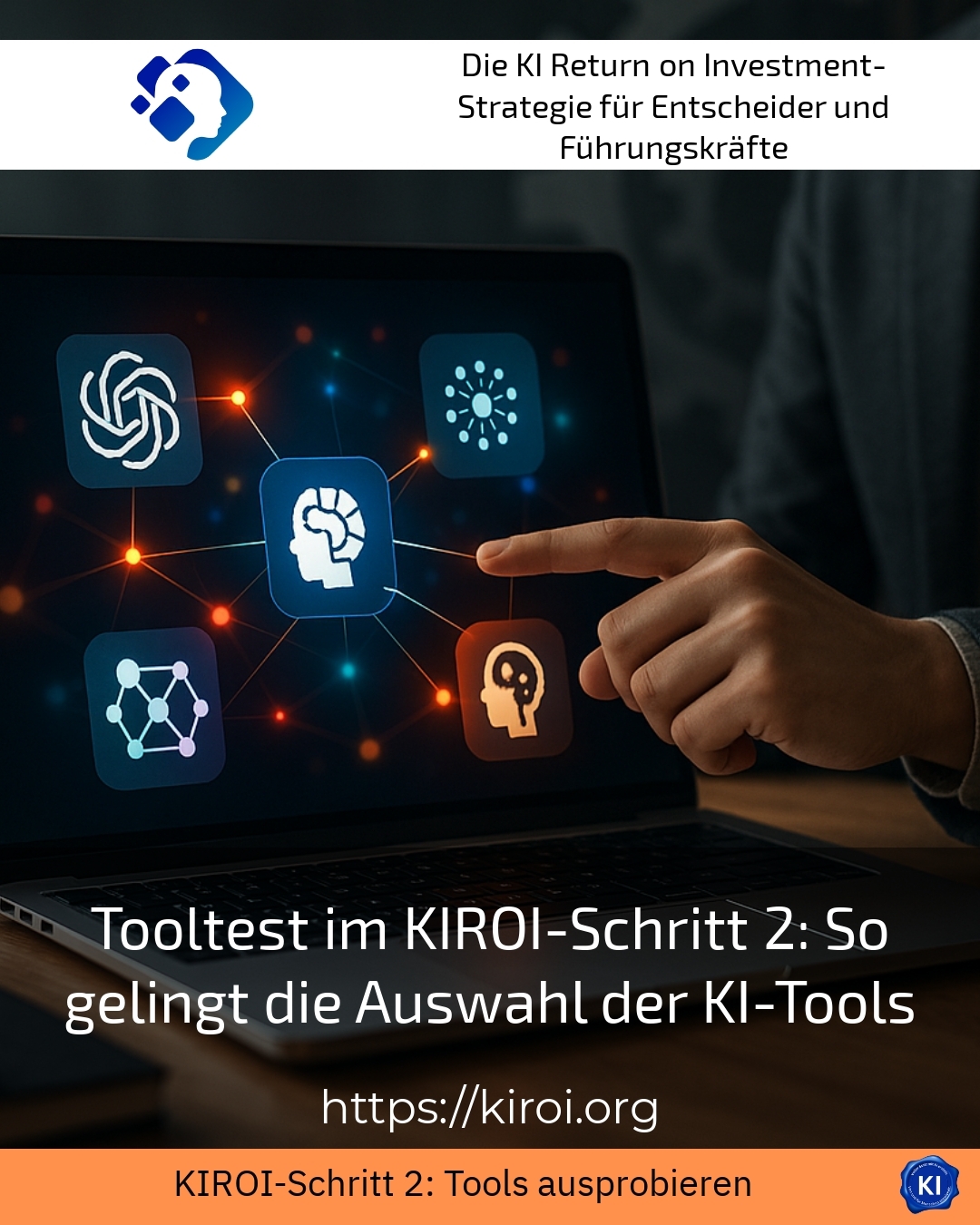
Tool testing in the KIROI step 2: How to successfully select AI tools

5
(475)

Many companies today face the challenge of finding the right tools for their digital projects. A tool test in the KIROI Step 2 is the decisive step in identifying the right solution. Many executives report that they lose a lot of time and energy without clear criteria and a structured approach. The tool test helps to reduce uncertainties and to specifically select suitable tools. It is not an end in itself, but a central building block for sustainable digitalisation projects.

What makes a tool test so valuable?

A tool test always begins with a precise analysis of the requirements. Companies first define concrete use cases and identify which functions they really need. Only then can the variety of offerings be meaningfully narrowed down. Many clients come to us because they are overwhelmed by the selection and unsure if the tools really fit their processes.

Structured tool testing thrives on transparency and communication. It is important to involve all relevant stakeholders and systematically gather feedback. This creates a solid basis for investment decisions. A tool test is not a one-off event but develops into a continuous optimisation process.

Real-world examples show how versatile tool testing can be. In financial analysis, tools help to analyse large volumes of data and create meaningful forecasts. In marketing, they can generate personalised content that is precisely tailored to the target audience. Significant efficiency gains are also evident in process automation, for example, in processing customer enquiries.

Tooltest: Practical examples from various industries

In the realm of data analysis, companies employ tools to perform predictive analytics. They analyse historical data and create forecasts for future developments. A tool test helps to find the right solution that can be seamlessly integrated into existing systems.

In marketing, companies use text generation and content creation tools. They automatically create blog posts, newsletters, and social media posts. A tool test shows which solution delivers the best results and how easy it is to use.

In recruitment, companies use tools to analyse applications and identify suitable candidates. A tool test helps to find the right software that adapts to individual requirements and ensures data protection.

Tooltest: The most important criteria

An excellent tool should be characterised by its user-friendliness and high performance. It is important that its operation is intuitive and does not require extensive training. Adaptability to individual requirements is another crucial factor. Especially in dynamic environments, tools should be flexible enough to integrate seamlessly into existing processes.

Data security and technical support are essential. Tools often process sensitive information, which is why high security standards are indispensable. Reliable technical support ensures that quick help is available in the event of problems.

A tool test helps to systematically check these criteria and find the right solution. Many companies report that a tool's effectiveness increases significantly with regular use and targeted adaptation.

Tooltest: Best Practice from the Field

In a medium-sized company in the technical services sector, it became apparent that a tool focusing on competitive analysis and keyword gap analysis offers significant added value. The company was able to specifically improve its positions against competitors and identify gaps in its own strategy. The tool test provided crucial impetus for the development of the digital strategy and led to marketing activities becoming measurably more efficient.

Another example comes from the field of process automation. A company used a tool to automate repetitive tasks. The tool test showed that the solution could be integrated seamlessly into existing systems and that employees could be trained quickly. The efficiency of the processes increased significantly.

A third example comes from the field of image and video processing. A company used a tool to carry out quality checks. The tool test helped to find the right solution that adapted to individual requirements and ensured data protection.

My analysis

The tool test is not an end in itself, but a central building block for sustainable digitalisation projects. It helps to minimise investment risks, optimise processes and promote innovation in a targeted way. Practical experience shows that those who take the tool test seriously and approach it in a structured manner benefit in the long term from better results and higher acceptance within the team.

Further links from the text above:

KIROI Step 2: Unleash AI Potential with the Tool Test

Tool test for decision-makers: successfully mastering KIROI step 2

For more information and if you have any questions, please contact Contact us or read more blog posts on the topic Artificial intelligence here.
How useful was this post?

Click on a star to rate it!

Average rating 5 / 5. Vote count: 475

No votes so far! Be the first to rate this post.

Spread the love

transruption.org

The digital toolbox for
the digital winners of today and tomorrow

Business excellence for decision-makers & managers by and with Sanjay Sauldie

transruption
transruption

transruption: The digital toolbox for
the digital winners of today and tomorrow

Start » Tool testing in the KIROI step 2: How to successfully select AI tools
28 June 2025

Tool testing in the KIROI step 2: How to successfully select AI tools

5
(475)

Many companies today face the challenge of finding the right tools for their digital projects. A tool test in the KIROI Step 2 is the decisive step in identifying the right solution. Many executives report that they lose a lot of time and energy without clear criteria and a structured approach. The tool test helps to reduce uncertainties and to specifically select suitable tools. It is not an end in itself, but a central building block for sustainable digitalisation projects.

What makes a tool test so valuable?

A tool test always begins with a precise analysis of the requirements. Companies first define concrete use cases and identify which functions they really need. Only then can the variety of offerings be meaningfully narrowed down. Many clients come to us because they are overwhelmed by the selection and unsure if the tools really fit their processes.

Structured tool testing thrives on transparency and communication. It is important to involve all relevant stakeholders and systematically gather feedback. This creates a solid basis for investment decisions. A tool test is not a one-off event but develops into a continuous optimisation process.

Real-world examples show how versatile tool testing can be. In financial analysis, tools help to analyse large volumes of data and create meaningful forecasts. In marketing, they can generate personalised content that is precisely tailored to the target audience. Significant efficiency gains are also evident in process automation, for example, in processing customer enquiries.

Tooltest: Practical examples from various industries

In the realm of data analysis, companies employ tools to perform predictive analytics. They analyse historical data and create forecasts for future developments. A tool test helps to find the right solution that can be seamlessly integrated into existing systems.

In marketing, companies use text generation and content creation tools. They automatically create blog posts, newsletters, and social media posts. A tool test shows which solution delivers the best results and how easy it is to use.

In recruitment, companies use tools to analyse applications and identify suitable candidates. A tool test helps to find the right software that adapts to individual requirements and ensures data protection.

Tooltest: The most important criteria

An excellent tool should be characterised by its user-friendliness and high performance. It is important that its operation is intuitive and does not require extensive training. Adaptability to individual requirements is another crucial factor. Especially in dynamic environments, tools should be flexible enough to integrate seamlessly into existing processes.

Data security and technical support are essential. Tools often process sensitive information, which is why high security standards are indispensable. Reliable technical support ensures that quick help is available in the event of problems.

A tool test helps to systematically check these criteria and find the right solution. Many companies report that a tool's effectiveness increases significantly with regular use and targeted adaptation.

Tooltest: Best Practice from the Field

In a medium-sized company in the technical services sector, it became apparent that a tool focusing on competitive analysis and keyword gap analysis offers significant added value. The company was able to specifically improve its positions against competitors and identify gaps in its own strategy. The tool test provided crucial impetus for the development of the digital strategy and led to marketing activities becoming measurably more efficient.

Another example comes from the field of process automation. A company used a tool to automate repetitive tasks. The tool test showed that the solution could be integrated seamlessly into existing systems and that employees could be trained quickly. The efficiency of the processes increased significantly.

A third example comes from the field of image and video processing. A company used a tool to carry out quality checks. The tool test helped to find the right solution that adapted to individual requirements and ensured data protection.

My analysis

The tool test is not an end in itself, but a central building block for sustainable digitalisation projects. It helps to minimise investment risks, optimise processes and promote innovation in a targeted way. Practical experience shows that those who take the tool test seriously and approach it in a structured manner benefit in the long term from better results and higher acceptance within the team.

Further links from the text above:

KIROI Step 2: Unleash AI Potential with the Tool Test

Tool test for decision-makers: successfully mastering KIROI step 2

For more information and if you have any questions, please contact Contact us or read more blog posts on the topic Artificial intelligence here.

How useful was this post?

Click on a star to rate it!

Average rating 5 / 5. Vote count: 475

No votes so far! Be the first to rate this post.

Spread the love

Other content worth reading:

Tool testing in the KIROI step 2: How to successfully select AI tools

written by:

Keywords:

#compliance #DigitalisierungSportverein #Ethikrichtlinien #yellow #Sustainability #Prozessoptimierung #SoftwareAuswahl #Tooltesting #Unternehmenskultur #Verantwortungsketten

Follow me on my channels:

Questions on the topic? Contact us now without obligation

Contact us

[wpforms id="331781" title="false"]

More articles worth reading

    Leave a comment