
Why do so many ambitious transformation projects fail despite investing millions in state-of-the-art technologies and highly skilled professionals?
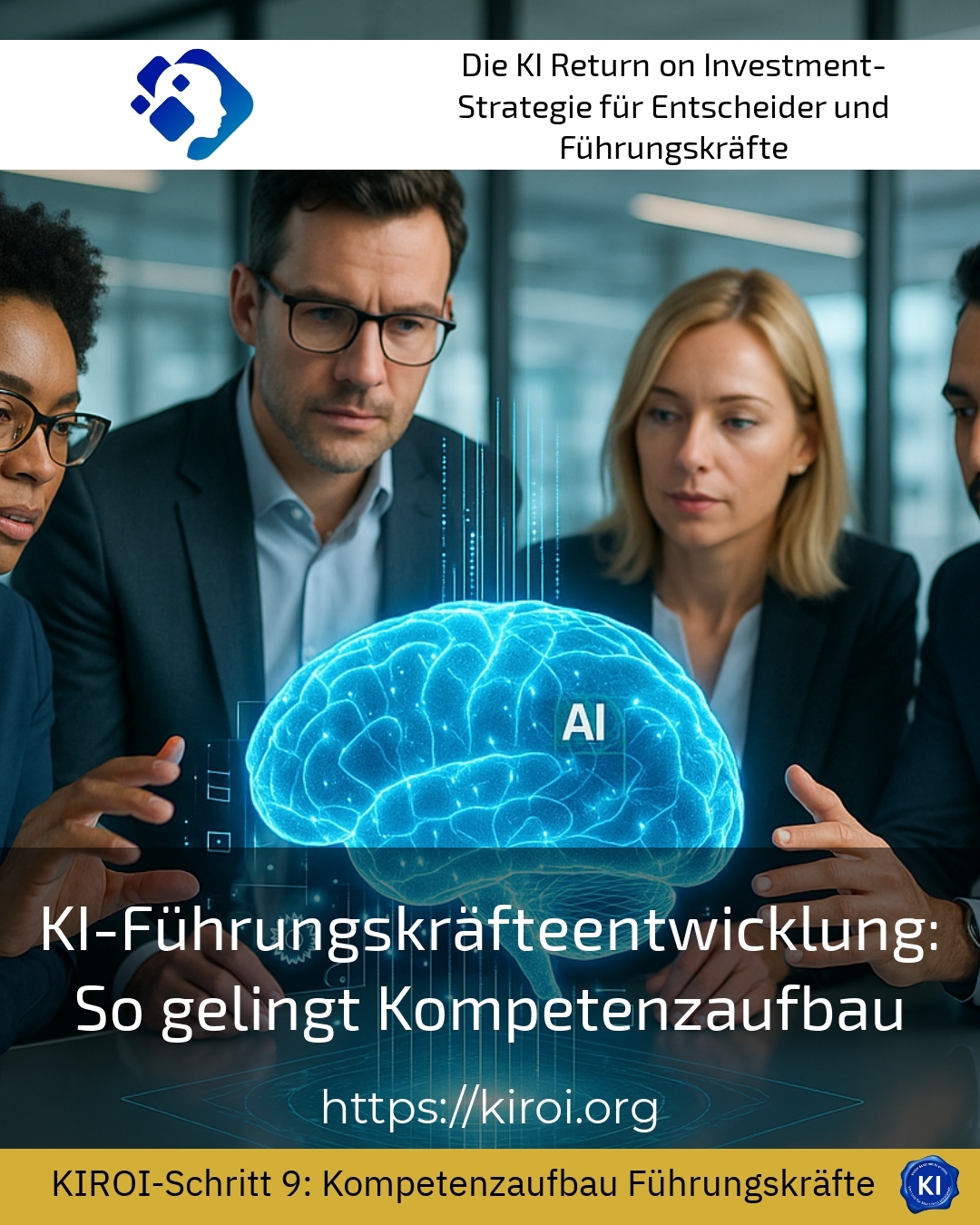
The answer often lies not in insufficient budgets or lack of technical resources, but rather in a fundamental deficit at the leadership level that extends through all hierarchical levels and prevents companies from realizing the full potential of intelligent systems. AI Leadership Development This is increasingly becoming a focus of strategic human resources work, as decision-makers need to understand how algorithmic processes work and what the ethical implications are. Companies often report that their executives are uncertain about how to handle data-driven decision-making processes and need support to bridge these gaps in competence.
Understand the strategic dimension of modern competence development
Change in organizations is happening faster today than ever before. Leaders face the challenge of understanding complex technological relationships. At the same time, they must accompany their teams through change processes. This double burden requires new skills and ways of thinking.
A production manager in the automotive industry must understand today how predictive maintenance systems work and what impact algorithmic optimizations have on workflows and personnel planning. In healthcare, clinic directors face similar questions when diagnostic systems are intended to generate treatment recommendations and support medical decisions. Financial executives in the banking sector, in turn, must understand how automated risk analyses influence their credit-granting processes and what regulatory requirements that entail.
The AI Leadership Development It addresses precisely this intersection between technical understanding and human leadership responsibility. It is not about training executives to become programmers. Rather, the focus is on enabling them to make informed decisions.
Best practice with a AIROI customer
A medium-sized logistics company with over three hundred employees faced the challenge of preparing its management team for the introduction of intelligent fleet management. The management team recognized early on that technical training alone would not be sufficient to build the necessary acceptance and competence. Within the framework of a six-month follow-up program, branch managers, dispatchers, and team leaders were systematically introduced to the new requirements. The support included both workshops on technical fundamentals and intensive coaching sessions to reflect on their own leadership role in the digital transformation. Particularly valuable was the work on concrete practical cases from day-to-day operations. The executives developed a deeper understanding of how data-based route optimization changes their planning processes and what new communication requirements arise for collaboration with drivers. After completing the program, the participants reported a significantly increased confidence in handling the new systems and an improved ability to lead their teams through changes.
AI leadership development as key to competitiveness
Organizations increasingly recognize the strategic value of targeted competency development at the leadership level. Investing in development programs pays off in the long run. Companies that get involved in this area often report accelerated implementation processes. Additionally, resistance to technological innovations is noticeably decreasing.
In retail, this is particularly evident with the introduction of personalized customer interactions through intelligent recommendation systems. Store managers who understand how these systems analyze purchase histories and generate product recommendations can significantly better guide and motivate their sales teams. In the energy industry, executives face the task of interpreting network stability forecasts and making decisions about load distribution based on these findings. The pharmaceutical industry, in turn, is undergoing profound changes due to accelerated drug development, which places researchers before entirely new requirements for their strategic planning.
Often, leaders with similar issues come to the support group. They report feeling overwhelmed by the speed of technological change. Many feel uncertain about evaluating new solutions. Others struggle with resistance within their teams. Still others seek guidance on ethical boundaries. This diversity of concerns illustrates the extent of the support needs.
Practical methods for sustainable competence building
Effective development programs are characterized by their strong practical relevance. Theoretical knowledge alone is not enough. Leaders must be able to apply what they have learned immediately. That is why case studies and simulations play a central role.
For example, an insurance company implemented a program in which department managers learned, based on anonymized claims data, how automated fraud detection works and which human control mechanisms should be meaningfully supplemented [1]. In the telecommunications industry, executives worked on scenarios for intelligent network optimization and developed an understanding of the balance between efficiency gains and service quality. Hotel chains, in turn, trained their regional managers in handling dynamic pricing systems, enabling them to make informed assessments of when human intervention is appropriate.
Transruptive coaching accompanies projects around such transformation processes and provides impulses for a reflective discussion of the changes. It is not about ready-made solutions, but about developing individual strategies for action. The coaching supports leaders in finding their own position and representing it authentically.
Challenges and obstacles on the path to competent leadership
The process of building competence rarely proceeds in a linear or smooth manner. Executives encounter various obstacles on their path of development. Time pressure due to daily business operations often makes continuous training more difficult. Mental barriers also play an important role.
In production companies, plant managers often report tensions between established experience and data-based optimization proposals. The trust in decades of accumulated expert knowledge suddenly comes into conflict with algorithmic analyses. Similar dynamics are evident among chief physicians who may perceive diagnostic support systems as a challenge to their medical expertise. In the educational sector, school principals struggle with the question of how adaptive learning systems will change pedagogical work and what role teachers will play in the future.
Best practice with a AIROI customer
A traditional family-run machine-building company with over a hundred years of history faced the difficult task of recruiting its experienced masters and production managers for data-driven quality assurance. Initial skepticism was considerable, because many executives saw their craft expertise at risk. The accompanying program therefore deliberately focused on a value-enhancing approach that positioned existing experience as an indispensable foundation for meaningful technological use. In several workshops, the executives worked out which of their skills could be supplemented by intelligent systems and which human judgment remained indispensable. Particularly impressive was the development of a production manager who initially belonged among the biggest critics and later became a convinced advocate. He realized that the new systems gave him more time for personal leadership of his employees and took over repetitive control tasks. This transformation in his attitude radiated to the entire team and significantly accelerated acceptance throughout the entire plant.
The human dimension in AI leadership development
Despite all the technical complexity, the human side must not be neglected. Leaders bear responsibility for people. This responsibility changes with technological developments, but it does not disappear. On the contrary, it even gains in importance.
In call centers, team leaders need to understand how intelligent call routing affects their employees and what psychological pressures can arise from constant performance monitoring [2]. Human resources managers in corporations are grappling with the question of how algorithmic preselection in hiring processes influences fairness and equal opportunity. Meanwhile, leaders in the creative industry navigate the tension between automated content creation and the value of human originality.
The AI Leadership Development These ethical and interpersonal dimensions must be explicitly addressed. Only in this way can a holistic competence be created that encompasses both technical understanding and human leadership qualities. Clients often report that this combination of both aspects represents the greatest impetus for their development.
Structured development paths for different management levels
Not every senior level needs the same set of competencies. The requirements vary depending on the area of responsibility. Strategic leaders need different skills than operational ones. Development programs should take these differences into account.
Members of the board of directors of large corporations must primarily understand strategic implications and be able to make informed investment decisions. Middle management in service companies primarily need skills for process control and employee management in a changing environment. Team leaders in technology companies, in turn, often require a deeper technical understanding to serve as a bridge between developers and users.
In the construction industry, this differentiation is particularly evident. While managers of medium-sized construction companies must primarily make investment decisions for building information modeling, construction managers require practical expertise in the daily use of these systems. Poliers, on the other hand, should understand how connected construction site logistics supports their work planning. Each of these levels requires tailored development offerings.
Best practice with a AIROI customer
An international hotel group implemented a multi-stage development program tailored to the specific requirements of different management levels. Hotel managers initially received an intensive strategy module in which they learned to assess the impact of intelligent revenue management systems on their business results and to make corresponding resource decisions. Department heads then underwent practical workshops on the operational use of guest communication systems and personalized service offerings. Shift managers, in turn, received compact training that helped them support employees in their daily interaction with automated systems and competently answer emerging questions. This integration of development initiatives across all hierarchical levels ensured consistent implementation and avoided the frequent communication gaps that often existed between strategic planning and operational implementation. The hotel group reported a significantly faster rate of adoption of new technologies and higher employee satisfaction with the changes in work processes.
My AIROI Analysis
The systematic development of leadership competencies in the context of intelligent technologies proves to be one of the crucial success factors for organizations in almost all industries and sizes. My analysis of the various practical examples and industry experiences clearly shows that isolated technology training is far from sufficient to build sustainable competence and enable real transformation.
The combination of technical knowledge, ethical reflection, and human leadership skills forms the core of effective development programs. Leaders who achieve this integration become valuable bridge builders within their organizations. They translate between technical possibilities and human needs. They navigate tensions and build trust in change processes.
The AI Leadership Development It should not be seen as a one-time project, but as a continuous process that adapts to rapid technological developments. Organizations that invest in this development of competencies today create the foundation for long-term competitiveness. They develop a leadership culture that understands technology as a tool and puts people at the center.
What I find particularly remarkable is how different the development needs are across different industries and at different leadership levels. This heterogeneity requires tailored approaches that take into account both the organizational context and individual learning preferences. Standardized programs can provide impetus, but real transformation only occurs through individual guidance and reflection. The future belongs to organizations whose leaders work confidently with intelligent systems while not losing sight of their human leadership responsibilities.
Further links from the text above:
[1] McKinsey Insights: AI and the Future of Work
[2] Harvard Business Review: Artificial Intelligence Leadership Topics
For more information and if you have any questions, please contact Contact us or read more blog posts on the topic Artificial intelligence here.







 Deutsch
 English (UK)