
Will you soon be replaced as a decision-maker by intelligent systems, or will you be among those who allow these technologies to operate autonomously for themselves?
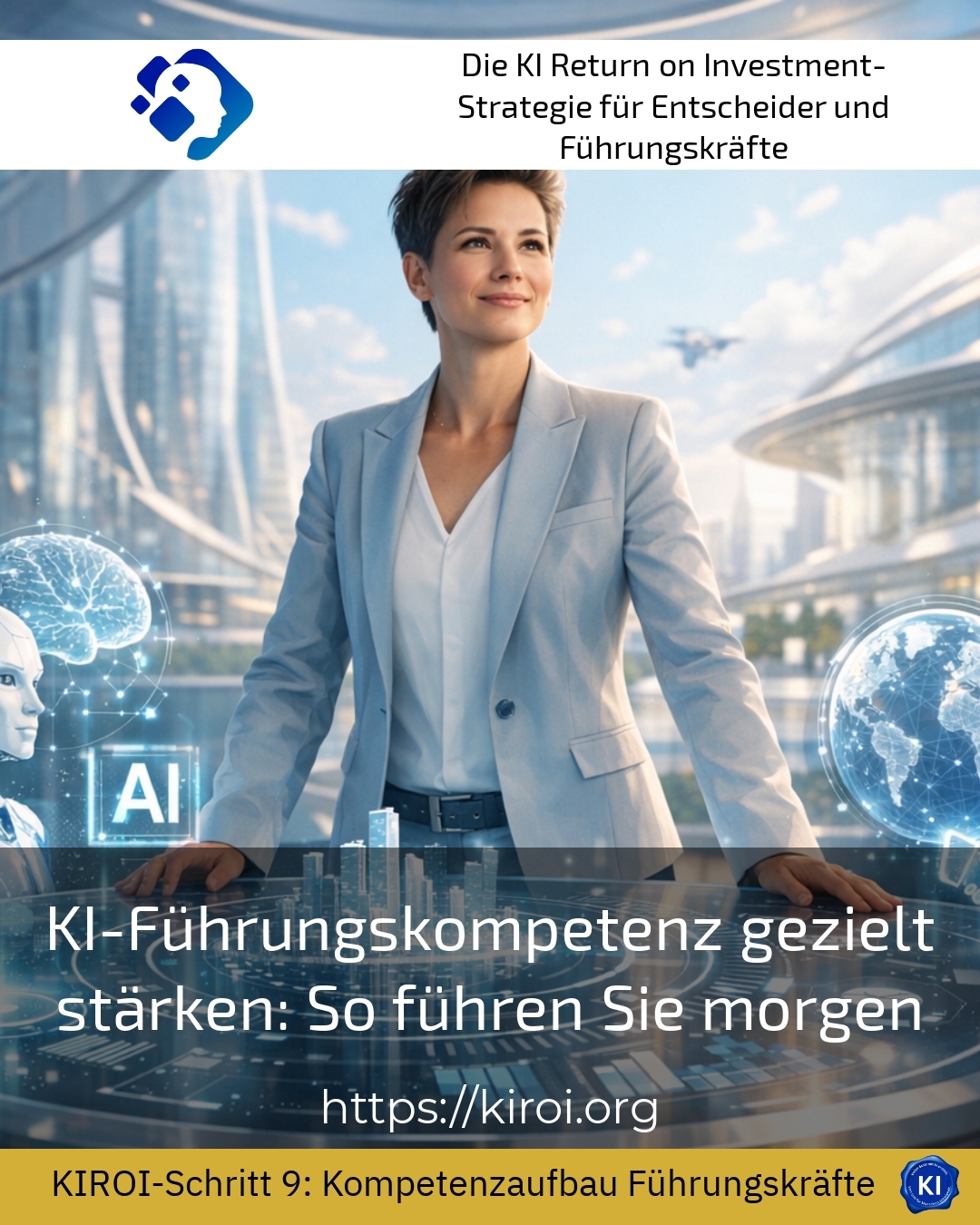
This question currently concerns countless leaders in almost all sectors of the economy. The rapid development of intelligent technologies is fundamentally changing the way companies are run. It is no longer just about implementing new tools; rather, a fundamental transformation of leadership practices is taking place. Today, those who manage their Strengthening AI leadership skills deliberately Wanting to invest in the most important resource of the coming decades. Because the ability to connect human intuition with machine intelligence will become the decisive competitive advantage. In this article, you will learn what concrete steps you can take. Additionally, we show you how transruptive coaching can support you on this path.
Why traditional leadership models are reaching their limits
The classic management concepts emerged in a time of relative stability and predictability. Today, however, we are experiencing an unprecedented acceleration of change processes. In the financial sector, for example, intelligent algorithms analyze millions of data points in seconds. Investment banks use these systems for market forecasts and risk assessments. Traditional analytical methods simply cannot keep up with this speed. At the same time, many leaders report being overwhelmed and disoriented. They feel torn between the human needs of their teams and the technological requirements.
In healthcare, a similar dynamic is evident. Hospital management faces the challenge of meaningfully integrating diagnostic assistance systems. These systems support image analysis and pattern recognition. However, the final decision-making responsibility remains with the human being. This constellation requires entirely new competencies from leadership figures. Clients often report feeling trapped between two worlds: on the one hand, they are expected to advance technological innovation; on the other hand, they must preserve the human dimension of leadership.
The manufacturing industry is also undergoing profound change. Production managers are increasingly coordinating human-machine teams. Predictive maintenance systems detect maintenance needs before failures occur. The question of decision-making is presented anew every day: when do we trust the machine, when do we rely on human experience? This balancing act requires a new understanding of leadership.
Targeted strengthening of AI leadership competencies: The three pillars of modern leadership
The first pillar is the basic technological understanding without expertise. Leaders do not need to be able to program. However, they should understand the functional principles and limits of intelligent systems. In retail, for example, companies rely on personalized recommendation systems. Store managers benefit from being able to understand how these recommendations are generated. This allows them to communicate competently with customers. They also recognize more quickly when system suggestions do not suit the local customer base.
The second pillar encompasses ethical reflection ability. Intelligent systems do not make value-neutral decisions. They reflect the values of their developers and training data. This is particularly evident in personnel recruitment. Automated pre-selection systems can unconsciously disadvantage certain applicant groups. Executives bear the responsibility to recognize and correct such distortions. This ethical vigilance can be developed intentionally.
The third pillar consists of emotional intelligence at the highest level. The more routine tasks are delegated to systems, the more important human connection becomes. In the insurance industry, chatbots increasingly handle standard inquiries. The remaining human interactions are becoming more complex and emotional. Team leaders in customer service must prepare their employees for these more intensive interactions. Empathy and resilience become core competencies.
Best practice with a AIROI customer
A medium-sized logistics company faced the challenge of preparing its management team for the introduction of intelligent route optimization. The previous planning was based heavily on the experience of long-standing employees. The new technology promised significant efficiency gains, but also raised concerns. As part of the transruptive coaching process, we first worked on the internal attitude of the management team. They learned to view the system not as a threat but as an extension of their decision-making capabilities. Subsequently, they developed a communication strategy for their teams. This involved creating transparency about the changes and enabling participation. The management team jointly identified areas where human expertise remains indispensable. This allowed them to provide their teams with security without making unrealistic promises. After six months, the participants reported a significantly increased acceptance. The route planners increasingly regarded the system as a helpful assistant. The role of leaders as bridge builders between humans and technology was crucial in this context. This example shows how important human guidance is in technological transformation.
Communication as a key competence in the context of technological change
Executives are increasingly becoming translators between different worlds. They mediate between technical experts and operational teams. In banking, for example, department heads must be able to explain the decisions made by credit scoring systems. Customers expect comprehensible justifications for refusals. At the same time, employees must understand why certain processes are being automated. This communication requirement requires both technical understanding and rhetorical skill.
In the media industry, editors face similar challenges. Automated text generation increasingly produces standardized reports. Journalists are wondering where their place is in this new media world. Leaders must find convincing answers to these existential questions. They should demonstrate how human creativity and machine efficiency complement each other. Conveying this vision in a credible way is one of the most demanding leadership tasks of our time.
The importance of effective communication is also evident in the education sector. School principals are introducing digital learning assistants. Teachers, parents, and students have different expectations and fears. Here, leadership figures are needed who take all perspectives seriously. They create spaces for dialogue and joint problem-solving.
Targetly strengthen AI leadership competencies through structured development processes
The development of future-proof leadership skills rarely happens on its own. Transruptive coaching systematically accompanies leaders in this transformation. The process begins with an honest assessment of the current situation. Where are you currently in terms of technological understanding? What fears or reservations shape your attitude? This self-reflection forms the foundation for all further steps. Clients often report surprising insights during this phase.
In the energy sector, we support executives in integrating intelligent grid control. Smart Grids require new forms of collaboration between people and systems. Team leaders at grid control stations must learn when to intervene. They develop an understanding of the limits of automated decision-making. This skill can be tested in protected coaching settings. Simulations and case studies prepare for real-life situations.
In the field of legal advice, law firms are increasingly using intelligent research systems. Partners face the task of preparing their associates for this changed working environment. Legal judgment remains indispensable. However, it must be combined with technological expertise. Transruptions coaching provides the impetus for how this integration can be achieved. We accompany leaders in shaping a learning organization.
The role of self-direction in an automated world
Before you can lead others, you must lead yourself. This well-known wisdom gains new meaning in the technological context. Intelligent systems confront us with our own limits. They can simply perform certain tasks better and faster. This realization can shake the self-esteem of leaders. In the pharmaceutical industry, we see this with the introduction of intelligent research assistants. These systems scour the scientific literature at superhuman speed.
Research leaders need to learn to define their value differently. Their strength no longer lies in the amount of knowledge they possess. It lies in their ability to recognize and evaluate connections. This realignment of professional identity requires internal work. Coaching provides the framework for this personal development. We support leaders in developing a new sense of self.
In the architecture industry, a similar dynamic is evident. Generative design systems create hundreds of design variants in minutes. Architects become curators and evaluators of machine-generated creativity. This role requires a high level of self-confidence and composure. Executives in architectural firms shape the entire team through their attitude.
Best practice with a AIROI customer
A sales manager at an international technology company came to coaching with a clear issue. She felt overwhelmed by the rapid development. Her team was already using intelligent sales forecasts and automated customer communication. She herself, however, understood the technology only superficially and felt it to be a personal failure. In coaching, we first developed a differentiated view of her situation. We identified her unique strengths in strategic customer relationship management. These human qualities were irreplaceable by any technology. Subsequently, we developed an individual learning plan for technological fundamentals. This did not involve expert knowledge but rather relevant understanding. The manager began asking targeted questions of her technical colleagues. She learned to request the right information without having to become a specialist herself. After three months, she reported a fundamentally changed self-image. She now saw herself as a bridge builder and translator between different worlds. Her team benefited enormously from this new clarity and sovereignty. Sales results improved noticeably as the leadership energy flowed again.
Targeted strengthening of AI leadership competencies: Practical recommendations for action
The first step is conscious exposure. Regularly familiarize yourself with new technologies. In the hotel industry, for example, you can test intelligent booking systems yourself. As a user, experience what your guests experience. This first-hand experience cannot be replaced by any presentation. You develop an intuitive understanding of the strengths and weaknesses of the systems.
Secondly, you should regularly plan reflection time. Paradoxically, technological acceleration requires more slowness. Take time to think and develop strategies. In consulting, we often see over-worked partners. They only respond to the next pressing need. However, strategic leadership requires a broader perspective.
Thirdly, we recommend building a diverse network. Be intentional about exchanging with people outside your industry. In agriculture, for example, a silent revolution is taking place. Intelligent systems optimize seeding, irrigation, and harvesting. Agricultural executives can greatly benefit from the experiences of other industries. At the same time, they have valuable insights to share.
The importance of continuous learning readiness
Lifelong learning is not a buzzword but a necessity for survival. The half-life of knowledge is dramatically shortening. What is valid today may be outdated tomorrow. In the automotive sector, executives experience this dynamic daily. The transformation to electric mobility is changing entire value chains. Intelligent driving assistance systems require entirely new skills from engineers and executives alike.
What is crucial here is the inner attitude towards learning. View non-knowledge as an opportunity instead of a flaw. In the telecommunications industry, we see leaders who embody this attitude. They ask openly for clarification and admit when they do not understand something. This authenticity creates trust and encourages their teams to be open as well. A learning organization always starts with leadership [1].
In the field of corporate consulting, the importance of continuous learning becomes particularly evident. Consultants must always be one step ahead of their clients. Intelligent analytical tools are fundamentally changing the industry. Executives in consulting companies are investing heavily in the further training of their teams [2].
My AIROI Analysis
The transformation of leadership through intelligent technologies is not a distant vision of the future. It is happening now, in this moment, in almost all industries and sectors. Leaders who are aware of this development gain significant advantages. They do not get swept away by the wave, but learn to surf it. The AIROI-methodology provides a structured framework for individual development. It combines a fundamental understanding of technology with human maturity. Crucial is the realization that there are no shortcuts. Whoever recognizes that there is no Strengthening AI leadership skills deliberately You want to be prepared for a continuous process. This process requires courage, openness, and the willingness to reflect on yourself. Transruptions coaching accompanies you on this journey as a reliable partner. We provide guidance, hold the mirror up, and celebrate your progress with you. The future of leadership lies in the wise combination of people and machines. You have the power to shape this connection. Start today with the first step. Your teams, your organization, and ultimately you yourself will benefit from it. The intelligent future is not waiting for the hesitant. It rewards those who boldly step forward while remaining human.
Further links from the text above:
[1] Harvard Business Review – Organizational Learning
[2] McKinsey – Insights on People and Organisational Performance
For more information and if you have any questions, please contact Contact us or read more blog posts on the topic Artificial intelligence here.







 Deutsch
 English (UK)