
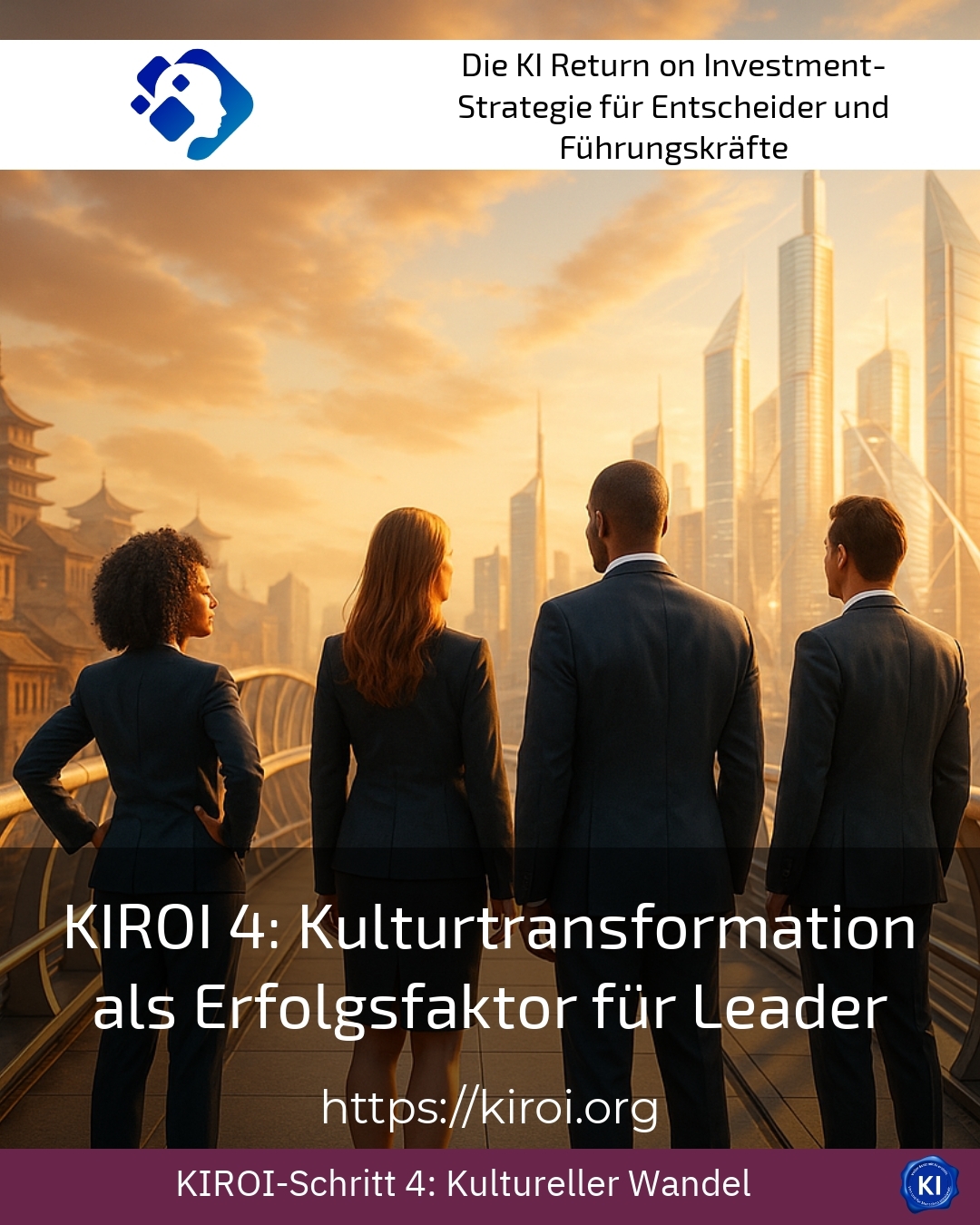
Cultural transformation is a key success factor for leaders today who want to make their companies future-proof. In a time when markets are rapidly changing and technological innovations constantly present new challenges, I support leaders in strategically steering cultural processes. Cultural transformation here means more than just superficial adjustments: values, ways of working, and mindsets are profoundly changed to achieve sustainable performance improvement and employee satisfaction.
Cultural transformation as a foundation for effective leadership
Leaders face the challenge of continuously motivating their teams and aligning them with new corporate goals. Cultural realignments only succeed if all employees understand and support the new direction. In the financial services sector, for example, leaders frequently reported resistance to more agile ways of working. Through systematic cultural transformation, communication channels were made more open and decision-making processes were decentralised. This led to a noticeable increase in the willingness to innovate.
Challenges are also evident in the automotive industry: classic hierarchical structures hinder adaptability. Through a culture transformation, companies are establishing new values such as mutual trust and acting with personal responsibility. Employees therefore see themselves as active shapers of change rather than mere executors, which promotes willingness to change.
In healthcare, I often experience how cultural transformation leads to improved interdisciplinary collaboration. The culture of working together is strengthened, making complex processes more efficient and increasing patient satisfaction. A collegial environment provides the foundation for the acceptance of necessary changes.
How cultural transformation succeeds in practice
A structured approach is essential for success. In the first step, we analyse the current company culture together, for example using employee surveys or workshops. A software company used this feedback to identify key pain points, such as a lack of transparency, which served as the impetus for cultural transformation.
Subsequently, leadership teams develop a clear vision and values that should be lived out in everyday life. These new guiding principles must be communicated across all levels and anchored through role modelling. In the IT industry, for example, agile values such as openness and a culture of learning from mistakes were consciously introduced and reinforced through regular feedback loops.
The concrete implementation is accompanied by a continuous dialogue. Managers and employees are actively involved to internalise new ways of thinking and acting. In a medium-sized manufacturing company, it was shown that regular workshops and individual coaching could significantly increase understanding of the cultural transformation.
BEST PRACTICE with one customer (name hidden due to NDA contract) In an international services company, we supported the cultural change through special team coaching for the leadership. This led to different departments breaking down their silos and communicating more transparently across projects. The improved collaboration measurably increased customer satisfaction.
The significance of leadership in the cultural change process
For leaders, culture transformation is an opportunity to define their role as role models and catalysts. Managers who are willing to reflect on themselves and realign their communication methods build trust and foster motivation. In the pharmaceutical industry, management teams reported that regular feedback rounds and transparent decision-making processes strengthened employee engagement.
At the same time, culture transformation supports the agile development of organisations. In retail, leaders are increasingly focusing on shared values such as customer centricity and team orientation, enabling employees to respond flexibly to market changes. This has a positive impact on turnover and market penetration.
Success in the public sector also arises from cultural transformation. Leaders create a culture of appreciation and joint learning. This has helped to break down rigid structures in several municipalities, leading to more efficient work processes and improved service quality.
Tips for Leaders to Guide Cultural Transformation
Leaders should be open to feedback from the outset and encourage dialogue. Transparency about goals and challenges reduces anxieties and increases acceptance. It is advisable to make small successes visible to make the change tangible. For example, a manufacturing company started with a pilot project where the new culture was visibly lived out. The success motivated the workforce to develop their own initiatives.
Furthermore, patience is required. Cultural transformation is a process that takes time and constantly requires adjustments. Leaders offer support by providing ongoing guidance and impetus, rather than forcing results. This is how they create sustainable change.
Cooperative working and trust are essential in this regard. Clients repeatedly report how important it is to create an atmosphere where employees can contribute their ideas and take responsibility. This leads to a stronger identification with the organisation and increases its innovative capacity.
My analysis
Culture transformation represents a crucial competitive advantage for leaders who wish to address the complex challenges of modern working environments. It enables a sustainable adaptation of values and behaviours that are essential for motivation, innovation, and collaboration. Successful culture transformation requires conscious planning, broad involvement, and authentic leadership. Those who actively support the process can not only strengthen the corporate culture but also significantly increase the performance and satisfaction of employees.
Further links from the text above:
Successful culture transformation for businesses
Culture Change: 6 Effective Steps
How cultural change drives the success of sustainable transformation
For more information and if you have any questions, please contact Contact us or read more blog posts on the topic Artificial intelligence here.








 Deutsch
  English (UK)