
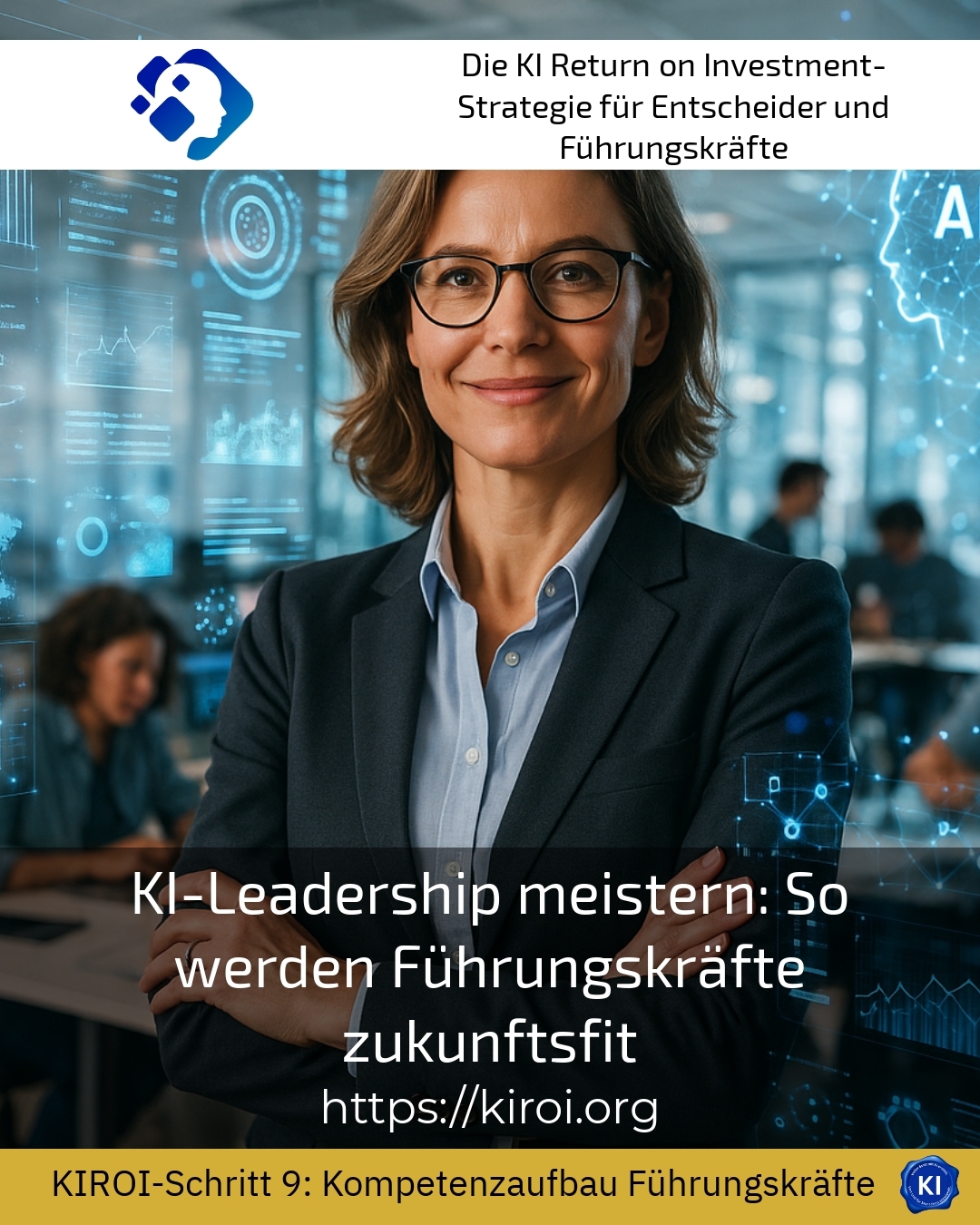
Do you sometimes wonder why some companies seem to glide effortlessly into the digital future, while others stand still despite massive investment? The answer often lies not in the technology itself, but in the way leaders shape and drive change. Mastering AI Leadership means today far more than the mere understanding of algorithms or the implementing of new software solutions. Rather, it is about a fundamental transformation of one's own leadership philosophy, which brings people and machines into a productive partnership. In this context, many managers report uncertainties and doubts because the rapid development of intelligent systems fundamentally calls traditional management approaches into question. Transruptions coaching accompanies precisely these change processes and provides valuable impetus for the individual leadership journey.
Understanding the new reality for decision-makers
The world of work is currently changing faster than ever before. Leaders are faced with the challenge of navigating their teams through uncharted territory. At the same time, they must convey stability and actively drive change. This dual role requires a completely new competence profile. Traditional leadership methods are increasingly reaching their limits. Intelligent systems are taking over tasks that were previously reserved exclusively for humans. This creates new scope for creative and strategic activities.
For example, a medium-sized manufacturing company introduced predictive maintenance systems. The production management had to learn to make decisions based on algorithmic recommendations. Initially, there was a great deal of scepticism within the team. However, following intensive support, a new culture of trust developed between human and machine.
A logistics company optimised its route planning using intelligent systems. Initially, the dispatchers felt patronised and bypassed. Only through targeted leadership development did a constructive collaboration emerge. The employees recognised their new role as a strategic control authority.
A financial services provider implemented automated risk analyses for lending. The advisors had to completely redefine their advisory role. They transformed from data collectors into relationship managers. This transformation only succeeded through intensive leadership support.
Best practice with a AIROI customer
An internationally active trading company faced the challenge of transforming its entire purchasing department. The management team had decided to introduce intelligent procurement systems designed to optimise supplier selection and price negotiations. The experienced buyers felt threatened by this decision and reacted with open resistance. As part of the transruption coaching, we accompanied the management level over several months. First, we jointly analysed the fears and resistance within the team. Then we developed a communication strategy that placed transparency and appreciation in the foreground. The managers learned to acknowledge their own uncertainties and use them as a bridge to their employees. Step by step, a new working culture emerged in which technological support was perceived as an opportunity. The buyers took on strategic tasks such as supplier development and sustainability assessment. At the end of this process, the employees reported increased job satisfaction and a new sense of self-efficacy. The managers had learned not to dictate changes, but to shape them together.
Mastering AI leadership through emotional intelligence
Technical understanding alone is not enough. Successful leaders of the future combine analytical skills with pronounced emotional intelligence. They understand that every technological change triggers emotional reactions. Fear of job loss, uncertainty about one's own role and resistance to new things are natural human reactions. These emotions deserve recognition and space.
In an insurance company, the digitalisation of claims processing led to massive conflicts. The long-standing handlers felt undervalued. The manager recognised the emotional dimension of the problem. Through regular one-to-one meetings and team workshops, she built trust. Thus, resistance transformed into constructive engagement.
A hospital implemented intelligent diagnostic aids for radiology. The doctors feared a de-professionalisation of their work. The lead physician took these concerns seriously and initiated an open dialogue. Together, the team developed new quality standards for working with the systems.
A media company used automated content creation for standardised reports. The journalists saw their creative identity threatened. The editor-in-chief created spaces for artistic projects and investigative journalism. As a result, the employees gained new motivation and meaning in their work.
Developing communication as a key skill
Transparent communication forms the foundation of successful transformation. Leaders must be able to explain complex technological contexts in an understandable way. At the same time, they should speak honestly about uncertainties and open questions. This authenticity builds trust and encourages employees to voice their own concerns. An open dialogue fosters the collective intelligence of the team [1].
An automotive supplier introduced robot-assisted quality control. Plant management communicated openly about opportunities and risks from the outset. Regular information events provided space for questions and discussions. This transparent communication reduced anxieties and significantly promoted acceptance.
An energy supplier comprehensively digitised its customer service. The managers trained their employees not only in technical skills, but also in communication. Together, they developed new standards for personal customer service. This created a unique selling proposition compared to purely automated competitors.
Combine strategic foresight with ethical responsibility
Leaders bear responsibility for the ethical implications of technological decisions. They must be able to answer questions regarding data privacy, fairness and societal impact. This responsibility cannot be delegated to systems or experts. It requires personal reflection and a clear value orientation [2].
An employment agency used algorithmic application screening. The management noticed that the system disadvantaged certain groups of applicants. An ethics advisory board was convened immediately and the system was revised. This swift response strengthened the trust of employees and clients.
A retail company used customer analytics for personalised advertising. Managers critically questioned the limits of personalisation. They developed internal guidelines for the respectful handling of customer data. This ethical stance became the core brand identity of the company.
A pharmaceutical company accelerated drug development through intelligent analytics systems. The research management insisted on human review of all critical decisions. This combination of efficiency and care became the company's hallmark of quality.
Best practice with a AIROI customer
A telecommunications provider wanted to ease the workload of its technical customer service by using intelligent chatbots. The executive board was faced with the difficult decision of how many positions would be eliminated as a result. In transruptions coaching, we jointly developed an alternative approach. Instead of laying off employees, they were to take on new roles and handle more complex customer queries. The leaders learned to communicate this vision convincingly and to address resistance constructively. They developed individual development plans for every affected employee. We supported regular reflection sessions in which leaders shared their own learning processes. This vulnerability on the part of leadership created an atmosphere of psychological safety throughout the team. After a year, employees reported higher job satisfaction despite the increased complexity of their tasks. Staff turnover fell significantly and customer satisfaction rose measurably. The company was recognised as an exemplary employer in the industry.
When mastering AI leadership, continuous learning counts
Technological development does not wait for hesitant leaders. Those who do not learn today will lose touch tomorrow. Lifelong learning is no longer an option, but a necessity. This is not just about technical knowledge, but also about new leadership skills. Agile methods, design thinking and systemic thinking complement traditional management capabilities.
An engineering company sent its entire management team on an intensive further training programme. The participants learned not only the technological fundamentals, but also new approaches to leadership. This shared learning experience strengthened cohesion and the readiness for change within management.
A training provider experimented with adaptive learning systems for its own leaders. The experiences fed directly into the development of new educational offerings. In this way, learning became a strategic competitive advantage for the company.
An architecture firm used generative design systems for its design work. The partners had to redefine their role as creative visionaries. Through regular reflection, they developed a new self-image as curators of machine creativity.
Empowering teams and unlocking potential
Modern leadership no longer means control, but empowerment. Leaders create frameworks in which employees can unfold their full potential. They delegate responsibility and trust in the competence of their teams. This attitude requires a fundamental rethink in many organisations [3].
A software company introduced self-organising teams. The managers transitioned from givers of instructions to coaches and mentors. This transformation required intensive personal development. The result was highly motivated teams with above-average innovative capacity.
A consultancy firm used intelligent analytics tools for project work. The partners realised that junior consultants could now take on more complex tasks. They adapted their career paths and created new development opportunities. This flexibility significantly enhanced their appeal as an employer.
A food manufacturer optimised its production planning using predictive systems. Shift supervisors were given more autonomy for on-site micro-control. This empowerment led to a heightened sense of responsibility and better results.
My AIROI Analysis
The mentoring of numerous leaders in transformation projects reveals clear patterns. Successful leaders are characterised by a combination of technological curiosity and human sensitivity. They understand that technology is a tool that must be shaped and directed by people. At the same time, they recognise the enormous opportunities that intelligent systems offer the working world. Maintaining this balance requires continuous reflection and personal development.
Leaders frequently report an initial sense of feeling overwhelmed. The speed of change and the complexity of decisions can seem daunting. This is where transruption coaching comes in, providing a safe space for reflection and orientation. Experience shows that leaders who embrace this guidance gain confidence more quickly. They develop a clearer understanding of their role in the transformation process.
The future belongs to leaders who view change as an opportunity. They use intelligent systems to relieve and empower their teams. They create spaces for human creativity and interpersonal relationships. And they take responsibility for the ethical implications of their decisions. Mastering AI Leadership ultimately means continuously developing one's own leadership identity. Anyone who consistently follows this path will not only become fit for the future, but will actively help shape it.
Further links from the text above:
[1] Harvard Business Review – Leadership Resources
[2] World Economic Forum – Artificial Intelligence
[3] McKinsey – People and Organisational Performance
For more information and if you have any questions, please contact Contact us or read more blog posts on the topic Artificial intelligence here.







 Deutsch
  English (UK)