
Why do so many companies fail at digital transformation, even though they have the most modern technologies and invest substantial budgets in innovative systems?
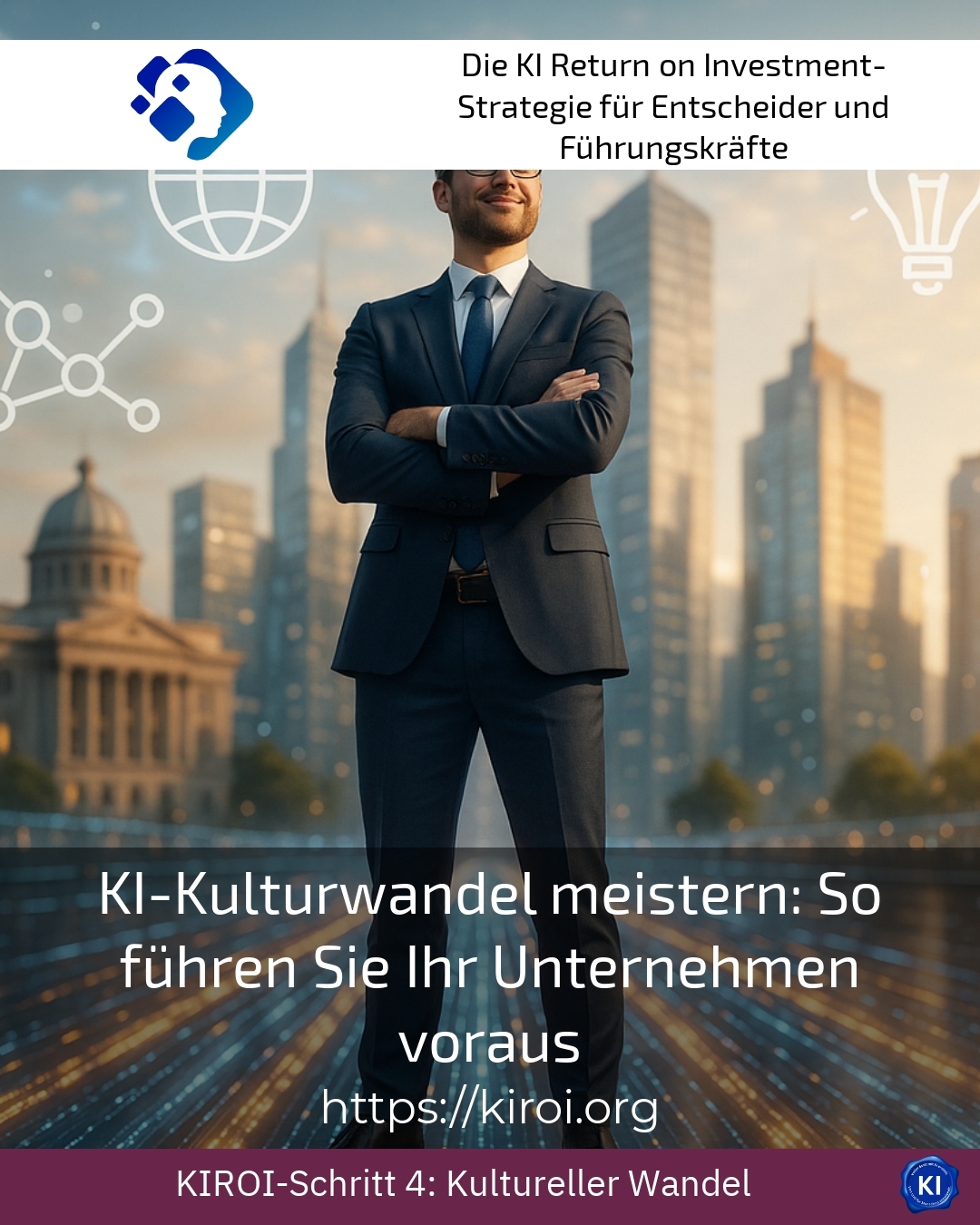
The answer rarely lies in the technology itself, but rather in the corporate culture, which proves to be an invisible barrier and blocks progress. The Mastering AI cultural change means far more today than simply introducing new software or automating processes. It is about bringing people along, alleviating fears and creating an atmosphere in which innovation can flourish. Many leaders underestimate the complexity of the human component in the process. They invest millions in technology and forget that their employees are the actual drivers of change. This is precisely where professional guidance comes in, helping companies to establish sustainable change.
Understanding the human dimension of technological change
Technological innovations are fundamentally changing our working world. However, every change initially triggers resistance. Employees fear for their jobs and a loss of competence. These fears are understandable and deserve serious attention. Managers frequently report frustration when introducing new systems. The best technology remains ineffective if it is not adopted [1].
This phenomenon is particularly evident in the manufacturing industry. Production workers with decades of experience suddenly find themselves confronted with intelligent assistance systems. Their tried-and-tested techniques are being questioned and optimised. This can be perceived as a threat. At the same time, it offers enormous opportunities for a new form of collaboration. Experiential knowledge and machine precision can complement one another.
Similar patterns can be found in the logistics sector. Warehouse workers today work alongside autonomous transport systems. Dispatchers use predictive analytics for their route planning. However, the transition will only succeed if those affected become participants.
Best practice with a AIROI customer
A medium-sized mechanical engineering company faced the challenge of integrating intelligent maintenance systems into its production. The experienced technicians initially showed significant reservations about the new technology. They feared that their years of accumulated expertise could be replaced by algorithms. As part of the transruptions coaching process, we developed a strategy together with the management that focused on appreciation and involvement. The technicians became active partners in the system calibration. Their empirical knowledge flowed directly into the optimisation of the predictive models. After six months, those involved reported a significantly increased level of job satisfaction. Downtime was measurably reduced because human and machine now worked hand in hand. This example impressively demonstrates that technological progress and human expertise do not have to be opposites.
Mastering the AI cultural shift through transparent communication
Communication forms the foundation of every successful transformation. Without it, rumours arise and uncertainty spreads. Leaders must therefore communicate openly from the very beginning. They should explain why changes are necessary. Equally important is outlining the opportunities for each individual [2].
In retail, we are currently experiencing massive upheaval driven by intelligent systems. Checkout staff are working alongside automated checkout solutions. Store managers are using sales forecasts for their order planning. Customer advisors are receiving personalised product recommendations in real time. All of these changes require sensitive guidance and clear information.
The financial sector is also undergoing a profound transformation. Bank advisers are relying on robo-advisors for investment advice. Claims handlers in insurance work with automated claims assessment. Compliance teams use intelligent monitoring systems for risk assessment.
In the healthcare sector, intelligent systems assist with diagnostics. Nursing staff benefit from automated documentation. Doctors receive treatment suggestions based on extensive data analyses.
Viewing resistance as a resource and using it constructively
Resistance to change is natural and even valuable. It shows that people are thinking things through. Critical voices can point to real problems. Leaders should therefore take these objections seriously. transruptions coaching guides teams in channelising resistance productively.
In the automotive industry, a particularly large number of cultures collide. Traditional engineering culture meets agile software development. Production lines are increasingly controlled by intelligent systems. Suppliers must completely rethink their processes. Dealer networks are transforming into digital ecosystems.
The energy sector is experiencing a twofold transformation. Alongside the digital transformation, there is the energy transition. Smart grids require completely new competencies. Network operators use predictive analytics for load balancing. Customer advisors work with intelligent tariff systems.
Best practice with a AIROI customer
A large logistics company was planning to introduce an intelligent route optimisation system. The experienced dispatchers initially reacted with clear rejection to the project. They perceived the technology as an attack on their professional autonomy. In the coaching process, we worked intensively with those affected on their concerns. Together, we identified the valuable experience and implicit knowledge of the employees. From this, the idea of a peer-to-peer human-machine partnership developed. The dispatchers were given the opportunity to modify system suggestions and contribute their expertise. The system learned from their adjustments and continuously improved. After the introduction, the dispatchers reported less stress due to optimised processes. At the same time, they felt validated as indispensable experts in their field.
Developing and empowering leaders as cultural architects
The Mastering AI cultural change always starts at the executive level. Through their behaviour, leaders significantly shape the corporate culture. They must be open to change themselves. Only then can they authentically bring their teams along with them. Role models have a stronger effect than appeals or instructions [3].
In the pharmaceutical sector, leaders face unique challenges. Strict regulation meets rapid technological development. Research departments use intelligent systems for drug development. Quality managers work with automated process monitoring. Field service representatives receive data-driven visit recommendations.
The media sector is experiencing the transformation particularly intensely. Journalists are working together with intelligent research tools. Editorial offices are using automated content analysis for their planning. Marketing teams are relying on the personalised delivery of their content.
Teaching and learning methods are changing fundamentally in the education sector. Teachers use adaptive learning systems for individualised support. Administrations rely on automated processes in the background. Educational institutions analyse learning progress with intelligent systems.
Build competencies systematically and anchor them sustainably
New technologies require new skills from all involved. This is not just about technical knowledge. Transferable skills are also gaining in importance. Critical thinking, creativity and emotional intelligence are becoming more important than ever. These competencies can be purposefully developed and fostered.
Entirely new job profiles are emerging in the construction industry. BIM coordinators combine traditional construction knowledge with digital competence. Site managers use drones and sensor technology for monitoring. Planners work with generative design systems on optimised designs.
Agriculture is transforming into a highly digitised economic sector. Farmers are using sensor-supported precision farming. Predictive systems assist with irrigation decisions. Autonomous machinery is increasingly taking over repetitive field work independently.
In the hospitality industry, intelligent systems are fundamentally transforming customer service. Hotels are relying on personalised guest experiences through data analysis. Restaurants are using predictive demand management for their planning. Tour operators are offering individually tailored experiences through intelligent recommendation systems.
Best practice with a AIROI customer
A traditional insurance company faced the task of introducing intelligent claims processing. Over decades, the case handlers had developed a fine intuition for fraud cases. This valuable competence was not to be lost, but rather integrated. As part of our transruption coaching project, we developed a hybrid model of cooperation. The employees were trained as trainers of the intelligent system. They checked system recommendations and provided qualified feedback. Their expertise flowed directly into the further development of the algorithms. Following the introduction, the detection rate for fraud cases improved significantly. At the same time, the processing of clear-cut standard cases accelerated considerably. The employees reported a more meaningful use of their time and skills.
Mastering the AI culture change through participatory design
Successful transformation only succeeds with the active involvement of everyone affected. Top-down approaches quickly reach their limits. People want to help shape things and be heard. Participation creates acceptance and identification. It also utilises the collective knowledge of the organisation [4].
In the telecommunications sector, the importance of integration is becoming apparent. Customer service agents work alongside intelligent assistants. Technicians use augmented reality for complex on-site installations. Network planners rely on predictive capacity models for their decision-making.
The textile industry is experiencing a renaissance through smart manufacturing. Designers are using generative systems for new collections. Production planners are optimising material flows with intelligent assistance. Quality control is increasingly carried out through automated image analysis.
Intelligent assistants are finding their way into the legal sector. Lawyers use systems for extensive document analysis. Notaries rely on automated deed verification in the background. Legal departments benefit from real-time contract analysis.
Establish sustainability and ethics as guiding principles
Technological change needs an ethical compass for all involved. Businesses must take responsibility for their decisions. Transparency and fairness are no longer optional extras. They are becoming competitive factors in a conscious society.
In the chemical industry, digitalisation and sustainability are particularly closely intertwined. Intelligent process control measurably reduces resource consumption and emissions. Predictive maintenance significantly extends the lifespan of plant and equipment. Optimised logistics noticeably reduces the carbon footprint.
The consumer goods industry is reacting with increasing flexibility to changing customer expectations. Transparent supply chains are being made possible by intelligent tracking systems. Personalised products are created through data-driven customer insights. Sustainability targets are becoming more achievable through optimised processes.
My AIROI Analysis
The accompaniment of numerous transformation projects reveals a clear pattern. Technology alone does not yet generate sustainable change in organisations. The decisive success factor lies in the cultural dimension. Companies that actively involve their employees achieve better results. They attain higher acceptance and make optimal use of the existing potential.
My experience across a wide variety of industries illustrates the universal validity of this insight. Whether in mechanical engineering or financial services, retail or healthcare – the human challenges are very similar. Fears, resistance and uncertainties appear everywhere. At the same time, curiosity, a willingness to shape things and a joy in innovation can be found everywhere too.
Den Mastering AI cultural change requires a holistic approach that brings people and technology together. Transruptions-Coaching helps companies successfully tread this path. We guide leaders and teams through the transformation. We provide impetus for new perspectives and solution approaches. Clients frequently report a noticeably improved collaboration.
The future belongs to companies that can make technology humane. They use intelligent systems as tools, not as replacements. They create a culture of continuous learning and openness. They understand change as an opportunity rather than a threat. The future belongs to these companies – and we are happy to accompany them on their journey there.
Further links from the text above:
[2] Harvard Business Review – Change Management
[3] World Economic Forum – Fourth Industrial Revolution
[4] MIT Sloan – Artificial Intelligence Insights
For more information and if you have any questions, please contact Contact us or read more blog posts on the topic Artificial intelligence here.









 Deutsch
 English (UK)