
Will you still hold the same leadership position in five years that you hold today, or will intelligent systems have taken over parts of your tasks long ago?
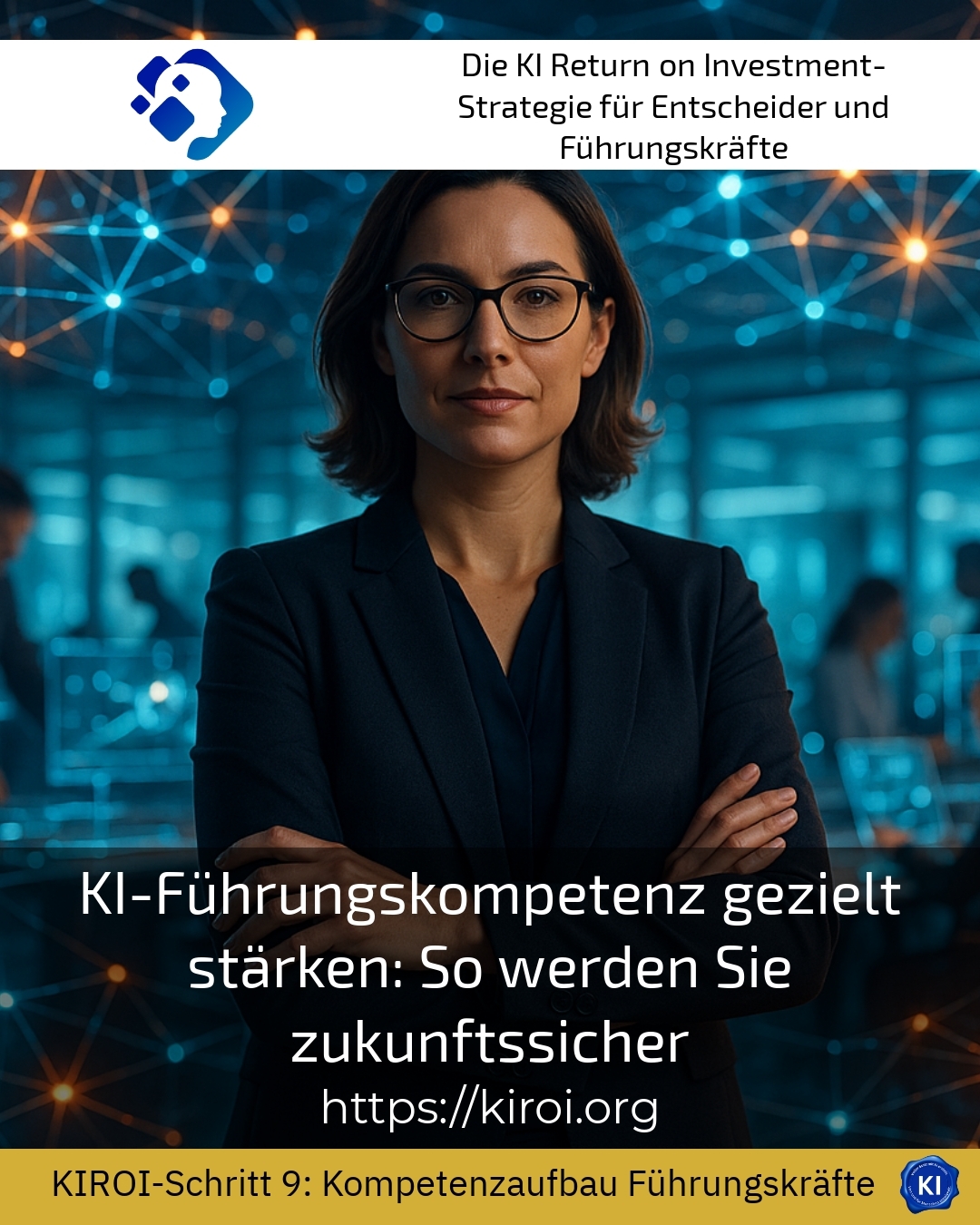
This question is currently occupying numerous decision-makers in companies of all sizes. The world of work is changing at a pace that is surprising many. Anyone who today Strengthening AI leadership skills deliberately wishes to, is investing in their own professional future. This is not just about a technical understanding; rather, an entirely new way of leading is at the heart of it. Leaders must learn to harmonise humans and machines. They must make decisions that take both worlds into account. Transruption coaching supports leaders with precisely these challenges.
Understanding the new reality in boardrooms
The requirements for leaders have fundamentally changed. In the past, technical expertise and assertiveness were enough. Today, a deep understanding of digital transformation is needed. Intelligent systems analyse data faster than any human team. They recognise patterns in seconds. Nevertheless, they cannot develop a vision or inspire employees. This is precisely where the opportunity lies for modern leaders.
Many clients report uncertainty when dealing with new technologies. They feel overwhelmed by the speed of change. Some are worried about losing touch. Others do not know how to guide their teams through this phase. Transruptions coaching provides vital impetus here and supports orientation.
For example, a production manager at a medium-sized mechanical engineering company realised that his previous management methods were no longer sufficient. His younger employees expected digital tools. The older ones, on the other hand, showed resistance to change. He was caught between two worlds. A department head in the financial sector experienced something similar. His analysts were increasingly working with automated evaluation systems. He had to learn to interpret and classify their results. A human resources manager in a logistics company also reported this challenge. Applicant tracking systems made pre-selections. She had to decide how much trust she could place in these recommendations.
Targeted strengthening of AI leadership skills through strategic learning
Developing new competencies requires a structured approach. Random learning is not enough. Leaders must work purposefully on their skills. Clear learning objectives and measurable progress help with this. The AIROI Masterclass provides a proven framework for this [1].
This necessity is particularly evident in retail. Store managers must understand how algorithms analyse purchasing behaviour. They need to be able to contextualise the recommendations made by merchandise management systems. At the same time, they must not neglect personal contact with customers. A sales director in the pharmaceutical industry faces similar questions. Predictive analytics predicts physicians' behaviour. He must decide how his field sales representatives should use this information. In the insurance industry, in turn, intelligent systems support risk assessment. Team leaders must empower their administrative staff to work with these tools.
Best practice with a AIROI customer
A medium-sized enterprise from the industrial manufacturing sector approached us with a specific challenge. The executive board had recognised that the management level was not sufficiently prepared for digital transformation. In particular, the production managers showed considerable apprehension towards new technologies. As part of the transruptions coaching, we developed an individual learning path for each participant. First, we analysed the existing competencies and identified concrete areas for development. Subsequently, we devised practical exercises that could be applied directly in their daily work. The managers learned to interpret data from networked production facilities. They practised using assistance systems that predict maintenance requirements. After six months of intensive support, all participants reported a significantly increased level of self-confidence. They now felt confident enough to ask well-founded questions about technological investments in strategy meetings. Particularly pleasing was the change in communication with their teams. The managers were now able to guide their employees authentically through change processes because they had understood for themselves what it was all about.
Practical Steps for Competency Development
The path to strengthening one's own abilities begins with self-reflection. Leaders should honestly identify their gaps in knowledge. Following this, it is important to create a realistic learning plan. Small, regular learning sessions are more effective in this regard than sporadic intensive seminars.
In healthcare, for example, clinic directors work with diagnostic support systems. They need to understand how these work without becoming programmers themselves. A chief medical officer told us that he initially felt resistance to such systems. Through targeted guidance, he learned to leverage their strengths and recognise their limitations. In the construction industry, project managers are increasingly using intelligent planning tools. These optimise schedules and resource allocation. Leaders must learn to critically evaluate the suggestions. In the media sector, editorial directors decide on the use of automated text generation. They need a sense of where such tools can help and where human creativity remains irreplaceable.
The human side of technological transformation
Technology alone does not make good leadership. People remain at the heart of all leadership responsibilities. Especially in times of great change, employees need direction and security. They want to understand what lies ahead of them. They want to know that their manager keeps on top of things.
Clients frequently report tensions in their teams. Younger employees are pushing for faster digitalization. Experienced colleagues feel left behind. Managers are stuck in the middle and have to mediate. transruptions coaching helps to build these bridges [2].
In the automotive industry, plant managers experience this situation daily. Assembly is becoming increasingly automated. Long-standing skilled workers are worried about their futures. On the one hand, the plant manager has to drive efficiency gains. On the other hand, he must not lose the trust of his workforce. In the hotel industry, directors face similar questions. Check-in machines and chatbots are taking over routine tasks. The staff must focus on more demanding guest services. In the banking sector, branch managers are experiencing the change particularly intensely. More and more customers are using digital channels. The remaining counter visitors nevertheless expect first-class service.
Targeted strengthening of AI leadership skills through emotional intelligence
Technical knowledge is not enough. Emotional intelligence is actually becoming even more important. Leaders must recognise fears and resistance within their teams. They need to be able to address them. They need the ability to instil confidence without making unrealistic promises.
The managing director of a software company described his experience vividly. His developers felt threatened by generative systems. They feared being replaced. He had to show them that their creativity remained irreplaceable. At the same time, he could not play down the potential of new tools. In the food industry, quality managers report similar situations. Sensor-based monitoring systems detect anomalies faster than humans. Employees must learn to use this information instead of feeling redundant. In the energy sector, shift supervisors face the task of introducing their teams to networked control systems.
Best practice with a AIROI customer
A management consultancy services company was facing a unique challenge. The partner level recognised the need to supplement their advisory services with intelligent analysis tools. However, there was considerable scepticism among the consultants regarding such systems. Many feared a devaluation of their expertise. As part of our support, we initially organised open discussion sessions in which all concerns could be voiced. We took these worries seriously and worked through them systematically. Subsequently, together with the managers, we developed a communication strategy. This emphasised the role of the new tools as support, not replacement. The partners learned to work with the systems themselves and to recognise their limitations. In this way, they were able to present themselves authentically to their teams. They demonstrated that human judgement remained indispensable. Following implementation, most consultants reported a noticeable reduction in their workload. The initial scepticism had given way to cautious enthusiasm because the managers had accompanied the process sensitively.
Strategic positioning for the coming years
Future-proofing is not achieved through a one-off learning process. It requires continuous development. Leaders must stay on the ball. They need to be able to observe and contextualise new developments. A network of like-minded individuals who are overcoming similar challenges helps with this.
In transport, logistics managers are already planning for autonomous vehicles. They need to prepare their organisations for this future, even though they do not know exactly when and how rapidly this change will happen. In the education sector, headteachers are preparing their staff for personalised learning systems, and they need to understand what these systems can and cannot do. In agriculture, farm managers are increasingly using networked sensors and automated data analysis, and they require the capability to use this data to make better decisions [3].
Networking and exchange as success factors
Nobody has to walk the path alone. Exchanging ideas with other leaders significantly accelerates learning. Experiences from other industries often provide valuable inspiration. transruptions coaching enables such networking and promotes cross-industry dialogue.
For example, a human resources director from the mechanical engineering sector learned a great deal from a female colleague in retail. Both were facing similar challenges in staff development. A marketing director from the consumer goods industry benefited from exchanging ideas with a hospital manager. Both used predictive analytics, albeit in completely different contexts. A female finance director from the SME sector found valuable inspiration in conversation with a start-up founder. His agile methods inspired her to adopt new approaches within her organisation.
Targeted strengthening of AI leadership skills: The path to implementation
Knowledge without action remains ineffective. Leaders must integrate what they have learned into their daily routine. That requires courage and perseverance. Setbacks are part of the learning process. The important thing is to keep going and to learn from mistakes.
In the chemicals sector, laboratory managers are experimenting with assisted research processes. They are testing new ways of working in small pilot projects, thereby gaining experience without major risk. In publishing, editorial directors are trying out automated workflows for routine texts. They are learning where the limits lie and where potential slumbers. In telecommunications, customer service managers are using intelligent routing systems. They are observing closely how customer satisfaction and employee motivation develop.
My AIROI Analysis
Strengthening leadership skills in the context of intelligent systems is no longer an option. It is a necessity for anyone wishing to maintain their position in the years to come. This is not about becoming a technology expert yourself. Rather, what is required is a fundamental understanding of the possibilities and limitations of these tools. Leaders must be in a position to ask well-founded questions. They must be able to critically evaluate recommendations. They must provide guidance for their teams in a time of great change.
Paradoxically, the human side of leadership is gaining in importance in the process. The more routine tasks are automated, the more important vision, inspiration and emotional intelligence become. These skills cannot be programmed. They remain the domain of human leaders. Anyone who combines both a basic technical understanding and human leadership qualities will remain indispensable in the future. Transruption coaching provides a proven framework for this and accompanies leaders on this important path. Investing in one's own development pays off multiple times over. It not only secures one's own position, but also makes it possible to lead teams and organisations successfully through change.
Further links from the text above:
[1] AIROI Masterclass for Leaders
[2] transruptions Coaching Offers
[3] AIROI corporate strategy development
For more information and if you have any questions, please contact Contact us or read more blog posts on the topic Artificial intelligence here.








 Deutsch
 English (UK)