
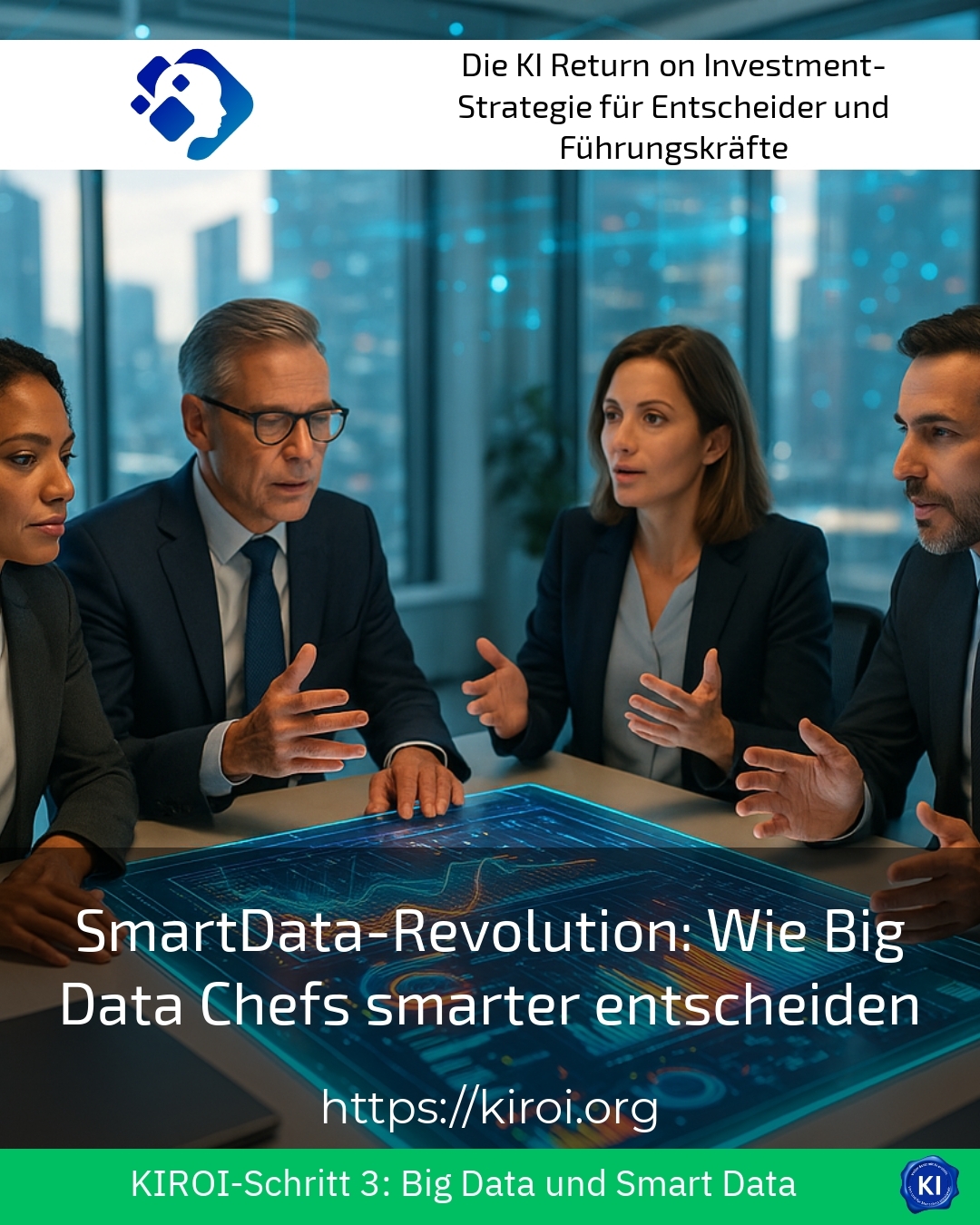
Imagine an experienced chef standing at his cooker, already knowing which ingredients will be delivered fresh today before the supplier has even called. He knows the preferences of his regular guests and intuits that light Mediterranean dishes will be particularly in demand on this summer evening. This seemingly magical premonition has nothing to do with magic, but rather with the SmartData Revolution: How Big Data Bosses Make Smarter Decisions can and what impulses this technological development can give to the entire gastronomy sector. The days when decisions in professional kitchens were based solely on gut feeling and years of experience are giving way to a new era of data-driven precision.
From intuition to intelligent data analysis in the hospitality industry
The transformation in professional kitchens is currently taking place at a remarkable speed. This is not about replacing culinary creativity with algorithms. Rather, modern analysis tools support decision-making processes in a variety of ways. For example, a renowned restaurant in Munich uses weather forecasts and local event calendars. This data helps to predict the volume of guests for the coming days. As a result, food waste is significantly reduced because excess purchasing can be avoided [1].
The development in hotel gastronomy is particularly exciting. There, specialised systems analyse the booking behaviour of international guests very closely. They identify patterns and preferences of different cultural circles and derive concrete recommendations from them. For example, head chefs know early on whether an increased number of Asian business travellers will be arriving the following week. This information then influences the breakfast planning and evening menu accordingly in a positive way.
Another fascinating area of application can be found in the catering industry. Decisions often have to be made there weeks in advance. The SmartData Revolution: How Big Data Bosses Make Smarter Decisions , is particularly evident here. Historical data from past events is combined with current trends to enable precise volume calculations [2].
Best practice with a AIROI customer
A medium-sized catering company from southern Germany approached us with a specific challenge. The management reported significant food waste at large events. At the same time, there were recurring situations where certain dishes ran out too early. As part of the transruptions mentoring, we jointly developed a data-driven planning system that analysed historical consumption patterns. In doing so, we also took into account external factors such as the season, type of event and demographic makeup of the guests. The system learned from past events and continuously improved its predictions. After six months of intensive mentoring, food waste was reduced by around forty percent. At the same time, guest satisfaction increased measurably because popular dishes were now available in sufficient quantities. Employees frequently reported a more relaxed working atmosphere at large events.
Inventory management and supply chain optimisation through intelligent systems
Sourcing high-quality ingredients presents a daily challenge for many catering businesses. Traditionally, chefs rely on established supplier relationships and personal experience. However, modern analytics systems open up completely new possibilities in this area. They automatically compare prices from various suppliers while systematically taking quality aspects into account.
For example, an upscale restaurant in Hamburg uses a networked ordering system. This communicates directly with regional producers and local fishermen on site. The system knows the current catch quotas and is aware of the seasonal availability of various products. This results in menu suggestions that are both culinarily impressive and economically sensible [3].
The benefits are particularly impressive in chain restaurants. Hundreds of locations must be supplied there simultaneously. Central analytics units monitor inventory levels in real time and coordinate deliveries efficiently. They identify impending bottlenecks early on and react proactively to potential supply issues.
The SmartData Revolution: How big data helps bosses make smarter inventory management decisions
Modern cold stores nowadays feature sensors that can measure far more than just temperatures. They record humidity, analyse fruit ripening stages and continuously monitor meat quality. These data streams feed into central systems and enable precise predictions regarding the shelf life of individual products.
A Michelin-starred chef from Berlin speaks enthusiastically about his smart cold room. The system notifies him automatically when certain ingredients have reached their optimal level of ripeness. This ensures that the perfectly matured cheese ends up on the guest's plate at the ideal time. This level of precision would have been practically impossible without data-driven monitoring.
The avoidance of food waste also benefits enormously from these technologies. Systems automatically suggest dishes that can use up ingredients before they spoil. This creates creative daily specials that are both economical and sustainable while making a positive contribution.
Guest experience and personalisation through data analysis
The relationship between restaurant and diner is undergoing a fundamental transformation today. In the past, regular guests had to communicate their preferences afresh with every visit. Today, intelligent reservation systems store this information securely and in compliance with data protection regulations. They know about the allergies, intolerances and personal taste preferences of individual diners.
An exclusive restaurant in Frankfurt demonstrates this development in an impressive way. As soon as a well-known guest makes a reservation, the kitchen automatically receives relevant information for preparation. The sommelier knows the guest's wine preferences and prepares suitable recommendations accordingly. The service team knows about preferred seating and special occasions from past visits [4].
Particularly interesting is the analysis of feedback data from various sources. Modern systems systematically evaluate review platforms, social media comments and direct guest feedback. They recognise recurring themes and identify potential areas for improvement for the future. These insights then feed directly into menu development and service optimisation.
Best practice with a AIROI customer
A hotel group with several upscale restaurants approached us with a complex request. The various locations had previously operated in isolation from one another and hardly exchanged any information. Guests who regularly dined at different properties within the group were treated like new customers every time. As part of the transruptions consultancy, we developed a holistic concept for networked guest management. The system enabled the secure exchange of relevant preference data between the hotel group's locations. Naturally, the utmost importance was placed on data protection and guest consent in the process. The results significantly exceeded the expectations of all involved after a short time. Regular guests frequently reported a noticeably more personalised service across all properties. The repeat visit rate increased measurably by approximately fifteen percent within a year. The head chefs at the various locations now regularly exchanged insights regarding successful dishes.
Staff scheduling and work organisation in the modern kitchen
The skills shortage in hospitality is one of the industry's most pressing challenges. This makes the efficient deployment of existing staff all the more important for operations. Intelligent planning systems support this process with data-driven recommendations for optimal shift schedules and work processes. They simultaneously take into account expected customer volume, individual skills and statutory working time regulations.
A catering business in Cologne has been using such a system very successfully for some time. The software analyses historical capacity data and precisely forecasts staffing requirements for each day. At the same time, it carefully takes into account the qualifications of individual team members when scheduling. This ensures that the optimal team works together during peak times, guaranteeing smooth operations.
The training of young chefs also benefits considerably from these technological developments. Learning platforms analyse the progress of each trainee individually and in great detail. They suggest targeted exercises and systematically identify areas with potential for improvement. Training managers receive clear reports and can adapt their mentoring accordingly [5].
Efficiency gains through the smart data revolution: how big data enables bosses to make smarter decisions
Optimising kitchen workflows offers significant potential for savings for many businesses. Sensors record movement patterns and automatically identify inefficient walking routes for staff. Analyses show which workstations are frequently overloaded and where bottlenecks can arise. On this basis, kitchen layouts and working processes can be specifically improved.
A commercial kitchen planner from Dresden already regularly integrates such analyses into their consultancy services. They observe workflows in existing kitchens and create data-driven optimisation proposals for their clients. The results are often strikingly clear and sustainably surprise even experienced head chefs. Small changes in the arrangement of equipment can bring about considerable time savings.
Particularly in mass catering, clear efficiency gains are evident through these methods. Canteens and refectories provide hundreds or thousands of people with warm meals every day. Here, every minute of saved working time has a positive direct impact on the cost structure.
Sustainability and environmental awareness through data-driven decisions
The hospitality industry is under growing pressure to reduce its environmental footprint. Intelligent systems can provide valuable support in this important endeavour. They calculate the carbon footprints of various menu options and systematically suggest climate-friendly alternatives. Chefs are thus provided with a basis for decision-making that goes far beyond traditional calculations.
An organic restaurant in Freiburg demonstrates this approach in an exemplary manner. There, transport routes, production methods and seasonality are deliberately factored into every menu decision. A dashboard transparently shows the kitchen team the environmental impact of various ingredient options. This results in dishes that are convincing both in terms of taste and ecology.
Energy efficiency in kitchens can also be significantly improved and optimised using data. Sensors continuously monitor the energy consumption of individual appliances and record all values. Analyses identify potential savings and suggest optimised usage times for the appliances. A Hamburg hotel measurably reduced its kitchen energy consumption by around twenty percent in this way [6].
Best practice with a AIROI customer
A sustainability-focused restaurant chain was looking for ways to document its environmental goals in a measurable way. Communication with eco-conscious guests needed to be based on reliable data. As part of the transruption support, we developed a comprehensive monitoring system for the chain. This systematically recorded energy consumption, food waste and transport emissions at all locations. The data was transferred into a clear dashboard that could appeal to both management and guests. Head chefs received monthly reports with concrete suggestions for improvement in their areas. The transparency motivated the teams to make further optimisations and created positive competition. Within eighteen months, recorded emissions fell significantly by around twenty-five per cent. Guests responded positively to the open communication of sustainability efforts and praised the commitment.
My AIROI Analysis
Guiding numerous hospitality businesses on their journey towards data-driven decision-making has provided me with valuable insights. The biggest challenge often lies not in the technology itself, but in the willingness to change. Head chefs who have successfully built their work on intuition for decades require compelling arguments for new approaches.
Projects are particularly successful when they take human expertise as their starting point and value it. Data should never be misunderstood by those involved as a substitute for culinary skill. Rather, they serve as a tool that enhances existing capabilities and opens up new perspectives in the process. I always communicate this attitude clearly and distinctly at the beginning of every collaboration.
The catering industry is undeniably facing immense challenges in the coming years. A shortage of skilled labour, rising costs and growing sustainability requirements demand new approaches to solutions from all involved. Data-driven systems can offer essential support here and provide valuable impetus for the future. They equally enable more precise planning, more efficient processes and better guest experiences.
At the same time, I urge caution when introducing such systems in companies. Not every technology is a good fit for every business and its individual requirements. Selection should always be carefully guided by concrete needs and goals. In my experience, a phased introduction with regular evaluation has proven effective.
In my estimation, the future of gastronomy lies in the clever combination of tradition and innovation. Data-driven systems will never be able to, nor want to, completely replace human creativity. However, they create the space in which culinary passion can unfold better than before. Businesses that find this balance will be able to position themselves successfully on the market in the long term.
Further links from the text above:
[1] DEHOGA Federal Association – Digitalisation in the Hospitality Industry
[2] Food Service Institute Germany
[3] Federal Ministry for Food – Food Waste
[4] FVW – Technology in Tourism and Gastronomy
[5] IHK – Apprenticeship in the hospitality industry
[6] Federal Environment Agency – Sustainability in gastronomy
For more information and if you have any questions, please contact Contact us or read more blog posts on the topic Artificial intelligence here.







 Deutsch
  English (UK)