
Why do so many digital transformation projects fail, even though companies invest millions in cutting-edge technologies?
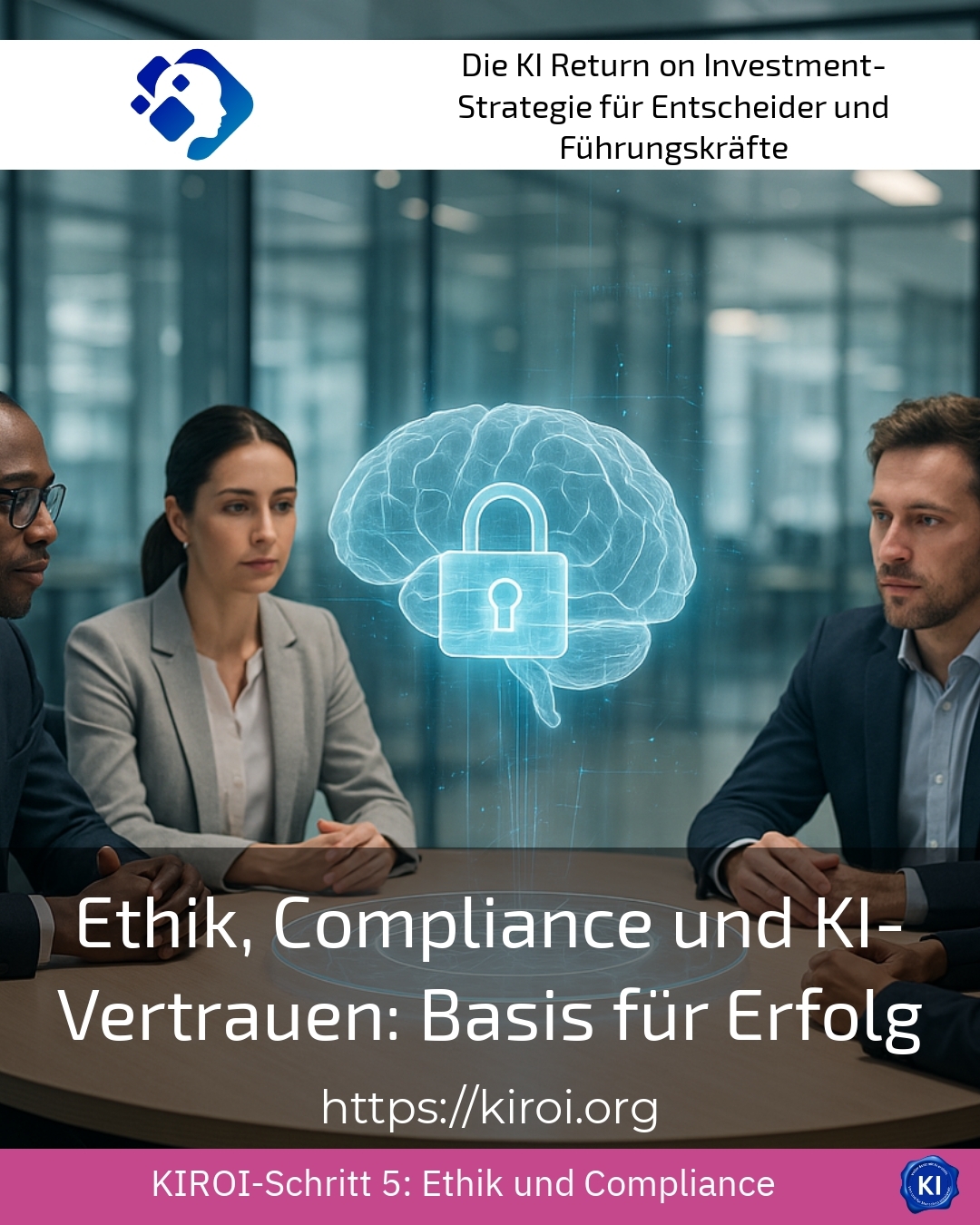
The answer frequently lies not in the technology itself, but in a fundamental lack of trust that employees, managers, and customers feel towards automated systems. Ethics, compliance and AI trust: Foundation for success form that invisible foundation upon which sustainable digital business models can be built. Without this foundation, there arise friction losses, resistance and ultimately the failure of ambitious ventures. At a time when algorithmic decisions are increasingly influencing our daily lives, organisations must understand that technological excellence alone is not enough. The real challenge lies in establishing a culture of responsibility that both meets legal requirements and sets moral standards.
The importance of ethics, compliance and AI trust: understanding the basis for success
Many organisations underestimate the profound connection between technological systems and human values. Yet numerous companies from various sectors show that this correlation determines success or failure. For example, a medium-sized manufacturing company implemented an automated quality control system. The workforce initially rejected this system outright. The reason did not lie in technical shortcomings; rather, there was a lack of transparent communication about how the system worked and its limitations.
Another example comes from retail. A major retail chain introduced personalised pricing. Customers reacted with outrage and calls for a boycott. The company had failed to define ethical guardrails. Legal permissibility alone does not guarantee social acceptance. Finally, a financial services provider reported similar experiences. Automated credit decisions led to allegations of discrimination. Although the algorithms worked flawlessly from a technical standpoint, they reproduced historical biases in the training data.
Best practice with a AIROI customer
An international logistics group faced the challenge of optimising its fleet management through predictive systems while simultaneously gaining the trust of its drivers. The company had already invested substantial sums in sensor technology and data analysis. However, acceptance among the workforce remained dismally low. Many drivers perceived the continuous monitoring as a vote of no confidence. As part of the transruptions coaching support, the project team developed a comprehensive code of ethics for the use of the new technologies. This code defined clear boundaries for data usage and guaranteed that performance evaluations would never be based exclusively on algorithmic recommendations. In addition, the company established a parity-based technology council in which employee representatives had an equal say in system adjustments. The result exceeded all expectations. The acceptance rate rose from under thirty percent to over eighty percent within six months. The productivity gains enabled by the technology could finally be realised. This example impressively demonstrates that technological innovation and ethical responsibility are not opposites, but can mutually reinforce one another.
Viewing regulatory requirements as an opportunity
European legislation is continuously evolving. Companies are facing growing documentation obligations. These requirements may initially appear to be a burden. However, smart organisations recognise the strategic potential behind them. Those that build robust governance structures early on gain competitive advantages. For example, a pharmaceutical company used the preparation for new regulations for fundamental process optimisation [1]. An insurance group developed innovative customer products out of compliance requirements. A technology service provider positioned itself as a market leader for responsible systems.
Proactive engagement with regulatory frameworks creates planning certainty. It reduces the risk of costly retroactive adjustments. At the same time, it signals to stakeholders a serious commitment to responsible behaviour. This aspect is becoming increasingly important, particularly in the competition for qualified professionals. Studies show that younger talent in particular prefer employers who credibly champion ethical principles [2].
Building trust as a strategic success factor in the context of ethics, compliance and AI trust: The foundation for success
Trust is not built through rhetoric, but through consistent action over extended periods of time. Organisations must understand that every interaction with automated systems either tops up or draws down the trust account. For example, an energy supplier implemented smart meters. Consumers' initial scepticism only subsided once the company granted complete data transparency. A healthcare provider introduced diagnostic support systems. Acceptance among doctors grew once clear responsibilities were defined. An educational institution deployed adaptive learning systems. Parents and teachers reacted positively after data protection guarantees were communicated credibly.
These examples illustrate a recurring pattern. Technological implementations rarely fail due to a lack of performance. They fail due to inadequate trust management. The transruptions coaching support helps organisations to factor in these critical success factors from the very beginning. The focus lies on the integration of technical, ethical and communicative dimensions.
Develop practical implementation strategies
The implementation of ethical principles requires concrete measures at various levels. First of all, organisations require clear governance structures. These should unambiguously assign responsibilities. For example, a manufacturing company established a Chief Ethics Officer at board level. This person reports directly to the supervisory board. A retail group set up decentralised ethics committees in each national subsidiary. These committees review all technological initiatives prior to implementation. A service company introduced mandatory impact assessments for automated decision-making systems.
In addition, training and awareness-raising measures play a central role. Employees must understand the ethical implications of their work. They need practical guidance for difficult situations. Conveying theoretical principles alone is not enough. Case-based learning and simulations have proven to be particularly effective.
Best practice with a AIROI customer
A telecommunications provider wanted to modernise its customer service using intelligent assistance systems, aiming to achieve efficiency gains while simultaneously increasing customer satisfaction. However, the initial pilot phase revealed significant problems in handling complaints from vulnerable customer groups. Older people and individuals with limited technical knowledge felt overwhelmed and rejected by the automated processes. The company recognised that purely technical optimisations would not solve this issue. As part of the transruptions coaching support, the project team developed a differentiated concept that took various customer needs into account. The system learned to identify vulnerable groups and automatically forward them to human service agents. At the same time, the team developed ethical guidelines for algorithmic customer segmentation that excluded discrimination. The compliance department was involved in the development process from the outset and validated all decision-making logic. This integration of various perspectives resulted in a system that operates both efficiently and fairly. Customer satisfaction scores improved significantly, and the company successfully positioned itself as a responsible technology user.
Cultural transformation as a prerequisite for sustainable change
Technological changes only succeed if they are accompanied by cultural changes. Organisations must create an environment where ethical concerns can be openly expressed. Psychological safety is a central prerequisite for this. For example, an automotive supplier introduced anonymous reporting channels for ethical concerns. A chemical company established regular ethics dialogues at all hierarchical levels. A media group integrated ethical reflection into its agile development processes.
Senior management bears a special responsibility for cultural change. Leaders must act as role models. Their decisions are closely observed by employees. Discrepancies between proclaimed values and actual behaviour permanently destroy trust. Therefore, transruptions coaching support assists leadership teams in particular with the development of an authentic ethical leadership style. The impulses from these accompaniment processes extend beyond individual development to the entire organisation.
Ensuring measurability and continuous improvement
What is not measured cannot be improved. This principle also applies to ethical performance and levels of trust. Organisations should develop suitable key performance indicators and collect them regularly. For example, a bank measures the fairness of its credit decisions using defined metrics [3]. A recruitment agency continuously checks whether its selection algorithms disadvantage certain groups. A retail company regularly assesses customer trust in its data-driven recommendations.
These measurements enable targeted improvement measures. They make progress visible and boost the motivation of those involved. At the same time, they create transparency towards external stakeholders. Investors, regulators and the public increasingly expect evidence of responsible technology management.
My AIROI Analysis
The intensive engagement with this complex of topics leads to a clear realisation. Technological innovations only unleash their full potential when they are embedded in a robust ethical and regulatory framework. Organisations that neglect this dimension risk not only legal consequences, but also the loss of stakeholder trust and thus their long-term competitiveness. The numerous examples from various sectors illustrate that these are not abstract theoretical considerations, but concrete business challenges with measurable impacts on corporate success.
The Ethics, compliance and AI trust: Foundation for success therefore proves to be a strategic imperative for leaders. However, the integration of these dimensions requires a holistic approach that equally considers technical, organisational and cultural aspects. Isolated measures such as the appointment of a compliance officer or the adoption of a code of ethics are not enough. Rather, ethical conduct must be woven into the DNA of the organisation. Transruptions coaching support offers companies the opportunity to shape this demanding transformation process professionally while avoiding common pitfalls. Clients repeatedly report that it is only through this external perspective that blind spots become visible and lasting changes succeed. The future belongs to those organisations that understand technology and responsibility as an inseparable entity and act accordingly.
Further links from the text above:
[1] Federal Ministry of Justice – Information on Artificial Intelligence and Regulation
[2] Bitkom – Studies and analyses on artificial intelligence in business
[3] BaFin – Supervisory requirements for algorithms in the financial sector
For more information and if you have any questions, please contact Contact us or read more blog posts on the topic Artificial intelligence here.







 Deutsch
 English (UK)