
Cultural transformation is a key driver of sustainable success today. Many decision-makers recognise that changes in the market and technology not only require new processes but also a profound adaptation of corporate culture. Cultural transformation means purposefully evolving the values, behaviours, and mindset of an entire company. Only in this way can innovation be fostered, teams be motivated, and long-term competitiveness be maintained.
Why culture transformation is important for decision-makers
Companies are facing new challenges. Markets are changing, technologies are developing rapidly, and employees expect more flexibility and purpose. Decision-makers therefore not only have to adapt strategies, but also actively shape the company culture. Culture transformation helps to question old structures and break new ground. Many clients report that changes are initially met with scepticism because the familiar is being questioned. However, as soon as the added value becomes clear and role models pave the way, the willingness to break new ground grows.
A practical example: A medium-sized mechanical engineering company with around 270 employees faced the challenge of stagnant growth and a demotivated team. Through a values-based cultural transformation, which included intensive workshops and open communication formats, it was possible to break down silo thinking and significantly improve cooperation across departmental boundaries. The company today reports increased innovative strength and new growth.
Culture transformation with the KIROI method
Step 4: Embed the new culture in everyday life
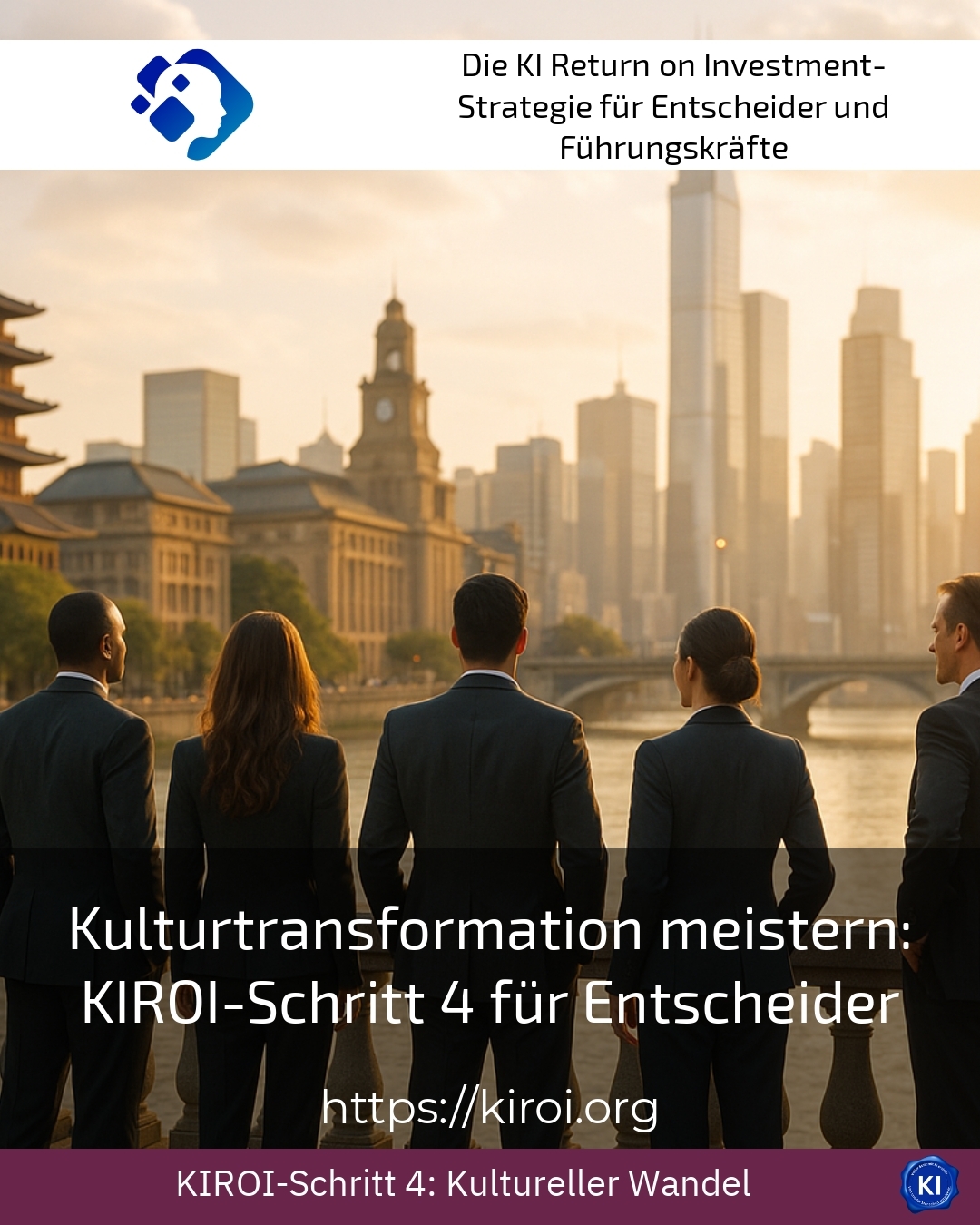
The fourth step of the KIROI method is the heart of every cultural transformation. This step is about embedding the new culture into everyday work. This means that values and behaviours are not just formulated but also lived. Leaders play a crucial role in this, as they must embody and pass on the new culture. Only in this way can changes be credible and sustainable.
A practical example: A company in the IT sector wanted to establish a more open feedback culture. As part of the cultural transformation, an initial joint analysis was carried out on how feedback is currently practised. This then led to a clear target vision, which all stakeholders helped to develop. New feedback formats were introduced, managers received targeted training, and digital tools supported communication. This created a new permissive environment in which openness could develop.
Another example: A company from the automotive sector adopted agile methods and iterative working practices to support its cultural change. This not only initiated a cultural shift but also firmly integrated it into everyday work. Employees were involved in the process and could contribute their ideas. This led to higher motivation and better results.
Practical tips for decision-makers
How to successfully support cultural transformation
Decision-makers should understand cultural transformation as a continuous process. It is not about a single project, but about permanent development. Important steps include the involvement of leaders and employees, the definition of clear goals, and regular measurement of progress. Only in this way can it be understood whether cultural goals are actually being achieved and where adjustments need to be made.
A real-world example: A company from the financial sector started with a thorough analysis of current values and behavioural patterns. This included employee surveys, workshops, and open interviews. Based on this diagnosis, a clear target vision was then formulated, describing the desired culture and serving as a guide. Employees were actively involved in the process and could contribute their ideas. This led to greater acceptance and better results.
Another example: A company from the healthcare industry focused.
My analysis
Cultural transformation is a key lever for sustainable success. Decision-makers must actively shape the company culture to foster innovation, motivate teams, and remain competitive in the long term. The KIROI method offers a structured framework, extending from the initial analysis to sustainable implementation. The fourth step is the core of this process, as it is where the new culture is brought to life in everyday operations. Leaders play a crucial role because they must embody and pass on the new culture. Only then will changes be credible and sustainable.
Further links from the text above:
Successful culture transformation for businesses
Corporate Culture: Top 3 Examples of Strong Organisations
Culture transformation – 4 steps and 4 interconnections
Corporate Culture: An Example of Values-Based Change
Mastering cultural transformation: With KIROI, Step 4 to success
KIROI Step 4: Culture Transformation as a Growth Driver
Cultural change in companies: Your path to the future
4 Companies with Successfully Implemented Cultural Change
For more information and if you have any questions, please contact Contact us or read more blog posts on the topic Artificial intelligence here.











 Deutsch
  English (UK)