
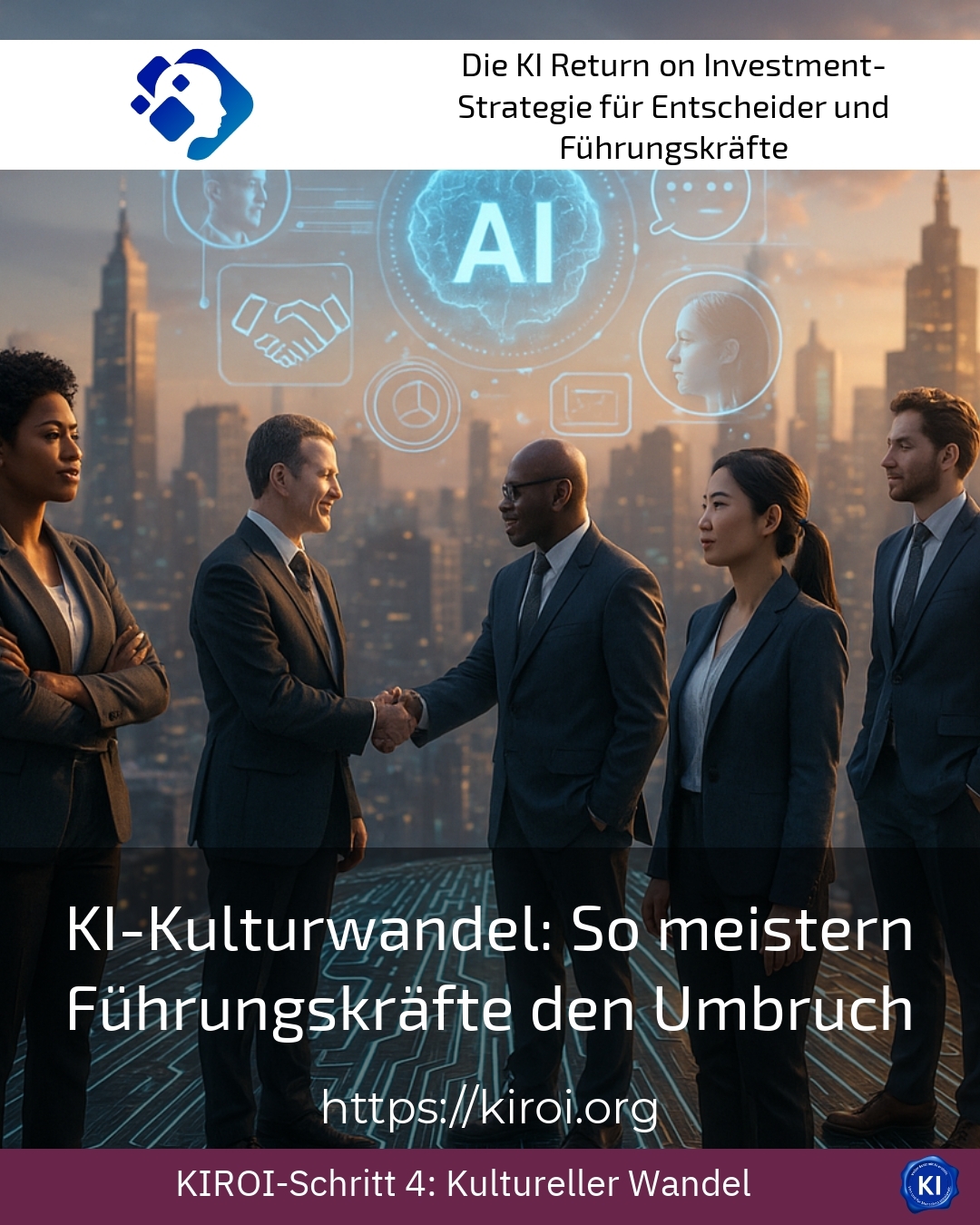
The digital revolution is transforming businesses at a breathtaking pace. Leaders face one of the greatest challenges of their careers. The AI cultural change requires entirely new competencies and ways of thinking. Many managers feel overwhelmed by this transformation. They are looking for guidance and practical strategies. This post shows ways to successfully manage the upheaval. It provides impulses for sustainable change processes in your organisation.
Why the AI cultural shift means more than just technology
Intelligent systems are not just changing processes and workflows. They are fundamentally transforming the way people collaborate and make decisions. In the manufacturing industry, production managers experience these changes daily. Automated quality control is gradually replacing manual inspection processes. Predictive maintenance enables foresight in the servicing of machinery and equipment. Employees must learn to cooperate with these systems. The fear of job losses is a frequent topic in this regard.
In the financial sector, algorithmic decision systems are revolutionising the lending business. Case workers are becoming supervisors of automated processes. They monitor and correct machine decisions as needed. This change in roles requires new skills and a different self-perception. Leaders must guide their teams through this transition.
Retailers are using intelligent systems for personalised customer engagement. Sales advisors receive recommendations based on purchase histories. However, human advisory skills remain indispensable. This is where the need for a cultural shift is particularly evident.
The role of leaders in the AI culture change
Managers critically shape their teams' attitudes towards new technologies. Their own stance serves as a role model for all employees. In healthcare, clinic managements are introducing diagnostic assistance systems. Doctors and nurses react differently to these changes. Some see them as a relief from their daily work. Others fear a devaluation of their professional expertise.
Successful leaders communicate transparently about opportunities and risks. They create spaces for dialogue and constructive debate. In the logistics sector, intelligent systems optimise route planning and warehouse management. Dispatchers are experiencing a fundamental change in their tasks. Leaders must provide reassurance and outline prospects in this area.
The insurance industry is increasingly using automated claims processing. Claims handlers often fear for their jobs. Smart leadership identifies new career paths within the organisation, promotes further training and enables personal development.
Best practice with a AIROI customer A medium-sized mechanical engineering company was facing the introduction of intelligent production control. Management recognised early on the need for cultural support. As part of a disruption coaching programme, all managers were first made aware of the issues. They learned to take their teams' fears seriously and address them constructively. Together, they developed a communication strategy for the entire workforce. Workshops enabled direct exchange between technical experts and production employees. The concerns of the people were systematically recorded and addressed. Individual training paths were created for each affected position. After six months, managers reported significantly reduced resistance. Employees had developed trust in the change process. They contributed their own ideas for optimising the new systems. The company was able to implement the transformation significantly faster than planned. Employee turnover noticeably decreased despite the profound changes. This example shows the effectiveness of professional support in complex transformation projects.
Emotional intelligence as a key competence in cultural change
Technical knowledge alone is not enough for successful transformation. Leaders need strong emotional competencies for this task. They must be able to recognise resistance and respond empathetically. In banking, advisors are experiencing the introduction of robo-advisory systems. Their traditional expertise suddenly seems less in demand. Empathetic leadership helps to address this uncertainty.
In the media industry, algorithms are increasingly automating news aggregation. Editors are questioning their future role. Leaders must emphasize the importance of journalistic judgment here. They point out where human creativity remains irreplaceable.
The legal sector is increasingly using automated document analysis systems. Young lawyers are losing typical entry-level tasks to these technologies. Law firm partners need to develop new training pathways for junior staff. Emotional intelligence helps to conduct these sensitive conversations successfully.
Practical Strategies for Transformation
Successful change begins with an honest assessment of the initial situation. Leaders should systematically gauge the mood within their teams. In the pharmaceutical industry, intelligent systems are increasingly supporting clinical trials. Researchers need to learn to work effectively with these tools. A phased introduction reduces overwhelm and resistance.
The automotive industry is fundamentally transforming its development departments. Simulations are replacing physical prototypes in many areas. Engineers require new competencies for this changed way of working. Managers are organising learning tandems between experienced and younger employees. This fosters a fruitful exchange of knowledge in both directions.
In the energy sector, smart grids autonomously optimise electricity distribution. Grid control technicians critically monitor these autonomous decisions. Their expertise remains indispensable for exceptional situations. Managers emphasise this important control function in their communications.
Communication as the Foundation of AI-Driven Cultural Change
Transparent information builds trust in uncertain times. Regular updates on the progress of the transformation are essential. In the telecommunications industry, chatbots are revolutionising customer service. Call centre employees are experiencing this change firsthand. Open communication about planned changes reduces rumours and anxiety.
The construction industry is making ever-increasing use of Building Information Modelling. Architects and engineers collaborate in virtual models. This cooperation requires new forms of communication and coordination processes. Managers actively promote interdisciplinary exchange.
In tourism, recommendation systems personalise travel offers automatically. Travel consultants seemingly compete with these algorithms. Smart communication emphasises the strengths of human advice. It highlights differentiation opportunities compared to automated offers.
Best practice with a AIROI customer A leading logistics company was planning to introduce autonomous warehouse systems across several sites. Management recognised the need for comprehensive cultural support early on. A transruptive coaching programme was launched six months before the technical implementation. All management levels were prepared for their new roles through workshops. They learned techniques for guiding employees through change processes. Simulations of difficult conversations in a safe environment were particularly valuable. Warehouse managers developed individual communication plans for their teams. They identified key individuals who could act as multipliers. These individuals received additional training and were involved in decision-making processes. Employees were able to contribute their own ideas for shaping their future roles. A continuous feedback system systematically captured moods and concerns. Managers responded promptly to emerging problems and resistance. The outcome significantly exceeded the management's expectations. Acceptance of the new systems was well above the industry average. Employees reported increased job satisfaction due to more interesting tasks.
Understanding and constructively using resistance
Resistance to change is a natural human reaction. It often contains valuable clues to overlooked problems. In the food industry, image recognition systems control product quality. Experienced quality inspectors doubt the reliability of these systems. Their criticism leads to important improvements in the algorithms.
The textile industry is increasingly optimising supply chains with predictive analytics systems. Buyers with decades of experience feel overlooked. Managers are actively integrating their expertise into system calibration. This creates a hybrid decision-making model with human oversight.
In education, adaptive learning systems are increasingly supporting teaching. Teachers worry about the loss of personal relationships. Constructive resistance leads to balanced integration of technology. The pedagogical relationship remains at the centre of learning.
Learning organisations as the goal of transformation
Successful companies foster a culture of continuous learning. They view change as the norm rather than the exception. In the chemical industry, intelligent systems optimise production processes in real-time. Process engineers constantly learn from these data-driven insights. Leaders actively promote the exchange between humans and machines.
The advertising industry makes intensive use of programmatic systems for media planning. Creatives and strategists must learn to work with data. Learning formats effectively combine technical knowledge with creative application. Managers encourage experimentation with new approaches.
In human resources, algorithms are increasingly automating recruitment processes. HR experts critically interpret the results of these systems. They bring ethical perspectives to decision-making. Managers explicitly encourage this critical reflection.
My AIROI Analysis
The accompaniment of numerous transformation projects shows clear success patterns. Companies that systematically manage cultural change achieve their goals faster. They avoid costly resistance and delays in implementation. The decisive factor lies in the preparation of leadership. They must first clarify their own attitude towards transformation. Only then can they credibly guide their teams through the change.
Transruptions coaching supports organisations with precisely this challenge. It provides a structured framework for the development of leadership skills. At the same time, it addresses the emotional dimensions of technological change. Experience shows that purely technical implementations often fail. People must internalise the change before it works.
The examples presented from various industries illustrate universal principles. Transparent communication, emotional intelligence, and genuine participation are crucial. Leaders who master these elements manage change more successfully. They build trust in uncertain times and enable constructive co-creation. The AI cultural change is ultimately a deeply human endeavour. Technology provides the tools, but people shape the transformation.
Organisations should invest early in cultural support. The costs of professional assistance are amortised through faster implementation. Employee satisfaction and innovation capabilities demonstrably increase with good support. The future belongs to companies that combine technical and human excellence.
Further links from the text above:
[1] McKinsey – Culture Change in the Age of AI
[2] Harvard Business Review – Leading Change
[3] World Economic Forum – Future of Work
[4] Gartner – Change Management Research
For more information and if you have any questions, please contact Contact us or read more blog posts on the topic Artificial intelligence here.









 Deutsch
  English (UK)