
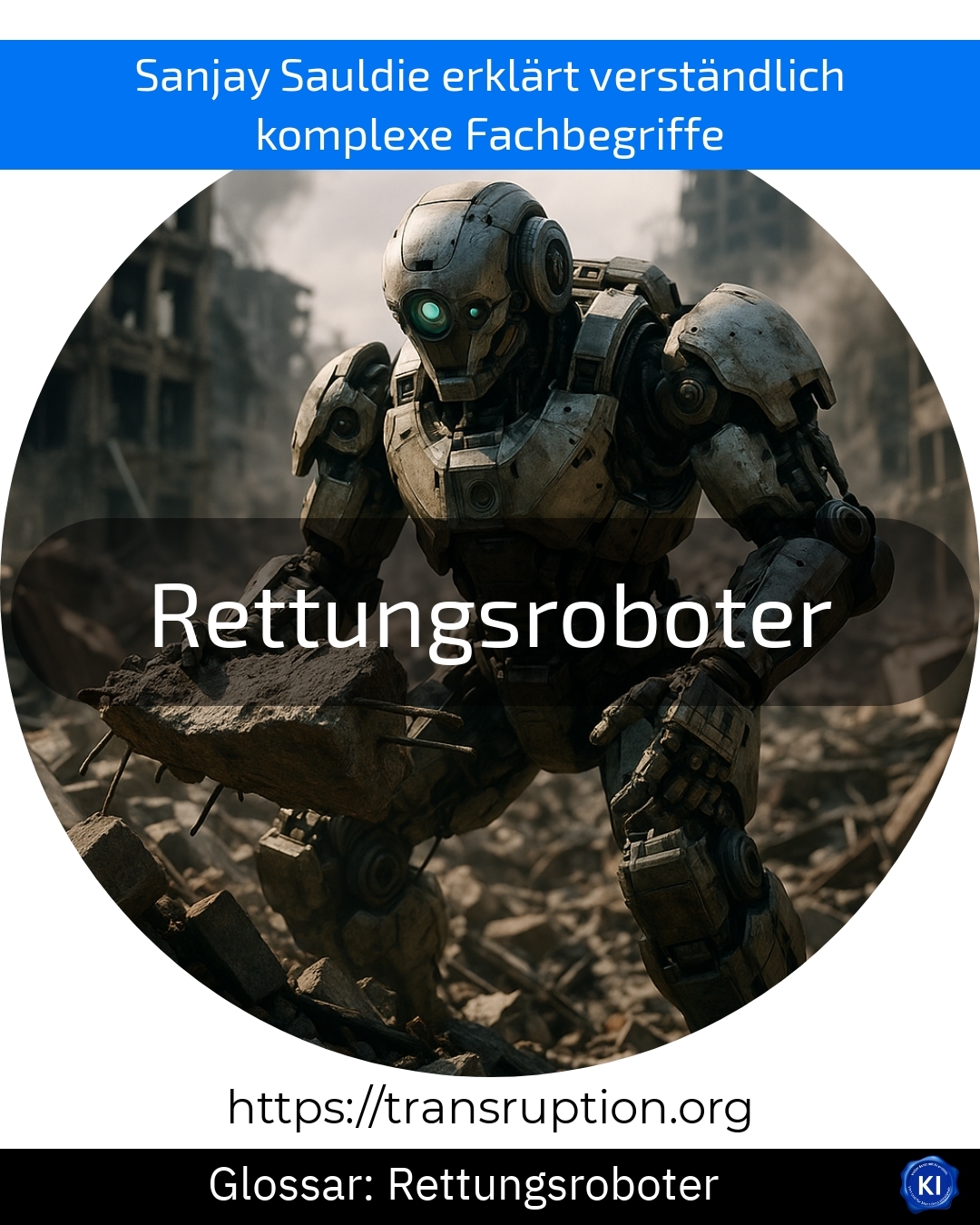
The term „rescue robot“ is at home in the fields of robotics, artificial intelligence, and sustainability and Environment 4.0. Rescue robots are specialised robots that have been developed to help people in dangerous situations where it would be too risky for human rescuers. This can include operations after natural disasters such as earthquakes, floods, or fires.
For example: After a severe earthquake, many buildings collapsed. It is often too dangerous for rescue workers to enter the rubble – the risk of collapse or toxic gases makes operations risky. This is where rescue robots come in. These small, remotely controlled machines can move through narrow gaps and search for buried people using cameras or sensors. Some models can even deliver water, oxygen, or first-aid kits to injured people until they can be rescued.
Rescue robots often work with modern artificial intelligence, recognise obstacles and independently choose safe paths. Their use can save lives and protect human helpers – an important advancement in the field of disaster management and emergency aid.











 Deutsch
  English (UK)