
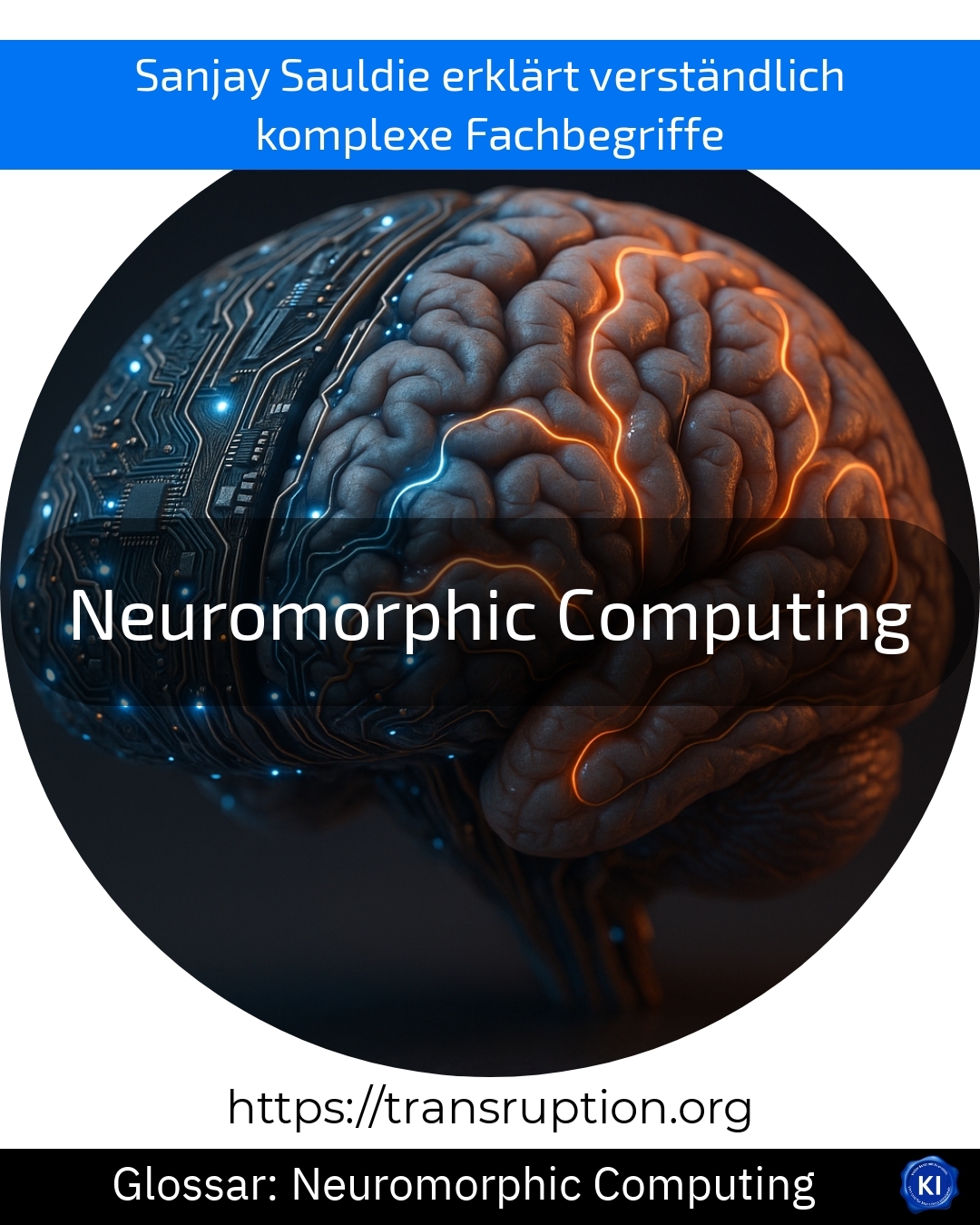
Neuromorphic computing is a term from the categories of artificial intelligence, digital transformation, and Industry and Industry 4.0. It describes a new type of computer technology that is modelled on the human brain. The aim is to build computers that can think and learn similarly to our brain.
Unlike conventional computers, which operate strictly according to fixed rules, neuromorphic computing uses so-called artificial neurons and synapses. These elements allow the computer to learn from experience and make decisions particularly quickly. This saves energy and makes the technology smaller and more efficient than conventional chips.
A practical example: on a modern production line, neuromorphic computers could ensure that robots autonomously recognise errors and react immediately. They analyse large amounts of data in real-time and adapt flexibly to changing situations – just like the human brain.
Neuromorphic computing is considered a significant milestone for the future of artificial intelligence. It aims to help make machines more intelligent, sustainable, and powerful.











 Deutsch
  English (UK)