
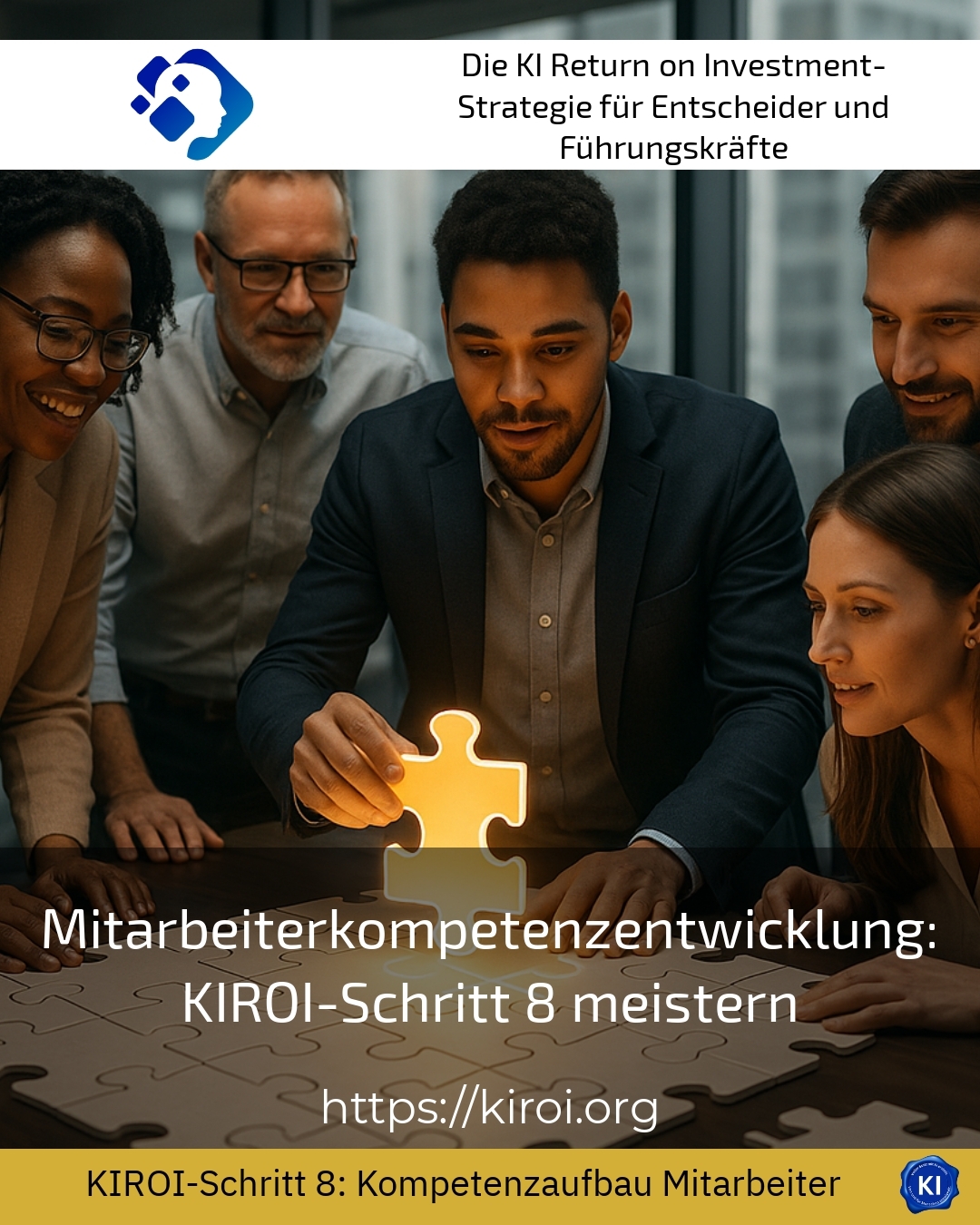
Targeted employee competency development is a key building block for sustainable success in companies today. Many organisations are finding that traditional training alone is no longer sufficient. Instead, structured support processes that identify and foster individual potential are becoming more important. In particular, KIROI Step 8 offers valuable impetus for systematically and practically designing employee competency development. In this article, you will learn how to master this step and which methods have proven effective.
Mitarbeiterkompetenzentwicklung im modernen Arbeitsumfeld bedeutet, dass Organisationen proaktiv in die Fähigkeiten und Wissensstände ihrer Belegschaft investieren, um mit sich ständig ändernden Anforderungen, technologischen Fortschritten und den allgemeinen Herausforderungen der heutigen Geschäftswelt Schritt zu halten. Dies umfasst nicht nur die Schulung in spezifischen technischen Fertigkeiten, sondern auch die Förderung von übertragbaren Fähigkeiten wie Problemlösung, kritisches Denken, Kommunikationsfähigkeit und Anpassungsfähigkeit. Das Ziel ist es, sicherzustellen, dass die Mitarbeiter befähigt sind, ihre Rollen effektiv auszufüllen, zum Wachstum des Unternehmens beizutragen und sich beruflich weiterzuentwickeln. Es handelt sich um einen fortlaufenden Prozess, der darauf abzielt, eine lernende Organisation zu schaffen, die agil und zukunftssicher ist.
Employee competency development encompasses more than just imparting specialist knowledge. It's about recognising and specifically fostering individual strengths. This includes technical knowledge, social skills, and methodological know-how. Companies that actively support this process often report higher motivation and better collaboration.
A practical example: A medium-sized company introduced an employee competency development concept based on regular feedback discussions and individual learning paths. The results were clearly noticeable: employees felt valued and became more engaged.
Even in the IT industry, it's evident that targeted employee skills development leads to faster innovation cycles. Teams that regularly participate in workshops and interdisciplinary projects develop new solutions more efficiently.
Another example: In the healthcare sector, many clinics use mentoring programmes to specifically support young professionals. This not only strengthens technical skills but also improves employee retention.
Employee Competence Development with KIROI Step 8
Systematic analysis and individual learning paths
KIROI Step 8 relies on a systematic analysis of current and future skills requirements. Managers and employees work together on individual learning paths. This ensures that development is tailored to specific needs and goals.
For example: In a financial services company, a competency model was developed which is regularly updated. Employees receive individual development plans based on their strengths and development areas.
In the logistics sector too, it's evident that systematic skills analyses lead to better results. Teams that regularly assess their skills are more flexible and adaptable.
Another example: In the automotive industry, many companies use digital tools to capture and foster skills. This allows employees to track their progress transparently.
Practical measures and coaching
KIROI Step 8 combines theory and practice. Employees benefit from practical workshops, individual support, and regular feedback discussions. This allows them to apply acquired knowledge directly in their daily work.
For example: In a trading company, practical workshops were introduced that were tailored to the specific challenges faced by employees. The results were impressive: employees felt better prepared and more motivated.
In the construction industry too, it is becoming apparent that practice-oriented measures lead to better results. Teams that regularly participate in workshops and coaching sessions work more efficiently and innovatively.
Another example: in the food industry, many companies use coaching methodologies to actively support employees. This leads to new ways of thinking and approaches to solutions.
Best Practices and Success Stories
Many companies report positive experiences with employee skills development. The combination of systematic analysis, individual learning paths, and practice-oriented measures has proven particularly effective.
For example: In a service company, a skills development concept was introduced, based on regular feedback discussions and individual learning paths. The results were clearly noticeable: employees felt valued and became more engaged.
Even in the IT industry, it's evident that targeted employee skills development leads to faster innovation cycles. Teams that regularly participate in workshops and interdisciplinary projects develop new solutions more efficiently.
Another example: In the healthcare sector, many clinics use mentoring programmes to specifically support young professionals. This not only strengthens technical skills but also improves employee retention.
My analysis
Employee competence development is an ongoing process that extends far beyond mere further training. KIROI Step 8 offers valuable tools to shape this process in a structured and sustainable way. Through the targeted use of coaching, individual learning paths, and practice-oriented measures, new perspectives and development opportunities emerge. For decision-makers, this concept offers valuable impetus to actively shape change within companies and strengthen competitiveness. Transparent communication and an appreciative corporate culture support the long-term success of these measures.
Further links from the text above:
Popular methods for developing the skills of company employees
Employee competence development: KIROI Step 8 for...
Competence Development: Definition + Successful Examples
Successful Competence Development in 5 Steps
Skills development: importance and methods
For more information and if you have any questions, please contact Contact us or read more blog posts on the topic Artificial intelligence here.











 Deutsch
  English (UK)