
Have you ever wondered why some companies seem to glide effortlessly into the digital future, while others, despite enormous investments, are stagnating and losing their best talent?
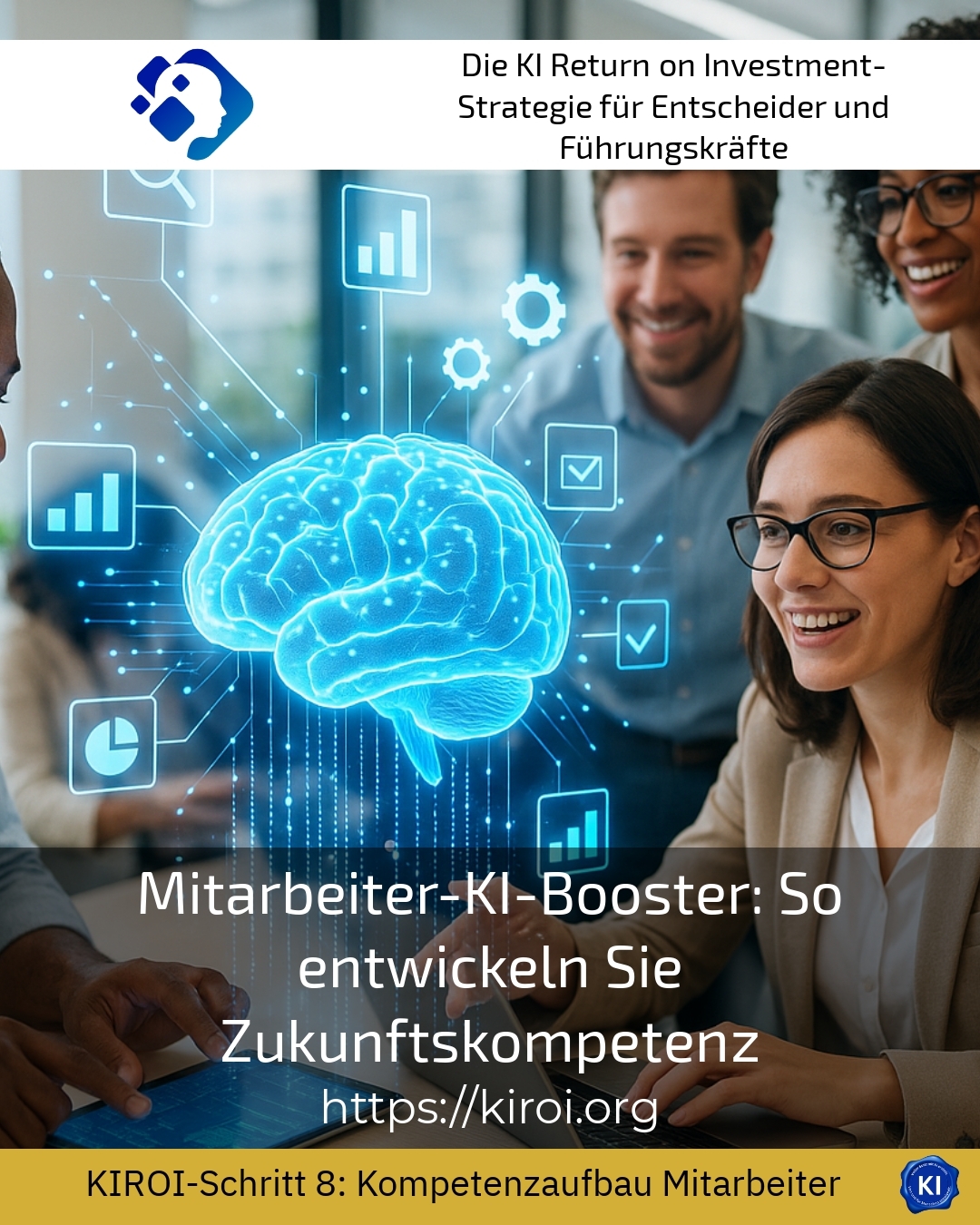
The answer often lies not in the technology itself, but in the way organizations prepare their workforce to collaborate with intelligent systems. Employee AI Booster This becomes a crucial competitive advantage that many leaders still underestimate. In a time when automated processes and data-driven decisions shape everyday work, people need new skills to stay relevant. This transformation does not happen overnight. It requires strategic guidance, continuous learning, and a culture that understands change as an opportunity. Many clients report initial uncertainty and concern about being replaced by machines. But this is exactly where professional support comes in.
The importance of the employee AI booster for modern organizations
Intelligent systems are now permeating almost every aspect of a company. From customer support to production and strategic planning, new interfaces are emerging between humans and machines. This development is fundamentally changing what skills are in demand on the job market. People who learn to use technological tools effectively become valuable builders of bridges between traditional work methods and digital possibilities.
For example, a medium-sized manufacturing company implemented predictive maintenance systems. These systems analyze machine data and predict potential failures. The technicians suddenly needed completely new skills. They had to interpret data visualizations and work with algorithmic recommendations. Some employees initially perceived this as a threat to their expertise. However, through accompanying training measures, they developed a new sense of self. They now considered themselves experts who could evaluate and optimize machine suggestions.
A logistics service provider implemented automated route planning. The dispatchers initially feared for their jobs. However, in the coaching process they recognized their indispensable role. They brought context knowledge that no algorithm could capture. Customer relationships, special requests, and local peculiarities required human judgment. The Employee AI Booster helped them redefine their strengths.
An insurance company automated large parts of the claims processing. Claims handlers now took on more complex cases. They learned to review and correct algorithmic decisions. This new responsibility required critical thinking and ethical awareness. Many employees viewed this development as an enhancement of their work.
Best practice with a AIROI customer
An international trading company faced the challenge of transforming its purchasing department into data-driven procurement processes. The experienced buyers had decades of market knowledge and developed supplier relationships. At the same time, algorithmic price analyses and automated order suggestions were to be introduced. As part of the transruptive coaching process, we developed a hybrid working model together with the team that meaningfully combined human expertise and machine intelligence. The employees learned to critically question algorithmic suggestions and to match them with their own experience. The work on mental models proved particularly valuable, as many participants had to first rethink their beliefs regarding their own role within the company. After six months, the buyers reported increased job satisfaction because they were able to focus on strategic tasks and delegate repetitive tasks to the systems. Procurement costs decreased measurably, while supplier relationships even improved in quality.
Systematically develop future competencies
The skills that people need in collaboration with intelligent systems differ significantly from traditional qualifications. Critical thinking is gaining in importance. Employees need to be able to evaluate machine outputs. They need a sense of when algorithms are wrong or deliver biased results. This metakognitive skill can be trained.
A pharmaceutical company trained its research teams in handling automated literature analyses. The scientists learned to critically examine algorithmically generated summaries. They recognized systematic distortions and missing nuances. This competence made them indispensable quality gatekeepers in the research process.
An advertising agency integrated generative systems into their creative processes. Initially, the designers feared losing their artistic identity. However, through coaching, they developed a new sense of self. They now saw themselves as creative conductors orchestrating and refining machine-generated suggestions. Their aesthetic judgment and understanding of brands remained indispensable.
A hospital implemented diagnostic support systems. Female doctors had to learn to deal with algorithmic second opinions. Transruptional coaching helped them find a healthy balance. They did not blindly adopt machine recommendations; they integrated them into their clinical decision-making process.
The employee AI booster as a tool for personnel development
Systematic competence development requires more than just one-off training sessions. Companies need sustainable concepts that enable individual learning paths. Employee AI Booster offers a structured framework for this development [1]. People learn at different rates and bring different prior experiences with them. Therefore, a uniform training program often falls short.
An energy provider developed individual training plans for its employees. Technicians received different learning content than customer advisors. The programs were based on concrete use cases. This hands-on approach significantly increased the learning motivation.
One bank implemented a mentoring program. Experienced employees accompanied colleagues as they got started with new systems. This peer-based support proved particularly effective. People learned from each other and overcame their fear of interacting with others.
A telecommunications company set up experimental spaces. Employees could try new tools risk-free there. These protected learning environments fostered curiosity and a joy of innovation. Mistakes were seen as learning opportunities, not failures.
Cultural Transformation as a Foundation
Technological changes often fail not because of a lack of resources, but because of cultural resistance. People cling to familiar working practices. They fear loss of control or a loss of meaning. These emotional factors deserve to be taken seriously. Transformation only succeeds when it involves the people [2].
A mechanical engineering company experienced massive resistance to the introduction of connected production systems. The skilled workers saw their craftsmanship being devalued. In transruptive coaching, we worked on redefining professional identity. The employees recognized that their expertise remained indispensable. They became system optimizers who continuously improved machine processes.
A retail chain implemented automated inventory management systems. The store managers perceived this as an encroachment on their autonomy. The coaching helped them to perceive the systems as a relief. They gained time for customer service and team management. This realignment significantly increased their job satisfaction.
A media company automated parts of its news production. Journalists feared the loss of editorial quality. In the process of change, they developed new roles. They focused on investigative research and insightful analyses. These activities were not machine-replaceable.
Best practice with a AIROI customer
A traditional family business in the food industry wanted to optimize its quality control through image recognition systems, with long-standing employees initially being skeptical about the change, as they considered their ability to assess product quality to be a core competency and feared being replaced by machines. As part of our support, we organized workshops where employees could openly express their concerns and we jointly analyzed which aspects of their work were actually automatable and which were not. It turned out that human expertise remained indispensable for borderline cases, unusual product variants, and the continuous improvement of the recognition systems. The employees took on the role of trainers, teaching the algorithmic systems what quality means and how to assess subtle differences. This repositioning led to a significant increase in identification with the company, and the turnover in the department fell to historic lows, while at the same time the attrition rates decreased measurably.
Executives as Facilitators of the Employee AI Booster
Successful transformation often begins at the top of the organization. Leaders shape the culture of the organization through their behavior. They must demonstrate a willingness to learn and lead by example. At the same time, they are responsible for the psychological safety of their teams [3].
An IT service provider initially trained its senior management. The managers learned to deal with their own uncertainty. They understood that ignorance was not a weakness. This attitude was passed on to their teams. Employees dared to ask questions and admit mistakes.
A hotel chain implemented automated reservation systems. Hotel managers had to redefine their leadership role. They focused more on guest service and employee development. This realignment improved both guest satisfaction and employee engagement.
A construction company implemented digital project management tools. The construction managers received coaching on their changed leadership role. They learned to combine data-based decisions with gut instinct and experience. This integrative competence made them valuable interface managers.
Practical implementation strategies
Successful qualification programs follow certain principles. They are based on concrete application cases rather than abstract concepts. People learn best when they see the benefits immediately. Theoretical knowledge alone is rarely sufficient.
An automotive supplier developed use-case-based training. Employees worked on real-world problems from their daily work. This contextual approach significantly increased the transfer of learning. The learned knowledge was immediately put into practice.
An accounting firm integrated new tools gradually. Employees were not flooded with changes. They were able to get used to each new system before the next one arrived. This gradual introduction significantly reduced the stress.
A chemical company established regular reflection rounds. Teams exchanged their experiences with new systems. Achievements were celebrated and challenges were solved together. This collective learning culture significantly accelerated the adaptation process.
My AIROI Analysis
Developing future competencies represents one of the key challenges for organizations that want to remain competitive in the long term. The systematic development of skills in handling intelligent systems requires more than technical training. People need guidance in emotionally processing changes. They need safe spaces to articulate their fears and develop new identities.
My experience from numerous transruptions coaching projects shows that cultural factors are often more important than technological ones. Companies that view their employees as partners in the transformation achieve more sustainable results. Employee AI Booster It achieves its full effect when it is embedded in a comprehensive change strategy.
The AIROI-methodology provides a structured framework for this holistic approach. It combines technological, organizational, and human aspects into an integrated approach. Leaders receive concrete tools for designing change processes. Employees receive support for personal development.
The coming years will show which organizations take the human dimension of digital transformation seriously. Those that invest in their workforce and enable development will emerge stronger from the change. The others risk losing their most valuable resource: dedicated, competent people.
Further links from the text above:
[1] McKinsey: The Human Side of Digital Transformation
[2] Harvard Business Review: Leadership Behaviors for Transformation Success
[3] World Economic Forum: Future of Jobs Report
For more information and if you have any questions, please contact Contact us or read more blog posts on the topic Artificial intelligence here.






 Deutsch
 English (UK)