
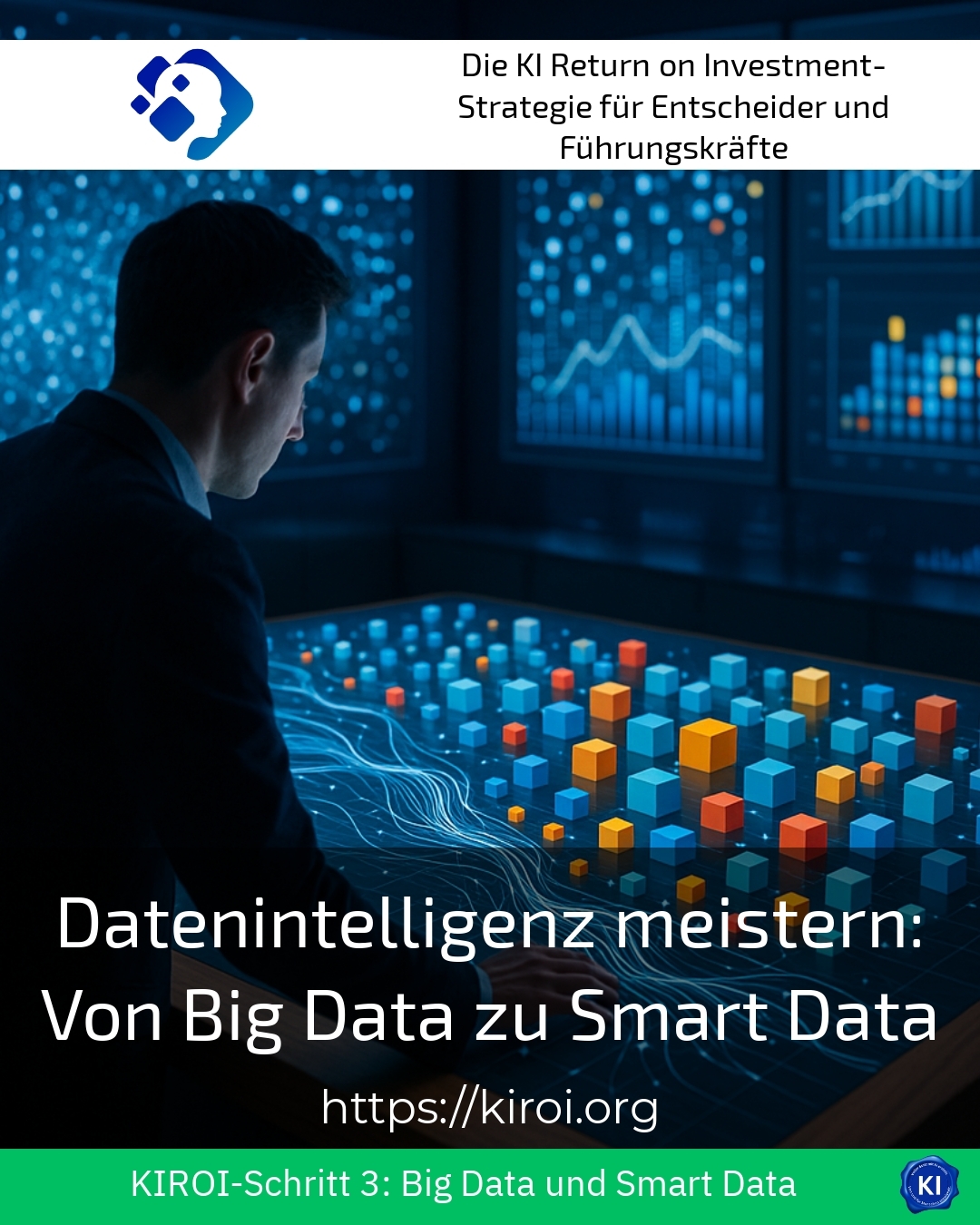
Imagine you are sitting on a mountain of information, yet you cannot find a single usable clue for your next important decision. Countless companies experience this exact scenario daily, collecting massive amounts of data without knowing how to extract real value from it. The transformation from big data to smart data represents the decisive turning point where genuinely usable insights emerge from sheer data volume. In this article, you will discover which strategies and methods can help you successfully shape this change and learn to master data intelligence in order to position your business for the future.
The challenge: why the sheer volume of data does not help
Many organisations invest significant resources in storing and managing their information assets. They collect customer data, transaction histories, sensor readings and communication logs in ever-growing databases. Yet the crucial next step is frequently missing. The mere accumulation of information does not generate a competitive advantage.
For example, a medium-sized logistics company spent years storing all the route data of its vehicle fleet. However, the terabytes of information lay unused on servers. It was only through systematic analysis that optimised routes could be identified. A retail company collected millions of receipt data points without a discernible strategy. The conversion of this raw data into meaningful customer profiles later enabled personalised offers. Similarly, an energy supplier struggled with the flood of meter data from its smart meters. Without intelligent evaluation, potential savings remained undiscovered.
These examples illustrate a fundamental problem of our time. The availability of information alone does not create added value. Rather, what matters is recognising relevant patterns and deriving actionable insights from them.
Mastering data intelligence: The path to structured analysis
The transition from unused mountains of data to actionable insights requires a systematic approach. First, companies must define clear goals. Which questions should be answered? Which decisions should be supported? Without these foundations, every analysis effort remains aimless and inefficient.
For example, an automotive supplier defined the goal of predicting production downtime. Focusing on this specific outcome enabled targeted data collection. An insurance company, on the other hand, wanted to detect cases of fraud at an early stage. The clear objective helped in selecting suitable analytical methods. A telecommunications provider aimed to reduce customer churn. This precise question steered all further activities in the right direction.
Best practice with a AIROI customer
An internationally operating trading company approached transruptions-Coaching because it was unable to achieve measurable improvements despite massive investments in data infrastructure. The managers reported frustration and feeling overwhelmed by the sheer volume of information. Together, we developed a clear prioritisation of the relevant data sources and defined concrete use cases for each business division. The guidance provided by transruptions-Coaching helped to overcome internal resistance and establish a data-driven culture. Within six months, the company was able to optimise its inventory levels while simultaneously improving its ability to deliver. The employees developed a new understanding of the value of structured information. Today, they regularly use dashboards and analysis tools for operational decisions. The transformation had a positive impact on the entire corporate culture.
Mastering data quality as the foundation for data intelligence
Before complex analyses are possible, the quality of the source data must be ensured. Incomplete data sets, inconsistent formats and outdated information lead to erroneous results. Investing in data quality pays off in the long term and forms the foundation for all subsequent activities.
For example, a pharmaceutical company discovered massive inconsistencies in its patient data from clinical trials. Cleansing these datasets was the very thing that enabled meaningful analyses of drug efficacy. A financial services provider struggled with different customer identifiers across various systems. Harmonising this data created a single customer view and enabled cross-selling initiatives. A manufacturing company also found that sensor data from different plants had different formats. Standardising these measurements was a prerequisite for cross-plant quality analysis.
Technologies and methods for intelligent data utilisation
Today, the technological landscape offers numerous tools for transforming raw data into actionable insights. Machine learning enables the automated recognition of patterns in large volumes of data. Predictive analytics assists in forecasting future developments. Natural Language Processing unlocks unstructured text data for analysis.
For example, a media company used algorithms to analyse user behaviour, thereby significantly increasing the relevance of its recommendations. A healthcare provider used predictive models to identify patients with an increased risk of certain conditions. A real estate group used text analysis for the automated evaluation of tenancy agreements and property descriptions. These examples demonstrate the diverse applications of modern analysis tools [1].
Mastering human competence as the key to data intelligence
Technology alone does not solve problems. Humans remain the decisive factor in interpreting and implementing analysis results. Companies need employees who combine both technical and business competencies. These bridge-builders between data and business are often difficult to find and retain.
A consumer goods manufacturer heavily invested in further training for its marketing staff in the field of data analytics. The combination of market knowledge and analytical skills led to significantly more effective campaigns. A mechanical engineering company trained its engineers in the interpretation of sensor data, thereby enabling predictive maintenance. A retail company established an internal centre of excellence that acts as a service provider for all departments. These investments in people often prove to be more sustainable than purely technological investments [2].
Best practice with a AIROI customer
A medium-sized industrial enterprise sought support in developing a data-driven corporate culture and turned to transruptions-Coaching for long-term guidance. Although the management recognised the potential of intelligent data usage, the workforce showed significant reservations about the planned changes. Through regular workshops and individual coaching sessions, we were able to alleviate fears and spark enthusiasm. The employees learned to formulate their own questions and carry out analyses independently. The combination of technical training and change management proved particularly valuable, as both aspects were equally important for success. After twelve months of guidance by transruptions-Coaching, the company had established a self-sustaining analytical culture that continuously generates improvements and sustainably strengthens its competitiveness. The transformation encompassed all hierarchy levels and functional areas of the company.
Mastering data intelligence: governance and ethical aspects
As the use of data analytics increases, so do the demands on governance and ethics. Companies must ensure that they use information lawfully and protect the privacy of customers and employees. Transparency regarding the methods used and their limitations is becoming increasingly important for the trust of all stakeholders.
For example, a credit institution revised its scoring models to prevent potential discrimination and ensure fair decisions. A personnel services provider established clear guidelines for the use of algorithms in candidate selection to ensure equal opportunities. A retailer now communicates openly about the use of customer data and gives consumers more control over their information. This proactive approach builds trust and minimises legal risks [3].
My AIROI Analysis
The transformation of unused data stocks into actionable insights represents one of the greatest opportunities and challenges of our time. Companies that successfully shape this change secure sustainable competitive advantages in an increasingly data-driven market environment. In this context, my analysis from numerous consulting projects shows that success depends on several factors that must be considered equally.
Firstly, the path to intelligent data utilisation requires a clear strategic direction. Businesses must precisely define which questions they want to answer and which decisions they want to improve. Secondly, data quality forms the indispensable foundation for all subsequent analyses, which is why investments in cleansing and standardisation pay off in the long term. Thirdly, organisations need people with the right combination of technical and functional skills who can act as bridge-builders between data and business.
Clients frequently report initial overwhelm and the feeling of missing out. transruptions coaching can provide valuable momentum as guidance for projects relating to digital transformation and support the change process. Experience shows that technological solutions alone are not enough and the human factor makes the crucial difference.
Further links from the text above:
[1] Gartner: Data and Analytics Research
[2] Harvard Business Review: Data Management Insights
[3] McKinsey: Analytics and AI Insights
For more information and if you have any questions, please contact Contact us or read more blog posts on the topic Artificial intelligence here.








 Deutsch
  English (UK)