
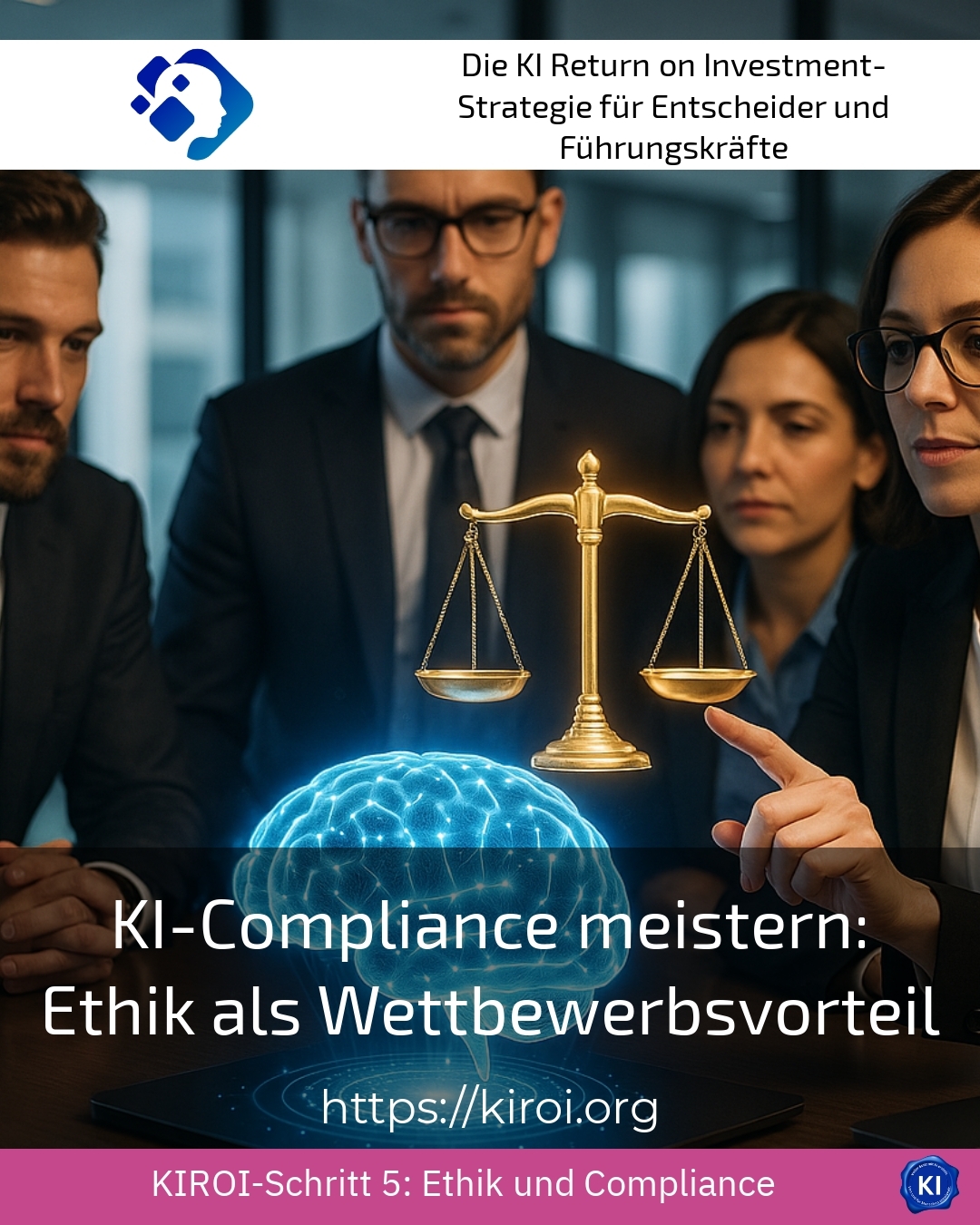
In an era where algorithmic systems increasingly make decisions that affect all our lives, a fundamental question arises: how can organisations successfully navigate the fine line between technological innovation and social responsibility? The answer lies in a paradigm shift that goes far beyond mere regulatory compliance and Mastering AI Compliance views as a core strategic competence. Those who neglect the ethical foundations of algorithmic decision-making today risk not only substantial penalties but also the loss of trust from customers, employees, and the public at large. The good news, however, is that companies can seize this challenge as an opportunity to sustainably differentiate themselves in the market and take on a pioneering role.
The fundamental importance of ethical guardrails in the algorithmic era
The introduction of intelligent systems into business-critical processes has unleashed a dynamic that many organisations initially underestimated. Algorithms analyse application documents, assess creditworthiness, and control complex supply chains. They recommend medical treatments and influence legal decision-making processes. This development holds enormous potential for increasing efficiency. At the same time, however, risks arise that could have serious consequences without adequate control. Discriminatory patterns in training data can manifest in automated decisions. Opaque algorithms significantly complicate the traceability of results. The regulatory framework, particularly the European AI Act, sets clear requirements here [1]. Companies must carry out risk classifications and implement appropriate measures. However, these specifications are only a minimum standard.
For instance, a financial services provider implemented an automated credit scoring system that initially yielded promising results. However, upon closer analysis, it was discovered that certain demographic groups were systematically disadvantaged. Rectifying this issue required significant investment. A retail company utilised image recognition technology for theft prevention without fully considering the data protection implications. The consequences were far-reaching, including fines and reputational damage. Conversely, an insurance group proactively developed an ethical framework for its pricing algorithms. This forward-thinking approach measurably strengthened customer trust and led to higher retention rates.
Why Mastering AI Compliance is Becoming a Strategic Imperative
The ability to design and operate algorithmic systems responsibly is emerging as a crucial differentiator. Companies that Mastering AI Compliance, positioning themselves as trusted partners in an increasingly digitised business world. This positioning goes far beyond avoiding sanctions. It creates a sustainable competitive advantage that is particularly valuable in times of growing scepticism towards technological systems. Customers prefer to choose providers whose practices they perceive as fair and transparent. Talented professionals prefer employers with clear ethical principles. Investors are increasingly taking sustainability criteria into account when making their decisions. All these factors underscore the strategic value of a well-thought-out approach to algorithmic responsibility.
Best practice with a KIROI customer A medium-sized company in the labour-intensive services sector faced the challenge of introducing an algorithmic application filter that was both efficient and fair. Transruptions coaching accompanied this transformation process over several months, helping to systematically integrate the different stakeholder perspectives. Initially, a comprehensive audit of the existing data foundation was carried out to identify potential biases early on. This revealed that historical hiring decisions contained certain patterns that would have led to problematic outcomes if adopted uncritically. Together, the team developed a catalogue of measures for data cleansing and introduced regular fairness audits. HR managers received training on the critical interpretation of algorithmic recommendations. A feedback mechanism enabled continuous improvements to the system. The company transparently documented all decision-making processes and created a clear governance structure. Following the introduction, those involved reported a significant increase in efficiency with simultaneously improved diversity in the applicant pools. Employees found the new system to be supportive rather than paternalistic.
Practical Implementation Strategies for Responsible Algorithmic Systems
The implementation of ethical principles in practice requires a structured approach. This begins with a thorough review of existing algorithmic systems and their application contexts. Organisations should first understand which decisions are made automatically or with algorithmic support. A categorisation based on risk potential helps in prioritising measures. High-risk applications in the areas of human resources, finance or healthcare require special attention. However, seemingly uncritical systems can also have unintended consequences. A systematic impact assessment forms the basis for further steps [2]. Potential negative consequences are identified and assessed. This is followed by the development of countermeasures and control mechanisms. These should be integrated into existing governance structures.
A logistics company implemented a route optimisation system that initially delivered significant cost savings. However, closer examination revealed that certain districts were systematically being delivered to later. Analysis showed that historical delivery data contained these patterns. The company subsequently developed corrective mechanisms that ensured a fairer distribution. A retailer used pricing algorithms based on demand forecasts. On review, it was found that socio-economically disadvantaged areas tended to be shown higher prices. After adjusting the algorithms, customer perception improved noticeably. An energy provider implemented predictive maintenance systems for its infrastructure. The integration of ethical review criteria ensured that all supply areas were treated equally.
Governance Structures and Organisational Embedding for Mastering AI Compliance
The sustainable integration of ethical principles requires appropriate organisational structures. Many companies are now establishing dedicated bodies or roles for algorithmic responsibility. These units act as internal bodies that oversee and evaluate projects. They develop guidelines and monitor compliance. The composition of such bodies should be interdisciplinary and include diverse perspectives. Technical expertise alone is not sufficient. Legal, ethical, and subject-matter competence must work together. External stakeholders can provide valuable input. Involving representatives of affected parties increases the legitimacy of decisions made. Regular reporting to management ensures strategic relevance. Training programmes for employees promote awareness at all levels.
A telecommunications provider established an Ethics Board to review all new algorithmic applications before their deployment. This body comprises internal and external experts from various disciplines. The average review period is approximately three weeks. A pharmaceutical company integrated ethical review criteria into its existing project management process. Each development phase now includes specific checkpoints for algorithmic fairness. A media conglomerate introduced mandatory training for all employees working with algorithmic systems. Participation is a prerequisite for unlocking relevant access rights. These structural measures demonstrate how Mastering AI Compliance can be implemented in practice.
Best practice with a KIROI customer An internationally operating industrial group wanted to automate its quality control processes using image-based inspection systems without neglecting ethical principles. Transruptions coaching supported the project team in developing a comprehensive governance framework that considered all relevant aspects. In the first step, the various application scenarios were systematically analysed and categorised. The team identified potential risks ranging from workplace safety to data protection issues. Specific measures and control mechanisms were developed for each risk category. Special focus was placed on involving the workforce in the transformation process. Employees received training on how the new systems work and on their rights. A feedback channel made it possible to raise concerns and suggestions for improvement. The company established a clear escalation structure for critical situations. Documentation of all decisions was carried out in a central repository. After successful implementation, the framework served as a template for further company locations.
Transparency and traceability as anchors of trust
The ability to explain algorithmic decisions in a comprehensible way is becoming increasingly important. Those affected have a legitimate interest in understanding why certain decisions were made. The regulatory framework provides for corresponding rights of access [3]. However, transparency is also an important factor in building trust beyond legal requirements. Companies should actively communicate where and how algorithmic systems are used. Understandable explanations of how they work promote acceptance. Technical concepts such as Explainable AI support these efforts. The challenge lies in presenting complex interrelationships in an understandable manner. Communication tailored to the target audience requires translating technical details into generally understandable language. Visualisations can help make abstract concepts tangible.
An insurance company developed an interactive dashboard that transparently shows customers the factors in their premium calculation. The use of this tool led to a measurable reduction in complaints and queries. A credit institution implemented automated explanations for rejection letters for financing applications. Customers now receive specific information on the relevant decision factors. A human resources service provider proactively informs applicants about the use of algorithmic pre-selection and the criteria used. This transparency is consistently rated positively by those affected.
Continuous monitoring and adjustment as a success factor in mastering AI compliance
Algorithmic systems are not static entities, but are continuously evolving. Training data changes, application contexts shift. What appears fair and appropriate today may be problematic tomorrow. Therefore, continuous monitoring is essential. Regular audits check adherence to defined criteria. Metrics for algorithmic fairness should become part of standard reporting. Deviations from target values trigger defined escalation processes. The technical implementation of such monitoring systems requires appropriate investment. However, the effort is worthwhile, as early detection of problems prevents costly corrections. Feedback from affected individuals and employees provides valuable insights into potential weaknesses.
An online marketplace introduced weekly automated fairness checks for its recommendation algorithms. Suspicious patterns are automatically escalated to the relevant team. A mobility provider continuously analyses the geographical distribution of its algorithmically controlled services. Underservice in certain areas is systematically identified and addressed. A healthcare provider monitors the quality of results from its diagnostic support systems based on demographic characteristics. Deviations lead to immediate investigations and, if necessary, adjustments to the models.
My KIROI Analysis
My accompaniment of numerous organisations through their algorithmic transformation has provided deep insights into the success factors and stumbling blocks of this process. What I repeatedly observe is the fundamental importance of a holistic approach that considers technical, organisational, and cultural aspects equally. Companies that view ethical considerations as a tedious compliance exercise regularly miss their goals. The most successful organisations, on the other hand, understand algorithmic responsibility as an integral part of their value creation, rather than an obstacle to innovation.
The KIROI methodology has proven to be a valuable framework in this regard, offering structure and direction without resorting to rigid templates. The realisation that sustainable success is only possible through the involvement of all relevant stakeholders seems particularly important to me. Technical experts alone cannot manage the necessary transformation. It requires dialogue between different disciplines, an understanding of different perspectives, and a willingness to critically question established practices. The examples in this contribution show that the path to responsible algorithmic practice is indeed challenging, but yields rewarding results. Companies that seriously embark on this journey often report positive side effects that go beyond the original objectives. Improved process quality, higher employee satisfaction, and strengthened customer trust are just a few of them. Whoever Mastering AI Compliance one should understand this path as a marathon and not as a sprint, but the investment is sustainable.
Further links from the text above:
[1] European Commission – Regulatory Framework for AI
[2] ISO/IEC 38507 – Governance of IT – Governance implications of the use of artificial intelligence
[3] GDPR – General Data Protection Regulation
For more information and if you have any questions, please contact Contact us or read more blog posts on the topic Artificial intelligence here.











 Deutsch
  English (UK)