
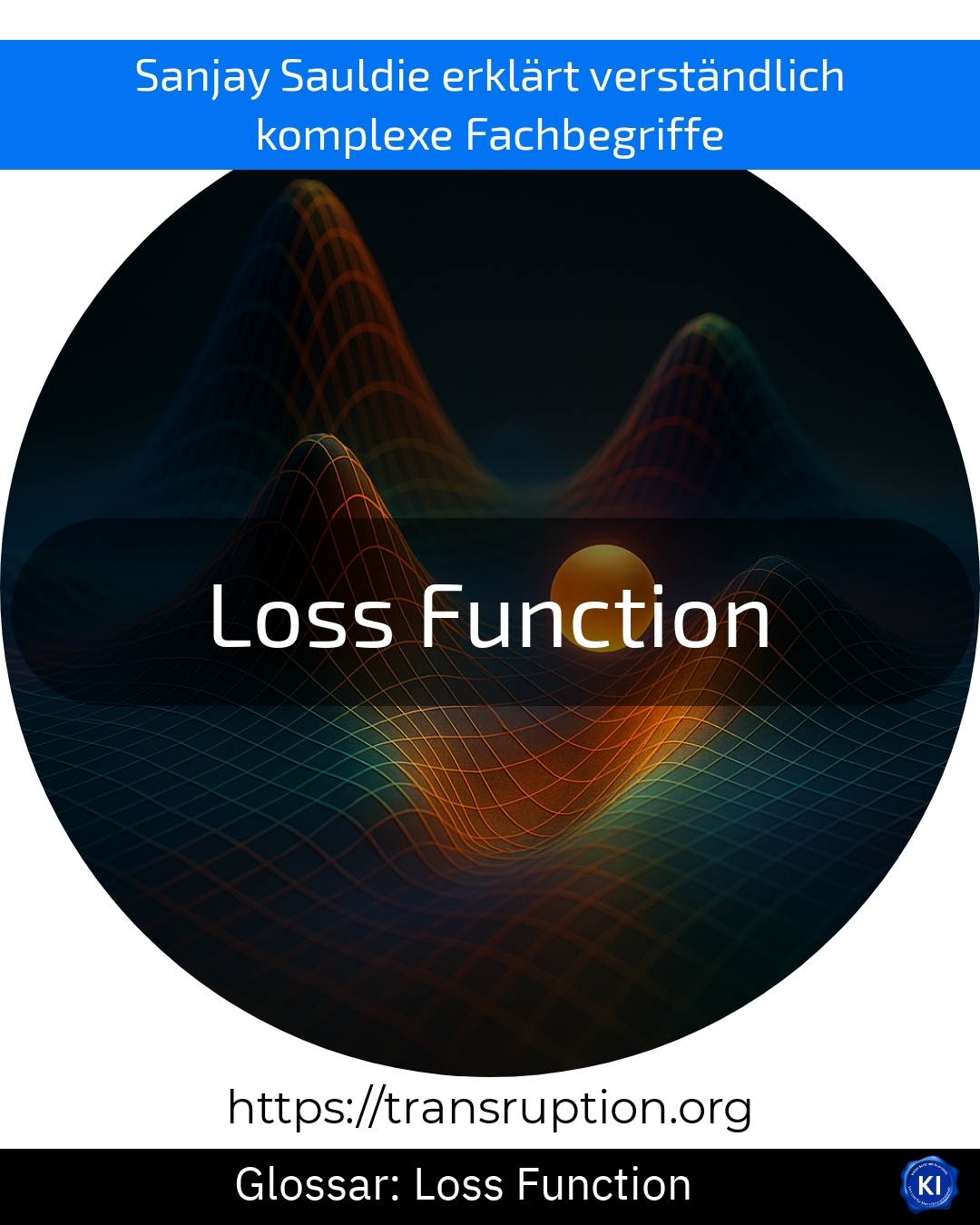
The term Loss Function originates from the fields of Artificial Intelligence, Big Data and Smart Data, and Digital Transformation. The Loss Function, often referred to in German as 'Verlustfunktion', is a central concept when training AI systems and algorithms.
It helps to improve artificial intelligence. Specifically, it measures how big the difference is between the result of a model and the actual correct result. The smaller the difference, the better the model works. The loss function therefore shows the computer how far away it still is from the optimal result.
A simple example: Imagine you're building an AI to distinguish between photos of dogs and cats. If the AI responds with „dog“ but the image is of a cat, the error would be large – the loss function would indicate this with high loss. If the AI correctly says „cat,“ the loss would be very small. Through thousands of repetitions, the system learns to become more accurate by trying to minimise the loss as much as possible.
In summary: the loss function tells computers how well or poorly they have solved a task and initiates improvements.









 Deutsch
  English (UK)