
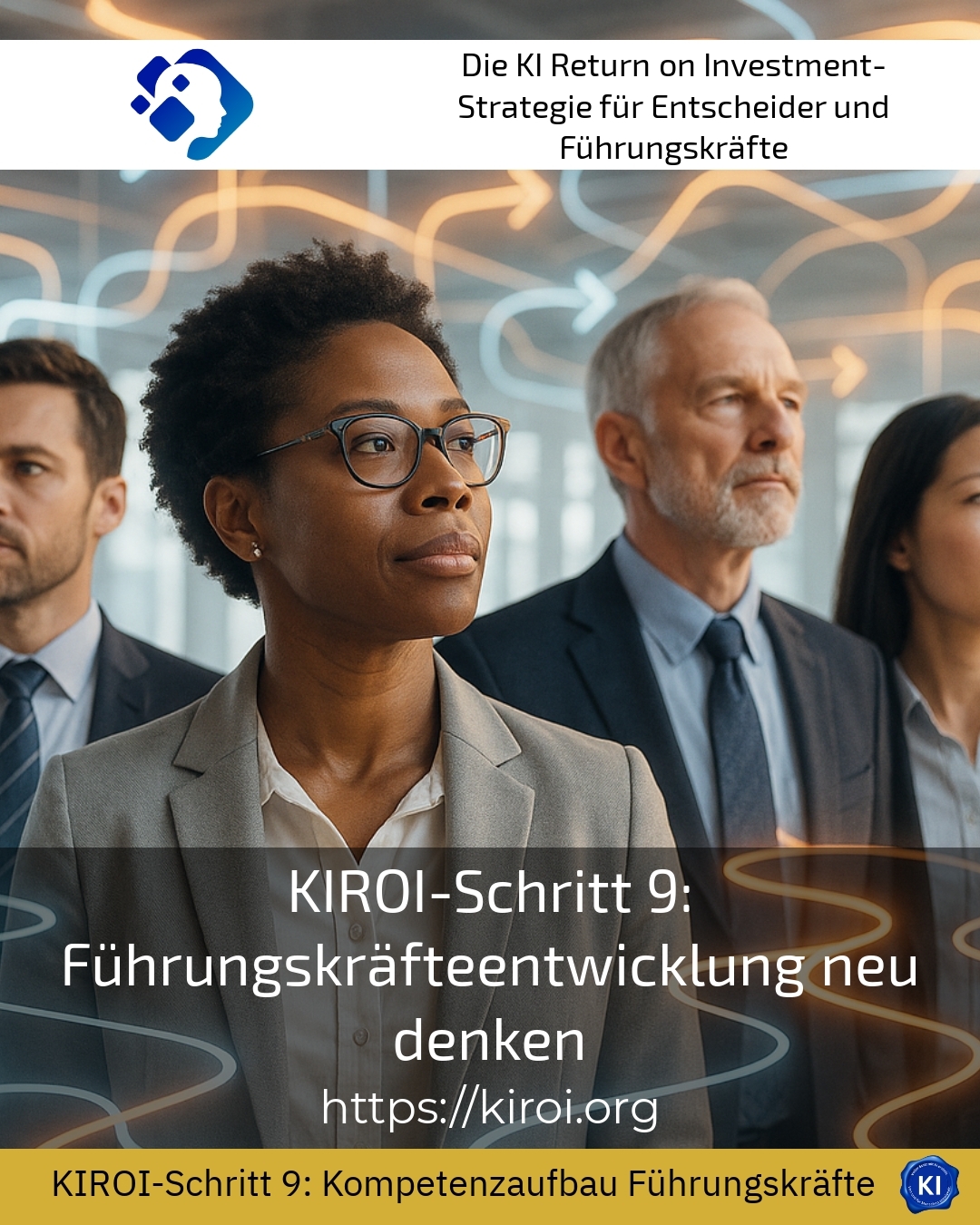
Leadership development is a key component of modern human resource strategies. As part of KIROI Step 9, it demonstrates how leadership development can be rethought to meet current and future challenges. Companies benefit when they design this process systematically and support it with tailored methods.
Leadership Development: More than just further training
Leadership development involves far more than traditional seminars or one-off coaching sessions. It encompasses ongoing support that considers all levels of an organisation and is tailored to the requirements of the respective industry. Companies like Siemens integrate hybrid learning models that combine face-to-face events with digital platforms. This equips leaders to manage change processes and innovations in their environment.
Development programmes in the automotive industry also rely on a combination of mentoring, training, and 360-degree feedback to strengthen managers' social and technical skills [6]. Another important aspect is the integration of leadership culture into everyday life: managers should not only acquire knowledge but also further develop their mindset in order to sustainably anchor the new leadership principles [10].
Practical formats for sustainable leadership development
In step 9 of the KIROI method, diverse formats are recommended for the effective and contemporary implementation of leadership development. Workshop series offer space for exchange and reflection. Digital learning modules enable learning independent of time and place. Individual coaching supports the application of new competencies in everyday life. Simulations and regular feedback loops have proven particularly effective, creating practical security[3].
For example, executives in the energy sector are guided to better understand and actively shape digital control systems. This promotes dialogue with technical experts and builds trust in complex change processes[3]. In the financial sector, on the other hand, the focus is often on developing ethical AI competencies, enabling executives to make AI-supported decisions responsibly and safely[5].
Some companies are also focusing on innovative formats such as peer coaching or interactive learning pathways. These not only strengthen professional competence but also promote emotional intelligence and social skills, which are becoming increasingly important for leadership success[6].
Examples from various industries for leadership development
BEST PRACTICE with one customer (name hidden due to NDA contract) An international energy company implemented a leadership development programme that specifically focused on AI competencies. Through practical coaching, leaders were able to expand their technological skills and create an innovation-friendly working environment.
In the logistics sector, executives use development programmes to effectively deploy AI-supported tools for resource planning. This leads to optimised processes and cost reduction[5].
A renowned automotive company has established a trainee programme that systematically prepares executives for higher management positions. Individual development plans are implemented and continuous feedback cycles are used to ensure learning progress.
Actionable tips for modern leadership development
For leadership development to have a sustainable impact, a precise needs analysis is the central starting point. Not only should professional qualifications be taken into account, but also personal development. Companies should encourage leaders to actively try new things and understand their own mistakes as learning opportunities.
The inclusion of mentoring programmes offers particularly valuable impetus. Experienced leaders pass on their knowledge while simultaneously creating networks that strengthen the company culture[2][6]. Furthermore, a balanced mix of different learning and development formats, tailored to the needs of individual managers, is recommended. These include blended learning approaches, face-to-face training, and digital learning modules[2][10].
Regular feedback discussions, such as 360-degree feedback, provide important indications of personal strengths and areas for development. This supports managers in working on themselves in a targeted manner and continuously improving their performance[6].
Leadership Development as a Continuous Development Process
KIROI Step 9 clarifies that leadership development must be viewed as a dynamic process. Changes in markets, technologies, and organisations necessitate regular adaptation of programmes. Only in this way can it be ensured that leaders are always optimally prepared for their role and can act effectively[10].
The future demands a high degree of flexibility and a willingness to learn from leaders. Leadership development programmes help to promote these skills and to fully realise the potential of individuals in leadership roles. This creates better cross-framework conditions for successful company development.
My analysis
The realignment of executive development, in the spirit of KIROI Step 9, demonstrates the importance of holistic and practice-oriented support. Companies benefit from tailor-made programmes that integrate technical, social, and strategic competencies. This better equips executives to guide their teams through complex change processes. The consistent connection between theory and practice is a key success factor here.
Further links from the text above:
Leadership Development: The HR Guide – Personio
Examples of successful leadership development – Bridge IMP
KIROI Step 9: Leadership Development for Future Competence
Leadership Development – Definition, Goals & Examples
KIROI Step 9: Leadership Development for AI Competence
6 Examples of Leadership Development – easyfeedback
Good practice examples – Ergonomics
Vertical development of leadership skills – CCL PDF
Effective Leadership: 5 Examples of Good Leadership
For more information and if you have any questions, please contact Contact us or read more blog posts on the topic Artificial intelligence return on investment here.











 Deutsch
  English (UK)