
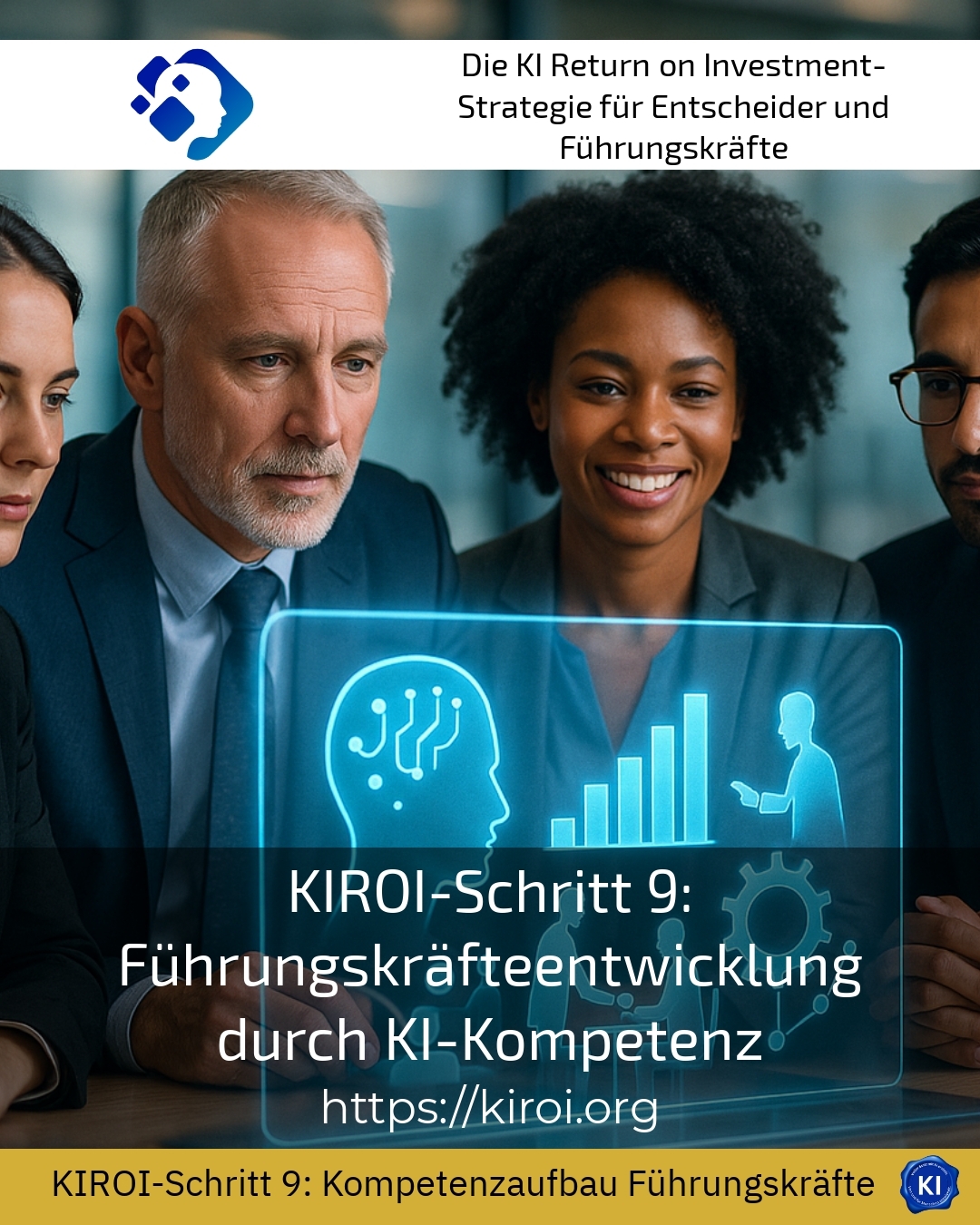
Leadership development is increasingly important today, particularly if companies want to make their management teams fit for the digital future. The integration of Artificial Intelligence (AI) is increasingly seen as a key factor for leaders to successfully fulfil their role. The development of AI competence is therefore a crucial building block of modern leadership development.
Leadership Development Through AI Competence: A New Approach
Leadership development comprises more than just traditional seminars or coaching. Particularly during times of digital transformation, the ability to understand and apply AI technologies is becoming increasingly important. Companies support their leaders not only in traditional leadership tasks but also in competently handling data-based decisions and automation processes.
For example, managers in the automotive industry benefit from using AI-powered analytics to optimise production processes or guide product development. Similarly, in retail, the ability to interpret customer behaviour using intelligent algorithms is becoming increasingly important.
In the financial sector, AI competence, in turn, makes it possible to assess risks more precisely and introduce automated reporting processes. These practical examples show how targeted executive development with a focus on AI competence can drive companies forward across industries.
Methods for integrating AI competence into leadership development
To promote AI skills, leadership development offers various approaches that can be well combined. Practical learning directly in everyday work („on the job“) supports the quick application and consolidation of new skills.
In the chemical industry, for example, area managers undergo systematic job rotations where they learn about different AI-driven production systems. In the customer service of telecommunications companies, managers are supported by mentoring to better understand and implement the use of AI-assisted data analysis.
Furthermore, seminars and workshops are important formats for imparting theoretical knowledge on AI and linking it with case studies from their own market. For example, managers from the pharmaceutical industry can attend workshops that deepen their understanding of AI in the context of research and regulatory requirements.
Coaching and mentoring as targeted support
Individual coaching helps leaders identify personal strengths and development potential in their engagement with AI. Experienced coaches or internal mentors guide the leaders through practical challenges and reflection discussions.
BEST PRACTICE with one customer (name hidden due to NDA contract) An executive at a large mechanical engineering company received executive coaching to implement an AI-based decision-making process in purchasing. The individualised support enabled the successful introduction of the project while simultaneously strengthening leadership competence in a digital context.
Likewise, leaders in technology companies benefit from reverse mentoring, where younger employees teach AI know-how to older leaders, while also opening up new perspectives for digital transformation.
Practical tips for promoting AI competence in leadership development
To effectively integrate AI competence into leadership development, a structured needs analysis is recommended. Leaders should be introduced to AI applications that are specifically relevant to their industry and role. For example, the manufacturing sector would focus on AI-supported process automation, while retail would prioritise customer data analysis.
The integration of learning modules in the form of e-learning or blended learning formats ensures temporal flexibility. This allows healthcare managers to use their own time slots to deepen their knowledge of AI topics without significantly interrupting their normal workflow.
Furthermore, it is beneficial to make successes with AI in leadership visible. Leadership development also includes setting milestones and providing regular feedback to document progress and maintain motivation.
Leadership Development and Dealing with Challenges
Many leaders report that getting started with AI topics initially seems complex. Topics such as data ethics, legal requirements, and technical fundamentals require guidance and time. Others are unsure how AI will change teamwork.
Here, leadership development is supported through transparent communication formats and the establishment of a positive error culture in dealing with new technologies. Companies from the logistics sector, for example, recognise the need to closely support managers in the implementation of AI solutions and to regularly provide space for questions and discussion.
My analysis
Leadership development is gaining contemporary relevance through the integration of AI competencies. Leaders who understand and actively shape the use of AI receive important impulses for effectively leading their teams and co-creating digital transformation. The combination of practice-oriented learning formats, individual support, and organisation-wide strategy makes this approach particularly effective.
Companies that consistently enhance their leadership development with AI expertise not only strengthen individual leaders but also foster the innovative strength and competitiveness of the entire company.
Further links from the text above:
How to succeed in leadership development – Methods
Leadership Development: Comprehensive Guide
Leadership Development: Trends and Measures
For more information and if you have any questions, please contact Contact us or read more blog posts on the topic Artificial intelligence here.











 Deutsch
  English (UK)