
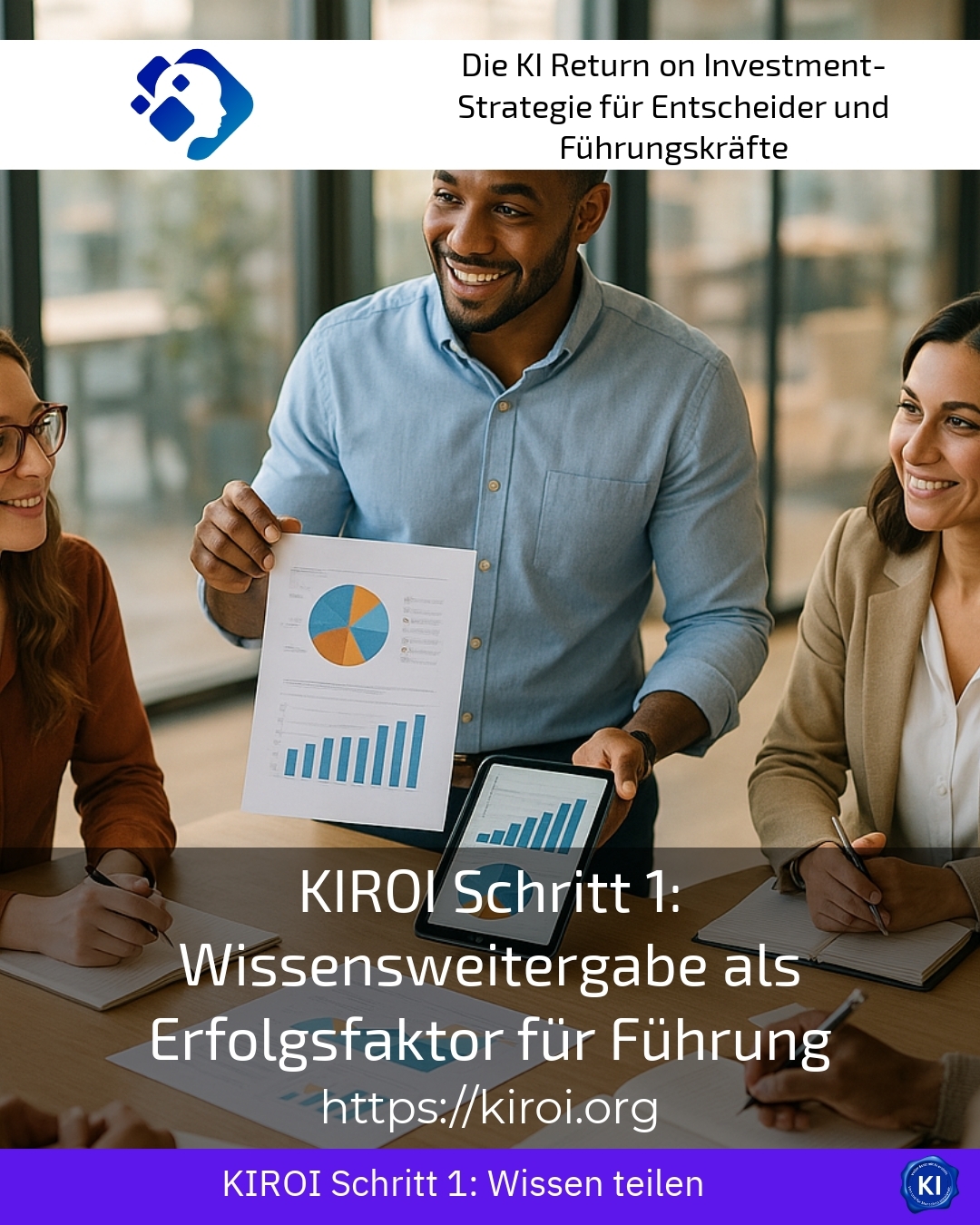
In today's working world, targeted Dissemination of knowledge increasingly important. For managers, it has long ceased to be a mere side aspect, but rather a central success factor. The way knowledge is passed on within a team or company often determines project progress, innovative strength and long-term competitiveness. This article takes a practical look at how managers can effectively contribute through their actions. Dissemination of knowledge and what measures have proven particularly successful.
Knowledge sharing plays a key role in leadership because it empowers teams, fosters innovation, and builds a strong organisational culture.
A leader bears responsibility not only for strategic decisions but also for the sustainable development of their employees and the entire team. Targeted Dissemination of knowledge creates the necessary foundation for this. Without structured information sharing, misunderstandings, duplication of effort, or delays can quickly arise in day-to-day work.
Examples from various industries illustrate this:
In mechanical engineering, team leadership uses time-bound workshops to systematically pass on experience from past projects to younger engineers. This allows sources of error to be identified early and costs to be reduced.
In software development, managers rely on pair programming and code reviews, which also serve as platforms for informal knowledge transfer. This way, both junior and senior developers benefit from each other.
In healthcare, senior physicians are establishing mentoring programmes that cover both professional and social Dissemination of knowledge intensifying youth development and ensuring better patient care.
Methods and instruments for knowledge transfer in leadership
The Dissemination of knowledge can be accompanied by various instruments and approaches. In addition to classic meetings, a variety of tried-and-tested concepts have become established.
Mentoring and peer learning
Mentoring offers experienced leaders the opportunity to impart knowledge specifically to less experienced employees. This is not just about facts, but primarily about passing on unwritten know-how and experience. Through peer learning, such as learning partnerships or collegial advice, employees connect on an equal footing, which effectively promotes internal exchange.
In the financial sector, leaders regularly have their teams participate in Lessons Learned sessions. These specifically promote the exchange of experience on complex projects and serve as a learning impulse for subsequent initiatives.
In retail, managers benefit from feedback sessions where employees share their knowledge of products and customer behaviour, thereby expanding collective knowledge.
Digital Knowledge Platforms and Documentation
Many companies are implementing internal knowledge bases or wikis that support codified knowledge transfer. This allows management to ensure that valuable knowledge is not lost and can be accessed at any time.
In consulting, project managers use structured documentation to systematically record work steps and best practices and make them accessible to the entire team.
In the manufacturing sector, managers ensure that operating manuals and maintenance logs are kept digitally. This ensures that knowledge is available to new employees as well.
Practical Tips for Managers to Foster Knowledge Sharing
Knowledge sharing doesn't happen on its own – it needs impetus and guidance. Here are some effective tips:
- Foster an open communications culture that values and makes visible the exchange of knowledge.
- Regularly organise discussion rounds where concrete challenges and solutions are shared.
- Use digital tools that make information easy to find and edit.
- Opt for informal formats such as coffee breaks or networking events to support casual knowledge sharing.
- Initiate moderated handover conversations during staff changes to minimise knowledge loss.
BEST PRACTICE with one customer (name hidden due to NDA contract) A manager in a medium-sized IT company established a systematic mentoring programme. Experienced employees met with new colleagues every two weeks for an exchange of experiences. These measures led to a measurable increase in team productivity and, at the same time, noticeably reduced onboarding times.
In a logistics company, the introduction of a digital knowledge map has enabled employees to quickly find the right contact persons. This targeted networking has accelerated internal processes and strengthened collaboration across departmental boundaries.
Regular documentation of teaching methods and learning experiences via an internal platform also proves beneficial in the education sector. This ensures that current knowledge is available to all educators at all times and new pedagogical approaches can be implemented quickly.
Knowledge transfer as a sustainable success factor in leadership
A systematically organised Dissemination of knowledge is not a one-off project but a continuous process. Management is urged to actively support this process and create suitable frameworks. Transparent and appreciative communication creates an environment in which knowledge is not withheld but shared and further developed.
The positive effects are reflected in increased efficiency, improved team dynamics, and enhanced innovation. This allows leaders not only to secure the stability of their team, but also to sustainably strengthen their company's competitiveness.
My analysis
The Dissemination of knowledge represents a central building block of successful leadership. Leaders who actively shape this process create a valuable foundation for sustainable company success. The combination of proven methods, such as mentoring and structured documentation, along with an open communication culture, supports teams in developing their full potential. Examples from a wide range of industries show that the effort is worthwhile and often leads to measurable improvements. Especially in dynamic markets, good Dissemination of knowledge often the decisive factor in remaining agile and future-proof.
Further links from the text above:
Information as a central leadership task: effectively sharing knowledge
Knowledge Transfer | Definition, Methods & Examples – persomatch
Barriers in Knowledge Transfer: Definition and 5 Tips for Removal
Knowledge transfer: Passing on knowledge within a company
Knowledge transfer: Definition - Sage
Leadership Culture: Knowledge Management: Effectively Sharing Information
Knowledge management: How to successfully retain knowledge in the company
For more information and if you have any questions, please contact Contact us or read more blog posts on the topic Artificial intelligence here.











 Deutsch
  English (UK)