
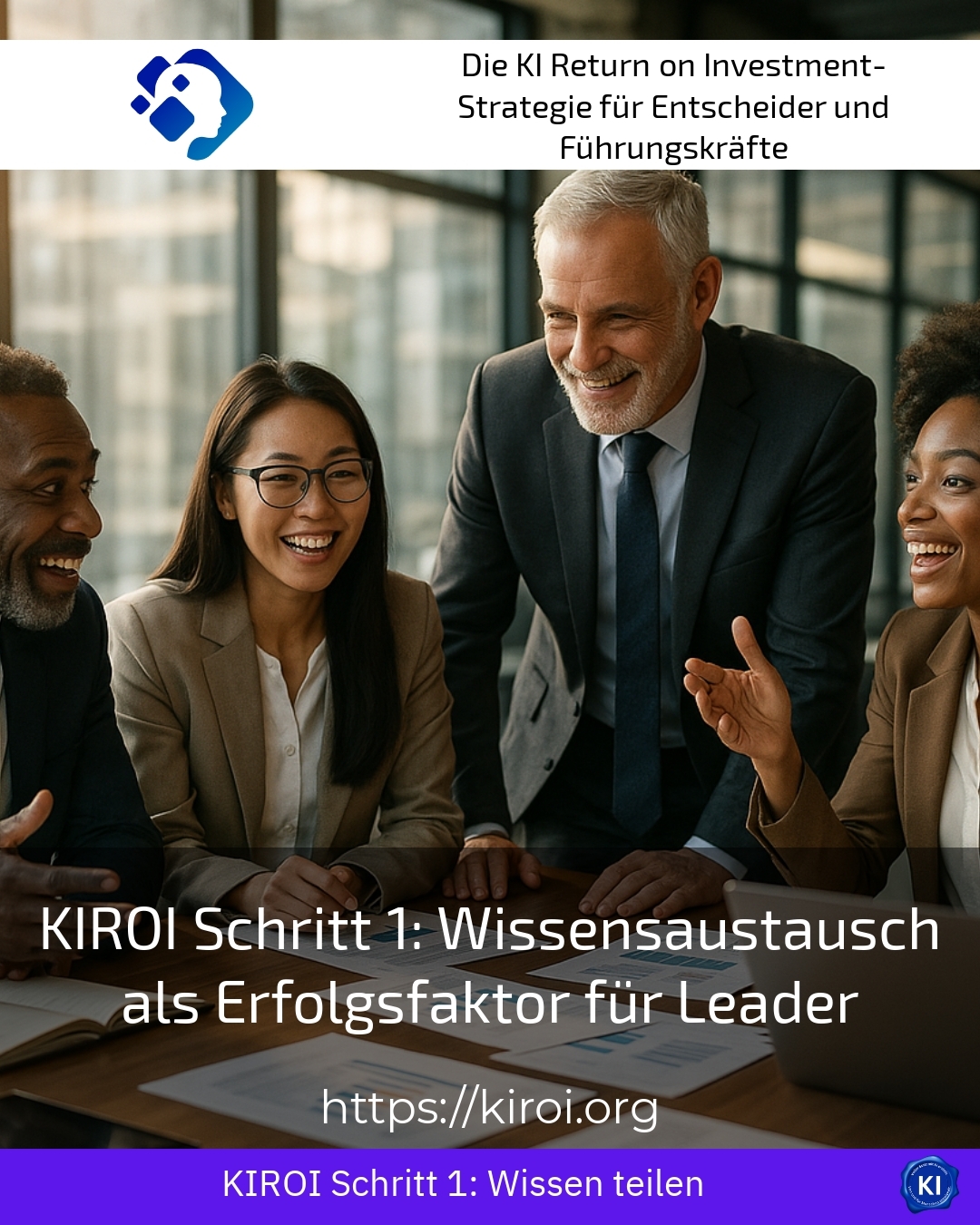
Knowledge sharing plays a central role for leaders who want to effectively support and develop their teams. It not only enables the dissemination of important knowledge but also fosters innovation and trust within organisations. In projects or in day-to-day leadership, many leaders realise how essential clear communication and active exchange are for success.
Knowledge sharing as the basis for successful leadership
Leaders often face the challenge of conveying diverse knowledge in a way that benefits all team members. A practical example comes from a manufacturing company where new processes were introduced. The project manager organised regular meetings where experiences were shared. This allowed the team to respond quickly to challenges and optimise workflows.
The benefits of active knowledge sharing are also evident in the IT industry. Developers exchange code examples and solutions in joint sessions. This not only promotes the quality of the software but also team spirit, as everyone involved learns from each other.
In the field of consulting, managers facilitate knowledge sharing through targeted feedback sessions. This allows project teams to react flexibly to new client requirements and receive additional impetus for their work.
Actively shaping knowledge exchange – practical approaches
For knowledge sharing to be successful, leaders need a clear communication culture. This means transparently conveying goals and expectations. An example from the healthcare sector shows how a hospital improved information flow between nursing staff and doctors through structured meetings and digital platforms. The result was increased patient satisfaction and fewer errors.
A second approach is to promote informal exchange formats. Employees from different departments meet for regular coffee breaks or workshops to freely discuss ideas. This practice often originates from start-ups, which quickly develop new innovations through this openness.
Ultimately, mentoring programmes support the sustainable transfer of knowledge. More experienced employees guide younger colleagues, share experiences and provide practical tips that are sometimes missing from standard documentation. A medium-sized company reports that onboarding proceeded significantly faster and more effectively as a result.
BEST PRACTICE with one customer (name hidden due to NDA contract) An internationally-focused manufacturing company used a digital platform for targeted knowledge sharing. By combining online discussions and in-person workshops, expert knowledge was pooled across locations and made accessible to everyone. This supported the management team in making quick decisions and efficiently implementing project goals.
Knowledge sharing in a hybrid work environment
With the increase in hybrid working, knowledge sharing is taking on a new dimension. Leaders need to master various communication channels, finding a balance between virtual and in-person interaction. In the financial sector, teams are increasingly using digital tools such as virtual whiteboards or collaboration platforms. These foster creative collaboration, even when team members are working in different locations.
In the education sector, hybrid formats are also on the rise. Teachers and administration exchange information there on digital notice boards and in live meetings. This ensures that the flow of knowledge is maintained without the need for physical meetings.
For managers, this means: in addition to technical competence, empathy and emotional intelligence are in demand. An open ear and flexible reactions to employees' needs foster trust and sustainably strengthen collaboration.
How leaders can promote knowledge sharing
First practical tips for leaders are:
- Communicate objectives and expectations clearly and in writing to all.,
- informal exchange formats such as peer learning or team meetings,
- to use digital tools consciously to combine in-person and remote work,
- while taking into account the individual needs and experiences of employees,
- to create a culture of trust that supports open communication.
These measures give the team space for creative input and resource sharing, which is often the basis for sustainable success.
My analysis
Knowledge exchange is more than just passing on information. For leaders, it is an indispensable success factor because it promotes collaboration, innovation, and trust. Practical examples from various industries show that clear communication structures, informal formats, and digital tools facilitate exchange. These elements are also crucial in a hybrid work environment to successfully support teams. Leaders who actively implement these principles sustainably support their projects and create a learning organisation.
Further links from the text above:
KIROI Step 1: Knowledge Sharing as a Success Factor for … [1]
How leaders actively promote knowledge sharing [2]
Mastering Hybrid Working: Success Factors for Leadership… [4]
For more information and if you have any questions, please contact Contact us or read more blog posts on the topic Artificial intelligence here.











 Deutsch
  English (UK)