
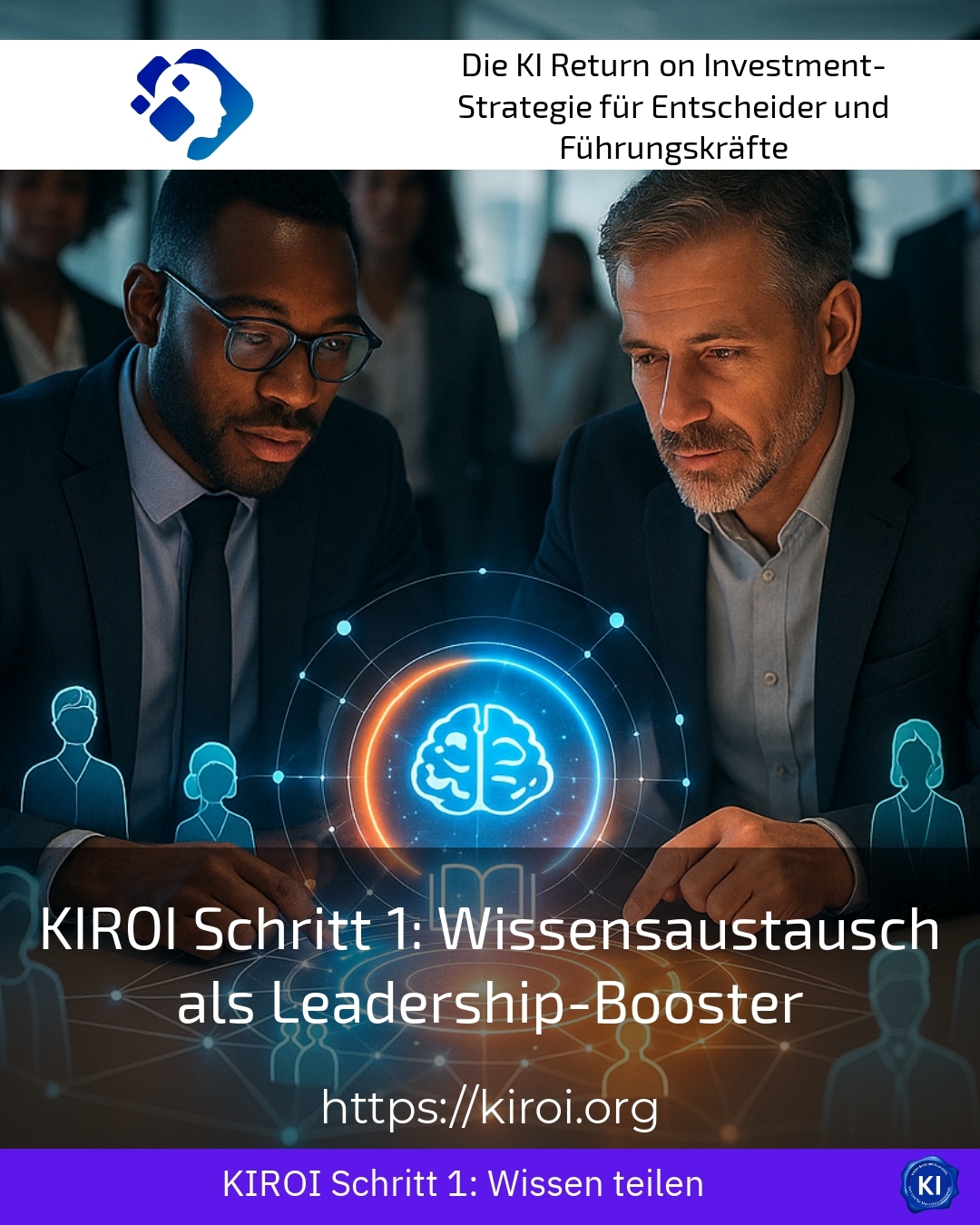
Knowledge sharing as a driver for leaders
Knowledge sharing plays a crucial role in the leadership of modern organisations. It supports leaders in better managing teams and driving innovative projects. The focus is not on the rapid delivery of solutions, but on guiding learning processes and developing an active knowledge culture. Companies that understand knowledge sharing as a valuable process create the foundation for sustainable collaboration and flexible responses to change.
Cultural change through knowledge exchange
Knowledge sharing is often seen as a purely technical task. However, the real challenge lies in the company's culture and communication. Leaders often report that in their role, they must provide impetus to question entrenched ways of thinking and to foster open dialogue. Knowledge sharing thereby becomes a process of learning and growth.
For example, employees in a manufacturing company gained access to expert knowledge through targeted workshops and digital support. The exchange not only improved problem-solving skills but also strengthened team cohesion.
AIROI BEST PRACTICE at XYZ Company (name changed due to NDA) In a production environment, internal information flows were redesigned to ensure employees could access expert knowledge at any time. Regular, hybrid workshops fostered exchange, leading to increased problem-solving capacity within the team. The combination of digital and analogue formats enabled knowledge to be shared simply and situationally.
Diversity of methods for knowledge exchange
Knowledge sharing methods are diverse and must be suited to the respective company culture. Mentoring, webinars, and hybrid learning formats offer different approaches to keeping knowledge alive. Coordinated coaching supports teams in successfully implementing these formats and embedding them flexibly into everyday working life.
In the tech industry, for example, teams rely on digital platforms and informal meetings to continuously share complex technical expertise. In service companies, hybrid learning supplements face-to-face meetings with digital modules that support learners individually.
AIROI best practice at XYZ Company (name changed due to NDA) In a technical company, coaching created a framework where employees could systematically share their specialist knowledge. Various formats, such as informal meetings and digital exchange platforms, were introduced to support knowledge sharing. This not only improved networking but also peer support in complex projects.
AIROI Best Practice at Company XYZ (name changed due to NDA) In a service company, a concept for hybrid learning was developed through supported coaching, which regularly combines digital learning modules with face-to-face workshops. Employees were able to learn at their own pace and then exchange ideas within the team. This approach promoted acceptance and led to a lively knowledge transfer, which became sustainably established in everyday work.
Support instead of ready-made solutions
Decision-makers often approach coaching services with the desire to receive quick solutions for knowledge sharing. However, experience shows that sustainable development is better achieved through guidance. This creates a space for experimentation and collaborative learning, where individual structures tailored to the company emerge. Leaders are thus supported in understanding their role as catalysts and in guiding the process as continuous change.
Knowledge sharing in dynamic industries
Especially in fast-paced industries, flexible knowledge sharing is essential. Production, for example, often reports the need to provide employees with expertise at all times to enable quick decisions. In technology, on the other hand, it is the complex interrelationships that require constant exchange and mutual learning. Service providers, in turn, benefit from hybrid offerings in order to be able to respond agilely to customer needs.
My analysis
Knowledge sharing is not purely a technical challenge, but a cultural and communicative process that requires careful guidance. AIROI Coaching does not offer leaders a ready-made plan, but supports them in providing impulses and developing their own sustainable forms of exchange. This allows for vibrant knowledge sharing that strengthens organisations and prepares them for dynamic requirements.
Further links from the text above:
[1] AIROI Step 1: Knowledge sharing as a success factor for leaders
[3] Rethinking knowledge transfer: Step 1 to success with AIROI
For more information and if you have any questions, please contact Contact us on or read further blog posts on the topic Artificial Intelligence Blog here.









 Deutsch
  English (UK)